Beyond the Blocks: A Comprehensive Guide to Choosing Building Sets for Tweens
—
Introduction
The tween years—roughly ages 8 to 12—are a remarkable period of cognitive, social, and emotional transformation. Children at this stage are no longer satisfied with simple stacking toys, yet they are not quite ready for the abstract complexities of adult engineering kits. They crave challenge, autonomy, and creative expression. Building blocks, far from being mere childhood relics, become powerful tools for learning, problem-solving, and self-discovery. Yet with thousands of products flooding the market—from traditional plastic bricks to programmable robotics kits—parents and guardians often feel overwhelmed. How do you select a building set that is age-appropriate, engaging, and educationally worthwhile? This guide unpacks the key factors to consider, ensuring that every block you buy contributes to your tween's growth and enjoyment, rather than collecting dust on a shelf.
—
Understanding the Tween Mindset: Cognitive and Social Development
Before diving into product specifications, it is essential to appreciate what makes tweens unique. Between ages 8 and 12, children experience a surge in abstract thinking. They can understand cause-and-effect relationships, follow multi-step instructions, and plan ahead—skills that make complex building projects feasible. Simultaneously, their social landscape shifts: friendships become more collaborative, and peer influence grows. They often want to share their creations, compare builds, and even compete in friendly challenges.
This developmental stage means that the chosen building blocks should offer a balance between guided challenge and open-ended freedom. A set that is too simple will bore the tween, while one that is overwhelmingly difficult may frustrate them and lead to abandonment. Look for kits that include both a clear goal—like a model to build—and the flexibility to modify or extend the design. Additionally, consider whether the set encourages solo play, pair work, or group collaboration. Sets that allow multiple builders to contribute, such as large-scale models or modular systems, can nurture teamwork and communication skills.
—
Safety First: Materials, Size, and Age Recommendations
Although tweens are past the stage of putting small objects in their mouths, safety remains paramount. Building blocks for this age group should be made from non-toxic, durable materials—typically ABS plastic, BPA-free, and free from phthalates. Wooden blocks, while charming, may splinter if not well finished; metal kits require careful handling to avoid sharp edges. Always check for certification marks like ASTM (American Society for Testing and Materials) or EN71 (European safety standard) to ensure the product meets international safety regulations.
Equally important is the size and shape of components. While preschoolers need large, chunky blocks, tweens can handle smaller pieces—down to about 1 cm in diameter. However, avoid sets with extremely tiny, fragile parts (like thin rods or delicate connectors) that break easily, as broken pieces can create hazardous sharp edges. Pay attention to the manufacturer’s recommended age range: most quality brands label their sets with “8+” or “10+,” which generally indicates appropriate complexity and safety. Ignoring these guidelines can lead to frustration or injury. Lastly, if the set includes electronic components (e.g., batteries, motors), ensure they are securely enclosed and that the wiring is child-safe.
—
The Spectrum of Complexity: From Simple Sets to Advanced Kits
Building blocks for tweens exist along a wide spectrum of difficulty. On the simpler end, classic interlocking brick systems (like standard LEGO City or Friends sets) offer clear instructions and moderate piece counts—typically 200 to 800 pieces. These are great for building confidence and learning to follow visual guides. Moving up, technic-style sets (e.g., LEGO Technic, Mega Construx) introduce gears, axles, and mechanical functions such as steering or lifting. Tweens who enjoy understanding how machines work will find these deeply satisfying.
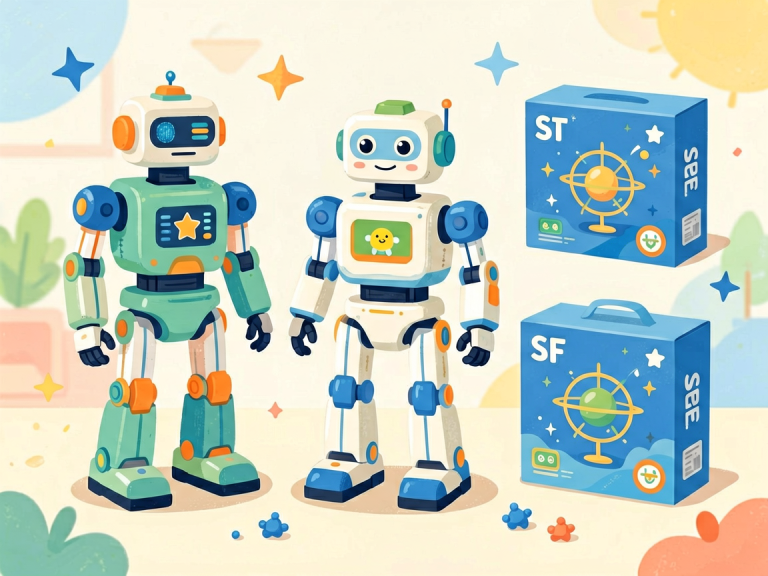
For the advanced tween, programmable robotics kits (like LEGO Spike Prime, Makeblock mBot, or VEX IQ) combine building with coding. These require sequential thinking, debugging, and sometimes group collaboration. They are ideal for children who have already mastered static builds and are ready for dynamic, interactive creations. Alternatively, open-ended engineering systems like KNEX or ZOOB allow builders to construct structures from scratch without predetermined pieces—perfect for fostering raw creativity.
A golden rule: start at the lower end of complexity if the child is new to building, then gradually increase difficulty. Many brands offer level-based indicators (e.g., "Skill Level 1–5"). Don’t be afraid to choose a set slightly above the child’s current ability, as long as they have a supportive adult or online tutorials to fall back on. The satisfaction of overcoming a challenging build is immense for a tween’s self-esteem.
—
Theme and Interest: Aligning with the Tween’s Passions
One of the most powerful motivators for a tween is personal interest. A child who loves space exploration will spend hours assembling a rocket ship; one who is fascinated by medieval history will dive into a castle siege set. The market caters to nearly every niche: architecture (e.g., LEGO Architecture series for skyline models), vehicles (from cars to spacecraft), fantasy (like LEGO Ninjago or Harry Potter), and even movie-inspired builds (Star Wars, Marvel, Jurassic World).
Beyond commercial themes, consider STEM-oriented themes that subtly teach principles of physics, engineering, and mathematics. For example, a set that builds a working pulley system or a hydraulic arm introduces real-world concepts without feeling like a textbook. Some kits even include educational booklets explaining the science behind the model.
Moreover, keep an eye on the longevity of the theme. Some licensed themes (e.g., specific movie releases) may disappear after a few years, making replacement parts hard to find. In contrast, evergreen themes like basic bricks or technic components tend to be supported for decades. If your tween tends to lose interest quickly, a broad theme (like “build your own machines”) can offer more replay value than a single, rigid model.
—
Educational Value: STEM, Creativity, and Problem-Solving
Building blocks are more than entertainment—they are stealth educators. The best sets for tweens explicitly integrate STEM learning. For instance, kits that involve gears teach about torque and rotational speed; those with pulleys demonstrate mechanical advantage; and any set with a simple motor introduces basic electricity. Scientific concepts become tangible: a child who builds a catwalk sees why trusses are strong; one who constructs a bridge learns about load distribution.
Creativity, too, is nurtured when the set allows for modification and iteration. Look for kits that include additional loose bricks or connectable components that let the builder redesign the final model. The process of “breaking and rebuilding” is where deep learning occurs. Problem-solving skills are honed when instructions are missing a step or when a design fails to function—the child must diagnose and correct the error.
Additionally, many modern building sets incorporate digital elements. Apps that provide 3D instructions, animation, or even augmented reality can engage tech-savvy tweens. However, screen time should be balanced; prefer kits that encourage hands-on manipulation over passive video watching. The ultimate educational value lies not in the final product, but in the process of planning, executing, testing, and iterating.
—
Compatibility and Expansion: Building a Sustainable Collection
No parent wants to invest in a building set that is a dead end. Compatibility is crucial—especially if your tween already owns other blocks. The most widely compatible system is LEGO’s stud-and-tube design, which has been the industry standard for decades. Many third-party brands also produce compatible bricks (e.g., Cobi, Mould King, and some unbranded sets), but quality varies. Always check reviews about clutch power (how firmly pieces stick together) and precision of mold.
Beyond bricks, consider modularity: sets that allow you to combine several smaller models into one giant creation offer excellent expansion potential. For example, LEGO’s modular buildings series is designed to connect side by side, encouraging long-term collection. Similarly, some robotic kits come with expansion packs to add sensors, more motors, or additional structural parts.
A practical tip: before buying, search online forums or YouTube to see if the set can be integrated with other systems you already own. Investing in a single, versatile system—rather than several incompatible ones—saves money, storage space, and frustration. For tweens who are serious builders, a subscription service (like LEGO BrickLink Designer Program or monthly STEM boxes) can keep the collection growing sustainably.
—
Budget Considerations: Investing Wisely
Building sets for tweens range from $20 for small impulse buys to over $300 for flagship robotics kits. A smart budget strategy balances cost per piece and longevity of play. Generally, a good value is around $0.10 per piece for basic plastic bricks; specialty pieces or licensed themes may cost more. But don’t be fooled by huge piece counts—sometimes a 1000-piece set full of tiny, generic 1×1 bricks offers less play value than a 300-piece technic set with gears and axles.
Consider buying used or refurbished. Many families sell complete sets online (eBay, Facebook Marketplace) or on dedicated trading platforms (BrickLink, BrickOwl). Gently used sets can cost 30–50% less than new, and you can often find retired themes that are no longer in production. Just ensure all pieces are accounted for—look for listings that advertise “100% complete.”
Another approach is to invest in a core set (like a large collection of basic bricks) and supplement with instruction booklets from the internet. Tweens can recreate thousands of models using only standard bricks, which is far cheaper than buying individual themed sets. For those interested in electronics, open-source platforms like Arduino or Micro:bit beginner kits offer high educational return at a modest price.
—
Social Play and Group Building: Encouraging Collaboration
Tweens are naturally social creatures. Building blocks that facilitate multiplayer experiences can transform a solitary activity into a vibrant social event. Some sets are explicitly designed for two or more builders—for example, split-model sets where each child builds a different section that later connects. Others, like LEGO’s "BrickHeadz" or "Speed Champions" series, are small enough that friends can each build their own and then display them together.
Consider organizing building challenges at home: “Who can design the fastest car using only these pieces?” Such activities promote friendly competition, communication, and problem-solving. Many brands offer official challenges and competitions (e.g., FIRST LEGO League for robotics) that combine building with teamwork and presentation skills. Participating in these can be a transformative experience for tweens, teaching real-world collaboration.
Even if the set is single-player, encourage your tween to share their creations on social platforms (with safety supervision). Positive feedback from peers can boost confidence, while viewing others’ builds can inspire new ideas. The key is to balance screen-based sharing with hands-on building.
—
Conclusion
Choosing building blocks for tweens is not a one-size-fits-all task. It requires thoughtful consideration of the child’s cognitive stage, safety, interest, educational goals, and budget. The perfect set bridges the gap between play and learning, offering challenges that stretch abilities without breaking confidence. It respects the tween’s growing independence while nurturing creativity, logic, and social skills. Whether you opt for a classic brick system, a programmable robot, or an open-ended engineering kit, the ultimate goal remains the same: to provide a tool that empowers your tween to imagine, build, and grow. As they snap together plastic pieces—or metal girders, or electronic sensors—they are constructing not just a model, but a foundation for lifelong curiosity and resilience. So choose wisely, build together, and watch the blocks become stepping stones to a brighter, more inventive future.