The Trap of the One-Note Wonder: Avoiding Toy Buying Mistakes That Lead to Limited Play Value
Every parent knows the scene: a brightly wrapped box, a child’s eager hands tearing at the paper, a shriek of delight, and then—within a week, sometimes within a day—the toy lies abandoned in a corner, ignored in favor of a cardboard box or a set of wooden spoons. The money is gone, the disappointment is mutual, and the cycle repeats. This is the quiet tragedy of the toy aisle: so many purchases are driven by clever marketing, momentary excitement, or a vague sense of obligation, rather than by a real understanding of how children actually play. The result is a clutter of possessions that fail to do the one thing a toy is supposed to do—engage a child’s mind and body in meaningful, repeatable, and evolving play. The most common and costly mistake, therefore, is not buying too many toys, but buying toys with limited play value: objects that are fun for a moment and then dead forever. Recognizing this trap, and learning to spot the underlying errors that lead to it, can transform both your wallet and your child’s daily experience.
The Allure of the Flashy but Hollow Toy
The first mistake is perhaps the most seductive: choosing a toy because it looks spectacular rather than because it plays well. Modern toy shelves are packed with items that seem designed for a YouTube unboxing video, not for actual childhood. They light up, they make noise, they move on their own, and they demand nothing in return except the press of a button. The problem with such “one-note” toys is that they have a fixed script. A dancing robot that sings three songs and waddles forward is exactly the same on the tenth day as it was on the first. There is no variation, no challenge, no discovery. The child quickly masters the single interaction offered, and because the toy cannot respond to the child’s imagination—it cannot become a character, a tool, or a puzzle—all interest evaporates.
The underlying error here is confusing stimulation with engagement. Stimulation is passive and fleeting; engagement is active and sustained. A flashing plastic dragon with a roar button stimulates the senses for about thirty seconds. A simple, unadorned dragon puppet, on the other hand, can fight a pillow fortress, negotiate peace with a stuffed rabbit, or fly to the moon on a swing. The puppet has what child-development experts call “open-ended play value”: its purpose is defined by the child, and therefore it can be played with in a hundred different ways across many years. The flashy toy, by contrast, is a closed system. Once its tricks are exhausted, it becomes nothing more than clutter. When you find yourself drawn to a toy that does something, ask instead what it allows the child to do. If the answer is merely “watch,” put it back on the shelf.
The Mistake of Over-Specificity
A second common error is choosing toys that are so tied to a single character, plot, or function that they cannot escape their own narrow script. Think of the endless line of movie-tie-in figures, vehicles, and play sets. A child who loves a particular animated film may beg for the spaceship with the special cockpit, the exact sword of the hero, and the articulated villain action figure. And indeed, for a while, the child reenacts scenes from the movie. But this is ritual, not play. Ritual has its comforts, yet it lacks the generative power of true play. Because the toy’s identity is fixed by its licensed source material, the child cannot easily repurpose it. The spaceship must remain a spaceship; the sword must remain that hero’s sword. If the child invents a new story, the toy resists—it keeps dragging the narrative back to the original film.
This is not to say that all character-based toys are worthless. A simple action figure of a beloved hero can become a flexible storytelling tool if it is not too heavy with accessories and its physical design allows for imaginary action. The real problem occurs when the entire play experience is pre-scripted by the manufacturer—when the toy’s only meaningful play pattern is to mimic a specific scene. Overly specific toys also include sets with one, and only one, correct outcome: a wooden puzzle that forms a single picture is fine, but a toy that is just a molded plastic replica of a kitchen appliance with a single “cooking” action has limited value. The more fixed the toy’s purpose, the quicker the child’s boredom. A better choice would be generic building blocks, loose parts, or simple figurines that can stand in for anyone or anything. When a toy has the freedom to be a thousand things, its play value approaches infinity.
Ignoring the Child’s Developmental Stage
Even well-designed, open-ended toys can become disappointing—or even frustrating—if they are mismatched to the child’s developmental stage. The mistake here is buying a toy that is either too easy or too difficult, both of which kill play value from different directions. A toy that is too easy offers no challenge: a two-year-old handed a jigsaw puzzle meant for a six-year-old may quickly give up, not because the puzzle is bad, but because the cognitive load is too high. Conversely, a six-year-old given a rattle that has no moving parts will handle it for five seconds and then move on. The sweet spot is called the “zone of proximal development”: the toy should be slightly beyond the child’s current abilities, inviting just enough struggle to be interesting but not so much that it causes despair.
Consider a set of magnetic tiles. For a toddler, the play value lies in the satisfying click of magnets and the simple act of stacking. For a preschooler, it becomes an exploration of shapes, balance, and symmetry. For an elementary-school child, it can become an engineering challenge—building a bridge that holds a heavy book, or a marble run with a specific trajectory. This is the hallmark of a great toy: it grows with the child, offering new layers of complexity as the child’s capacities expand. The mistake of ignoring developmental stage often leads parents to buy toys “in advance” for a future age, only to find the toy is ignored for years, or to buy “age-appropriate” toys that are actually underestimating the child’s curiosity. The remedy is to observe the child honestly and choose toys that are just one small step ahead of their current play patterns, allowing for a gradual increase in difficulty rather than a cliff.
The “Collectible” Fallacy
Another subtle path to limited play value is the purchase of toys whose primary appeal is the act of collecting, not playing. These are the blind boxes, the trading cards, the figurine lines with numbered editions, the chase variants, and the “complete the set” traps. There is no doubt that the anticipation of opening a mystery box has a certain charm, but that charm is the charm of gambling, not the charm of play. Once the figure is unwrapped and the brief dopamine spike of revelation fades, the object itself often has little to offer. It may stand on a shelf, unheld, unplayed-with, solely for the sake of completeness. The child may ask for the next one, and the next one, not because they want to play with the figures, but because the collection feels incomplete—a feeling that never ends, because companies deliberately make completion impossible or perpetually out of reach.
This mistake is especially harmful because it teaches children that the value of a toy is in its rarity or acquisition, rather than in its imaginative use. It also creates a cycle of dissatisfaction: the child is rarely happy with what they have, because the focus is on what they lack. The play value of a single action figure from a large set is often near zero; the child does not know what to do with it alone, and the parent’s hopeful suggestion to “play with what you have” falls on deaf ears because the child has learned that play is about owning the whole line. To avoid this error, resist the pull of serial consumption. Instead, choose a small number of versatile toys that work splendidly on their own, and if your child is drawn to collecting, guide them toward collectibles that have inherent play systems—such as building sets where pieces from different sets can be combined—rather than static, identical-shaped figures whose only variable is paint color.
How to Choose for Open-Ended Play
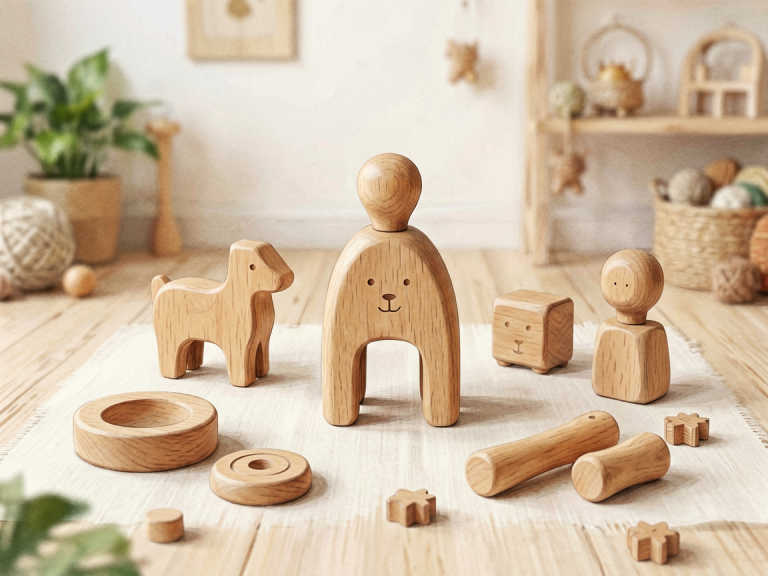
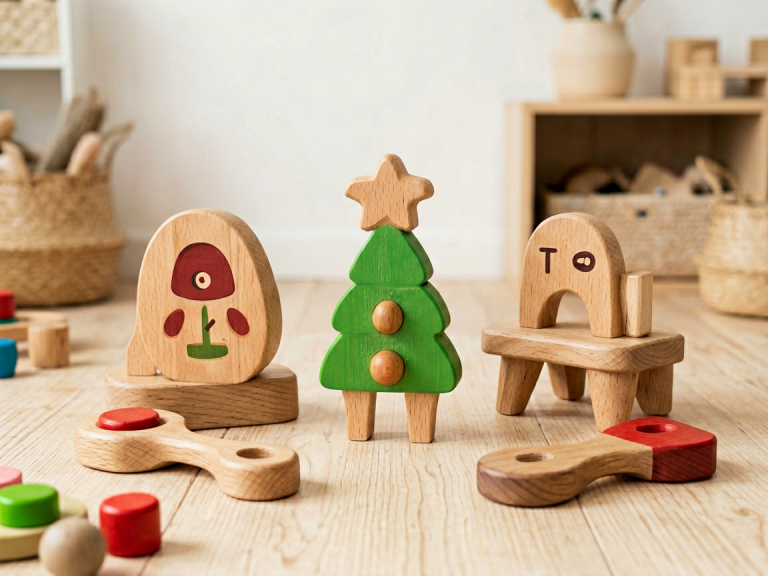
So what does good toy buying look like? The guiding principle is simple: choose toys that do less so that the child can do more. Look for materials and designs that invite manipulation: wooden blocks, play silks, cardboard bricks, water, sand, clay, puppets, simple vehicles without batteries, dolls with neutral expressions, and construction sets with universal connection systems. These are the toys that never get old because they are never finished. A set of plain wooden dominoes can be a train track at age three, a spelling game at age six, and a physics experiment at age nine. A single large sheet of felt can be a superhero cape, a picnic blanket, a cave entrance, or a river to be crossed. The longer a toy stays in a child’s open-ended inventory, the more expensive it proves to be worth—not in dollars, but in hours of engaged, self-directed, joyful activity.
A second useful criterion is asking whether the toy can be used in multiple ways and combined with other toys. A toy that only works within its own tiny universe is a dead end; a toy that can be thrown into a mixing bowl with other toys becomes a catalyst for infinite scenarios. Another question: Does the toy give feedback that responds to the child’s effort? A marble run, for example, rewards each adjustment of a ramp or a tunnel with a different outcome. A painting set rewards every stroke with an unpredictable visual result. Toys that respond to the child’s choices foster a sense of agency and creativity, while toys that simply repeat the same programmed response teach passivity.
Finally, remember that the most valuable play materials are often not toys at all. A cardboard box, a roll of tape, a pile of old clothes, a set of measuring cups—these have unlimited play value because they are undefined. When you are in the toy store, and the pressure is on to buy something, pause and ask yourself: “Could a child get more play out of the wrapping paper than out of the toy inside?” If the answer is yes, you might be about to make a mistake. And if you stop making that mistake, both you and your child will be richer for it.
Conclusion
The toy industry wants you to believe that a better toy is a busier toy—more lights, more sounds, more characters, more parts. But the truth is exactly the opposite. A toy with limited play value is like a one-line joke: it lands once, and then it’s done. A toy with rich play value is like a book with no fixed ending; it can be re-read, re-written, re-imagined every day. By avoiding the mistakes of flashy hollow purchases, over-specific scripts, developmental mismatches, and the collectors’ mirage, you can clear the clutter from your home and open up the space where true play thrives. The best toy is not the one that does the most; it is the one that allows the child to become the author of their own play. So next time you reach for your wallet, choose the empty space, the open rule, the silent invitation. That is where the real magic lives.