STEM Kits for Preschoolers: Investment or Overkill?
In the modern parenting landscape, few questions spark as much debate as whether to introduce structured academic tools to children who have barely mastered tying their shoelaces. Among the most popular—and expensive—options are STEM (Science, Technology, Engineering, and Mathematics) kits designed specifically for preschoolers. These colorful boxes promise to turn bath time into a chemistry lesson and block play into an engineering feat. But before you swipe your credit card, it is worth asking: Should I buy STEM kits for my preschooler? This article explores the nuanced answer, weighing developmental benefits against potential pitfalls, and offers practical guidance for making an informed decision.
The Allure of Early STEM Education
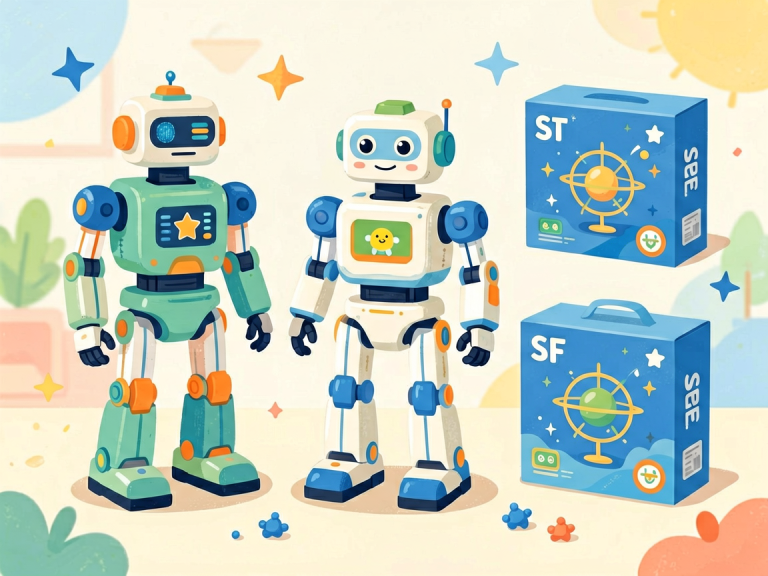
The marketing behind STEM kits for preschoolers is powerful. Parents are told that the earlier children are exposed to scientific concepts, the more likely they will develop critical thinking, problem-solving skills, and a lifelong love for discovery. In an era where technology dominates every industry, the pressure to give our children a head start is immense. Many kits come with colorful magnets, simple coding games, building sets that introduce basic physics, and even preschool-friendly microscopes.
But the key question is not whether STEM is valuable—it undoubtedly is. The question is whether commercial STEM kits are the best vehicle for delivering that value to three- to five-year-olds. The answer depends heavily on the child, the parent, and the kit itself.
Potential Benefits: What Research Actually Says
Encourages Curiosity and Hands-On Exploration
At its best, a good STEM kit can turn abstract concepts into tangible experiences. For instance, a kit that lets a child mix baking soda and vinegar to simulate a volcano eruption teaches cause-and-effect in a way no worksheet can. Preschoolers learn best through sensory play and active manipulation. When a kit includes real materials—magnets, pulleys, seeds, or simple circuits—it can spark questions: “Why does this stick?” “What happens if I push harder?” These questions are the foundation of scientific inquiry.
Builds Foundational Vocabulary and Concepts
Exposure to words like “experiment,” “observe,” “predict,” and “compare” at an early age can build a rich conceptual vocabulary. Many STEM kits include picture cards or simple instruction booklets that introduce these terms in context. While a preschooler won’t grasp the full meaning of “hypothesis,” they can understand that “we guess what will happen, then we try it.” This early familiarity can reduce anxiety about science later in school.
Develops Fine Motor Skills and Persistence
Assembling a simple marble run, snapping together gears, or threading beads to create a pattern requires precise hand movements. These activities strengthen the small muscles in hands and fingers, which are crucial for later writing. Moreover, when a structure collapses or a circuit doesn’t light up, children learn to try again—a lesson in resilience that no screen can teach.
Quality Time with Parents
Perhaps the greatest benefit of a STEM kit is not the kit itself but the context it creates for parent-child interaction. When a parent sits down with a child to explore a kit, they engage in what educators call “scaffolded learning.” The parent can ask open-ended questions, model curiosity, and celebrate failures as learning opportunities. This shared experience often matters more than the specific content of the kit.
Potential Drawbacks: When Kits Do More Harm Than Good
Over-Structuring Play
The greatest danger of STEM kits is that they can turn play into a task. Preschoolers naturally learn through unstructured, open-ended play—building with blocks, digging in sand, pretending to cook. A kit with step-by-step instructions and a predetermined outcome can stifle creativity. If the child feels pressure to “get it right” or to follow the manual exactly, the joy of discovery is replaced by anxiety. Many child development experts warn that too much structured activity in early childhood can reduce intrinsic motivation and curiosity.
Expensive and Often Single-Use
High-quality STEM kits for preschoolers can cost anywhere from $20 to over $100. Yet many contain materials that are used once—a few plastic test tubes, a packet of powder, a single balloon rocket. Once the experiment is done, the child loses interest, and the kit sits on a shelf. Compare this to a cardboard box, which can become a castle, a spaceship, or a car for weeks. The financial and environmental cost of disposable kits is worth questioning.
Age-Inappropriate Complexity
Not all “preschool” STEM kits are truly age-appropriate. Some claim to be for 3+ but contain small parts that pose choking hazards. Others require fine motor skills far beyond a typical four-year-old. When a child cannot complete an activity without constant adult intervention, it can lead to frustration for both child and parent. Worse, the child may internalize the message that they are “bad at science.”
The Pressure to Perform
When parents buy a STEM kit, there is often an implicit expectation that the child should learn something specific. This can lead to quizzing: “What color is this acid?” “Why does the wheel spin?” For a preschooler, the process—splashing, mixing, watching—is the learning. To be tested on it can turn exploration into a chore. If a child feels that their playtime is being evaluated, they may resist or lose interest.
Key Considerations Before Buying
Know Your Child’s Developmental Stage
Every child develops differently. Some three-year-olds enjoy following a simple recipe for a “slime” experiment; others will prefer to just squeeze the glue bottle. Observe your child’s natural play style. Do they ask “why” and “how” frequently? Do they enjoy building and taking things apart? If so, a kit that complements these interests may be welcome. If they prefer imaginative, narrative-driven play (dress-up, storytelling), a STEM kit might feel forced.
Evaluate the Kit’s Open-Endedness
The best STEM kits for preschoolers are those that allow multiple outcomes. For example, a set of magnetic tiles can be used to build towers, animals, or abstract sculptures—no instructions needed. A kit that provides only one experiment and then is finished is a poor investment. Look for kits that encourage reuse: stacking, pouring, sorting, comparing.
Consider the Parent’s Role
Are you willing and able to sit with your child during kit time? Most preschool STEM kits require adult facilitation—not just supervision, but active involvement. If you are busy or prefer independent play, a STEM kit may lead to frustration. On the other hand, if you enjoy hands-on projects and have the patience to follow your child’s lead, a kit can be a wonderful bonding tool.
Balance with Free Play
No single kit can replace the richness of everyday experiences. A walk in the park, cooking together, water play in the sink, or building a fort with blankets all teach STEM concepts in authentic ways. Before buying, ask yourself: Is this kit filling a gap, or is it adding to an already screen-heavy or overly structured schedule? The American Academy of Pediatrics recommends that preschoolers have plenty of unstructured playtime. A STEM kit should supplement, not dominate.
Alternatives to Commercial STEM Kits
Everyday STEM at Home
You do not need a fancy box to introduce STEM. A simple set of measuring cups teaches volume and fractions. A flashlight and shadow puppets teach light and geometry. A magnifying glass on a backyard leaf teaches observation. These activities are free, easily adjustable, and often more engaging than packaged kits because they arise from the child’s immediate environment.
Library Programs and Community Resources
Many public libraries offer free STEM story times or maker sessions for preschoolers. Museums, science centers, and nature preserves often have low-cost or free family days. These provide social learning opportunities and exposure to real scientists or educators, which can be more inspiring than a kit alone.
Subscription Boxes with Caution
Some subscription services deliver monthly STEM kits tailored by age. While these can provide variety, be wary of accumulation. Review each box before showing your child; if it looks too complicated or flimsy, set it aside for later. Rotate kits rather than offering them all at once.
Final Verdict: Should You Buy STEM Kits for Preschoolers?
The answer is not a simple yes or no. Buy a STEM kit if you choose it with intention: one that is high-quality, open-ended, and aligned with your child’s natural curiosity. Avoid kits that promise to turn your child into a “little Einstein” or that rely on rigid instructions. The best STEM kit is one that becomes a catalyst for conversation, not a curriculum.
For most families, the wisest approach is to invest in a few versatile materials—magnetic tiles, a simple balance scale, a set of ramps and balls—rather than dozens of single-experiment kits. Combine these with plenty of free outdoor play, creative art projects, and daily life activities like cooking and gardening. These experiences, rich in observation and problem-solving, provide a stronger foundation than any packaged product.
Ultimately, the question “Should I buy STEM kits for preschoolers?” is really about your parenting philosophy. If you see yourself as a facilitator of discovery rather than a teacher of facts, and if you can let go of the need for a tangible outcome, then a STEM kit can be a delightful addition to your preschooler’s world. But if you buy it out of fear that your child will fall behind, you may end up with a dusty box and a disappointed little face. Choose wisely—and remember that the most powerful STEM tool in your home is your own engaged, curious presence.