Science Kits for Kindergarteners: A Parent’s Guide to Making the Right Choice
As a parent of a curious five-year-old, you have likely encountered the colorful boxes of science kits lining store shelves or populating online marketplace recommendations. The packaging promises creativity, learning, and hours of engaged play. But the question lingers: Should I buy science kits for kindergarteners? The answer is not a simple yes or no. While these kits can be wonderful tools for early education, they also come with potential pitfalls that every thoughtful parent should consider. This article explores the multifaceted pros and cons, offers practical guidance on selecting age-appropriate kits, and ultimately helps you decide whether investing in a science kit is the right step for your little explorer.
Understanding the Appeal: Why Science Kits Are So Tempting
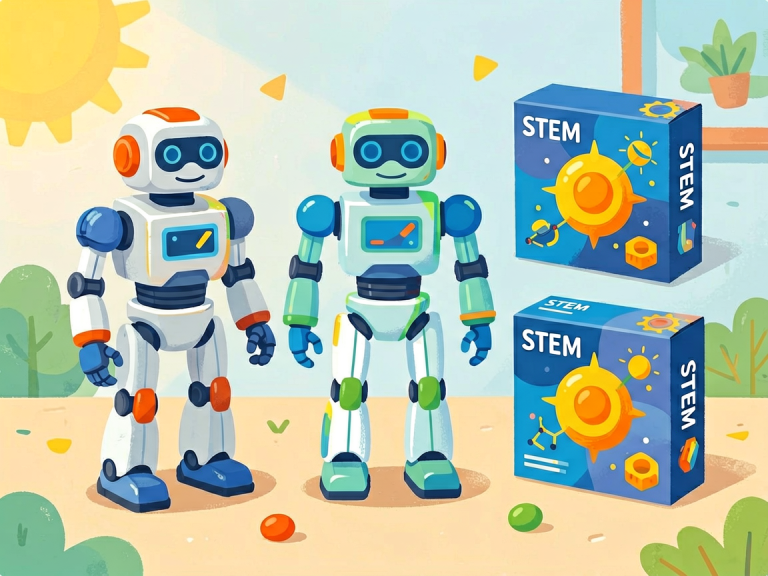
A typical science kit for kindergarteners might include a plastic microscope, a few prepared slides, test tubes, colorful powders, and instruction cards for simple experiments like growing crystals or creating a volcano eruption. The marketing emphasizes STEM (science, technology, engineering, and math) education, hands-on learning, and the development of critical thinking skills. For parents who want to give their children a head start in a world increasingly driven by science and technology, these kits seem like a no-brainer.
Moreover, the design of modern science kits is undeniably appealing. Bright colors, cartoon characters, and simple illustrations invite children to open the box and start exploring. Many kits are curated by educators and aligned with early childhood development standards, which adds a layer of credibility. The promise of “learning through play” resonates deeply with parents who want their children to enjoy education rather than merely endure it.
The Bright Side: Potential Benefits of Science Kits for Young Children
1. Fostering Curiosity and a Love for Discovery
At its core, science is about asking questions and seeking answers. A well-designed science kit can spark a kindergartener’s natural curiosity. When a child mixes baking soda and vinegar to create a fizzy eruption, they witness cause and effect in a tangible, exciting way. This positive experience plants a seed: science is fun. Over time, repeated positive associations can build a foundation for lifelong intellectual curiosity.
2. Hands-On Learning That Supports Developmental Milestones
Kindergarteners are in a critical period of sensory and motor development. Science kits often require pouring, stirring, measuring, and observing. These actions refine fine motor skills, hand-eye coordination, and spatial awareness. Additionally, following step-by-step instructions (even with adult help) teaches sequencing, patience, and the ability to concentrate on a task. The concrete, hands-on nature of experiments also helps young children grasp abstract concepts like “reaction” or “growth” more easily than they could from a book or video.
3. Introduction to Scientific Vocabulary and Concepts
Even a simple science kit can introduce kindergarteners to words like “hypothesis,” “observation,” “experiment,” and “result” in a natural context. They learn that a “hypothesis” is just a guess about what will happen, and an “observation” is what you see and record. This early exposure normalizes scientific thinking and vocabulary, making school science classes less intimidating later on. Concepts like density, color mixing, magnetism, or life cycles become familiar through play rather than formal instruction.
4. Quality Bonding Time Between Parent and Child
Many science kits require adult supervision or participation. This creates an opportunity for focused, interactive time between you and your child. Instead of passive screen time, you are engaging in a shared activity that encourages conversation, explanation, and collaboration. You can ask open-ended questions like “What do you think will happen next?” or “Why did that change color?” This dialogue enhances language development and critical thinking while strengthening your relationship.
5. Encouraging a Growth Mindset and Resilience
Experiments don’t always work on the first try. A crystal might not form, or a volcano might not erupt as expected. These small failures are valuable learning moments. Through your guidance, your child can learn that mistakes are part of the scientific process. They see that trying again, adjusting variables, and being patient lead to success. This nurtures a growth mindset—the belief that abilities can be developed through effort—which is a powerful predictor of long-term academic and personal success.
The Other Side: Potential Drawbacks and Considerations
1. Over-Structured Play Can Stifle Creativity
One of the biggest criticisms of commercial science kits is that they often prescribe a rigid set of steps. The child is told exactly what to do and what outcome to expect. While this can teach procedure, it may also limit open-ended exploration. A kindergartener’s brain thrives on free play—mixing ingredients without a plan, pouring water down a ramp, or taking apart an old toy. A pre-packaged kit may inadvertently train a child to follow instructions rather than to invent their own experiments. If the kit becomes the only “science” your child does, the creative spark could be dimmed.
2. Short Attention Spans and Frustration
Kindergarteners typically have attention spans of only 10 to 15 minutes for a structured activity. Many science kits include experiments that require several steps, waiting periods (like waiting for crystals to grow overnight), or careful handling of small pieces. A child who loses interest midway may become frustrated, leading to tears, mess, or a negative association with the kit. Parents then feel pressured to salvage the activity, which can turn a fun experience into a stressful chore.
3. Quality and Safety Concerns
Not all science kits are created equal. Some use cheap plastic components that break easily, or contain small parts that pose choking hazards for children under three. Others include chemicals that, while generally safe, can irritate sensitive skin or eyes if mishandled. Always check for ASTM or CE safety certifications, and read the recommended age range carefully. A kit labeled for ages 5–8 might still have components that are too complex or dangerous for a kindergartener without constant adult supervision.
4. The Mess Factor
Let’s be honest: science experiments with a five-year-old can be messy. Baking soda volcanoes, slime making, and color mixing often leave behind sticky counters, stained clothes, and scattered supplies. If you are a parent who values a tidy home or has limited patience for cleanup, a science kit might add stress rather than joy. However, this can be mitigated by setting clear boundaries (e.g., doing experiments only at the kitchen table with a plastic tablecloth) and involving your child in the cleanup process.
5. The Risk of Over-Commercialization and Unrealistic Expectations
Some science kits are marketed as “brain-building” or “genius-making,” which can pressure parents to expect extraordinary outcomes. When a child simply enjoys playing with the materials without learning a specific concept, a parent may feel disappointed or that the money was wasted. Remember that a science kit is a tool, not a magic bullet. The real learning happens through conversation, repetition, and the child’s own interpretation of the experience.
How to Choose the Right Science Kit for Your Kindergartener
If you decide to buy a science kit, the following guidelines can help you select one that maximizes benefits and minimizes drawbacks.
1. Prioritize Open-Ended Play Over Prescribed Experiments
Look for kits that emphasize exploration and discovery rather than just following recipes. For example, a magnet kit with various objects allows your child to test what is magnetic, sort items, and create their own “experiments.” A light and color kit that includes prisms, flashlights, and colored filters invites open-ended play. Avoid kits that require multiple steps and precise measurements unless you are prepared to do most of the work yourself.
2. Check for Maximum Adult Participation
Read the box or online description carefully. Some kits claim to be “independent play” but actually require extensive adult setup and supervision. For a kindergartener, the best kits are those that involve you as a partner. Look for kits that come with a parent guide containing questions to ask, extension activities, and safety reminders.
3. Focus on One or Two Concepts per Kit
Young children learn best when they are not overwhelmed. A kit that covers too many topics (e.g., chemistry, biology, physics, and geology all in one box) can be confusing. Instead, choose a kit that dives deep into one area—like water play, magnets, or growing plants—so your child can build a strong conceptual foundation.
4. Consider Reusable and Durable Materials
Avoid kits that use disposable items (e.g., single-use plastic cups, foil packets) unless you plan to buy refills. Better yet, choose kits that include materials you can replenish from household supplies (like baking soda, vinegar, food coloring, flour). The best kits have reusable components like magnifying glasses, test tube racks, or tweezers that can be used for future homemade experiments.
5. Read Reviews from Other Parents
Real-world feedback can reveal hidden issues. Look for reviews that mention whether the kit held a child’s attention, how messy it was, whether the instructions were clear, and if the adult felt it was worth the price. Pay special attention to reviews from parents of children the same age as yours.
Practical Tips for Maximizing the Experience After You Buy
Once you bring a science kit home, how you present it matters as much as the kit itself.
- Set the stage for success: Do the experiment yourself first to understand the steps and anticipate where your child might struggle. Prepare the workspace with a protective cover and have paper towels ready.
- Follow your child’s lead: If your child wants to mix all the powders together without reading the instructions, let them. You can guide them back to the intended experiment later, but the free exploration is valuable.
- Ask open-ended questions: Instead of saying “Look, it fizzed!”, ask “What do you think made the fizz happen?” or “What would happen if we used more vinegar?”
- Record observations: Use a simple notebook to draw what happened. This teaches scientific documentation without demanding writing skills.
- Repeat and extend: Don’t treat the kit as a one-time activity. Revisit the same experiment a week later, or modify it with different variables (e.g., use cold water vs. warm water). This reinforces learning and shows that science is about asking new questions.
Conclusion: The Verdict on Science Kits for Kindergarteners
So, should you buy science kits for your kindergartener? The answer is a qualified yes—provided you choose wisely and manage your expectations. A high-quality, age-appropriate science kit can be a wonderful supplement to your child’s natural exploration. It offers structured yet playful exposure to scientific thinking, builds motor and cognitive skills, and creates precious bonding time. However, no kit can replace the everyday “science” of a walk in the park, a conversation about why the sky is blue, or a homemade baking soda volcano made from pantry ingredients.
The best science kit is the one that invites your child to ask “what if?” and “why?”—and that can be found in a cardboard box, a bucket of water, or a handful of leaves as easily as in a store-bought package. If you decide to purchase one, treat it as a starting point, not an endpoint. Use it to ignite curiosity, then let your child’s imagination carry the experiment far beyond what the box intended. In the end, the most valuable scientific tool you can give your kindergartener is your own engaged presence and your patient, wonder-filled questions.