Smart & Safe: The Ultimate Toy Buying Guide for 1-Year-Olds Under $10
Introduction: Why Age-Appropriate, Budget-Friendly Toys Matter
The first year of life is a whirlwind of developmental milestones. By the time a baby turns 12 months old, they are typically pulling up, cruising along furniture, babbling with intent, and exploring the world with insatiable curiosity. As parents, caregivers, or gift-givers, we want to nurture that curiosity without breaking the bank. The good news? You don’t need to spend a fortune to provide meaningful, engaging, and safe toys for a one-year-old. In fact, many of the best toys for this age group are simple, open-ended, and cost well under $10. This guide will walk you through the essential categories of toys that support sensory development, motor skills, problem-solving, and imaginative play—all while respecting a tight budget. We’ll also cover critical safety considerations, material choices, and where to find these hidden gems. Whether you are shopping for your own child, a friend’s little one, or a daycare center, this guide will help you make informed, smart purchases that delight both baby and wallet.
1. Understanding the Developmental Needs of a 1-Year-Old
Before diving into specific toy recommendations, it’s important to understand what a typical one-year-old is working on developmentally. At this age, children are rapidly developing fine and gross motor skills. They can grasp small objects with their thumb and forefinger (the pincer grasp), stack blocks (though they may knock them down more often), and push or pull toys while walking. They are also beginning to understand cause and effect—if I shake this rattle, it makes a sound; if I drop this ball, it rolls away. Language is exploding: they may say a few words, understand simple commands like “no” or “come here,” and love to mimic sounds. Socially, they enjoy interactive play but are also prone to parallel play (playing alongside others rather than with them). Sensory exploration remains paramount: everything goes into the mouth, is squeezed, banged, and examined. Therefore, toys under $10 that cater to these needs must be durable, non-toxic, free of small parts that could be choking hazards, and easy to clean. They should also encourage repetition, exploration, and a bit of challenge without causing frustration.
2. The Best Budget-Friendly Toy Categories for 1-Year-Olds
2.1. Sensory Toys: Rattles, Teethers, and Textured Balls
Sensory toys are the cornerstone of play for one-year-olds. They stimulate the senses of touch, hearing, and sight, and they often double as teething relief. For under $10, you can find excellent options such as silicone banana-shaped teethers, wooden or plastic rattles with easy-to-grip handles, and soft cloth balls with various textures. Look for products made from food-grade silicone or natural wood with non-toxic paint. A simple set of three small, textured balls (e.g., one bumpy, one smooth, one with nubs) can cost as little as $5–$8 and provides hours of rolling, grasping, and mouthing. Another fantastic option is a crinkle toy—a small fabric square that makes a satisfying crackling sound when squeezed. These are lightweight, washable, and often feature contrasting colors or animal faces. Always ensure that any attached parts (like loops or tags) are securely sewn and cannot be pulled off. Sensory toys also help with self-regulation: a baby who is fussy may calm down when offered a cool, textured teether.
2.2. Stacking and Nesting Toys: Building Early Math Skills
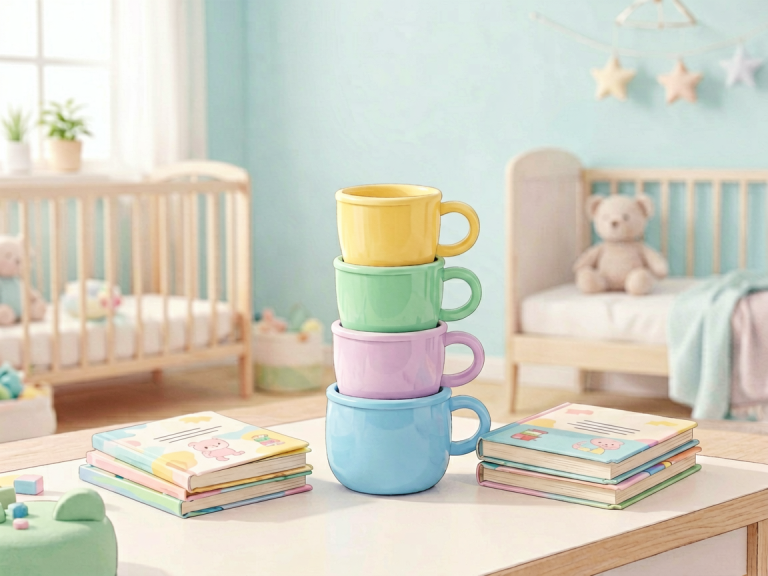
Stacking cups or rings are classic toys that never go out of style—and they are often available for under $10. A set of 6–8 colorful plastic or silicone cups can be nested together, stacked into a tower, or used for pouring water during bath time. These toys teach spatial awareness, hand-eye coordination, and early concepts of size and order. For one-year-olds, the stacking process is as much about knocking the tower down as building it up, and that’s perfectly fine. You can find simple stacking ring toys with a central post for as little as $6–$9. Choose ones with rings that are chunky and easy to grip. Avoid sets with very small rings that could be a choking hazard. Another great option is a set of nesting wooden blocks (usually 4–5 blocks) that fit inside one another. These are often painted with primary colors and simple patterns, making them visually stimulating. The act of nesting helps babies understand object permanence and cause and effect.
2.3. Push and Pull Toys: Encouraging Walking and Balance
As many one-year-olds are either walking or on the verge of walking, push and pull toys are invaluable. While some elaborate wooden walkers can cost $30 or more, there are budget-friendly alternatives. For about $7–$10, you can find a simple plastic push toy with a handle and a small drum or beads that spin when pushed. Look for lightweight models that are stable enough not to tip over easily. Another idea: a pull-along animal on a string (like a wooden puppy or a plastic duck) that “wobbles” when pulled. This encourages a baby to practice walking backward or sideways while holding the string. Be cautious with strings—the CPSC recommends that strings on toys for young children be no longer than 12 inches to prevent strangulation. Always check the length before buying. If you cannot find a suitable commercial option under $10, consider repurposing: a small, empty (and clean) plastic bottle filled with rice or beans, securely sealed, can serve as a makeshift push toy or rattle.
2.4. Cause-and-Effect Toys: Simple Puzzles and Activity Boxes
One-year-olds are fascinated by actions that produce a visible result. Simple cause-and-effect toys like a pop-up toy (where you press a button and a character pops up) can be found for around $8–$10. However, many pop-up toys are made of plastic with small springs; ensure the mechanism is sturdy and cannot be accessed. A cheaper alternative is a “shape sorter” with a few large, basic shapes (circle, square, triangle) and a cube with corresponding holes. Shape sorters teach problem-solving and shape recognition. You can find basic shape sorters for $5–$9. Look for ones with rounded edges and shapes that are at least 1.5 inches in diameter to avoid choking. Another fantastic budget option is a simple “busy board” made from felt or fabric with zippers, snaps, and buttons. While some wooden busy boards are expensive, there are soft fabric versions available for under $10. These allow babies to practice fine motor skills safely.
2.5. Musical Instruments: Shakers, Drums, and Maracas
Music is a universal language for babies, and simple instruments encourage rhythm, listening skills, and gross motor movements. Small maracas, hand-held tambourines, or egg shakers are often sold in sets of two for around $6–$8. Wooden or plastic maracas with smooth surfaces are ideal. Avoid instruments with sharp edges or those that produce an uncomfortably loud sound (like metal triangles or whistles). A small hand drum (about 4–6 inches in diameter) with a drumstick attached by a string can be found for under $10. Let the baby bang, shake, and experiment with different volumes. Musical toys also facilitate parent-child interaction: you can sing along, dance, and make patterns. Remember that at this age, the toy is a tool for exploration, not for perfect melody. The simpler, the better.
3. Where to Find Quality Toys Under $10
You might wonder where to locate these affordable toys without sacrificing quality. Here are some smart shopping strategies:
- Dollar stores and discount retailers: Stores like Dollar Tree (in the US) or equivalent in other countries often carry simple plastic stacking cups, small balls, and teethers. Inspect them carefully for sharp edges and strong chemical smells. Many items are surprisingly well-made for the price.
- Thrift stores and consignment sales: Gently used toys are often in excellent condition, and you can find vintage wooden blocks, rattles, and push toys for less than $5. Just clean them thoroughly with mild soap and water.
- Online marketplaces: Amazon, eBay, and Etsy have filters that let you set a maximum price. Look for listings with “under $10” or “budget” tags. Read reviews to ensure safety and durability. Some Etsy sellers create handmade sensory bags or soft toys for very reasonable prices.
- Free sources: Don’t overlook items from around the house. A clean empty tissue box can become a treasure chest. A set of plastic measuring cups from the kitchen makes a great nesting toy. Always supervise play with household items.
4. Safety Checklist: What to Avoid When Buying Toys for a 1-Year-Old
No matter how attractive the price, never compromise on safety. Here is a checklist to follow for every toy under $10:
- No small parts: Any piece that can fit inside a toilet paper tube (approx. 1.75 inches in diameter) is a choking hazard. Toys for one-year-olds should have all components larger than that.
- No sharp edges or points: Run your finger along all edges. Cheap plastic toys sometimes have mold seams that are sharp.
- No long cords or strings: As mentioned, strings longer than 12 inches can pose a strangulation risk. Also avoid beads or decorations on strings that can be chewed off.
- Non-toxic materials: Look for labels like “BPA-free,” “phthalate-free,” or “ASTM F963” (the US safety standard for toys). Wooden toys should have non-toxic paint that is lead-free.
- Sturdy construction: A toy that breaks easily can create sharp fragments or small parts. Shake it, twist it, and test it before giving it to the child.
- Easy to clean: One-year-olds drool, chew, and drop toys constantly. Choose toys that can be wiped down or thrown in the wash. Avoid toys with fabric stuffing that cannot be removed or cleaned.
5. Final Tips for Maximizing Play Value on a Budget
Finally, remember that the best toy for a one-year-old is often you! The simplest objects—like a cardboard box, a set of plastic bowls, or a scarf—can become magical when a caregiver engages with the child. Rotate toys every few days to keep interest high. You don’t need to buy dozens of toys; a handful of well-chosen items under $10 can provide months of developmentally appropriate fun. Consider combining two or three cheap toys to create a new experience: for example, put a rattle inside a nesting cup and let the baby figure out how to get it out. Above all, follow the child’s lead. If they seem more interested in the wrapping paper than the actual gift, that’s perfectly okay. Play is about discovery, not about the price tag.
Conclusion
Shopping for a one-year-old on a budget is not only possible—it can be a rewarding challenge. By focusing on sensory, fine motor, gross motor, and cause-and-effect toys, you can find dozens of safe, engaging options under $10. From simple teethers to stacking cups to musical shakers, each toy supports a specific developmental leap. Always prioritize safety, inspect materials carefully, and remember that a loving, attentive adult is the most valuable “toy” of all. With this guide, you are now equipped to make smart, joyful purchases that encourage learning, exploration, and endless giggles—without stretching your wallet. Happy toy hunting!