The Power of Pretend: Why Play Kitchens and Dollhouses Are Essential for Kindergarten Development
In the colorful, bustling environment of a kindergarten classroom, few sights are as captivating as a group of children huddled around a miniature wooden stove, plastic fruits scattered across a tiny countertop, or a cluster of youngsters meticulously arranging furniture inside a dollhouse. These seemingly simple toys—play kitchens and dollhouses—have been staples of early childhood education for generations. Yet, in an age increasingly dominated by screens, structured academic drills, and standardized testing, the value of these open-ended, imaginative play tools is often underestimated or dismissed as mere entertainment. This article explores the profound, research-backed benefits that play kitchens and dollhouses offer to kindergarteners, arguing that they are not just toys but powerful instruments for cognitive, social, emotional, and linguistic development. By examining each type of play environment in depth, comparing their unique contributions, and offering practical guidance for educators and parents, we will see why every kindergarten classroom and many homes should embrace these timeless treasures.
The Cognitive and Language Benefits of Play Kitchens
A play kitchen is far more than a scaled-down replica of a domestic space; it is a laboratory for cognitive growth and language acquisition. When a five-year-old picks up a plastic carrot, pretends to wash it, and then places it in a toy oven “to bake,” a complex set of mental processes is at work. At the most basic level, this activity involves symbolic thinking—the ability to use one object to represent another (a block becomes a steak, a cardboard box becomes a refrigerator). This capacity for symbolic representation is a cornerstone of cognitive development, closely linked to later reading and math skills. According to developmental psychologist Jean Piaget, children in the preoperational stage (roughly ages 2 to 7) learn best through hands-on, symbolic play. Play kitchens provide an ideal context for this, as children regularly transform everyday objects into ingredients, recipes, and meals.
Moreover, play kitchens naturally encourage classification and sequencing, two essential mathematical concepts. A child sorting toy fruits into separate baskets—apples here, oranges there—is practicing categorization. When she mimics the steps of making a sandwich (first bread, then cheese, then lettuce, then closing the top), she is learning about order and sequences, which later translates into understanding story sequences, number sequences, and procedural writing. Research by the American Academy of Pediatrics has highlighted that such unstructured, imaginative play boosts executive function skills, including working memory, inhibitory control, and cognitive flexibility. In a play kitchen, a child must remember her “recipe,” suppress the urge to eat the “forbidden” plastic cookie prematurely, and adapt when a playmate decides to “spill” imaginary milk.
Language development flourishes in play kitchens as well. The context-rich environment prompts children to use new vocabulary in authentic situations. Words like “stir,” “bake,” “measure,” “ingredient,” “simmer,” and “taste” are not abstract labels but become meaningful actions. Children naturally engage in narrative talk (“I’m making soup for the baby who is sick”), which builds storytelling skills. Teachers and parents who join in the play can model more complex language: asking “What do you think would happen if we added too much salt?” or “Can you describe the smell of your pretend soup?” These interactions expand syntactic structures and pragmatic language use. A study published in *Early Childhood Research Quarterly* found that children who engaged in frequent pretend play with props like kitchens scored higher on measures of expressive vocabulary and story grammar than peers who engaged in more passive activities.
Finally, play kitchens promote problem-solving and scientific thinking. What happens when the “stove” doesn’t turn on? The child might figure out that pretending to fix it with a toy screwdriver works, or she might invent a “faulty fuse” narrative. When water spills (real or imagined), she must decide how to clean it up. When there aren’t enough plates for all the pretend guests, she must negotiate or innovate—perhaps using leaves as makeshift plates. These micro-problems are low-risk yet high-reward for building resilience and creativity. In an era where many children are overprotected from failure, the play kitchen offers a safe space to try, fail, and try again.
Social and Emotional Learning Through Dollhouses
If play kitchens primarily stimulate cognitive and language domains, dollhouses offer an unparalleled arena for social and emotional growth. A dollhouse is essentially a stage for social role-playing and emotional rehearsal. When a kindergartner places two dolls in the living room, makes one say “I’m angry because you took my toy,” and then has the other respond, “I’m sorry, let’s share,” the child is not merely playing; she is practicing conflict resolution, empathy, and perspective-taking. This form of play allows children to make sense of complex human interactions in a controlled, manageable environment.
One of the most significant contributions of dollhouse play is the development of theory of mind—the understanding that others have thoughts, feelings, and beliefs different from one’s own. To successfully play with a dollhouse, a child must attribute intentions and emotions to the doll characters. Why is the daddy doll sad? Maybe he lost his job. How does the baby doll feel when left alone? These scenarios require the child to step into someone else’s shoes, a skill that is pivotal for social competence. A longitudinal study from the University of Cambridge followed children from ages 3 to 7 and found that those who engaged in frequent, high-quality pretend play with miniature figures (including dollhouses) demonstrated stronger theory-of-mind abilities, which in turn predicted better peer relationships and fewer behavioral problems later in school.
Dollhouses also serve as a safe space for emotional expression. Many children experience big feelings—fear of separation, jealousy of a sibling, anger at a parent—that they cannot easily verbalize. Through the dolls, they can act out these emotions indirectly. A child who is nervous about starting kindergarten might repeatedly enact a scenario where a doll goes to a new school, meets a friendly teacher, and makes a friend. This symbolic repetition helps the child process anxiety and develop coping strategies. Likewise, a child who has recently become a big sister might reenact scenes of the baby doll being cared for, both to explore her new role and to express any resentment she feels in a non-threatening way. Teachers and parents who observe dollhouse play can gain invaluable insights into a child’s inner world, identifying concerns that might otherwise go unspoken.
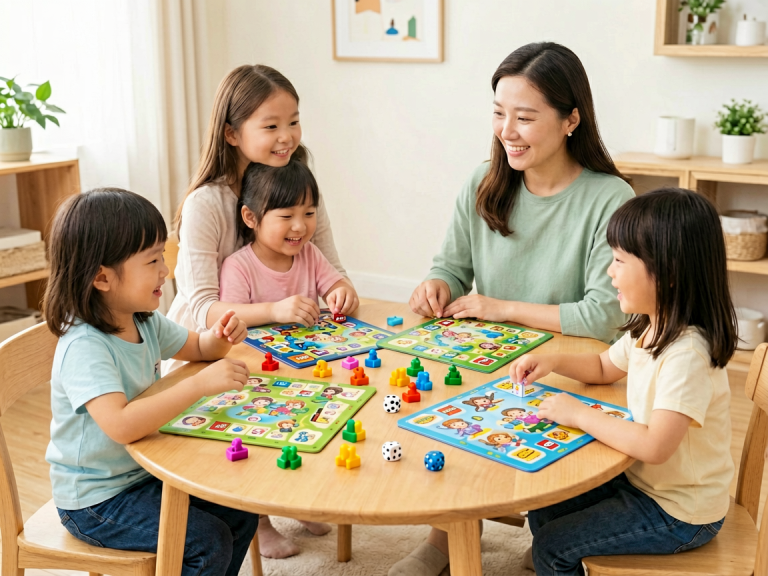
Furthermore, dollhouse play encourages negotiation, cooperation, and rule-making. When two or three children play together with a single dollhouse, they must agree on roles (who is the mother, who is the child, who is the dog), coordinate storylines, and resolve disputes over limited furniture or dolls. “No, the mommy doesn’t sleep in the bathtub!” “Yes, she does, because she’s a superhero mom!” These negotiations teach children to listen, compromise, and stand up for their ideas respectfully. Such social skills are more effectively learned through guided peer play than through direct instruction. Research on cooperative play in early childhood settings consistently shows that children who engage in complex sociodramatic play develop higher levels of social competence, including better sharing, turn-taking, and emotional regulation.
Finally, dollhouses can be a window into cultural and family diversity. A carefully curated dollhouse with diverse dolls (different races, abilities, family structures) allows kindergarteners to explore and normalize a variety of human experiences. A child from a single-parent home can see a dollhouse with a single parent family; a child with two mothers can see that represented. This inclusive play fosters empathy and reduces prejudice. Educators can use dollhouse play to introduce topics like community helpers, seasons, or even simple geography (a house in the mountains vs. a house by the sea), making it a versatile tool for cross-curricular learning.
Comparing Play Kitchens and Dollhouses: Shared and Unique Contributions
While both play kitchens and dollhouses are forms of pretend play, they offer distinct yet complementary benefits. Understanding their differences can help educators and parents make informed choices about when and how to introduce each.
Play Kitchens tend to be action-oriented and procedural. They center on doing—cooking, cleaning, setting the table—and thus emphasize cause-and-effect, sequencing, and physical manipulation. The kitchen is often a hub of activity where multiple children can collaborate on a shared “meal.” Its props (pots, spoons, food items) invite hands-on exploration of textures, weights, and volumes. This makes play kitchens particularly effective for developing fine motor skills (pouring, stirring, grasping small objects) and early math concepts (counting eggs, measuring cups). The kitchen also naturally lends itself to connecting with real-life routines, reinforcing health and nutrition knowledge. For instance, a teacher might integrate a lesson on healthy eating by providing a variety of plastic fruits and vegetables and prompting children to create a balanced “meal.”
Dollhouses, on the other hand, are relationship-driven and narrative-rich. They focus on being—being a parent, a child, a doctor, a pet. The play is more introspective and character-centered, often involving extended storylines that evolve over days or weeks. While the kitchen emphasizes actions, the dollhouse emphasizes interactions: conversations, conflicts, celebrations, and caregiving. The dollhouse’s enclosed, multi-room structure invites children to think about space and privacy—where do people sleep? Where do they eat? Where do they go when they need to be alone? This spatial reasoning is a forerunner to geometric thinking and map skills. Moreover, because dollhouses allow for the addition of new characters and furniture, they offer unparalleled flexibility for open-ended storytelling.
Both toys share common ground in promoting language development, symbolic thinking, and social skills. However, the kitchen’s focus on functional tasks may appeal more to children who are kinesthetic learners or who enjoy procedural play. The dollhouse’s emphasis on emotional and relational drama may attract children who are introspective or who enjoy social dynamics. Inclusion of both in a classroom or home ensures that all children can find a mode of play that resonates with them.
Another key difference lies in gender stereotypes. For decades, both play kitchens and dollhouses have been marketed primarily to girls, reinforcing traditional domestic roles. However, modern educators are increasingly challenging this by actively inviting boys to engage in these toys. Research shows that boys who participate in domestic pretend play develop stronger nurturance skills and are better prepared for cooperative learning. Similarly, girls who engage in both kitchen and dollhouse play gain exposure to procedural thinking and spatial reasoning. The goal is not to eliminate gender differences but to offer all children a full range of developmental experiences. A classroom that treats the play kitchen and dollhouse as gender-neutral zones—where boys can cook and girls can build furniture—sends a powerful message about equality and choice.
Practical Considerations for Educators and Parents
Given the impressive developmental benefits of play kitchens and dollhouses, how can educators and parents maximize their potential? Here are some evidence-based recommendations.
First, prioritize quality over quantity. A play kitchen does not need to be expensive or elaborate. A simple cardboard box painted like a stove, with a few pots and wooden spoons, can be just as effective as a high-end plastic model. What matters is that the materials are safe, durable, and open-ended. For dollhouses, resist the urge to buy pre-set family packs that limit diversity. Instead, offer a range of dolls representing different ages, races, genders, and abilities. Include furniture that can be rearranged, and avoid fixed layouts that restrict creativity.
Second, rotate and refresh props regularly. Children’s interest in any toy can wane without novelty. Swap out play kitchen items seasonally: bring in toy pumpkins in fall, pretend snow cones in summer, or multicultural food items like dumplings and tortillas. For the dollhouse, introduce new miniature books, pets, or even a tiny plant to spark new storylines. A “proposal box” where children can suggest new props gives them ownership over their play environment.
Third, participate thoughtfully. Adult involvement can significantly enhance the learning potential of play. However, the key is to follow the child’s lead, not to dominate. An adult visiting the play kitchen might say, “I smell something delicious! What’s for lunch today?”—a question that invites narration and vocabulary expansion. In the dollhouse, an adult might reflect feelings: “It looks like the baby doll is crying. What do you think she needs?” Avoid correcting or directing too firmly; the child’s creativity is the priority.
Fourth, integrate literacy and numeracy. Place a small whiteboard and markers near the play kitchen where children can write “menus” or “shopping lists.” Add a toy cash register with play money to practice counting. For the dollhouse, create simple “books” about the doll family’s adventures, or use address labels to label rooms (e.g., “bedroom,” “kitchen”). These low-stakes connections to reading and math reinforce academic skills without turning play into work.
Fifth, consider the physical setup. Position the play kitchen near a sink or a water table if possible; real water (even in small bowls) adds a rich sensory dimension. Place the dollhouse on a low table or rug so that children can easily access all rooms. Ensure ample floor space for multiple children to play side by side. Avoid crowding the area with too many other toys, as this can fragment attention.
Sixth, reflect on your own biases. Some adults still view play kitchens and dollhouses as “girl toys.” Challenge this by ensuring that all children, regardless of gender, are encouraged to participate. Observe whether boys are gravitating toward the block center while girls monopolize the kitchen. Gentle redirection—“I’ve noticed those blocks are really heavy. Could you help me move some tables in the dollhouse?”—can normalize cross-gender play. Similarly, avoid labeling activities as “work” vs. “play.” Pretend play is a child’s most serious work, as Maria Montessori famously noted.
Finally, remember that the value of these toys is not in the object itself but in the relationships and narratives children build around them. A broken stove door can become a “car repair shop.” A dollhouse missing a roof can become a “camping tent.” The most effective play environment is one that celebrates imagination over perfection. By providing simple, versatile tools like play kitchens and dollhouses—and then stepping back to allow children’s creativity to flourish—we give kindergarteners one of the greatest gifts of childhood: the ability to explore, understand, and transform their world through the power of pretend.
Conclusion
In the rush to prepare young children for a competitive future, it is tempting to fill classrooms with tablets, workbooks, and structured lessons. Yet the evidence is clear: the most profound learning in kindergarten often happens not through direct instruction but through the seemingly trivial act of pretending to cook a meal or tucking a doll into bed. Play kitchens and dollhouses are not nostalgic relics of a bygone era; they are dynamic, research-supported tools for fostering cognitive flexibility, language proficiency, emotional intelligence, and social harmony. They allow children to make sense of their world, one imaginary meal and one dollhouse argument at a time. As educators and parents, our responsibility is to protect and promote this kind of play—not because it is cute, but because it is essential. In the miniature worlds of play kitchens and dollhouses, kindergartners rehearse the real-life skills they will need for the rest of their lives: creativity, communication, empathy, and resilience. And perhaps, in doing so, they remind us that the best way to learn about life is to play.