Navigating the Age Rating Guide for Toys for Babies: A Comprehensive Parental Handbook
Introduction
Walk into any toy store, and you will be greeted by rows of brightly colored boxes, each emblazoned with a small but crucial label: "0+", "6+ months", "12+ months", or "18+ months." These age ratings are not arbitrary marketing suggestions. For parents and caregivers of babies, understanding the age rating guide for toys is one of the most important steps in ensuring both safety and healthy developmental stimulation. Yet many well-meaning adults either ignore these labels or misinterpret them, leading to frustration, wasted money, or—worse—potential hazards. This article serves as a comprehensive guide to decoding age ratings for baby toys, explaining why they exist, what they really mean, and how to apply them intelligently in the real world of curious mouths, unsteady hands, and rapidly developing brains.
Why Age Ratings Matter: More Than Just a Number
Age ratings on toys for babies are not merely about intellectual challenge. They are primarily safety guidelines based on the physical, cognitive, and behavioral characteristics of infants at different stages. A toy rated for a 3-year-old may contain small parts that a 6-month-old could choke on, simply because a baby explores the world through mouthing. Conversely, a toy rated for newborns might be so simplistic that it fails to engage a toddler's growing curiosity, leading to disinterest or even unsafe improvisation.
The U.S. Consumer Product Safety Commission, the European Union's Toy Safety Directive, and other international bodies rely on standardized testing to determine age grades. These tests account for factors such as part size, shape, durability, sharp edges, toxic materials, and the likelihood of ingestion or suffocation. For babies, the margin for error is tiny. An age rating is not a suggestion; it is a safety barrier built on decades of accident data. Ignoring it is like disregarding a car seat's weight limit—you may get away with it once, but the consequences can be catastrophic.
Understanding the Rating Categories: From Newborn to Toddler
Age ratings for baby toys typically follow a predictable progression. Let’s break down the most common categories and what they actually indicate.
0+ Months: The Sensory Awakening
Toys labeled "0+" are designed for newborns. At this stage, a baby’s vision is blurry, with the ability to focus only on objects about 20-30 centimeters away. Contrasts in black, white, and red are most visible. High-contrast cards, soft cloth books with crinkly pages, and gentle mobiles fall into this category. Safety requirements are extreme: no small parts, no strings longer than 7 inches, and no fillings that can be easily accessed. These toys stimulate the developing senses of sight, hearing, and touch without requiring any manual dexterity. A newborn will not "play" in the interactive sense; instead, the toy provides passive sensory enrichment.
3+ Months: Grasping and Mouthing Begin
Around three months, babies start to bat at objects and bring them to their mouths. The age rating "3+" reflects this milestone. Toys in this group include soft rattles, teething rings, and fabric balls with no internal beads that could leak. The key is that they are lightweight, easy to grip, and free of any components that could become loose. The rating also acknowledges that the baby is starting to track moving objects and respond to sounds. Importantly, "3+" does not mean "safe to leave unattended with the baby." It simply means the design has been tested for typical behavior at this age—which includes intense mouthing.
6+ Months: The Sitter and Explorer
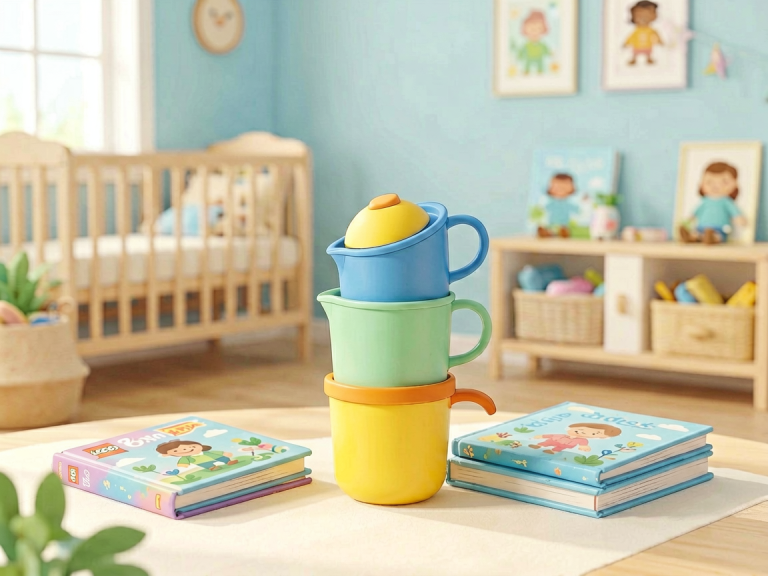
At six months, many babies can sit with support and begin to transfer toys from one hand to another. They also experience teething discomfort, making textured chew toys essential. The "6+" rating introduces toys with more interactive features: stacking cups, simple activity cubes, soft blocks, and toys that make noise when squeezed. These toys often have larger parts to prevent choking, but they may include some smaller elements like a removable lid—provided the lid is too large to fit entirely into the baby's mouth. This age group is notorious for dropping things, so durability and easy cleaning are also factored into the rating.
9+ Months: The Mobility and Problem-Solving Phase
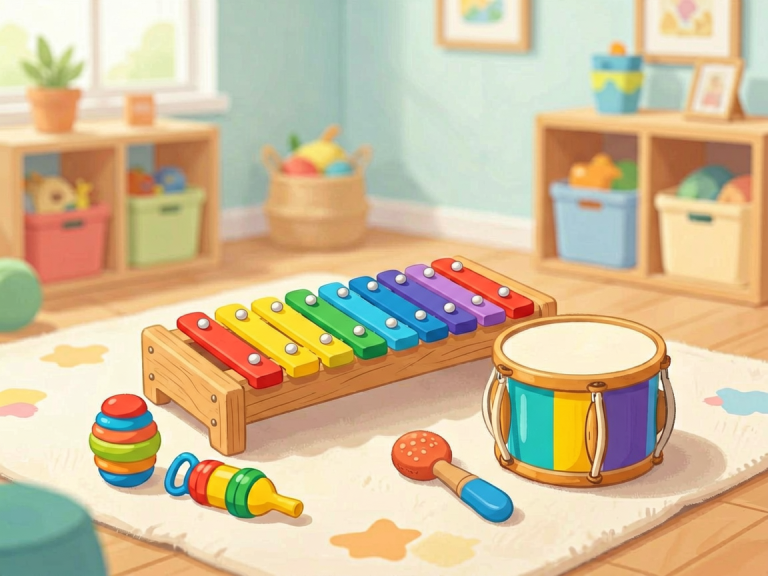
Once a baby starts crawling and pulling up, the world becomes a playground. The "9+" rating corresponds to toys that encourage movement and cause-and-effect learning: pop-up toys, shape sorters with large chunky pieces, push-along carts, and simple musical instruments like tambourines. At this age, babies understand object permanence—they know a hidden toy still exists—so flap books and surprise boxes are highly engaging. Safety-wise, the rating allows for slightly more complex mechanisms, but any small part must withstand a pull force of at least 70 Newtons (roughly 15 pounds) to prevent breakage. The rating also warns against toys with wheels that could roll under furniture but are otherwise safe.
12+ Months and Beyond: The Toddler Transition
The "12+" category marks a major shift. Babies are often walking and have refined pincer grips. Toys can include building blocks (though still oversized), simple puzzles with knobs, pull toys on strings (with careful length limits), and pretend-play items like toy phones. The age rating here reflects improved motor control and cognitive ability, but also an increased need for supervision. A 12-month-old may try to climb on a toy or use a piece as a hammer. Thus, the rating demands sturdier construction and no sharp corners. Many toys for this age also introduce small batteries, which must be secured in a screw-fastened compartment to prevent swallowing.
Developmental Milestones and Toy Suitability: A Deeper Look
Age ratings are not just about prohibiting; they are about enabling. Matching a toy to a baby's exact developmental stage is crucial for maximizing play value. Here is how the guide aligns with neural and motor development.
The First Year: Wiring the Senses
During the first year, a baby's brain doubles in size, forming millions of synaptic connections per second. Toys rated appropriately for age provide the "nutrients" for this wiring. For instance, a 0+ high-contrast mobile helps the visual cortex learn to distinguish patterns. A 3+ rattle with varied textures stimulates the somatosensory cortex. A 6+ stacking cup, when repeatedly knocked down and rebuilt by an adult, teaches spatial relationships and the basics of gravity—long before the baby can speak. The age rating guide, therefore, is a de facto curriculum for early neural development. Choosing a toy above the rating may overwhelm the baby; choosing one below may bore them, causing the adult to overcompensate with risky modifications.
The Second Year: From Body to Mind
After 12 months, the focus shifts from sensory input to purposeful action. Toys rated 12+ and 18+ are designed to encourage trial-and-error, memory, and early language. A shape sorter for a 15-month-old is not just a shape lesson; it is a lesson in persistence and frustration tolerance. When a baby tries to force a square peg into a round hole, the toy offers immediate feedback. This self-correcting feature is why age-appropriate toys are superior to generic ones. The guide also acknowledges that babies 18+ months start to imitate adults, so toy phones, kitchen sets, and baby dolls become valuable—provided they have no small accessories that could choke a younger sibling. An 18+ toy might include small, attached components, but they must be securely sewn or fixed.
Safety Considerations Beyond the Label
While the age rating is a vital first filter, it does not absolve caregivers of their duty to inspect toys regularly. Here are additional safety factors that every parent should keep in mind, even when the label says "appropriate."
Choking Hazards and the Toilet Paper Test
A practical rule: if a toy or its detachable part fits through a standard toilet paper roll (approximately 4.4 cm in diameter), it is a choking hazard for any child under three years old. This applies even for toys rated 12+ if the child is a particularly aggressive mouther. Always pinch, pull, and twist every seam, button, and eye on a soft toy before giving it to a baby. Check for loose threads that could wrap around fingers or toes. Batteries, magnets, and small hinges are the most dangerous hidden components.
Material Toxicity and Phthalates
Babies put everything in their mouths. An age rating guide usually ensures that toys meet chemical safety standards, such as being BPA-free, lead-free, and phthalate-free. However, these standards vary by country. Look for certifications like ASTM F963 (USA) or CE (Europe). Avoid wooden toys with flaking paint, plastic toys with a strong chemical smell, and any toy that feels sticky or waxy on the surface. Washcloth toys and teethers should be cleaned regularly, but before washing, check the label for "surface wash only" versus "machine washable."
Noise Levels and Overstimulation
Some toys rated for babies can produce sounds exceeding 90 decibels if held directly to the ear. This is a hidden hazard in many plush singing toys. The age rating does not always specify volume limits. Parents should test the sound personally, place a hand or a piece of fabric over the speaker, or remove batteries if the toy is too loud. Equally important, avoid too many electronic toys at once. An overstimulated baby may show signs of fussiness, poor sleep, or disorganized play. The best practice is to rotate toys, allowing the baby to focus deeply on one or two at a time.
How to Choose Wisely: Beyond the Sticker
When faced with an attractive toy not labeled with a clear age guide, or when considering secondhand toys, you must become an expert evaluator. Here are three strategies.
Read the Label, But Interpret It
The age rating is the minimum age at which the toy is *not* an immediate hazard—not necessarily the age at which the toy is *educationally optimal*. A toy rated "0+" might still be too visually chaotic for a premature infant. A toy rated "12+" might be too simplistic for a gifted 10-month-old who already walks. Use the rating as a floor, not a ceiling, but never go below the floor for safety. When in doubt, choose a higher-rated toy in the same category—the baby will grow into it. Conversely, if a toy is rated far above your baby’s age, do not let them play with it even under supervision, because supervision cannot outpace a sudden grab or fall.
Consider Multi-Use and Open-Ended Toys
The age rating guide often favors single-function toys, but open-ended toys like stacking cups, nesting blocks, and fabric balls can be used across many stages, albeit with different supervision levels. For example, a set of soft cubes rated 6+ can later be used for a 15-month-old to build towers and learn colors. Check the toy’s label for any warnings about changing capacities. If you are buying a gift for a baby, choose an age range slightly above the current age, but only if the baby has older siblings or advanced motor skills. This extension of use is a smart budget strategy, but never compromise on the safety requirements at the baby’s current age.
Beware of Marketing Tricks
Some manufacturers deliberately mislabel toys with lower age ratings to widen their market. They may omit a "small parts" warning or use a "suggested age" rather than a safety grade. Always look for the specific phrase "age grade" or "safety rating" on the packaging. Trusted brands provide detailed rationale for their ratings, often including developmental notes. If a label lacks any contact information or batch number, treat the toy as suspect. Remember, a higher price tag does not guarantee a safer toy; rigorous testing does.
Common Misconceptions About Age Ratings
Let’s debunk a few persistent myths that can lead to dangerous mistakes.
Myth: "My Baby Is Advanced, So They Can Play with Older Toys"
Advanced cognitive skills do not equal physical safety. A 10-month-old might be able to solve a puzzle meant for 18 months, but their throat is still the same size. If the puzzle piece fits in their mouth, the rating exists for a reason. Even brilliant babies lack the pharyngeal reflexes and chewing coordination of older children. Do not let pride override physiology.
Myth: "The Age Rating Is Just a Lawsuit Prevention Tactic"
While liability is a factor, age ratings are derived from actual injury data. The ASTM and ISO standards are developed by committees of pediatricians, engineers, and safety experts who test prototypes with real children. The rating system is a consensus, not a random corporate decision. Dismissing it as legal boilerplate ignores hundreds of thousands of emergency room visits.
Myth: "Natural Toys Are Always Safer Than Plastic"
Wooden blocks can splinter; organic cotton can harbor mold; homemade clay can contain gluten (an allergen). Natural materials are not inherently safer. The age rating guide applies to all materials. A wooden teether rated for 3+ has been sanded and sealed with food-safe oil. A hand-carved toy from a craft fair may have rough edges or toxic varnish. Always apply the same rigorous inspection.
Myth: "Once a Baby Is Weaned, Mouthing Stops"
Mouthing peaks between 4-10 months but continues, albeit less frequently, up to age 2. Some babies mouth more than others. The age rating for toys of a 12-month-old still assumes mouth contact because teething molars can last until 30 months. Therefore, "12+" does not mean "no longer a choking risk." It means the parts are too large to be swallowed, but they could still cause gagging if the baby thrusts them deep into the throat. Supervision remains essential.
Conclusion: The Guide Is Your Friend, Not Your Enemy
The age rating guide for toys for babies is one of parenting’s most reliable tools—when used correctly. It translates complex developmental science and injury statistics into a simple set of numbers that fit on a small sticker. But the guide is not a substitute for judgment. It informs you; it does not replace you. As you choose toys for the baby in your life, remember these three golden rules: always respect the lower bound of the rating, always inspect the toy thoroughly before and after each play session, and always observe your baby’s actual behavior rather than the baby on the box. A toy that is rated "0+" but loved by a 6-month-old is a success; a toy that is rated "12+" but left untouched because it is too difficult is a failure—though not a dangerous one. The ultimate goal is to foster joyful exploration. With this guide in hand, you can walk through the toy store with confidence, knowing that you are not just buying a product, but curating a safe, enriching, and wondrous world for the tiny explorer who is growing up faster than you can imagine. Age ratings are signposts, not barriers, on that beautiful journey.