When More Is Less: Why Buying Toys with Too Many Pieces for 4-Year-Olds Does More Harm Than Good
Introduction
Walking into a toy store is an overwhelming experience for any parent. Rows of brightly colored boxes promise creativity, learning, and hours of fun. Among the most tempting are those elaborate construction sets, jigsaw puzzles with 200 pieces, or craft kits containing dozens of tiny components. The label says “Ages 4 and up,” and the marketing images show happy children building castles or assembling intricate models. Yet many parents discover, often after a frustrating afternoon, that such toys are not just unappealing to a typical four-year-old — they can be counterproductive, stressful, and even unsafe. Buying toys with too many pieces for a four-year-old is a well-intentioned mistake rooted in a misunderstanding of early childhood development. This article explores why these toys fail young children, the specific risks they pose, and what parents should look for instead.
The Allure of Complex Toys: Misplaced Expectations
Why do parents gravitate toward high-piece-count toys? The answer lies in a combination of marketing and wishful thinking. A 500-piece block set or a 200-piece puzzle suggests value for money, longevity, and advanced educational potential. Parents imagine their child spending long stretches focused on building, sorting, or creating — activities that seem to foster patience, fine motor skills, and problem-solving. The word “challenge” is often used in toy descriptions, implying that struggling with a difficult task builds character.
However, four-year-olds are not miniature adults. Their cognitive and emotional development is in a very specific stage. According to child development experts, children at this age are still in the preoperational stage according to Piaget's theory. They think intuitively rather than logically, have short attention spans (typically 8–12 minutes for a single activity), and are easily overwhelmed by too many choices or steps. A toy with dozens or hundreds of pieces presents an organizational demand that far exceeds their executive function capacity. What an adult sees as a manageable project, a four-year-old experiences as chaos.
Developmental Mismatch: Attention Span and Working Memory
One of the most significant issues with multi-piece toys is the mismatch with a four-year-old’s attention span and working memory. Consider a typical 100-piece jigsaw puzzle. For an adult, the strategy involves separating edge pieces, grouping by color, and systematically testing fits. For a four-year-old, the same puzzle presents an avalanche of identical-looking cardboard shapes. Their working memory can only hold a few pieces at a time. They might try to force two unrelated pieces together, fail, and quickly lose interest.
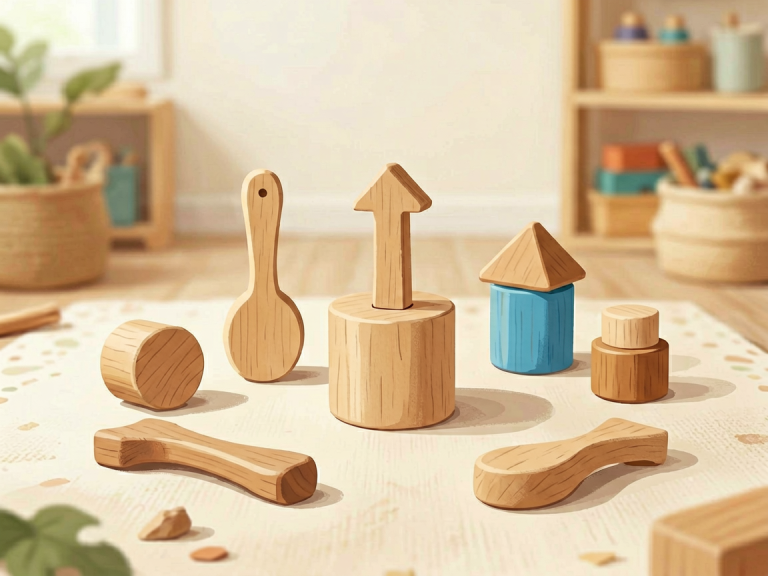
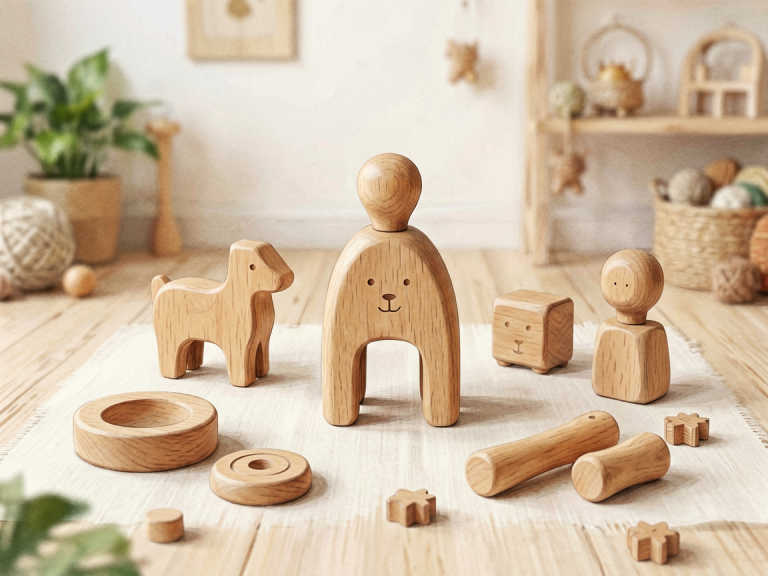
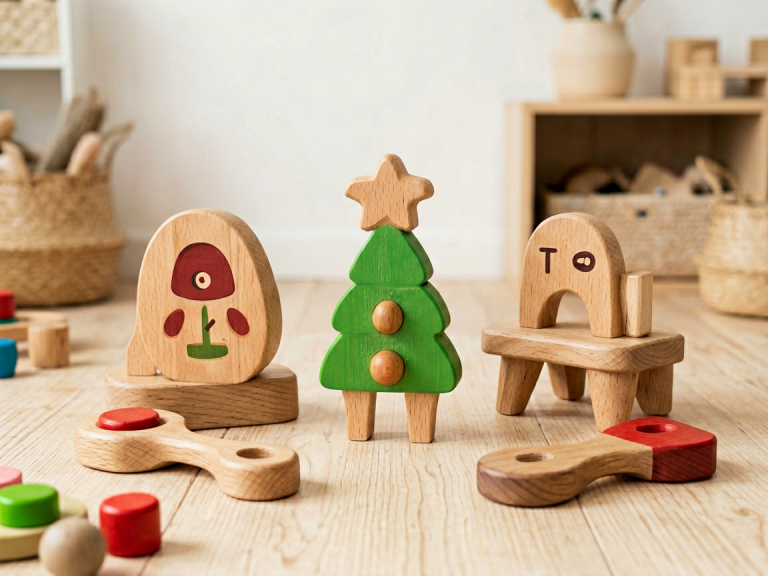
When parents push children to “finish the puzzle” or “build the castle exactly like the picture,” the child may feel pressure rather than pleasure. The toy becomes a chore. Worse, the child may internalize the message that they are not good enough if they cannot complete the task. This can undermine intrinsic motivation and foster a fear of failure. Research in early childhood education consistently shows that open-ended toys — those that can be used in multiple ways without a fixed outcome — are far more beneficial for this age group. A simple set of large wooden blocks, for instance, allows a child to build a tower, knock it down, pretend it is a car, or use it as a phone. There is no “right” way to play, which reduces stress and encourages creativity.
Frustration and Overstimulation: The Emotional Toll
Beyond cognitive limits, too many pieces can trigger emotional dysregulation. Four-year-olds are still learning to manage frustration. They have big feelings and limited coping skills. When a toy requires precision that their fine motor skills cannot yet achieve — such as snapping together tiny plastic connectors or placing a small piece in an exact slot — the result is often a meltdown. A child who cannot make a piece fit may throw it, cry, or scream. The parent, in turn, may feel irritated or guilty, leading to a negative cycle of interaction.
Furthermore, the sheer number of pieces can overwhelm a child’s sensory system. A table covered with hundreds of small items creates visual noise. The child may not know where to start, scanning aimlessly from piece to piece, unable to settle on a plan. This is not the kind of focused play that parents hope for; it is scattered, anxious behavior. Overstimulation can manifest as hyperactivity or withdrawal. Either way, the toy has failed its primary purpose: to provide joyful, absorbing play.
The Choking Hazard and Safety Concerns
Safety is another non-negotiable consideration. While many toys labeled for ages 4+ are tested for small parts, the definition of “small” can be tricky. A four-year-old still explores the world orally, especially when tired or bored. Pieces that are small enough to fit into a child’s mouth — and many building kits, mosaic tiles, or miniature figurines are exactly that size — present a choking risk. Even if the child does not intentionally mouth the pieces, they can scatter across the floor and be stepped on, causing falls, or be swallowed by a younger sibling.
Moreover, the cleanup burden often falls on parents. A toy with 200 pieces means 200 opportunities for a piece to be lost under the couch, sucked into a vacuum, or disappear into the depths of a toy bin. The inevitable loss of pieces renders the toy incomplete and even more frustrating for the child, who may now be unable to follow the instructions. This real-life consequence teaches a lesson about responsibility, but it is one that a four-year-old is not developmentally ready to understand. Instead, it becomes a source of disappointment and a source of tension between parent and child.
The Hidden Cost: Parental Involvement and Play Quality
A common defense of complex toys is that a parent can sit with the child and guide the play. This is true to some extent, but it raises another issue: the quality of parent-child interaction. When a parent takes over most of the assembly or puzzle-solving to prevent a meltdown, the child becomes a passive observer. The “play” is actually the parent playing while the child watches. The child may feel bored or controlled.
Alternatively, if the parent insists on the child doing it alone, the child may struggle in silence or give up. The optimal scenario — where the parent provides light scaffolding and the child actively engages — is difficult to sustain with a high-piece-count toy because the steps are too complex. A better use of time is a play situation where the child leads and the parent follows, such as building with large Duplo blocks or engaging in pretend play with a few character figures. These interactions build vocabulary, social skills, and emotional bonds. A fiddly craft kit that requires adult assistance for every step actually reduces the amount of authentic independent play.
Better Alternatives for 4-Year-Olds
So what should parents buy instead? The key principles are simplicity, open-endedness, and sensory appropriateness. For construction, large interlocking blocks (like Duplo or Mega Bloks) are ideal because the pieces are easy to manipulate and the possibilities are endless. For puzzles, choose ones with no more than 12–24 large pieces that depict familiar, high-contrast images. For art, provide fat crayons, washable markers, and large sheets of paper rather than intricate coloring books with tiny spaces.
Role-play toys such as play kitchens, tool benches, dress-up clothes, and animal figures encourage storytelling and social development. Outdoor toys like balls, tricycles, and sandboxes support gross motor skills. Board games for this age should be simple, cooperative, and short, like “Hoot Owl Hoot!” or “The Sneaky, Snacky Squirrel Game.” The common thread is that these toys do not come with a long list of instructions or a demand for precision. They invite the child to invent, experiment, and repeat.
Conclusion
The toy industry thrives on the idea that more pieces mean more value. But for a four-year-old, less is truly more. Buying toys with too many pieces sets up both child and parent for disappointment, frustration, and missed opportunities for joyful connection. A four-year-old’s brain is not ready to manage complexity, sequential steps, or fine motor demands at the scale that many “educational” toys require. Instead of challenging a child, these toys overwhelm them. The best toys for this age are those that allow the child to lead, that forgive mistakes, and that spark imagination without imposing a rigid outcome. Next time you stand in front of that dazzling display of 500-piece puzzles and 300-piece craft kits, remember: a simple set of blocks, a few good books, and a cardboard box may be the most powerful learning tools of all. Choose wisely, and watch your child’s play flourish.