The Peril of a Thousand Pieces: Why Buying Toys with Too Many Pieces for 6-Year-Olds Often Backfires
Introduction
Walking into a toy store is an assault on the senses. Rainbows of plastic, blinking lights, and walls of boxes promising endless fun. Among the most tempting displays are the elaborate construction sets, sprawling train tracks, and intricate mosaic kits—all boasting hundreds, sometimes thousands, of tiny components. For a parent, grandparent, or well-meaning friend, the urge to gift a six-year-old the biggest, most detailed, and most “challenging” toy on the shelf is almost irresistible. It feels like an investment in intelligence, creativity, and future STEM skills. But beneath the glossy packaging lies a hidden trap. The reality is that buying toys with too many pieces for a six-year-old can lead to frustration, clutter, lost parts, and a shelf life measured in minutes. This article explores the pitfalls of overwhelming piece counts and offers practical guidelines for choosing toys that genuinely support a child’s development at this critical age.
The Allure of Complex Toys: What We Think We Are Buying
Why do we gravitate toward the 1,000-piece building set or the 500-piece marble run? The marketing is brilliant. The box shows a magnificent castle, a working roller coaster, or a detailed spaceship. The fine print reads “Ages 6+” or “Ages 5–7,” which seems like a green light. Psychologically, we equate complexity with value. A toy with many pieces must teach more, last longer, and deliver a greater sense of achievement than a simple set of wooden blocks. We imagine our six-year-old sitting quietly for hours, carefully snapping pieces together, developing fine motor skills and patience. We also hope the toy will grow with the child, providing years of play. But this reasoning ignores a fundamental truth about six-year-olds: their attention spans, fine motor control, and emotional regulation are still very much in development. A toy designed for an eight- or nine-year-old may be perfectly appropriate in terms of safety warnings but completely inappropriate in terms of cognitive and emotional demands.
The Developmental Mismatch: What a Six-Year-Old Can and Cannot Handle
At age six, children are in a beautiful but fragile stage of cognitive growth. They can follow multi-step instructions, but their working memory is limited. A set that requires sorting fifty types of pieces and following a thirty-step manual is not a challenge; it is a cognitive overload. Six-year-olds are also still developing their frustration tolerance. When a tiny connector breaks or a piece refuses to click into place, they do not yet have the metacognitive skills to step back, breathe, and try a different angle. Instead, they melt down—and the toy, which was meant to be fun, becomes a source of tears and conflict.
Moreover, fine motor skills at age six vary widely. Some children can manipulate tiny LEGO® bricks with ease; others struggle with small tabs and slots. Forcing a child to handle pieces smaller than a thumbnail can lead to hand fatigue and a sense of failure. The result is not the quiet, focused play we imagined but a frustrated child who abandons the toy after ten minutes. The parent then steps in to “help,” which often means taking over the building process, turning the child into a passive spectator. Far from building independence, the over-complex toy fosters dependence or avoidance.
The Problem of Overwhelm and Frustration: When “More” Becomes “Less”
One of the most insidious consequences of too many pieces is the sheer visual and organizational chaos. Imagine dumping out a 600-piece set onto a living room floor. The child sees not a castle but a sea of anonymous parts. Where does one even start? Sorting by color and shape is a task many six-year-olds find tedious and meaningless. They want immediate play, not a pre-game chore. This mismatch between the toy’s demands and the child’s expectations creates instant disappointment.
Frustration does not stop at the building stage. Once assembled, many complex toys are fragile. A bump from a sibling, a twist during play, and the entire structure collapses. Because the child invested so much effort in building it, the collapse feels catastrophic. Worse, the intricate parts often cannot be reassembled without the manual. The toy then lies in pieces, never to be rebuilt, or the child simply pushes it aside and returns to simpler toys. The expensive, piece-laden toy becomes a monument to wasted money and a headache for parents who must pick up the pieces—literally.
The Mess and Management Burden: A Parent’s Perspective
For the adults in the house, a toy with too many pieces transforms playtime into a management crisis. Every small part is a potential choking hazard for younger siblings or pets. The moment of play ends, the parent faces the Sisyphean task of sorting and storing. Lost pieces are inevitable—a single missing block can render the entire set useless. The toy’s reusability plummets. Many parents report that toys with massive piece counts end up in a “miscellaneous bin” within a week, never to be touched again.
Furthermore, the mess creates a negative feedback loop. A child who is scolded for not picking up the pieces begins to associate the toy with stress and punishment. Instead of fostering creativity, the toy becomes a source of conflict between parent and child. The ideal toy should promote autonomy, not create a cleanup battlefield.
Guidelines for Age-Appropriate Toy Selection: What to Look For Instead
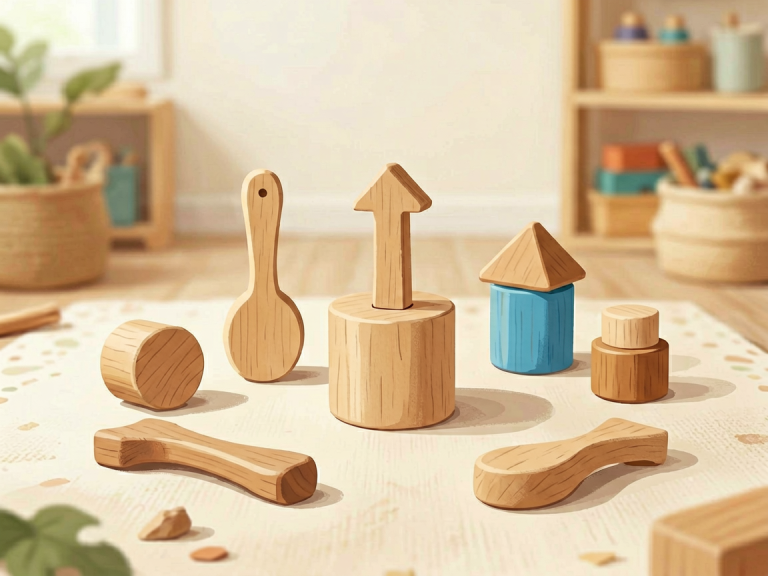
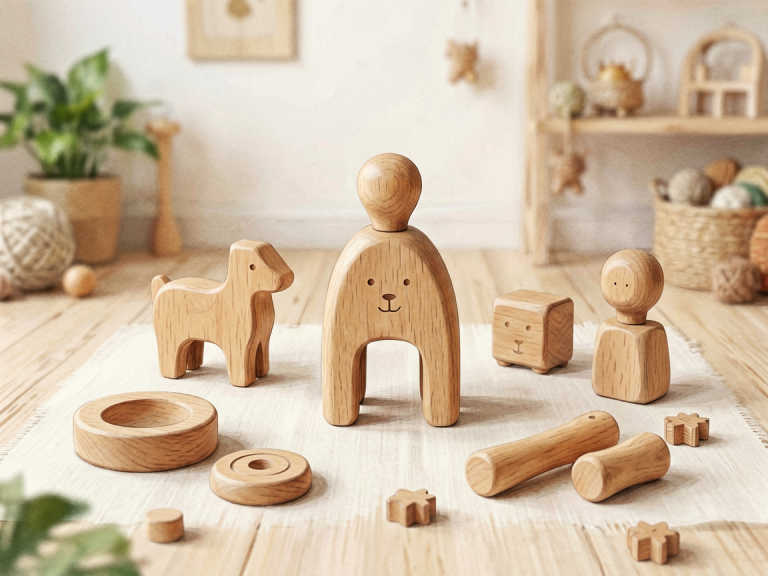
So what should a parent or gift-giver buy for a six-year-old? The solution is not to avoid all toys with pieces but to choose wisely. First, prioritize open-endedness. A set of 50 wooden blocks, a magnetic tile set with 40 pieces, or a simple LEGO® Classic box with 200 bricks in standard shapes offers far more play value than a 1,000-piece set designed to build one specific model. Open-ended toys allow the child to create their own designs, fail safely, and rebuild without manuals.
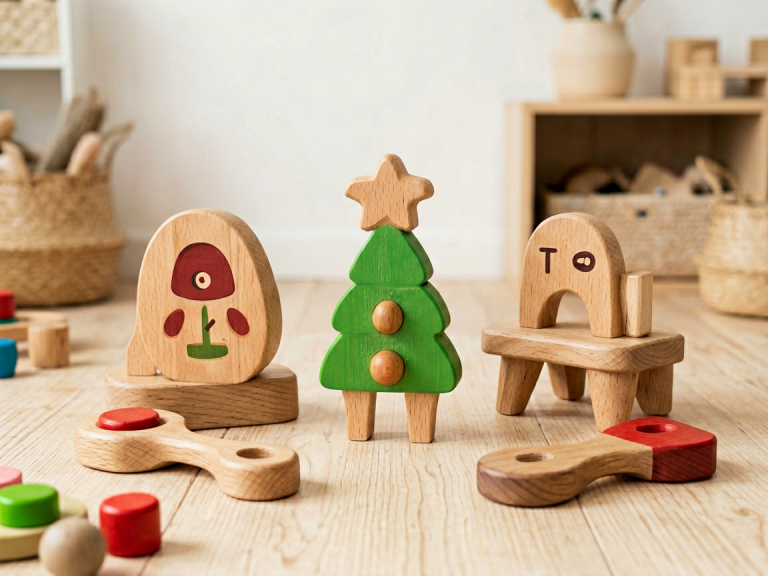
Second, look for chunkiness. Pieces should be large enough for small hands to grasp easily and snap together without requiring adult-strength force. Brands such as Duplo®, Magna-Tiles®, and wooden train sets are excellent examples.
Third, consider the assembly-to-play ratio. A good toy for a six-year-old has minimal setup and maximal play. A dollhouse with furniture, a simple marble run with 30 pieces, or a large floor puzzle with 24 pieces allows the child to enjoy the result quickly. The joy comes from playing *with* the toy, not from the arduous process of building it.
Fourth, involve the child in the choice. A six-year-old can express preferences. If they are genuinely fascinated by a complex Lego set and have demonstrated patience with simpler sets, a more advanced kit might work—but only if you are prepared to sit and help without taking over. Co-construction can be a wonderful bonding activity, but the toy should not depend on your constant presence.
The Value of Simplicity and Open-Ended Play: Remembering the Joy
Finally, it is worth remembering what six-year-olds truly love. They love stories, movement, pretend play, and social interaction. A simple toy that fuels imagination—like a set of plastic animals, a dress-up box, or a bucket of sand—often provides more sustained engagement than a sophisticated construction set. Research in developmental psychology consistently shows that open-ended play with simple materials fosters creativity, problem-solving, and executive function better than highly structured toys with a single correct outcome.
The best toy for a six-year-old is not the one with the most pieces. It is the one that invites them to invent, to explore, to fail and try again without tears, and to clean up with reasonable effort. When we resist the siren call of the “mega set” and choose toys that match a child’s developmental reality, we give them a gift far more valuable than a thousand plastic pieces: the gift of confident, joyful play.
Conclusion
Buying a toy for a six-year-old is an act of hope. We want to spark curiosity, build skills, and create happy memories. But hope must be tempered with understanding. Toys with too many pieces often deliver the opposite: frustration, clutter, and a sense of inadequacy for both child and parent. By focusing on age-appropriate piece counts, sturdy components, and open-ended possibilities, we can select gifts that truly enrich a child’s world. The next time you are tempted by that 800-piece castle on the shelf, take a breath. Ask yourself: will this toy invite my child *in*, or will it push them away? The answer, more often than not, is written in the small, scattered pieces that end up under the sofa. Choose wisely, and let the joy—not the pieces—be the lasting memory.