Should I Buy Wooden Blocks for 7 Year Olds?
Introduction: The Timeless Appeal of Wooden Blocks
As parents, we constantly face decisions about which toys will truly benefit our children’s development. Among the countless options lining store shelves—from flashy electronic gadgets to plastic playsets—wooden blocks stand out as a classic choice that has survived generations. Yet the question remains relevant today: should I buy wooden blocks for a 7-year-old child? At first glance, one might assume that blocks are better suited for toddlers, but a closer examination reveals that wooden blocks offer substantial developmental, educational, and creative benefits for children in the early elementary years. This article explores the multiple dimensions of this question, weighing the pros and cons, and provides a well-informed recommendation for parents considering this purchase.
The Developmental Value of Wooden Blocks at Age Seven
Cognitive Growth and Problem-Solving Skills
At age seven, children enter a critical phase of cognitive development. According to Jean Piaget's theory of cognitive development, a seven-year-old is typically in the concrete operational stage, where logical thinking emerges but still relies on tangible, hands‑on experiences. Wooden blocks provide the perfect medium for this stage. When a child decides to build a tower, a bridge, or a castle, they must engage in planning, estimating, and predicting—skills that directly support mathematical and scientific reasoning. For instance, they learn about balance, symmetry, gravity, and structural integrity through trial and error. A simple block that topples can teach more about physics than a textbook diagram. Moreover, block play encourages executive function skills such as working memory (remembering the design plan), inhibitory control (resisting the urge to knock everything down prematurely), and cognitive flexibility (adapting when a structure fails). These are precisely the skills that lay the foundation for academic success.
Spatial Awareness and Geometric Understanding
Seven-year-olds are also developing a stronger sense of spatial relationships. Wooden blocks, with their varied shapes—cubes, cylinders, arches, triangles, and rectangles—allow children to manipulate three‑dimensional objects in space. Research in developmental psychology has consistently linked block play with improved spatial reasoning, which in turn predicts later achievement in STEM fields such as engineering, architecture, and computer science. When a child tries to fit a triangular block into a square gap, for example, they are intuitively learning about geometric properties. They also begin to understand concepts like area, volume, and proportionality. A wooden block set that includes unit blocks (e.g., a half‑block, a double‑block) naturally introduces fractions and measurement. For a 7‑year‑old who may be struggling with math concepts, this hands‑on approach can be far more effective than worksheets.
Educational Benefits Beyond the Classroom
Fostering Creativity and Open‑Ended Play
One of the greatest advantages of wooden blocks is that they are an open‑ended toy. Unlike many modern toys that come with predetermined functions or narratives (a talking robot that says only scripted phrases, for example), wooden blocks have no instructions. A set of blocks can become a city, a spaceship, a farm, or a jungle—limited only by the child’s imagination. At age seven, children are capable of rich, complex pretend play. They can construct elaborate worlds and invent stories around them. This kind of play enhances language development, narrative skills, and social cooperation when playing with siblings or friends. Furthermore, because blocks are non‑prescriptive, they encourage divergent thinking—the ability to generate multiple solutions to a problem, a key trait of creativity and innovation.
Promoting Patience and Persistence
In an age of instant gratification, where apps and videos provide immediate rewards, wooden blocks require something different: time and effort. A child must carefully place each block, adjust, and sometimes start over. When a tower collapses, the child learns resilience. They learn that failure is not final but a step toward a stronger design. This process builds grit and a growth mindset. For a 7‑year‑old, who is beginning to face academic challenges and social pressures, this lesson is invaluable. The tactile feedback of real wood—its weight, texture, and warmth—also provides a calming sensory experience that can help regulate emotions, something that many screen‑based activities cannot offer.
Practical Considerations: Safety, Durability, and Cost
Safety and Environmental Factors
When considering wooden blocks, safety is a top priority. High‑quality wooden blocks are typically made from sustainable materials such as beech, maple, or birch, finished with non‑toxic, water‑based paints or left natural. Unlike plastic toys that may contain BPA, phthalates, or other harmful chemicals, wooden blocks are generally safer if a child puts them in their mouth—though at seven, this is less of a concern. However, parents should still check for splinters, sharp edges, or loose parts. Reputable brands ensure smooth, rounded edges and durable construction. Additionally, wooden blocks are environmentally friendly; they are biodegradable and often come in minimal packaging, making them a sustainable choice compared to battery‑operated plastic toys.
Durability and Long‑Term Value
Another advantage is longevity. A well‑made set of wooden blocks can last for decades. Many adults fondly remember playing with blocks that belonged to their parents or grandparents. For a 7‑year‑old, this durability means the blocks can be used for years to come, often becoming a family heirloom. They can also be passed down to younger siblings, increasing their cost‑effectiveness. While the initial investment may be higher than a cheap plastic toy, the cost per use is extremely low. In contrast, electronic toys often break, lose batteries, or become obsolete.
Storage and Space Requirements
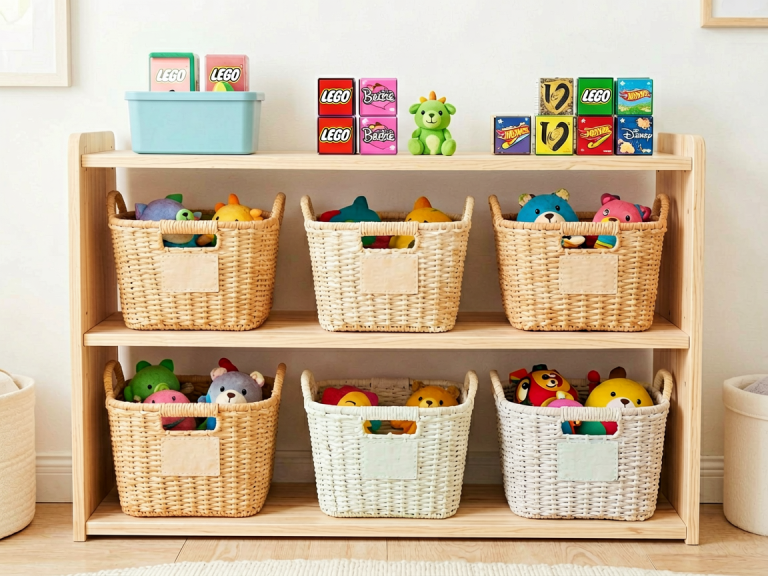
One practical drawback is that wooden blocks can be bulky. A comprehensive set with many pieces requires adequate storage—a sturdy bin, shelf, or bag. If your home is small or you already have a lot of toys, this might be a consideration. However, this can also be an opportunity to teach organization: having a designated place for blocks helps children learn tidiness and responsibility. Furthermore, blocks encourage floor‑based play, which may not work well in homes with limited floor space or delicate furniture.
Potential Drawbacks: Are There Reasons to Say No?
Age‑Appropriateness Concerns
Some might argue that by age seven, children have outgrown simple block play. They may prefer more complex building sets like LEGO, which offer detailed instructions and themed sets tied to popular movies. While LEGO certainly has its own benefits (fine motor skills, following instructions), it is a different kind of play. Wooden blocks offer more freedom and less predetermined structure. A child who is deeply into Minecraft or Roblox might initially find wooden blocks “boring.” But that is precisely the point—they force the child to slow down and create without digital assistance. If your 7‑year‑old already shows a strong preference for screen‑based activities, introducing wooden blocks could be a healthy counterbalance, though it may require some gentle encouragement.
The Risk of Underestimating the Child
Another concern is that wooden blocks might be perceived as too simple, leading to under‑stimulation. However, this underestimates the complexity that a 7‑year‑old can achieve. With enough blocks, they can build structures that rival those made with expensive construction kits. They can incorporate other loose parts (paper, fabric, figures) to expand play. Moreover, they can use blocks as props for math games, storytelling, or even engineering challenges (e.g., “Can you build a bridge that supports this toy car?”). The key is that the adult can scaffold the play by posing questions and challenges, but the child remains the driver.
Recommendations: Should You Buy Wooden Blocks for a 7‑Year‑Old?
Yes, with Some Caveats
After weighing the developmental, educational, and practical factors, the answer is a resounding yes—with some thoughtful considerations. Wooden blocks are not merely a toy for toddlers; they are a powerful tool for cognitive, social, and emotional growth at age seven. However, the purchase should be tailored to the child’s interests and the family’s living situation. Here are specific recommendations:
- Choose a quality, diverse set. Look for sets that include a variety of shapes and sizes, such as unit blocks (e.g., the standard “Community Playthings” type) or architectural blocks with arches, columns, and curves. Avoid sets with only a few pieces; you need enough to allow ambitious building.
- Supplement with other materials. Provide small figurines, cars, fabric scraps, or cardboard tubes to expand play possibilities. This transforms block play into a rich, imaginative experience.
- Engage with your child. At seven, children still benefit from adult involvement, but not over‑direction. Ask open‑ended questions like, “What would happen if you made the base wider?” or “Can you build a tower as tall as you?” This fosters deeper thinking.
- Consider the child’s personality. If your child already loves building (e.g., with LEGO, Magna‑Tiles, or even cardboard), wooden blocks will be a natural addition. If they are more drawn to art, blocks can become a three‑dimensional canvas. If they are reluctant, start with short sessions and build together to spark interest.
- Be patient with the transition. A child used to digital toys may initially find blocks unexciting. Resist the urge to force play. Leave the blocks accessible, and model building yourself. Often, curiosity will take over.
Conclusion: A Gift That Keeps Giving
In conclusion, the question “Should I buy wooden blocks for a 7‑year‑old?” has a strong affirmative answer. Wooden blocks are not a quaint relic of the past; they are a research‑backed tool that nurtures creativity, problem‑solving, patience, and spatial intelligence. They are safe, durable, eco‑friendly, and offer open‑ended play that adapts to the child’s evolving interests. While they may not align with every child’s current obsessions, they provide a counterbalance to the fast‑paced, screen‑saturated world. As a parent, investing in a quality set of wooden blocks is investing in your child’s cognitive and emotional development—a gift that will be used, cherished, and remembered for years to come. So, the next time you wander through a toy store, let your hand reach for the simple, warm, wooden blocks. Your 7‑year‑old might just thank you—perhaps while building a castle that reaches the sky.