Building Minds, One Block at a Time: Should You Buy Wooden Blocks for an 8-Year-Old?
Introduction: A Timeless Toy in a Digital Age
In an era dominated by glowing screens, app-based learning, and battery-powered gadgets that beep, buzz, and flash, the humble wooden block might seem like a relic from a bygone childhood. Yet parents and educators alike continue to debate its relevance, especially for children who have already entered the “tween” phase of late elementary school. At eight years old, a child is no longer a toddler stacking wobbly towers, nor are they a preschooler learning primary colors. They can read chapter books, execute complex instructions in video games, and engage in sophisticated social play. So the question arises: should you invest in a set of wooden blocks for an eight-year-old? The answer is not a simple yes or no—it depends on the child’s interests, the type of blocks, and the parent’s goals. But after examining the cognitive, social, and emotional benefits, as well as the potential drawbacks, a strong case emerges: yes, wooden blocks can be an invaluable tool for an eight-year-old, provided they are chosen and used thoughtfully.
Cognitive Development: Beyond Simple Stacking
The Shift from Sensory to Abstract Thinking
At eight, children typically enter what Piaget called the “concrete operational stage.” They begin to grasp logical reasoning, classification, and the concept of conservation—the idea that quantity remains the same despite changes in shape. Wooden blocks are a perfect medium to exercise these emerging cognitive skills. Unlike digital games that provide instant feedback and guided paths, blocks require the child to plan, hypothesize, and test cause-and-effect relationships in real time. For example, building a bridge that must support a certain weight demands an understanding of balance, symmetry, and structural integrity. The child must mentally rotate shapes, estimate distances, and adjust their design when a tower collapses. This kind of hands-on problem-solving is far more enriching than the passive consumption of media.
Mathematical and Spatial Reasoning
Research consistently shows that block play enhances spatial visualization—the ability to imagine and manipulate objects in three dimensions. This skill is a strong predictor of later success in STEM fields (science, technology, engineering, and mathematics). An eight-year-old who spends time with blocks is not merely playing; they are internalizing concepts of geometry, fractions, and even algebra. For instance, when they try to fill a rectangular frame using a combination of unit blocks, they are unconsciously calculating area and volume. When they build a symmetrical pattern, they explore congruence and reflection. These are not abstract textbook problems; they are tangible, self-motivated explorations.
Fostering Executive Functions
Wooden block play also demands sustained attention, working memory, and cognitive flexibility—collectively known as executive functions. An eight-year-old might start with a grand plan to build a castle, only to realize halfway through that they are running out of a certain shape. They must then revise their plan, prioritize resources, and resist the frustration of failure. This process strengthens their ability to self-regulate and think ahead. In a world where instant gratification is the norm, the slow, deliberate nature of block building teaches patience and perseverance.
Social and Emotional Growth: Building Relationships, Not Just Structures
Collaborative Play and Communication
While eight-year-olds are increasingly capable of independent play, they also thrive in collaborative settings. Wooden blocks are a natural catalyst for cooperative projects. Two or three children working on a single structure must negotiate roles, share limited pieces, and articulate their ideas clearly. “If we put the arch here, the tower will lean” is a statement that requires verbal reasoning and the ability to compromise. Unlike competitive video games that often pit players against each other, block building is inherently cooperative. It teaches conflict resolution, turn-taking, and the satisfaction of achieving a shared goal.
A Safe Space for Emotional Expression
Blocks can also serve as an emotional outlet. An eight-year-old who feels anxious about a school test or a social conflict might channel those feelings into building a fortress or a “safe house.” The tactile feedback of wood—its weight, its smoothness, its subtle grain—can be calming. Psychologists have long used sandplay and block construction as therapeutic tools because they allow children to externalize their inner world without the pressure of words. For a parent, watching how a child builds can offer insights into their emotional state. A chaotic, haphazard build may signal stress, while a carefully symmetrical structure might indicate a desire for order.
Nurturing Creativity Without Digital Constraints
Open-Ended vs. Scripted Play
One of the greatest advantages of wooden blocks over many modern toys is their open-ended nature. A set of plain, unpainted blocks can become anything: a medieval castle, a modern skyscraper, a spaceship launchpad, or a maze for a marble. There are no instructions, no levels to beat, no right or wrong answers. This is especially valuable for eight-year-olds, who are often bombarded with structured activities—school, sports, music lessons. Blocks offer a rare opportunity for pure, unstructured creativity. They encourage divergent thinking: the ability to generate multiple solutions to a problem. In contrast, many digital toys and even some construction sets (like branded LEGO kits) prescribe a specific final model, which can stifle imagination.
Combining Blocks with Other Materials
To maximize the creative potential for an eight-year-old, consider pairing blocks with other loose parts: fabric scraps, string, paper, toy animals, or even household items like cardboard tubes. This transforms block play into a rich, cross-disciplinary activity that can involve storytelling, art, and engineering. An eight-year-old might build a town, then write a story about its inhabitants, then create a map. The blocks become the physical anchor for an entire imaginative universe.
Practical Considerations: Types, Quality, and Safety
Choosing the Right Set
Not all wooden blocks are created equal. For an eight-year-old, simple unit blocks (rectangular prisms in standard ratios) are ideal because they allow for architectural complexity without the distraction of bright colors or pre-printed images. Look for sets that include arches, cylinders, triangles, and half-units to enable varied structures. Avoid sets with small pieces that pose choking hazards—though at eight, this is less of a concern, but still check for splinters or toxic paints. High-quality hardwood like maple or beech is durable and offers a satisfying weight. Avoid cheap pine blocks that dent easily or have rough edges.
The Digital Complement: Screen Time vs. Block Time
Parents often worry that if they buy blocks, their child will ignore them in favor of a tablet. This is a legitimate concern, but it can be addressed by creating a “block zone” that is physically inviting and screen-free. Set aside a corner of the living room with a low table or a large floor mat, and keep the blocks accessible. Remove distractions. You can also use blocks as a family activity—build together on weekend afternoons. When children see adults engaged in block play, they are more likely to join. Moreover, blocks can actually complement digital learning. After a child watches a video about ancient Egyptian pyramids, they can build one with blocks, deepening their understanding through kinesthetic learning.
Potential Drawbacks and How to Overcome Them
Lack of Novelty and the Risk of Abandonment
One argument against buying wooden blocks for an eight-year-old is that they may seem “babyish” compared to the latest video game or remote-controlled car. Children at this age are acutely aware of social status and peer perception. If an eight-year-old perceives blocks as toys for toddlers, they might reject them. To counter this, choose sets that are sophisticated in design—perhaps architectural blocks with a modern aesthetic, or a large set that allows for truly ambitious projects. You can also frame block play as “engineering” or “architecture” rather than “playing with blocks.” Let the child see videos of real architects using physical models. Invite friends over for a block-building competition. The key is to treat it as a serious creative and intellectual pursuit.
Storage and Mess
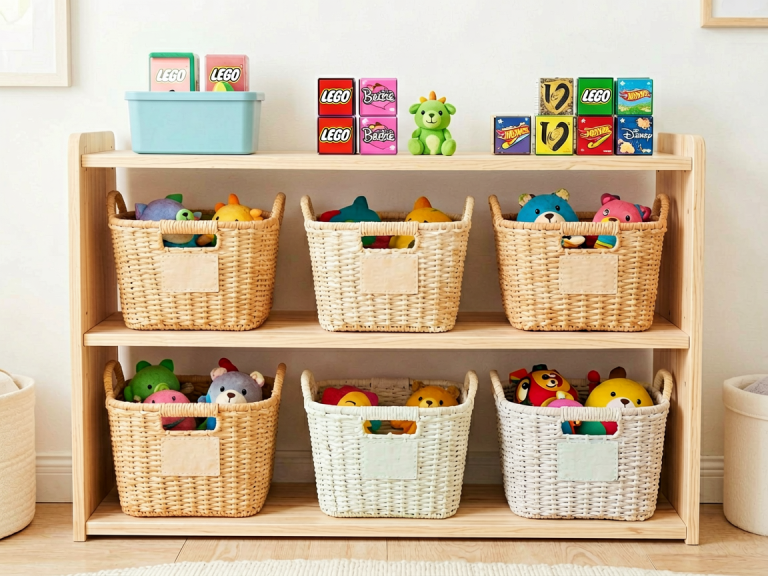
Wooden blocks are bulky and heavy. A large set can easily take over a room. Without proper storage, they become a tripping hazard or a source of family conflict. Invest in a sturdy shelving unit or a rolling bin with a lid. Teach the child to sort and store blocks by shape—this itself is a math skill (classification). Set a clear rule: blocks must be cleaned up before dinner or before the next activity. If the mess becomes overwhelming, consider rotating the block set with other toys; bring it out only for specific building sessions.
The Verdict: To Buy or Not to Buy?
An Investment in Cognitive and Emotional Resilience
After weighing the evidence, the answer leans heavily toward “yes”—but with caveats. Wooden blocks are not a magic bullet; they will not automatically turn an eight-year-old into a math prodigy or a serene philosopher. However, when used intentionally, they offer a unique combination of cognitive challenge, creative freedom, and social collaboration that few other toys can match. They are a counterbalance to the fast-paced, high-stimulation world of screens. They teach failure as a step toward mastery. They provide a quiet space for the mind to wander and design.
Tailoring the Experience to the Child
Ultimately, the decision should be based on the individual child. If your eight-year-old already spends hours building intricate creations with LEGO bricks, they might welcome the new challenge of wooden blocks, which require different engineering skills (no interlocking studs, just gravity and friction). If your child is more drawn to narrative play—dramatic, story-based activities—blocks can become the stage for their stories. If your child is highly active and struggles with fine motor control, the act of carefully balancing blocks can improve hand-eye coordination and focus.
A Final Word
In a culture that constantly urges parents to buy the next new thing, wooden blocks are a humble, durable, and profoundly beneficial choice. They do not require batteries. They do not become obsolete. They can be passed down to younger siblings or grandchildren. And they invite a kind of play that is increasingly rare: slow, deep, and self-directed. So, should you buy wooden blocks for an eight-year-old? Yes, with confidence—and perhaps also buy a set for yourself. You might discover that building together is one of the most rewarding activities you can share.