Are Wooden Blocks Worth It Under $100? A Comprehensive Analysis of Value, Play, and Development
Introduction: The Timeless Toy Debate
In an age dominated by flashing screens, plastic bricks, and battery-powered gadgets, the humble wooden block has quietly persisted as a staple of childhood playrooms, Montessori classrooms, and minimalist parenting circles. But for budget-conscious parents, caregivers, and educators, a practical question inevitably arises: *Are wooden blocks worth it under $100?* The price point is significant—under $100 is the sweet spot for many families looking for a meaningful, durable toy that will not break the bank. At first glance, a set of simple wooden cubes, cylinders, and triangles might seem overpriced compared to a mega-pack of plastic building bricks. Yet wooden blocks offer a unique combination of sensory richness, open-ended creativity, developmental benefits, and longevity that plastic often cannot match. This article will dissect the true value of wooden blocks in the under-$100 range by examining their materials, educational impact, versatility, safety, and long-term cost effectiveness. By the end, you will have a clear, evidence-based answer to whether that wooden block set on your shopping list is a smart investment or a nostalgic splurge.
What Defines Quality in a Wooden Block Set Under $100?
To evaluate whether wooden blocks are “worth it,” we must first establish what constitutes a high-quality set in this price range. Not all wooden blocks are created equal. A $20 set from a discount store may consist of poorly sanded, splinter-prone wood with toxic paints, while a $90 set from a reputable brand might feature certified sustainable hardwood, non-toxic finishes, and precision-cut edges. Under $100, the market offers a wide spectrum. Key factors to consider include:
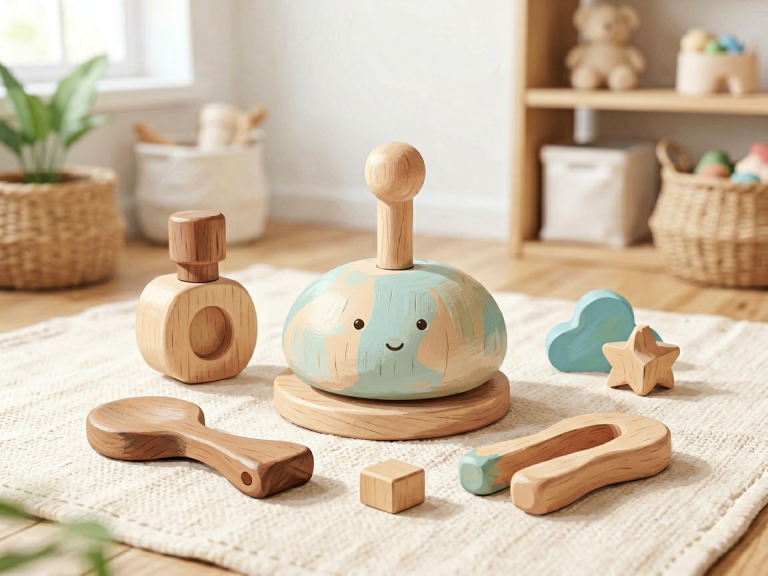
- Material and Construction: The best wooden blocks are made from solid hardwoods such as maple, beech, or birch. These woods resist chipping, warping, and denting far better than softwoods like pine. A good set under $100 will often use eco-friendly rubberwood or birch plywood. Look for rounded edges, smooth surfaces, and water-based, non-toxic stains or paints. Avoid sets with a strong chemical smell or visible splinters.
- Number and Variety of Pieces: Under $100, you can expect anywhere from 20 to 100 pieces. A set with 50–80 blocks offers enough variety for complex constructions without overwhelming a small child. Variety in shapes (rectangles, squares, triangles, arches, cylinders) is more important than sheer quantity. A well-designed set encourages stacking, balancing, sorting, and pattern-making.
- Brand Reputation and Certifications: Brands like Hape, Melissa & Doug, Tegu, PlanToys, and Grimm’s are known for quality. Many of their sets fall within the $30–$80 range. Look for certifications such as FSC (Forest Stewardship Council), ASTM, or EN71, which indicate safety and environmental responsibility.
The Developmental Payoff: Why Wooden Blocks Excel (Even on a Budget)
The primary reason wooden blocks remain relevant is their unparalleled contribution to a child’s cognitive, motor, and social development. Under $100, you are not just buying a toy—you are buying hours of brain-building play.
- Fine Motor Skills and Hand-Eye Coordination: Stacking and balancing irregular wooden shapes requires precise control. Unlike plastic blocks that snap together with a satisfying click, wooden blocks demand a child to adjust grip, angle, and pressure. This strengthens the small muscles in the hands and fingers, crucial for later writing and self-care tasks.
- Spatial Awareness and Mathematical Thinking: When a child experiments with balancing a triangular block atop a rectangular one, they are intuitively learning about geometry, gravity, and weight distribution. Research shows that block play in early childhood correlates with stronger math skills in later years, especially in area, volume, and symmetry.
- Creativity and Problem Solving: Wooden blocks are the quintessential open-ended toy. There is no instruction manual, no right or wrong way to build. A single set can become a castle, a spaceship, a bridge, or a zoo. This freedom fosters divergent thinking and resilience—when a tower falls, the child learns to adjust and try again.
- Language and Social Skills: When children play with blocks together, they negotiate, share ideas, and describe their structures. “I need the big red block,” “Can you put the arch on top?” These exchanges build vocabulary and cooperative skills. Even solitary block play often involves self-talk and storytelling.
Comparing Wooden Blocks to Plastic Alternatives Under $100
To answer whether wooden blocks are worth it, a direct comparison with plastic building blocks (like standard interlocking bricks) is essential. Both have merits, but they serve different developmental purposes.
- Sensory Experience: Wood has a natural warmth, texture, and subtle weight that plastic cannot replicate. For infants and toddlers, the tactile variety of wood is more engaging and calming. Plastic blocks often have sharp corners, slick surfaces, and a uniform feel.
- Durability and Longevity: A well-made wooden block set can easily last for decades, surviving multiple children and even grandchildren. Cheap plastic blocks often break at the connectors, lose their color, or become brittle. Under $100, a wooden set may feel like an initial investment, but its lifespan far exceeds most plastic sets at the same price.
- Noise and Aesthetic: Wooden blocks produce a gentle clunking sound rather than the harsh click of plastic. They blend into a home’s decor, making them a favorite of minimalist families. Many parents also appreciate that wooden blocks are quieter during play.
- Creativity vs. Structured Play: Plastic bricks are often themed (e.g., a castle set or spaceship) and come with instructions. While this can be fun, it guides play toward a specific outcome. Wooden blocks, being plain and unfettered, offer pure creativity. For children under 6, this open-endedness is particularly valuable.
However, plastic blocks do have advantages: they allow for more intricate, interlocking constructions that can support cantilevers and moving parts. For older children (ages 8+), plastic sets may better satisfy engineering interests. But for the critical preschool and kindergarten years, wooden blocks offer a richer developmental experience.
Safety and Sustainability: The Hidden Value of Wooden Blocks
Under $100, you might worry that cheaper wooden blocks cut corners on safety. In reality, even affordable sets from reputable brands meet strict international safety standards. Non-toxic paints, lead-free materials, and smooth finishes are standard. Moreover, wood is a natural material that does not off-gas volatile organic compounds (VOCs) like some plastics can.
From an environmental perspective, wooden blocks are a superior choice. High-quality sets are often made from fast-growing, sustainably harvested trees (like rubberwood, a byproduct of latex production). They are biodegradable and can be passed down or donated. Plastic blocks, unless made from recycled materials, contribute to long-term waste. For families trying to reduce their ecological footprint, wooden blocks under $100 represent a thoughtful purchase.
Who Should Buy Wooden Blocks Under $100? (And Who Should Skip Them?)
Wooden blocks are an excellent investment for:
- Parents of children aged 18 months to 6 years, especially if the child is in a sensory or cognitive developmental phase.
- Montessori or Waldorf families who prefer natural, open-ended materials.
- Grandparents or gift-givers looking for a timeless, non-electronic present.
- Homeschooling or co-op playgroups that value cooperative building activities.
You might reconsider if:
- Your child is over 8 and shows no interest in construction play—they may prefer more complex building kits.
- You are on an extremely tight budget and need a very large set (100+ pieces) for multiple children—in that case, a large plastic block set might offer more pieces per dollar.
- You prioritize color variety over natural aesthetics—some children are attracted to bright primary colors, which are more common in plastic sets.
Top Wooden Block Recommendations Under $100
To ground this analysis in reality, here are three highly rated sets that deliver outstanding value without exceeding the $100 mark:
- Melissa & Doug 100-Piece Wooden Block Set (~$40) – A classic, budget-friendly choice with a good variety of shapes and colors. The blocks are made from durable wood and finished with non-toxic paints. Ideal for toddlers and preschoolers.
- Hape Fantasia Blocks (~$30) – A smaller set (40 pieces) with whimsical shapes like stars, arches, and half-circles. Perfect for sparking imaginative play and stacking challenges.
- Grimm’s Large Wooden Rainbow Stacker (~$80) – While technically a stacking toy rather than traditional blocks, this iconic piece offers endless open-ended play. Its hand-painted, water-based finish and beechwood construction make it a heirloom-quality choice.
Conclusion: The Verdict
So, are wooden blocks worth it under $100? The unequivocal answer is yes—provided you choose a set that prioritizes quality materials, non-toxic finishes, and age-appropriate variety. The developmental benefits—from fine motor skills to spatial reasoning to social cooperation—are well-documented and far outweigh the initial cost. Wooden blocks under $100 are not just a toy; they are an investment in your child’s cognitive growth, creativity, and connection to natural materials. They are durable enough to last through multiple childhoods, beautiful enough to leave out on a shelf, and simple enough to spark infinite worlds. In a marketplace flooded with disposable, single-purpose gadgets, the humble wooden block remains a quiet champion of meaningful play. For under $100, that is a bargain by any measure.