Building Beyond Blocks: Should You Buy Wooden Blocks for a 10-Year-Old?
Introduction: The Timeless Toy Meets the Tween
When we think of wooden blocks, we often picture toddlers stacking colorful cubes on a soft rug. But what about a ten-year-old? At this age, children are no longer preschoolers. They have entered the pre-adolescent stage—curious, increasingly independent, and drawn to digital screens, complex board games, or sports equipment. The question "Should I buy wooden blocks for my 10-year-old?" might seem odd at first glance. Yet, upon closer inspection, wooden blocks are not merely a relic of early childhood; they can be a surprisingly rich tool for cognitive, social, and creative development in older children. This article will explore the benefits, potential drawbacks, and practical considerations of introducing wooden blocks to a ten-year-old, drawing on developmental psychology, educational theory, and real-world testimonials.
1. Cognitive Development: More Than Just Stacking
1.1 Spatial Reasoning and Mathematical Thinking
At ten, a child’s brain is still highly plastic. Wooden blocks—especially those that come in varied geometric shapes—offer a hands-on way to explore concepts of geometry, symmetry, proportion, and even basic physics. Unlike digital simulations, physical blocks require the child to manipulate real objects in three-dimensional space. Research in spatial cognition shows that activities such as building with blocks significantly improve mental rotation ability, which is a strong predictor of later success in STEM fields (science, technology, engineering, and mathematics). For a ten-year-old, blocks can be used to construct bridges, towers, or even simple machines (like a lever or a pulley system if the set includes wheels and axles). This is not "playing with baby toys"; it is engineering in miniature.
1.2 Problem-Solving and Executive Function
Complex block building—such as replicating a model from a diagram or designing an original structure that must be stable—demands planning, patience, and adaptability. A ten-year-old who attempts to build a multi-story castle with an archway will inevitably face structural failures. The process of troubleshooting (e.g., "Why did the tower collapse? The base is too narrow.") trains executive functions like working memory, cognitive flexibility, and self-regulation. These are skills that schools increasingly emphasize, yet they are difficult to teach through worksheets alone. Wooden blocks provide immediate, tangible feedback: you can see and feel the consequence of your design choices.
1.3 Open-Ended Play vs. Prescriptive Toys
Many toys marketed for older children are highly prescribed: a Lego set comes with step-by-step instructions; a video game has a linear narrative. Wooden blocks, by contrast, are the ultimate open-ended material. There is no "right" way to play. This freedom can be both liberating and challenging for a ten-year-old. In an age of structured schedules (school, homework, extracurriculars), open-ended play allows the child to take ownership of their creativity. They might build a futuristic city, a marble run, or even abstract sculptures. This kind of unstructured exploration fosters divergent thinking, a key component of creativity.
2. Social and Emotional Benefits
2.1 Collaboration and Communication
If your ten-year-old has siblings, cousins, or friends, wooden blocks can become a social catalyst. Building together requires negotiation, division of labor, and verbal communication. For example, two children might disagree on whether to build a fortress or a spaceship. Resolving such conflicts teaches compromise and perspective-taking. In a world where peer interactions are increasingly mediated by screens (texting, online games), face-to-face collaborative building offers a refreshing, low-tech way to bond. Even a solitary child can benefit: building alone can be a meditative, calming activity that reduces stress—something many ten-year-olds need as academic pressures mount.
2.2 Sense of Accomplishment and Self-Efficacy
Completing a complex block structure, especially one that the child designed themselves, provides a powerful sense of achievement. Unlike digital achievements that can feel fleeting, a physical creation persists. The child can display it on a shelf, show it to family, and even modify it later. This boosts self-efficacy—the belief in one’s ability to succeed. For a ten-year-old who may be struggling with handwriting, math, or social dynamics, succeeding at a block-building challenge can be an affirming counterbalance.
3. Potential Concerns: Is It “Too Babyish”?
3.1 Age Appropriateness and Social Stigma
This is the most legitimate concern. By age ten, children are acutely aware of peer perception. If a child’s friends view wooden blocks as "little kid toys," they may reject them. However, this depends heavily on how the blocks are presented. A simple set of colored cubes will likely feel infantile. But high-quality, sophisticated block sets—such as those made by companies like Kapla, Citiblocs, or Grimm’s—offer endless complexity. Kapla planks, for example, are identical wooden slats that can be balanced to create intricate towers, arches, and cantilevers. A ten-year-old can build a model of the Golden Gate Bridge or a spiral skyscraper. This is challenging, visually impressive, and far from babyish. The key is to select a set that matches the child’s developmental level and to frame it as a "building kit" or "architecture tool" rather than "blocks."
3.2 Competition with Digital Entertainment
Let’s be honest: the average ten-year-old might prefer a video game or a tablet. Wooden blocks cannot compete with the immediate dopamine hits of a smartphone game. But that’s precisely the point. Blocks offer a slower, more mindful form of engagement. Many parents report that once their ten-year-old starts building, they become absorbed for an hour or more—similar to the "flow state" experienced in hobbies like model-building, knitting, or woodworking. If introduced during a "screen-free" period (e.g., Sunday afternoon, after homework), blocks can fill that time productively. Also, consider combining blocks with other materials: add a marble run kit, a ball, or even a smartphone used as a leveling tool (using a bubble-level app) to bridge the digital-physical divide.
4. Practical Considerations: What to Look For
4.1 Quality and Safety
For a ten-year-old, safety is less about choking hazards and more about durability and finish. Look for blocks made from solid hardwood (like beech or maple) with non-toxic, water-based paints or stains. Avoid sets with small magnets that could come loose. The blocks should be smooth, with no splinters. The quantity matters too: a set of 50 small blocks is insufficient for complex projects. Aim for at least 100–200 pieces. Some sets include specialized shapes (arches, triangles, cylinders) that facilitate engineering.
4.2 Complementing Interests
A ten-year-old who loves dinosaurs might use blocks to build a Jurassic Park landscape. A budding architect might design floor plans. A fantasy fan could construct a castle with moats and drawbridges. Choose a set that is neutral enough to allow multiple themes but also consider supplementing with accessories (toy animals, people, or vehicles) to spark narratives.
4.3 Storage and Space
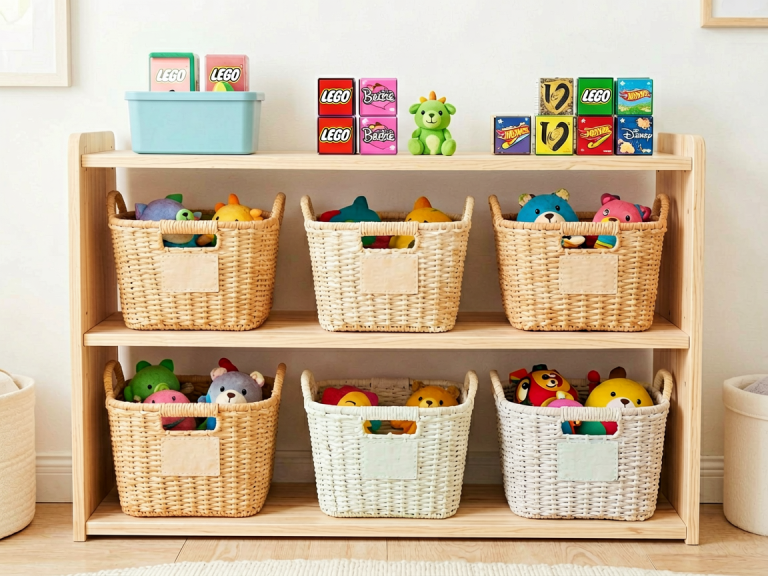
Blocks require space—both for building and for storage. Ensure you have a dedicated shelf or bin where the child can store the blocks independently. A large tray or board (like a piece of plywood) can serve as a building base that can be moved if needed. Involving the child in organizing the blocks (by shape or size) adds a meta-cognitive layer to the experience.
5. Real-World Examples and Testimonials
Many educators and parents have successfully introduced wooden blocks to older children. For instance, in Montessori schools, elementary students (ages 6–12) use "Binomial Cube" and "Trinomial Cube" blocks to explore algebraic concepts. In Japanese kindergartens, "Kumiki" wooden puzzles are used by children as old as 12. Online forums like Reddit’s /r/woodenblocks (though small) have threads from parents whose 9- and 10-year-olds spend hours creating marble runs. One parent wrote: "My son said blocks are boring. I bought a set of Kapla planks and challenged him to build a tower that could support a book. He was hooked for two weeks."
6. Alternatives and Comparisons
If you remain uncertain, compare wooden blocks to other toys targeting this age group:
- Lego bricks are more familiar but expensive, with strong brand loyalty. They also tend to encourage following instructions rather than pure creativity (though creative play is possible).
- Magnetic tiles (e.g., Magna-Tiles) are excellent for structural play but are often marketed to younger children. Some ten-year-olds might still enjoy them, but the pieces are large and less challenging.
- K’NEX or Strawbees are engineering-focused but involve plastic connectors that can be fiddly. Wooden blocks, by contrast, require no connectors—just gravity and friction.
- Scrap wood and a nail gun (with adult supervision) is another option for a very hands-on ten-year-old, but it is messier and less safe.
Ultimately, wooden blocks occupy a unique niche: they are simple yet profound, cheap yet durable, and screen-free yet intellectually stimulating.
Conclusion: A Resounding “Yes” with Conditions
So, should you buy wooden blocks for a ten-year-old? The answer is a qualified yes. They are not a magical cure for boredom or a replacement for other toys, but they are an excellent addition to a child’s playroom—provided you choose the right set, frame it appealingly, and give your child permission to explore at their own pace. The blocks themselves are not the end; they are a medium through which a ten-year-old can develop spatial intelligence, patience, collaboration, and creative confidence. In an age where children’s free time is often over-scheduled or digitized, wooden blocks offer a quiet but powerful invitation: to build, to fail, to try again, and to imagine. And that is a gift worth giving.
*(Word count: approximately 1,250 words)*