The Peril and Promise of Tiny Pieces: A Guide to Buying Toys with Small Parts for 9-Month-Olds
Introduction: Why This Topic Matters
Every parent of a nine-month-old has stood in a brightly lit toy aisle, mesmerized by a colorful plastic contraption that promises to stimulate their baby’s growing mind. But then the warning catches their eye: “Contains small parts. Not for children under 3 years.” A familiar anxiety settles in. How can a toy be developmentally appropriate and yet carry such a stark caution? The question of whether to buy toys with small parts for a nine-month-old is not merely a matter of convenience—it is a nuanced intersection of pediatric safety, developmental psychology, and parental intuition. While the official safety guidelines are clear, the reality is that many toys designed for infants include components that are small enough to be hazardous if not properly supervised. This article explores the risks, the benefits, and the practical strategies for making informed decisions about toys with small parts for babies who are just beginning to explore the world with their hands and mouths.
Understanding the 9-Month-Old’s Developmental Stage
Cognitive and Motor Milestones
At nine months, babies are in a period of explosive growth. They have typically mastered sitting independently and are often beginning to crawl, pull to stand, or even cruise along furniture. Their fine motor skills are developing rapidly: the pincer grasp—the ability to pick up small objects between thumb and forefinger—emerges around this age. This newfound dexterity makes small objects suddenly fascinating. A nine-month-old will joyfully pick up a tiny block, a plastic ring, or a hard bead, bring it to the mouth, and explore it with gums that may already sport a few teeth.
Cognitively, babies at this stage are learning cause and effect. They drop objects to see what happens, shake rattles to hear sounds, and push buttons to produce responses. Toys that incorporate small, movable parts can be extraordinarily engaging because they offer multiple sensory inputs: visual, auditory, tactile, and even olfactory. The challenge is that the very feature that makes these toys so appealing—their small size and detachability—also creates the primary hazard.
The Oral Exploration Phase
Mouthing remains the dominant mode of exploration well into the first year. A nine-month-old’s mouth is densely packed with nerve endings, and tasting, chewing, and gumming objects provides critical sensory feedback. The American Academy of Pediatrics warns that any object small enough to fit entirely inside a standard toilet paper tube (approximately 1.25 inches in diameter) is a choking hazard for children under three. Yet many toys marketed for babies as young as six months include parts that barely exceed this threshold. This paradox demands careful evaluation, not blanket avoidance.
The Choking Hazard: Facts, Statistics, and Realities
How Small Is Too Small?
The test is simple but sobering: if a small part can pass through a choke tube (a cylinder about 1.25 inches in diameter and 2.25 inches long), it poses a choking risk. The CPSC (Consumer Product Safety Commission) enforces strict regulations for toys intended for children under three. However, not all toys labeled for older children are inaccessible to nine-month-olds—especially in households with siblings. A stray Lego brick, a game token, or a broken rattle can become a life-threatening object in seconds.
Data from Safe Kids Worldwide indicates that choking remains one of the leading causes of injury and death among infants and toddlers. In 2021 alone, over 12,000 children aged 14 and under were treated in emergency rooms for choking episodes, with food and small toys being the primary culprits. For nine-month-olds, the highest risk period coincides exactly with their peak oral exploration and new mobility—they can now crawl into areas where older children have dropped small items.
The Danger of “Built-in” Small Parts
Even toys designed for infants can have problematic features. Consider a popular activity cube: it might have a spinning window with a movable plastic butterfly, a sliding bead on a wire, or a small door that opens to reveal a tiny animal. These parts are attached, but a determined nine-month-old can sometimes break or twist them off. The mechanism might be secure under normal play, but a baby’s strength, combined with teething-induced chewing, can compromise the integrity of even well-made toys. Therefore, parents must inspect toys not just at purchase but regularly thereafter.
Benefits of Small Parts: Developmental Yays Amid the Nays
Fine Motor Skill Development
It would be a disservice to suggest that all small parts are bad. When used under direct adult supervision and chosen with care, toys that incorporate small components can accelerate fine motor development. A simple wooden puzzle with large knobs (not small pieces) is ideal. But consider a “toddler busy board” that has latches, zippers, and small plastic keys on strings—these items are small but tethered. Tethered small parts greatly reduce the risk of ingestion while still allowing the baby to practice grasping, pulling, and manipulating.
Another example is a set of soft, chunky stacking rings. The rings themselves are not small, but they might have a small bead sewn inside a fabric ring to create a shaker sound. The bead is enclosed and cannot be accessed. That is an excellent way to include the sensory benefit of a small moving part without the hazard.
Sensory Stimulation and Cause-and-Effect
Nine-month-olds learn through repetition and variation. Toys that produce different sounds when different buttons are pressed—especially if the buttons are large, raised, and have distinct textures—can introduce early problem-solving. If those buttons are decorated with small raised bumps, or if they have a tiny light that flashes, the toy is effectively using “small parts” in a safe, integrated manner. The key distinction is whether the small part can be detached.
For instance, a plastic telephone with a small spinning wheel on the dial is acceptable because the wheel is attached securely and too large to swallow. Conversely, a plastic telephone that has a tiny, removable handset that could fit into a baby’s mouth is not acceptable.
Guidelines for Safe Selection: A Practical Checklist
1. The Age Label Is a Starting Point, Not a Promise
Always check the manufacturer’s age recommendation. However, these labels are based on average development and do not account for individual variation. A particularly strong or determined nine-month-old might overcome defenses that a typical child the same age could not. Therefore, use the label as a baseline, but apply your own judgment based on your baby’s abilities. If your child has already shown an ability to pry objects open, treat even age-appropriate toys with suspicion.
2. The “Drop Test” for Durability
Before letting a baby play with a toy, drop it repeatedly from a height of about three feet onto a hard surface. If any part breaks off, rattles loose, or even becomes slightly wobbly, discard it. Many cheap plastic toys fail this test within minutes. For nine-month-olds, only toys with a solid, one-piece construction or with parts that are molded into the larger piece are reasonably safe.
3. Avoid Any Toy With a Button Battery Compartment
Button batteries are extremely hazardous if swallowed. Even toys that have a battery compartment secured with a screw may still be accessible if the screw is not child-resistant. For nine-month-olds, it is safest to avoid any toy that uses button batteries entirely. If you must have such a toy, ensure the compartment is screwed shut with a Phillips head screw that requires a tool to open, and never leave the child unattended with it.
4. Beware of “Sensory” Toys That Are Actually Small
In recent years, “sensory toys” for babies have become popular—items like small silicone pop-it fidgets, tiny textured balls, or miniature stacking cups. Many of these are marketed for “6 months+” but are small enough to be dangerous. Always measure the toy. If it fits entirely in your baby’s mouth, it is too small. A good rule of thumb: the toy should be larger than your baby’s closed fist.
5. Prefer Tethered or Enclosed Small Parts
As mentioned earlier, small parts that are permanently attached—like beads on a string (but make sure the string is short and tightly sewn), or rattling beads inside a sealed plastic ball—are much safer. Look for toys that have a “captured” design where the small part is embedded and cannot be extracted without destroying the toy.
6. Regular Inspection Is Non-Negotiable
Even the highest-quality toy can degrade over time. Plastic can crack, seams can split, and Velcro can wear out. Inspect toys weekly for any signs of damage. Pay special attention to seams that might have been glued or heat-sealed; these are common failure points. If you find any small part that has become loose, remove the toy immediately.
Practical Alternatives: What to Buy Instead
Safe Recommended Toy Categories for 9-Month-Olds
- Large interlocking rings and links: Soft plastic or fabric links that are at least three inches across. They can be joined together and are too large to swallow.
- Soft cloth books with crinkly pages: These often have sewn-in small squeakers or mirrors, but the small parts are enclosed in fabric and cannot be removed.
- Stackable nesting cups: Large, preferably made of flexible material. Avoid cups with tiny holes that could trap fingers or allow a small part to be inserted.
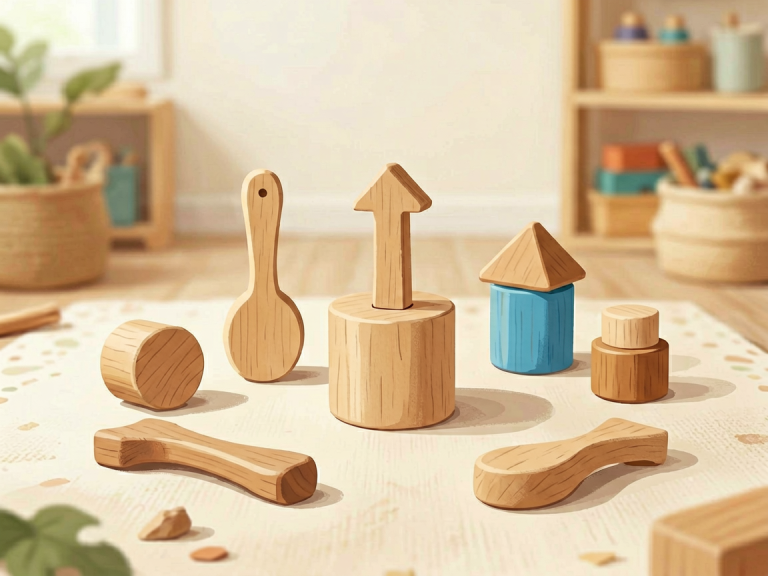
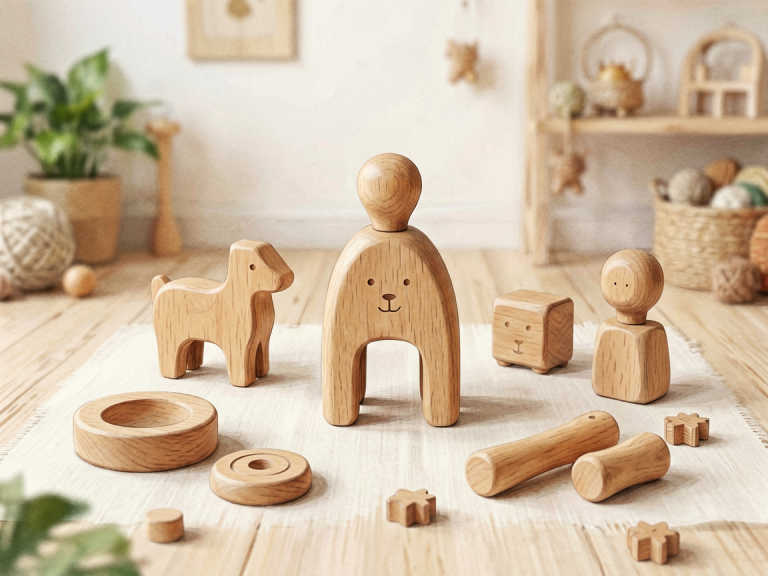
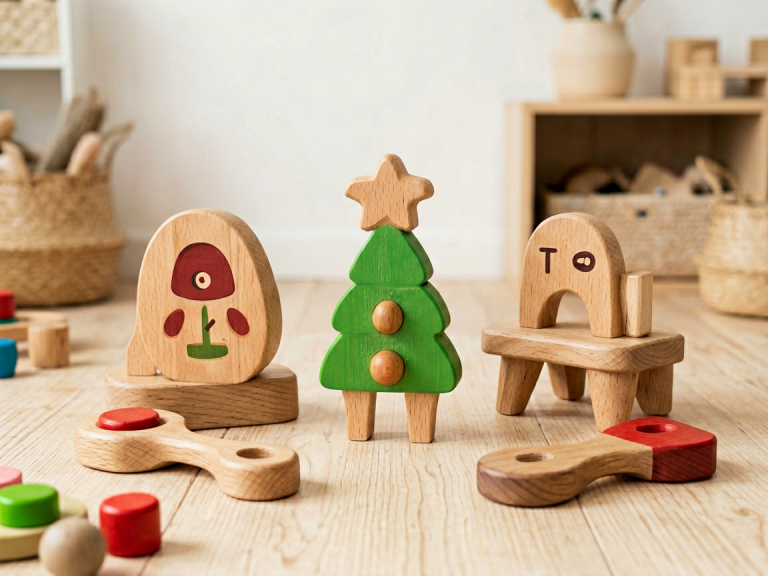
- Push-and-pull toys with no detachable parts: For example, a wooden car that is a single solid piece, or a plastic lawn mower with spinning wheels that are molded as one unit.
- Activity gyms with dangling toys: The toys hanging from the arch should be securely attached with wide fabric loops, not flimsy strings.
- Rattles made of one solid piece (plastic or silicone) with no removable handle or interior loose parts that could break free.
What to Avoid
- Building blocks smaller than 2 inches: Even wooden blocks can be a choking hazard if they are small enough.
- Toys with plastic eyes or buttons that are glued on: Stuffed animals often have these. The eyes can be chewed off. Choose embroidered eyes instead.
- Miniature cars or figures: Popular brand toys for older toddlers often have wheels that can be pulled off.
- Any toy with a removable cap or lid: Even a small plastic cap can cause blockage.
Conclusion: Balance, Not Ban
The debate over buying toys with small parts for nine-month-olds should not be framed as a binary choice between safety and development. Rather, it is a call for thoughtful, vigilant parenting. A blanket ban on all toys with any small components would deprive babies of valuable opportunities to refine their fine motor skills and engage in cause-and-effect learning. Conversely, ignoring the risks can lead to tragedy. The correct approach is to select toys that incorporate small parts in a safe, integrated manner (tethered, enclosed, or too large to swallow) and to always supervise play actively. As your baby grows, you can gradually introduce more complex toys with detachable parts, but at nine months, the mantra should be: *bigger is better, and attached is safest.* By combining a knowledge of developmental needs with a rigorous commitment to safety inspections, you can provide your baby with an enriching, stimulating environment that minimizes risk and maximizes joy. The aisle of tiny plastic pieces does not have to be a minefield—it can be a garden of discovery, as long as you walk through it with your eyes wide open and your hands ready to guide.