Should I Buy STEM Kits for 8-Year-Olds? A Comprehensive Guide for Parents
As a parent, you have likely come across the colorful boxes labeled “STEM Kits” in toy stores or online marketplaces. They promise to turn your child into a mini engineer, coder, or chemist. But with so many options and a price tag that often exceeds that of a regular toy, the question naturally arises: Should I buy STEM kits for my 8-year-old? The answer is not a simple yes or no. It depends on your child’s interests, your educational goals, and how you plan to use the kit. This article will help you make an informed decision by exploring the benefits, potential drawbacks, and practical tips for choosing the right STEM kit for an 8-year-old.
What Are STEM Kits?
STEM stands for Science, Technology, Engineering, and Mathematics. STEM kits are curated sets of materials, instructions, and activities designed to teach children concepts in these fields through hands-on projects. For 8-year-olds, kits typically range from simple circuit-building sets and crystal-growing experiments to more advanced robotics or coding kits that use block-based programming. Unlike traditional toys, STEM kits emphasize problem-solving, critical thinking, and creativity.
The Benefits of STEM Kits for 8-Year-Olds
1. Fostering a Love for Learning Through Play
At age 8, children are naturally curious and eager to understand how the world works. STEM kits tap into that curiosity by turning abstract concepts into tangible experiences. For example, a kit that lets your child build a working volcano using baking soda and vinegar does more than entertain—it teaches chemical reactions in a memorable way. When learning is fun, children are more likely to develop a lifelong passion for science and discovery.
2. Developing Critical Thinking and Problem-Solving Skills
STEM kits rarely come with a single “right” way to complete a project. Many require trial and error, troubleshooting, and creative thinking. If a circuit doesn’t light up, your child must figure out why: Is the battery connected correctly? Are the wires in the right place? This process builds resilience and analytical skills. For an 8-year-old, learning to persist through failure is as valuable as the final product.
3. Enhancing Fine Motor Skills and Hand-Eye Coordination
Many STEM kits involve assembling small parts, connecting wires, or using tools. For instance, building a robotic arm requires careful manipulation of screws, gears, and joints. These activities help improve fine motor control, which is still developing at age 8. Moreover, the precision needed for such tasks can boost confidence in handling real-world tools later.
4. Encouraging Collaborative and Social Interaction
While some children enjoy solo projects, many STEM kits are designed for group play. Siblings, friends, or parents can work together to solve a challenge. This collaborative aspect teaches communication, sharing ideas, and teamwork. For example, a coding kit that requires two people to program a robot’s movement can lead to lively discussions about logic and sequencing.
5. Building a Strong Foundation for Future Academic Success
Exposure to STEM concepts at an early age correlates with higher performance in math and science later in school. An 8-year-old who understands basic principles of physics through building a catapult will have a head start when those concepts appear in the classroom. Additionally, many kits introduce vocabulary like “voltage,” “algorithm,” or “structural integrity” in a natural context, making future learning easier.
Potential Drawbacks to Consider
1. Cost vs. Longevity
STEM kits can be expensive, ranging from $20 to over $100. Some kits are one-time use—once the crystals grow or the chemicals are used up, the kit is essentially finished. Others, like building sets, can be reused but may lose appeal after a few builds. Before purchasing, consider whether the kit offers reusable components or expandable options. A cheap kit that breaks after one use may not be a wise investment, whereas a more durable kit with online resources can provide months of engagement.
2. Age Appropriateness and Frustration Levels
Not all “ages 8+” kits are created equal. Some assume prior knowledge or advanced reading skills. If the instructions are too complex, an 8-year-old may become frustrated and lose interest. On the other hand, a kit that is too simple might bore them. Look for kits that offer a balance—challenging enough to stretch their abilities but with clear, step-by-step guides. Reading online reviews from other parents can help you gauge the actual difficulty.
3. Screen Time vs. Hands-On Time
Some STEM kits heavily rely on tablets or computers for instructions or coding. While technology is an integral part of STEM, too much screen time can counteract the benefits of hands-on learning. For an 8-year-old, aim for kits that minimize screen dependency. For example, a mechanical kit that uses gears and pulleys requires no screen at all, while a coding kit might need a tablet but only for a short session per project.
4. Mess and Supervision Requirements
Science experiments, especially chemistry kits, can be messy. Expect spills, powders, or even minor stains. Some parents may not have the time or patience to supervise a project that requires cleaning up afterward. Similarly, electronics kits with small parts pose a choking hazard for younger siblings. If you have multiple children at home, you may need to set strict rules about where and when the kit is used.
How to Choose the Right STEM Kit for Your 8-Year-Old
1. Match the Kit to Your Child’s Interests
A child who loves building with LEGO will likely enjoy an engineering or robotics kit. A child who is fascinated by animals might prefer a biology kit with dissection tools or a microscope. Don’t force a specific field; instead, observe what naturally excites them. An 8-year-old’s attention span is short, so a kit aligned with their passions will hold their interest longer.
2. Prioritize Open-Ended Kits Over Single-Project Kits
Open-ended kits, such as those that include a set of gears, motors, and building blocks, allow children to create multiple inventions. Single-project kits, like a “build one rocket” kit, can be fun but offer limited replay value. For a similar price, an open-ended kit often provides better long-term educational value. Look for kits that include a “challenge book” or online resources with additional project ideas.
3. Check the Quality of Materials
Cheap plastic parts that snap easily will lead to disappointment. Read product descriptions carefully; look for kits made of wood, metal, or high-quality ABS plastic. Also, consider whether the kit includes replacement parts or whether the company offers customer support. Brands like Snap Circuits, KiwiCo, and Thames & Kosmos have established reputations for durability.
4. Ensure Adult Involvement Is Feasible
Many STEM kits recommend adult supervision, especially for the first few projects. Before buying, ask yourself if you have the time and interest to sit with your child for 30–60 minutes per session. Some parents find this quality time rewarding; others may view it as a chore. If you are not a “DIY” person, consider kits that come with video tutorials or an app that guides the child independently.
5. Look for STEM Kits That Integrate Real-World Applications
The best STEM kits connect directly to real-life examples. For instance, a kit that teaches about renewable energy by building a solar-powered car helps children understand why solar panels are important. Another example: a coding kit that teaches programming through controlling a robot that can draw pictures or move objects. These connections make learning meaningful and memorable.
Popular STEM Kit Categories for 8-Year-Olds
Robotics and Coding Kits
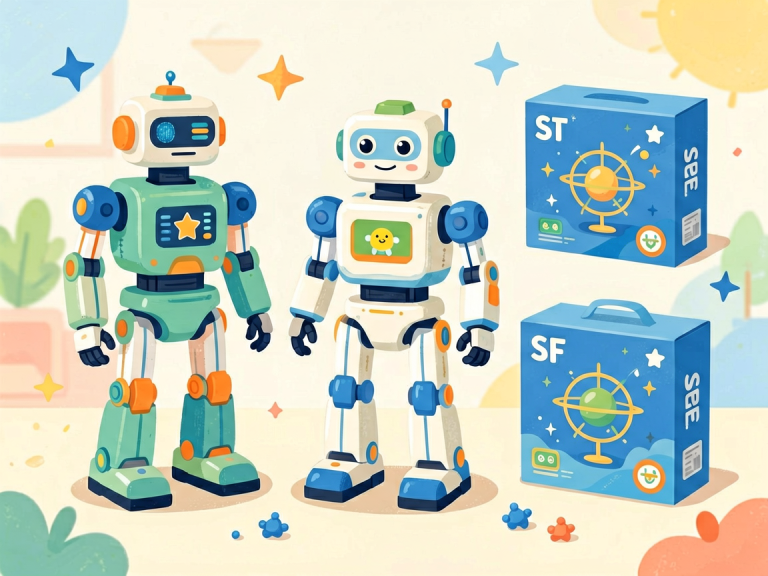
These often include a programmable robot, a remote control, or a circuit board. Brands like Botley (screen-free) or LEGO Boost are excellent for beginners. They teach sequencing, loops, and logic visually.
Chemistry and Science Experiment Kits
Kits with test tubes, pH paper, and safe chemicals let children conduct simple reactions. The classic “grow your own crystals” or “make a lava lamp” kits are always popular. Ensure they come with safety goggles and clear instructions.
Engineering and Construction Kits
These focus on building structures, bridges, or vehicles. K’NEX, Erector sets, or magnetic tiles like Magna-Tiles are great. They develop spatial awareness and understanding of forces like tension and compression.
Earth and Space Kits
For the astronomy-loving child, kits that include a simple telescope, rock collection, or solar system model can spark wonder. Weather station kits that measure rainfall and temperature also combine science with daily observation.
The Verdict: Should You Buy STEM Kits for an 8-Year-Old?
In most cases, the answer is yes, but with careful selection. STEM kits offer immense educational benefits when chosen wisely—they cultivate curiosity, build problem-solving skills, and provide hands-on learning that screens cannot replace. However, a bad purchase can lead to frustration, wasted money, and a child who associates science with boredom.
To make the best decision, consider your child’s personality, your willingness to participate, and your budget. Start with a moderately priced, open-ended kit from a reputable brand. Observe how your child interacts with it. If they dive in and ask for more, you have found a winner. If not, try a different category—maybe they are a future artist who needs a more creative STEM kit like a 3D pen or a solar-powered art bot.
Ultimately, the goal is not to raise a future engineer or scientist overnight. The goal is to give your 8-year-old the tools to explore, fail, learn, and grow. A well-chosen STEM kit can be one of those tools—a small investment in a big world of discovery. So go ahead, pick a kit that lights up your child’s eyes, and let the sparks of learning fly.