Unlocking Early Development: The Best Puzzle Toys and Board Games for One-Year-Olds
The first year of a baby’s life is a whirlwind of rapid growth, from helpless newborn to curious toddler who can pull themselves up, take tentative steps, and explore the world with newfound determination. At 12 months old, a child’s brain is developing at an astonishing rate, forming neural connections that lay the foundation for all future learning. While many parents focus on physical milestones like walking and talking, the role of structured play—specifically through puzzle toys and board games—is often underestimated. For a one-year-old, these are not merely entertainment; they are powerful tools that foster cognitive skills, fine motor coordination, problem-solving abilities, and even social-emotional growth. However, not all toys are created equal. The wrong choice can frustrate a toddler or pose safety risks. This article dives deep into the world of age-appropriate puzzle toys and board games for one-year-olds, exploring why they matter, what to look for, and how to use them effectively to support your child’s journey.
The Developmental Significance of Puzzle Toys and Board Games at Age One
At first glance, the idea of a one-year-old playing a “board game” might seem absurd. After all, traditional board games involve complex rules, turn-taking, and patience—concepts well beyond a toddler’s grasp. Yet the term “board game” in this context refers to simplified, tactile activities that mimic the structure of games without the cognitive demands. Similarly, puzzle toys for one-year-olds are far removed from the 1,000-piece jigsaws adults enjoy. Instead, they are chunky, durable pieces designed to be grasped, manipulated, and placed into corresponding slots or slots with simple shapes.
Why invest in these toys at such a young age? The answer lies in the concept of “scaffolding”—providing just the right level of challenge to stretch a child’s abilities without causing overwhelm. At 12 to 18 months, toddlers enter a critical phase of sensorimotor development. They are learning cause and effect (e.g., “If I push this shape into the hole, it disappears”), object permanence (understanding that a toy still exists even when hidden), and early categorization (sorting by color or shape). Puzzle toys specifically target these areas. When a one-year-old attempts to fit a triangular block into a triangular hole, they are not just practicing hand-eye coordination; they are engaging in logical reasoning, spatial awareness, and persistence. Each successful placement reinforces their sense of agency and accomplishment.
Board games designed for one-year-olds, such as simple matching games or cooperative stacking activities, serve a slightly different purpose. They introduce the concept of turn-taking in a very basic form—“Mommy’s turn, now Baby’s turn”—which lays the groundwork for social reciprocity. They also encourage joint attention, where the child and caregiver focus on the same object, a key predictor of language development. Moreover, these games often incorporate bright colors, sounds, or textures that stimulate multiple senses, keeping the toddler engaged for longer periods. In an era of screen-based entertainment, physical toys that require hands-on interaction are invaluable for building neural pathways that screens cannot replicate.
Essential Features to Look for When Choosing Toys for One-Year-Olds
Navigating the toy aisle can be overwhelming, especially with countless products claiming to be “educational.” For one-year-olds, safety and appropriateness must come first. Here are the critical features to consider:
1. Size and Choking Hazards
One-year-olds explore everything with their mouths. All puzzle pieces and game components must be larger than a standard toilet paper roll (approximately 1.25 inches in diameter) to prevent choking. Avoid toys with small detachable parts, magnets, or buttons that could be swallowed. Look for solid, one-piece items that cannot be easily broken.
2. Material and Durability
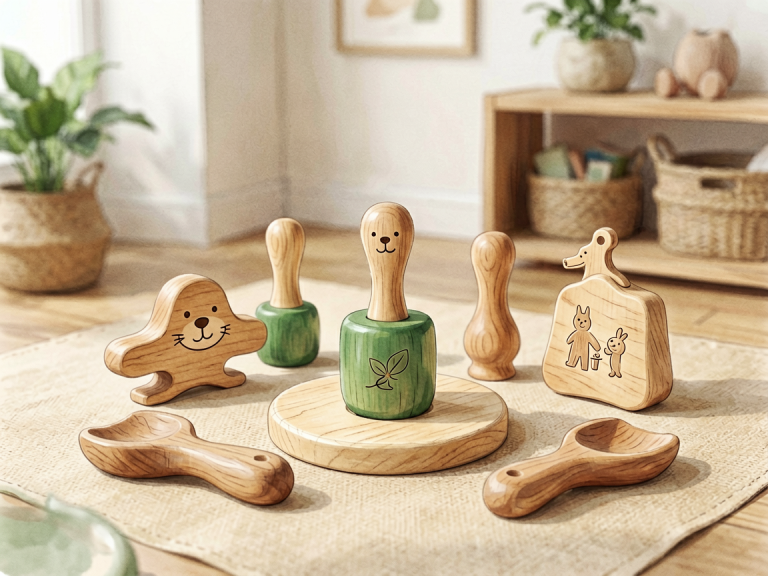
Toddlers are notoriously rough on toys. They drop, throw, chew, and stomp. Therefore, choose puzzles and games made from non-toxic, BPA-free plastic, sustainably sourced wood with child-safe paint, or soft fabric. Wooden puzzles are classic favorites because they are sturdy, have a satisfying weight, and can withstand enthusiastic play. Avoid sharp edges, splinters, or painted surfaces that might chip off.
3. Simplicity and Graduated Challenge
The best puzzles for one-year-olds have large, easy-to-grasp knobs or handles. Each piece should represent a single shape (circle, square, triangle) or a familiar object (apple, car, animal). Avoid puzzles with more than 4–6 pieces initially. As the child masters a simple shape sorter, you can introduce puzzles with slightly more pieces or with pictures that require matching (e.g., a farm animal puzzle where the cow fits into the cow-shaped slot). Similarly, board games should have only one or two actions—like flipping a card, placing a block on a stack, or moving a piece along a path with a single die that has large, clear dots or colors.
4. Sensory Engagement
One-year-olds learn through their senses. The best toys incorporate multiple textures (smooth, bumpy, soft), sounds (rattles, crinkles, squeaks), and bright contrasting colors. For example, a wooden puzzle with a mirror under the pieces or a board game that produces a musical note when a piece is placed correctly can captivate a toddler’s attention and encourage repetition.
5. Open-Ended vs. Structured Play
For a one-year-old, strict rules are counterproductive. Look for toys that allow for both guided play (e.g., “Let’s put the red circle in this hole”) and free exploration (e.g., the child can simply stack the puzzle pieces or throw them around). The toy should not be frustrating; if a piece is too difficult to fit, the child will quickly lose interest. Some of the best games for this age are actually “cooperative” rather than competitive—everyone wins by completing the activity together.
Top Recommended Puzzle Toys for One-Year-Olds
While individual preferences vary, several types of puzzle toys have proven consistently beneficial for one-year-olds:
1. Shape Sorters with Large Knobs
Classic wooden shape sorters with a cube or a flat board are ideal. Look for one where each shape has a knob or peg for easy gripping. The Melissa & Doug “First Shapes Jumbo Knob Puzzle” is a standout—it features three basic shapes (circle, square, triangle) with large wooden knobs, and the shapes are easy to insert into the corresponding cutouts. This toy teaches shape recognition, fine motor control, and cause and effect. Another excellent option is the “Hape Pound & Tap Bench with Xylophone,” which combines hammering with shape sorting, adding an auditory reward.
2. Peg Puzzles with Pictures
Once a child masters basic shapes, peg puzzles with familiar images are the next step. For instance, a “Farm Animals” peg puzzle with four or five chunky animal pieces, each with a peg, allows the toddler to lift and place the cow, pig, sheep, etc., into their designated spots. These puzzles encourage vocabulary development if you name the animals while playing. They also help with visual discrimination—the child must notice the outline of each animal to match it correctly. The “Melissa & Doug Farm Animals Jumbo Knob Puzzle” is a classic that lasts for months.
3. Stacking and Nesting Puzzles
Stacking rings, nesting cups, and graduated blocks are essentially 3D puzzles. While not traditional jigsaw puzzles, they require the child to sequence pieces by size or color. Stacking rings teach order, and when the rings are placed correctly, the tower stands. A one-year-old may initially just knock the tower over, but that is part of learning. The “Fisher-Price Rock-a-Stack” is a pediatrician-favorite because its rings are soft and the base rocks, adding a wobble challenge. Similarly, “Green Toys Stacking Cups” are made from recycled plastic and can be used in water play, sand play, or as a simple nesting puzzle.
4. Simple Insert Puzzles with Sound or Texture
Some puzzles incorporate additional sensory elements. For example, the “B. toys – One Two Squeeze” puzzle features soft, squeezable shapes that make a squeaking sound when pressed. The peek-a-boo element adds surprise. Another clever design is the “Taf Toys Silhouette Puzzle” where pieces have different fabric textures (furry, silky, bumpy) that invite tactile exploration. These multi-sensory puzzles are particularly effective for children who are reluctant to sit still for traditional puzzles.
Age-Appropriate Board Games for One-Year-Olds
True board games for one-year-olds are rare, but several innovative products bridge the gap between toy and game:
1. Cooperative Color or Animal Matching Games
Games like “The Color Monster: A Pop-Up Board Game” (simplified for toddlers) or “Peaceable Kingdom’s ‘Hoot Owl Hoot!’” (age 3+ but can be adapted) have inspired simpler versions. A great example is the “Galt Toys – First Matching Game,” which includes large, thick cards with bright images of familiar objects. The “game” involves flipping over two cards to find a match—but for a one-year-old, you can just let them turn the cards over and name the pictures. No rules required. The key is that the cards are large, durable, and easy to handle.
2. Stacking and Balancing Games
Games like “HABA – My First Games: Animal Upon Animal” (ages 2+) have a junior version for age 1.5+ called “HABA – My Very First Games: First Orchard,” which is a cooperative fruit-collecting game. In this game, toddlers take turns picking wooden fruit from a tree and placing them in a basket—there is no competition, just shared fun. The pieces are large wooden fruits that are perfect for grasping. Similarly, “The Learning Journey – My First Game: Bear’s Picnic” uses a spinner with large arrows and soft plastic pieces that children can place on a picnic blanket. The simplicity and lack of pressure make these ideal introductions to turn-taking.
3. Sensory Dice Games
A die (or cube) with large colored dots or simple pictures can be used in countless ways. For a one-year-old, you can roll the die and then do the action together: if it shows a red dot, find something red; if it shows a star, clap your hands. The “Montessori Silicone Dice” (soft, chewable, with raised dots) is perfect. Pair it with a set of colored rings or blocks, and you have an impromptu game that teaches color recognition and imitation. Another option is the “Educational Insights – The Sneaky, Snacky Squirrel Game” (ages 3+), but its junior version “Sneaky, Snacky Squirrel – Toddler Edition” features large, easy-to-grasp acorns and a simple spinner. The toddler’s goal is to collect acorns in a log—a fine motor challenge disguised as a game.
4. Musical Movement Games
Board games don’t have to be static. A “game” like “Fisher-Price – Let’s Go! Hop & Roll” is an interactive mat that responds to movement. When the child crawls or rolls over different sections, it plays music and lights up. While not a board game in the traditional sense, it incorporates the idea of rules (follow the lights) and cause-effect learning. Simple “Simon Says” can also be turned into a game with a single action card—“Jump!” or “Clap!”—using oversized cards with pictures. One-year-olds love imitation, so even without a formal board game, you can create one using household items.
Safety Considerations and Common Pitfalls
When introducing puzzle toys and board games to a one-year-old, safety is paramount. Always inspect toys for loose parts, splinters, or sharp edges. Never leave a toddler unsupervised with a toy that has small pieces, even if they are supposedly “age-appropriate.” Remember that children develop at different rates; if your child is not interested in puzzles at 12 months, do not force it. Some children prefer gross motor activities like pushing cars or climbing, and that is perfectly normal. Puzzles become more engaging around 15–18 months when fine motor skills improve.
Another common pitfall is expecting “correct” play. A one-year-old might use a puzzle piece as a hammer, a chew toy, or a projectile. This is not a sign of failure—it is exploration. Let them experiment. Only step in when safety is a concern. Also, be mindful of overstimulation. Too many toys at once can lead to scattered attention. Rotate puzzles and games weekly to maintain novelty.
Avoid electronic puzzles that talk or beep incessantly. While they may seem educational, the child often becomes a passive observer rather than an active problem-solver. The best learning happens when the toddler’s own actions cause the outcome—a piece fitting into a hole, a block stacking upright, a ring sliding onto a pole. These analog experiences build intrinsic motivation.
How to Engage Your One-Year-Old with Puzzle Toys and Games
The key to success is patience and playfulness. Here are practical strategies:
- Model the behavior: Sit alongside your toddler and slowly demonstrate how to place a puzzle piece. Use exaggerated gestures and enthusiastic language: “Wow! The circle fits! Can you find the square?” Avoid taking over the task. If your child struggles, gently guide their hand or offer a verbal cue.
- Follow your child’s lead: If they want to dump all the pieces out and bang them together, let them. Later, you can try to redirect: “Let’s put the cow back in the barn.” The goal is to create positive associations.
- Use narration: Talk about colors, shapes, sounds, and what you are doing. “You picked up the red ring. That goes on the blue peg.” Even if they don’t understand, they are absorbing language.
- Keep sessions short: A one-year-old’s attention span is 2–5 minutes per activity. If they lose interest, move on. Do not force completion.
- Celebrate effort, not just success: Clap and say “You tried so hard!” even if the piece didn’t fit. This builds resilience.
- Create a routine: Perhaps after a nap or before lunch, spend 5 minutes playing with a puzzle together. Consistency helps toddlers feel secure and anticipate the activity.
Conclusion: The Lasting Impact of Playful Learning
Puzzle toys and board games for one-year-olds are far more than simple pastimes. They are the building blocks of cognitive development, fine motor dexterity, and early social understanding. By choosing safe, well-designed toys that offer the right level of challenge, and by engaging with your child in a warm, responsive manner, you create an environment where learning feels like play. The skills honed during these early months—attention, persistence, categorization, and spatial reasoning—will serve as the foundation for later academic success. Moreover, the shared joy of completing a puzzle together or laughing over a silly game creates bonds that last a lifetime. So go ahead, open that box of chunky wooden pieces, and watch your one-year-old’s world expand one puzzle piece at a time.