The Hidden Wisdom of Choosing Toys with Limited Play Value for 1-Year-Olds
In an age of flashing lights, robotic voices, and toys that promise to teach quantum physics to infants, the idea of deliberately choosing toys with limited play value for a one-year-old might seem counterintuitive, even radical. Yet a growing number of pediatric occupational therapists, early childhood educators, and thoughtful parents are arguing that less is truly more when it comes to the first years of life. For a child who has just learned to sit, crawl, or take a wobbly first step, a toy that does not do much—or even appears dull by adult standards—can be a powerful tool for development. This article explores why choosing toys with limited play value for one-year-olds is not a compromise, but rather a wise and developmentally appropriate choice that nurtures deep concentration, creativity, and a genuine sense of discovery.
The Problem with Overstimulating Toys
Walk down the toy aisle of any big-box store, and you will encounter a dizzying array of products designed to capture the attention of infants. Many of these toys feature multiple buttons, loud sounds, bright flashing colors, and dozens of separate functions. They are marketed as “educational” and “interactive,” promising to boost brain development from day one. However, for a one-year-old, such toys often do the opposite of what they claim. A child at this age is still learning to process the world through their senses. When a toy bombards them with several types of stimuli at once—auditory, visual, and tactile—the child may become overwhelmed rather than engaged. Instead of focusing on one aspect, they flit from one cause-effect trigger to another, never truly exploring any single feature. This creates a shallow, fragmented play experience that actually inhibits the development of sustained attention.
Moreover, the so-called “play value” of these flashy toys is often an illusion. A child may press a button, hear a tune, and watch a light spin, but the toy is essentially doing all the work. The child is a passive observer, not an active player. In contrast, a toy with limited functions—such as a simple wooden block or a soft fabric ball—demands something from the child. It invites them to push, pull, bang, drop, roll, and eventually stack or throw. These actions are the true building blocks of cognitive and motor development. When a toy does not tell the child what to do, the child must invent the play. That invention, not the toy itself, is where genuine learning happens.
What “Limited Play Value” Actually Means
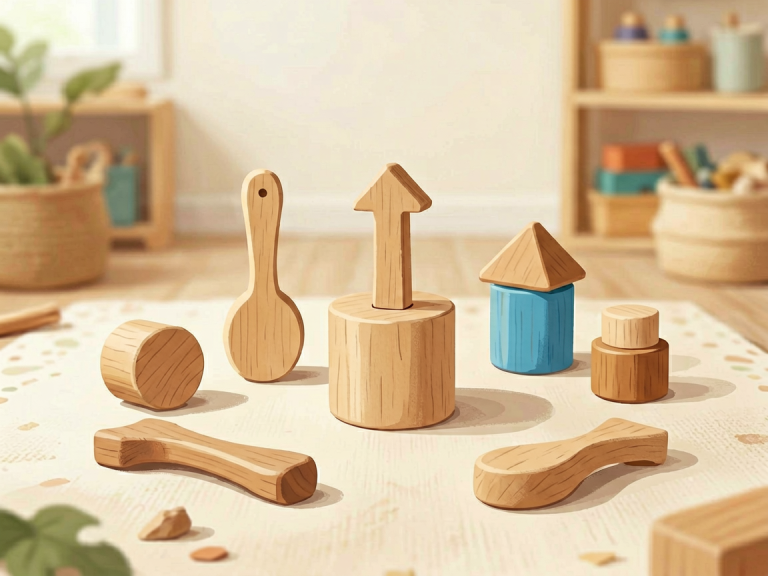
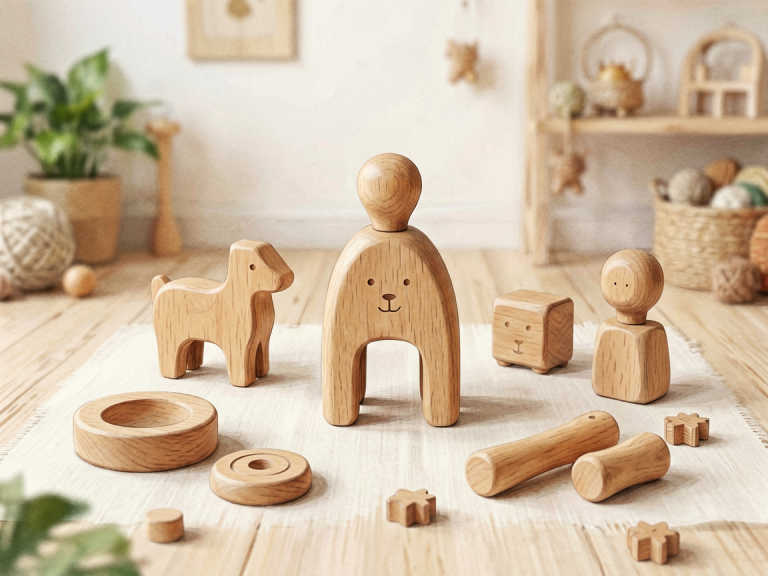
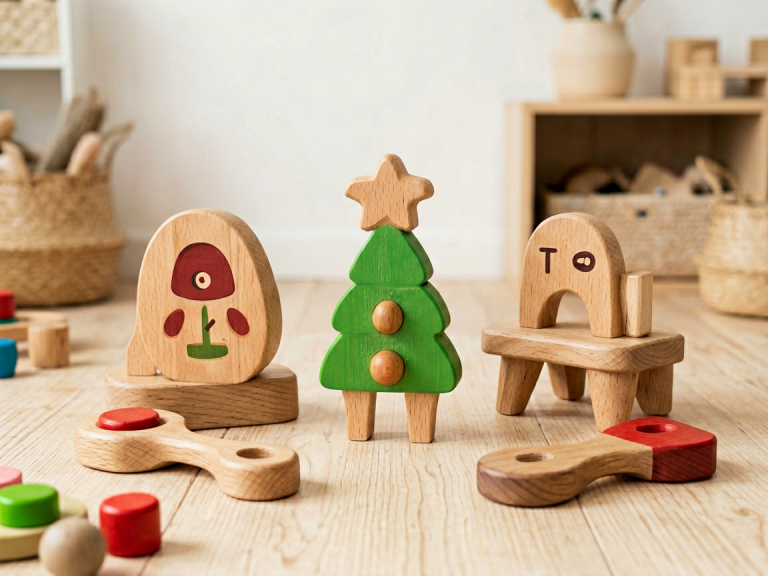
The term “limited play value” can be misleading. It does not mean a toy is worthless or that it offers no opportunities for engagement. Rather, it describes a toy that has a narrow, open-ended range of possible uses, or one that is deliberately simple in its design. For a one-year-old, examples include a simple rattle, a set of wooden nesting bowls, a cardboard box, a small stuffed animal with no electronics, or a few large, smooth stones. These toys do not light up, make noise on their own, or offer pre-programmed instructions. Their play value is limited in the sense that they provide only a few raw materials—shape, weight, texture, color—but those materials are enough to spark a child’s curiosity and imagination in countless ways.
A one-year-old is at a stage of rapid neural development. Their brains are forming new synaptic connections at a staggering rate, and the way they interact with objects is foundational. Limited toys allow the child to control the pace and nature of their own learning. For instance, a simple wooden spoon can be a drumstick, a crawling toy, a teether, or a tool for scooping imaginary food. The child decides. This self-directed play is crucial for developing executive function, problem-solving skills, and a sense of agency. A toy that says “quack” or flashes a star because a button was pressed, in contrast, offers a fixed cause-and-effect relationship that the child can only respond to, not reimagine.
Fostering Deep Focus and Concentration
One of the most precious gifts parents can give a one-year-old is the ability to concentrate. In our fast-paced world, adult attention is constantly fragmented, and we often worry that children will fall behind if they are not stimulated early. But research in child development suggests that attention is a skill built through practice, and practice requires boring materials. When a child plays with a toy that has limited play value, they are not distracted by a dozen blinking features. They are free to spend five, ten, or even fifteen minutes turning a wooden ring around and around, feeling its smooth surface, testing how it fits on a finger or a post. This repetitive, focused exploration is the foundation of deep learning. It strengthens neural pathways related to sustained attention and cognitive endurance.
In contrast, many electronic toys encourage a “grab and go” style of play. The child presses one button, gets a reward, presses another, gets another reward, and then quickly loses interest because the novelty wears off. Within minutes, they may become frustrated and demand another toy, starting the cycle again. Over time, this pattern can contribute to shorter attention spans and a constant need for external stimulation. By choosing limited toys, parents can gently teach their one-year-old that play is not about being entertained, but about being engaged. The child learns to find pleasure in the simple act of exploring an object thoroughly, discovering new properties with each turn. That kind of focus is far more valuable than any flashing light.
Unlocking Creativity and Imagination
A toy with limited play value is a blank canvas for a young mind. Consider a cardboard box. To an adult, it is just a container. To a one-year-old, it might be a cave to hide in, a drum to bang, a hiding place for a stuffed bunny, or a “car” to push across the floor. The beauty of limited toys is that they do not dictate their own meaning. The child must assign meaning, and that act of assignment is the essence of creativity. When a toy is highly specific—say, a plastic battery-operated phone that only plays a pre-recorded melody—it leaves no room for imagination. The child can only use it as a phone, and only in the way its designers intended. This narrows the world, rather than expanding it.
For a one-year-old, creativity is not yet about making art or telling elaborate stories; it is about discovering that objects can be transformed and repurposed. A simple stack of rings can become a tower, a bracelet, a wheel, or a thrown projectile. Each new use is an imaginative leap. When parents choose toys with limited play value, they are actively supporting this cognitive flexibility. The child learns that there is no single “right” way to play, which reduces frustration and encourages experimentation. This mindset, cultivated in infancy, can lead to a lifelong love of learning and problem-solving. In a world that constantly demands creative thinking, the humble wooden block may be more powerful than the most advanced digital gadget.
Safety, Longevity, and the Joy of Simplicity
Another practical reason to choose toys with limited play value for one-year-olds is safety and durability. Simple toys are usually made of fewer parts, making them less likely to break into small, choking hazards. They also tend to be made of natural materials like wood, cloth, or silicone, which are safer for a child who puts everything in their mouth. Electronic toys often contain small batteries and wires, which pose a serious risk if swallowed or exposed through cracks. Limited toys, by their very nature, are more transparent and easier for parents to inspect.
Additionally, toys with limited play value often outlast their flashy counterparts. The plastic light-up toy that entertains a one-year-old for a week may be discarded by their second birthday, when the novelty fades and the batteries die. A set of simple wooden blocks, however, can be used from infancy into the preschool years and beyond. As the child grows, the blocks can be stacked, counted, sorted, balanced, and used in imaginative play. The same bowl that a one-year-old bangs with a spoon can become a tea cup, a hat, or a part of a robot at age four. This longevity is both economically and environmentally wise. In a culture obsessed with novelty, choosing limited toys is a bold stand for sustainability and simplicity.
Practical Tips for Parents and Caregivers
If you are convinced, you may wonder how to put this philosophy into practice. First, look for toys that are open-ended and made from natural materials. Wooden blocks, rings, balls, fabric squares, silicone teethers, and simple nesting cups are excellent choices. Second, avoid toys with batteries unless they serve a specific functional need, such as a talking book for a child with speech delays. For a typical one-year-old, battery-free toys are almost always better. Third, observe your child. See what they naturally gravitate toward. Often, they prefer household objects—wooden spoons, plastic containers, empty boxes—over any commercial toy. Embrace that. Let them play with a cardboard tube and watch their face light up with curiosity.
Finally, resist the urge to constantly rotate or add more toys. A one-year-old thrives on repetition and familiarity. They may want to play with the same set of limited toys for weeks or months, exploring them in slightly different ways each time. That repetition is not boring; it is how their brains consolidate learning. By respecting their play rhythm, you stand beside them as a witness to their discoveries, not as a manager of their stimulation. The quiet moments spent rolling a ball back and forth, or stacking two blocks again and again, are truly the moments of greatest growth.
Conclusion: Less Is More in the First Year
Choosing toys with limited play value for one-year-olds is not a rejection of fun or an attempt to make childhood austere. On the contrary, it is a joyful and respectful decision to offer a child the freedom to play in their own way, at their own pace. These simple toys do not shout for attention; they wait patiently for a child’s imagination to bring them to life. In doing so, they foster focus, creativity, safety, and a sense of mastery. In an age of excess, the hidden wisdom lies in restraint. By giving a one-year-old less—fewer buttons, fewer lights, fewer pre-packaged solutions—we actually give them more: more room to grow, more space to explore, and more ownership over their own learning. The child who has learned to find infinite value in a simple wooden circle has received a gift that no flashing, singing, corporate-engineered gadget can ever match. And that, perhaps, is the deepest truth of early childhood: the best toys are the ones that leave the most room for the child to be the toy’s true creator.