The Gift of Less: Why Overbuying Holiday Toys for a 9-Month-Old Misses the Point
Every December, a familiar frenzy grips the homes of young families. Parents, grandparents, aunts, and uncles all descend upon toy stores, determined to make the season magical for a baby who cannot yet crawl, speak, or even recognize a wrapped present. For families with a nine-month-old, the pressure is especially acute. The child is on the cusp of real mobility and curiosity, but cannot articulate a single wish. And so, in a well-intentioned panic, adults compensate by buying everything—plush animals, light-up rattles, electronic singing consoles, shape sorters, stacking cups, and an inexplicable number of stuffed bears. This pattern, which we might bluntly call overbuying holiday toys for 9 month olds, is often dismissed as harmless festive cheer. But a closer look reveals a more troubling picture: the excess not only fails to benefit the infant, but may actually harm her developmental trajectory, burden parents emotionally and financially, and distort the very meaning of holiday giving. The truth is that a nine-month-old needs very little—and sometimes the most loving gift is a profound exercise in restraint.
The Developing Brain: What a 9-Month-Old Actually Sees
To understand why overbuying is counterproductive, we must first peer into the world of a nine-month-old. At this age, an infant’s brain is a marvel of rapid pruning and connection-building. Every waking moment is spent making sense of a chaotic universe—learning how objects move, how faces respond, how sounds relate to gestures. Yet this extraordinary work does not require a multiplication table of bright plastic gadgets. In fact, developmental psychologists consistently emphasize that the best toys for infants are simple, open-ended, and somewhat "boring." A cardboard box can become a cave, a car, a drum, or a hiding space. A wooden spoon offers taste, texture, and a way to pound the high chair tray. A single colorful scarf can be pulled, waved, peeked-at, and chewed for twenty minutes. The nine-month-old mind thrives on repetition, variation, and sensorimotor exploration—not on novelty for its own sake.
However, when a child is surrounded by a mountain of holiday toys, the sensory input becomes overwhelming. An infant’s attention span at this age typically lasts mere minutes, and the presence of dozens of toys fragments that attention into meaningless micro-glimpses. Research on infant cognition shows that babies learn best when they can focus deeply on one or two objects at a time, manipulating them in repetitive ways that build neural pathways. When a corner of the living room is piled high with noisy, flashing, battery-operated contraptions, the baby’s visual field is cluttered, her auditory system is bombarded, and her natural exploration is replaced by a shallow, rapid-fire switching between items. Instead of engaging in what psychologists call "sustained play"—the foundation for later problem-solving and creativity—she simply flits from one stimulus to the next, never really mastering any. The very abundance of toys, paradoxically, teaches her nothing at all.
Moreover, nine-month-olds are fundamentally social learners. Their greatest delight is not a toy but a responsive human face. They learn by watching their caregivers’ expressions, imitating sounds, and receiving reassurance during moments of uncertainty. A pile of glittering plastic can never replace a game of peek-a-boo or the simple pleasure of being lifted high into the air. When parents spend the holidays wrapping, organizing, and buying toys, they are inadvertently reducing the time they spend sitting on the floor, face-to-face with their child. The most developmentally rich gift for a nine-month-old, therefore, is not a toy at all—it is the undivided attention of a loving adult. Overbuying actively undermines this gift by normalizing a transactional exchange: things in place of presence.
The Paradox of Choice: Too Many Toys, Too Little Play
In the 2000s, psychologist Barry Schwartz popularized the "paradox of choice" in the context of consumer goods. The idea is that while some choice is liberating, an overwhelming abundance leads to paralysis, anxiety, and reduced satisfaction. This principle applies with particular force to infants and toddlers. A famous 2018 study observed that toddlers who were offered fewer toys played for longer durations and with more creativity and focus than those given a larger assortment. The researchers noted that an overabundant environment prompted the children to become easily distracted and to abandon toys quickly. Although the study focused on toddlers, the implications for nine-month-olds are even more salient, because their executive function—the brain’s ability to filter irrelevant stimuli and maintain attention—is virtually nonexistent. They are at the mercy of their environment. An overwhelming toy set does not invite them to choose; it simply drowns them.
This phenomenon has a tangible impact on the quality of play. Consider a typical holiday morning with a nine-month-old. She is placed in the center of a gaily wrapped mountain. She reaches for the nearest shiny object, makes it squeak, drops it, and turns to the next. Then the next. Within five minutes, she is crying—not because she is unhappy, but because her nervous system cannot process the sheer sensory load. The parents interpret the tears as fatigue or hunger, but the true cause is overstimulation. Meanwhile, the toys themselves become meaningless commodities. The child does not develop an attachment to any one possession; she learns that possessions are interchangeable, disposable, and ultimately unsatisfying. This early lesson in material saturation may blossom into a lifelong expectation that joy comes from acquisition, not from engagement.
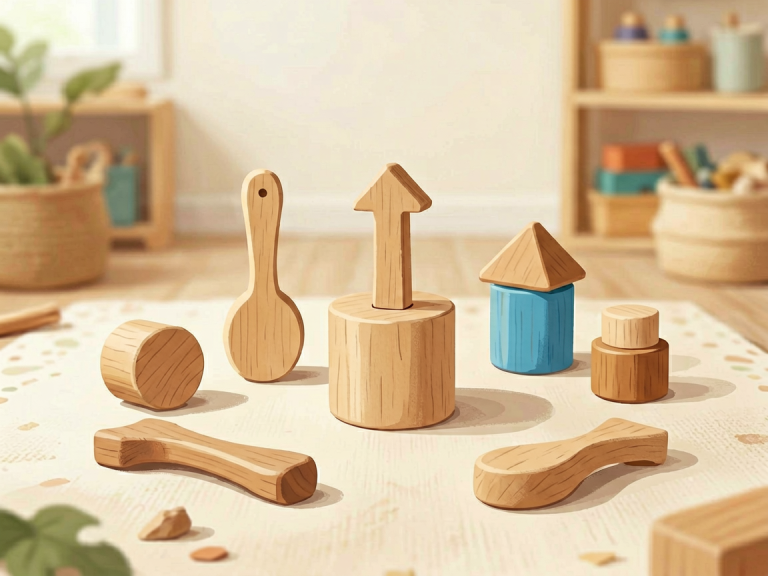
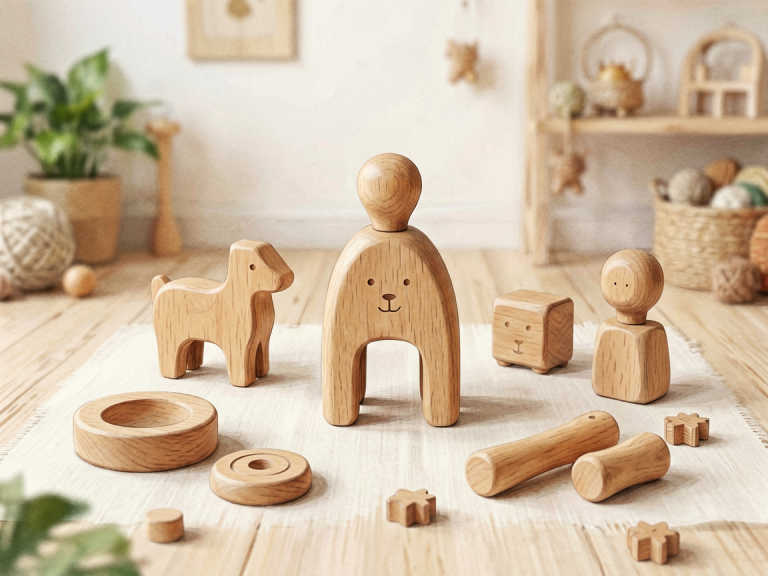
What, then, should a holiday toy list look like for a nine-month-old? Developmental experts suggest selecting just three to five high-quality, age-appropriate items that support emerging skills. An ideal set might include a set of nesting cups, a soft cloth book with crinkly pages, a tactile ball with different textures, and a musical instrument like a simple maraca. These toys are not "boring" to an infant—they are doorways to endless discoveries. Nesting cups help with spatial relationships and hand-eye coordination; the crinkly book stimulates curiosity about cause and effect; the textured ball invites grasping, rolling, and mouthing. When presented with a small, curated collection, a baby will spend far longer exploring each object, forming preferences, and exercising her growing motor abilities. The holiday season should be an opportunity to model this mindful approach, not to demonstrate adult anxieties about generosity.
The Emotional and Financial Toll on Parents
The effects of overbuying extend far beyond the playroom. For parents, the decision to buy an excess of holiday toys is frequently driven by complex emotional currents. Some parents grew up in households with material scarcity and now, with the means to do so, vow to give their children "everything." Others feel guilt about returning to work or spending long hours away from their baby, and they compensate with purchases. Still others are simply caught in the competitive crossfire of social media, where photos of staged playrooms and lavish gift piles create a false standard of parental adequacy. In this atmosphere, a nine-month-old’s holiday gifts become a proxy for parental worth. To give less feels like failing; to give more feels like love.
This emotional calculus has a heavy financial price. The average family in many Western countries spends hundreds or even thousands of dollars on holiday gifts, and much of that spending is directed at children. For a nine-month-old, the majority of those toys will be discarded, ignored, or forgotten within months. Many will be broken, outgrown, or simply deferred to a later developmental stage. The result is that parents are paying a premium for clutter, waste, and temporary gratification—all while the bank account strains against holiday bills. The stress of this spending can bleed into January, creating resentment, anxiety, and marital tension. Far from enhancing the family’s happiness, overbuying becomes a source of quiet regret.
Moreover, the emotional toll includes the inevitable disappointment of unmet expectations. Parents dream of the moment their baby’s eyes light up at an expensive interactive toy; in reality, a nine-month-old often more eagerly plays with the gift wrap and ribbons. This mismatch between fantasy and reality can produce a subtle sense of failure: "We spent so much, and she didn’t even care." Yet the fault lies not with the baby but with the adults’ misunderstanding of infant nature. A nine-month-old is not ungrateful; she is simply behaving as a neurologically honest creature. She will always prefer the tissue paper to the gift, because the paper crinkles, moves, and fits in her mouth. If parents can release their own expectations and accept this truth, they can liberate themselves from the unreasonable demand that a holiday toy must be a magical moment. The actual magic is watching a baby discover a simple object on her own terms—and that requires no price tag at all.
Rethinking Holiday Giving: Mindful Alternatives for Infants
So how can families break the cycle of overbuying holiday toys for 9 month olds? The first step is to normalize a different kind of giving. Instead of defaulting to another plush animal or a noisy gadget, consider gifts that are experiential, relational, or consumable. For a nine-month-old, an experience such as a parent-child music class or a set of swimming lessons is a wonderful gift that creates shared memories and supports development. Even simpler, a custom-made photo book featuring the faces of close family members can become a treasure; infants love looking at faces, and a board book of relatives helps build emotional bonds and early language skills. For relatives who live far away, a subscription to a monthly developmental toy club or a video recording of a favorite song sung by grandma can be more meaningful than any physical object.
Another mindful alternative is to give a gift that props up the parents, since the baby’s well-being is inseparable from her caregivers’. A gift certificate for meal delivery, a cleaning service, or a few hours of babysitting is, in effect, a gift to the baby—because a less exhausted, more present parent is the environment in which the child thrives. Similarly, a donation made in the baby’s name to a children’s charity can teach (though the baby will not understand it yet) the value of generosity. The holiday table can be a place to share stories about how each relative chose their gift, transforming the exchange from a commercial transaction into a narrative of care.
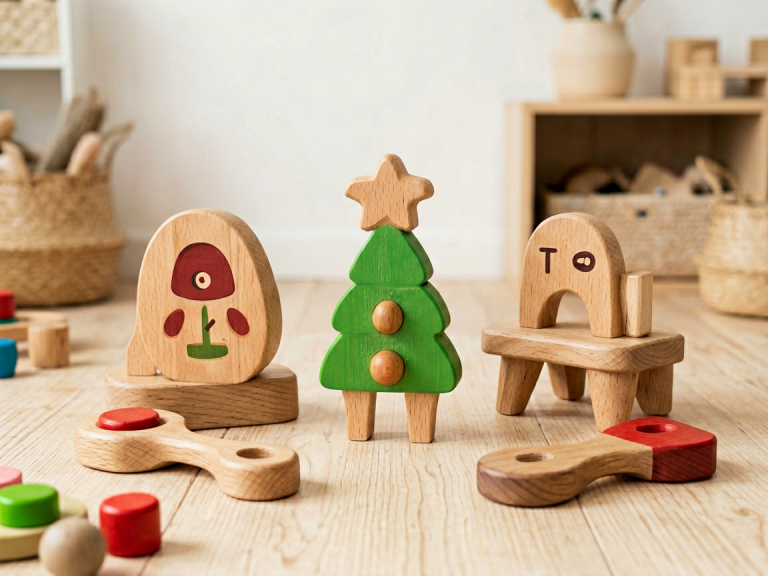
For parents themselves, the discipline of a gift list is essential. Write down the names of the people who plan to give presents, and communicate clearly, without embarrassment, that the family is intentionally keeping the number of toys small. Suggest a theme: "We are focusing on books this year," or "We are asking for a single wooden puzzle from each person." Relatives may be resistant at first, but a kind explanation—"We’ve read that babies play better with fewer toys, and we want to protect her attention span"—can turn a potential conflict into an educational moment. Many adults will be relieved to be freed from the endless hunt for the perfect toy. The holidays can then become what they are supposed to be: a time of gathering, food, rituals, and shared warmth, rather than a logistical race to accumulate beeping plastic.
Conclusion: The Best Gift Is Presence
The image of a nine-month-old staring at a mountain of unwrapped gifts is far less charming than greeting-card commercials suggest. What that baby actually sees is a confusing wall of colors and sounds, all of which demand her attention but none of which offer the grounded, responsive interaction she craves. The overbuying holiday toys for 9 month olds phenomenon is not a sign of modern indulgence only; it is a symptom of our broader detachment from the real needs of infants. We give things because giving time is harder. We buy more because trusting less seems risky. We wrap, hoard, and accumulate because the quiet act of sitting beside a baby and marveling at a wooden spoon can feel, in our productivity-obsessed culture, like doing nothing.
Yet doing nothing is precisely what a nine-month-old needs most. She needs a parent who is not on a phone comparing prices. She needs a lap that is not piled high with gift wrap. She needs a room where she can crawl in safety and find one fascinating object—a teaspoon, a cardboard tube, a loved one’s face—and explore it for as long as she wishes. The holiday gift that truly gives is the gift of an unhurried, uncluttered, and attentive environment. If we can resist the siren call of overbuying, we offer our infants the foundational experiences of deep play, calm attention, and secure attachment. These are not flashy, nor are they announced with a bow. But they are the toys that never break, never go on sale, and never outlast their welcome. And they will remain, long after the wrapping paper is thrown away, the most beloved gifts a child ever receives.
Word count: approximately 1,450.