The Gift of Less: Why Overbuying Holiday Toys for Six-Month-Olds Does More Harm Than Good
Introduction: The Pile Under the Tree
The holiday season transforms living rooms into colorful wonderlands, with wrapping paper cascading like snowdrifts and ribbons curling around boxes of every size. For parents of a six-month-old, the temptation to shower their little one with gifts is almost irresistible. Relatives send packages, friends stop by with plush animals, and online shopping carts fill with "developmental" toys promising to boost IQ, motor skills, and sensory awareness. By Christmas morning, the floor around the tree resembles a toy store explosion, and the six-month-old sits in the middle, blinking at the chaos, more interested in the empty gift bag than the $80 interactive piano gym. This scene repeats in millions of homes each year, yet few pause to ask a crucial question: Is overbuying holiday toys for a six-month-old actually beneficial? The answer, supported by developmental psychology and pediatric research, is a resounding no. In fact, excessive toy gifting to infants not only fails to enhance development but can actively hinder attention, creativity, and emotional regulation, while creating unnecessary financial and environmental strain. This article explores the hidden costs of holiday overindulgence and offers practical, evidence-based alternatives for celebrating with a baby.
The Developmental Mismatch: What a Six-Month-Old Truly Needs
To understand why overbuying is counterproductive, we must first examine the developmental reality of a six-month-old. At this age, infants are beginning to sit with support, roll over, reach for objects, and bring everything to their mouths. Their vision is improving but still far from adult acuity—they prefer high-contrast patterns, simple shapes, and faces. They are just starting to understand object permanence, which means that a toy hidden under a blanket is a fascinating surprise, not a predictable concept. Their attention spans are measured in minutes, often seconds, and their primary modes of learning are through caregiver interaction, body movement, and sensory exploration of ordinary objects.
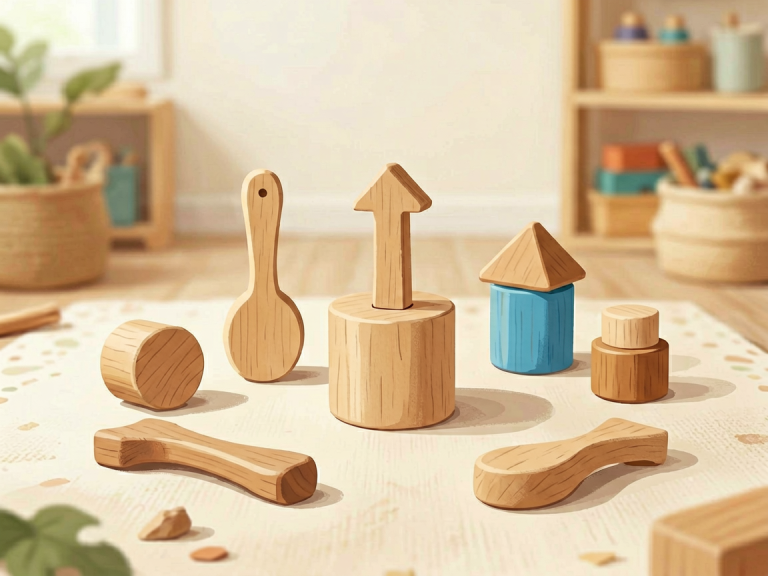
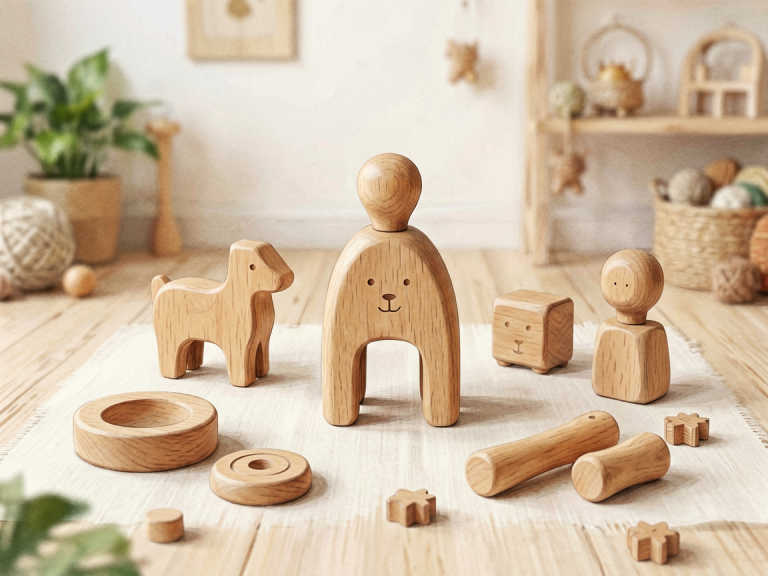
What does this mean for toys? A six-month-old does not need a toy that lights up, sings six songs, and has detachable parts. They need opportunities to practice grasping, mouthing, shaking, banging, and dropping. A simple wooden rattle provides as much stimulation as an electronic gadget—actually more, because it allows the baby to generate the cause-and-effect themselves. The most developmentally appropriate "toys" at this age are often not toys at all: cardboard boxes, plastic containers, fabric scraps, spoons, and their caregiver's face. When a child receives dozens of flashy toys at once, the sensory overload can override the infant's natural curiosity. Instead of focusing on one object and exploring its properties in depth, the baby becomes a passive recipient of rapid-fire stimuli, flitting from one shiny thing to the next without ever entering a state of sustained attention. This phenomenon, sometimes called "toy fragmentation," has been documented in child development research. A well-known 2017 study published in *Infant Behavior and Development* found that toddlers presented with fewer toys engaged in longer, more creative play sessions than those presented with many toys. While that study focused on toddlers, the principle applies even earlier: the developing brain craves depth, not breadth.
The Hidden Costs: Attention, Creativity, and Emotional Overload
Overbuying holiday toys does not simply clutter the nursery; it actively shapes the infant's developing neural pathways. Consider attention. At six months, the prefrontal cortex—the brain region responsible for focus and self-control—is in a rapid growth phase. Every experience strengthens certain synaptic connections while pruning others. When a baby is surrounded by twenty toys, each with its own sound, color, and texture, the brain learns that distraction is normal. The child's gaze darts from a flashing star to a squeaky elephant to a crinkly book, never settling long enough to form what psychologists call "sustained executive attention." Over time, this can lay the groundwork for a shorter attention span in preschool and beyond. Conversely, when an infant has only two or three toys available, they are forced to use their imagination and problem-solving skills. They may try shaking the rattle, then turning it, then mouthing it, then dropping it and watching it fall. Each repetition builds neural connections about weight, gravity, sound, and texture. This is the essence of deep learning, and it is impossible when the environment is saturated.
Creativity also suffers. A six-month-old's creativity may look different from an older child's, but it is already blooming. Placing a soft block in a cup, banging two spoons together, or sliding a sock off their foot—these are acts of invention. When toys are overabundant, the baby's exploratory drive is overwhelmed. The sheer presence of so many objects creates a passive, consumerist relationship with play: "What can this toy do to me?" rather than "What can I do with this object?" The latter is the foundation of inventiveness. Furthermore, emotional overload is a genuine concern. Infants are highly sensitive to environmental complexity. A mountain of gifts can raise cortisol levels, leading to irritability, fatigue, and even disturbed sleep during the holiday season. Parents often report that their baby seems fussy and overstimulated after unwrapping marathon—not because they are ungrateful, but because their immature nervous systems are not equipped to process that volume of novelty. The result is a crying baby on Christmas evening, not a delighted one.
The Pressure Behind the Purchases: Who Is Really Buying the Toys?
To address overbuying, we must confront the social and emotional drivers that fuel it. Parents of a six-month-old are especially vulnerable to holiday toy marketing because they want to prove—to themselves and others—that they are good caregivers. A well-stocked gift pile is mistakenly equated with love and attention. Grandparents, aunts, and family friends also participate, each wanting to be remembered as the one who gave the "best" present. E-commerce algorithms amplify this by suggesting "must-have baby toys for Christmas" based on the baby's age, and influencer unboxing videos normalize the idea that a happy infant is one surrounded by new merchandise. The toy industry knowingly exploits this parenting anxiety. With a global market worth over $90 billion, toy manufacturers have perfected the art of convincing adults that a specific rattle, mat, or swing is essential for the baby's future. They slap labels like "STEM-approved" and "Montessori-inspired" on plastic junk, and parents swipe their credit cards without hesitation.
But let's be honest: for a six-month-old, the most valuable gift is not a toy at all. It is time with a calm, attentive adult. Face-to-face interaction, peek-a-boo games, gentle tickles, singing lullabies, reading board books with exaggerated expressions—these are the experiences that sculpt the infant brain. No toy can substitute for a caregiver's responsive smile. When parents empty their wallets and fill the room with objects, they may unconsciously be compensating for the one thing they fear they cannot give enough of: time. The shopping is easier than the sitting, the wrapping easier than the waiting, the buying easier than the being present. Overbuying is a communication—but it communicates anxiety, not love.
A More Meaningful Holiday: Practical Alternatives to Overbuying
So what should a well-meaning family do instead of overbuying for a six-month-old? The answer is not to abandon gift-giving, but to reframe it around quality, restraint, and experience. Here are several evidence-informed strategies for a less-cluttered, more joyful holiday.
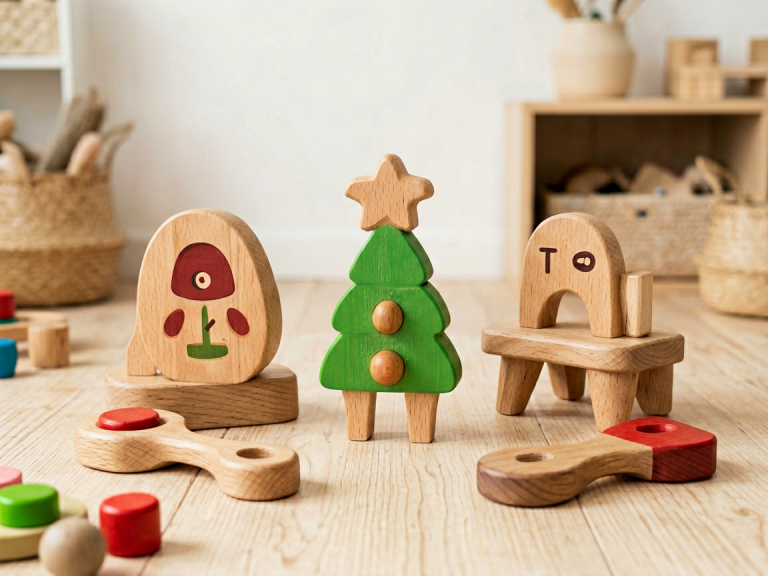
Adopt the "one plus one" rule. For a six-month-old, the ideal gift load is modest: one meaningful toy, one sensory item (like a teether or cloth book), and perhaps one experience (like a family membership to the local zoo or a baby music class). This gives the infant enough novelty to engage with without overwhelming their system. When extended family asks what to buy, provide a specific, short list. Suggest gifts that grow with the child, such as a set of silicone stacking cups, a wooden rainbow, or a simple push cart—items that will still be used at 12, 18, and 24 months. Quality over quantity ensures that each gift is actually played with.
Emphasize gifts of presence. Wrap a "coupon book" for baby? Of course the baby cannot read, but the parents can. Announce a gift of "six Saturday morning park walks with baby" or "a monthly photo book of your first year." These gifts create memories and connection, not clutter. For relatives who insist on showing love through objects, suggest consumable gifts that delight without adding pile-up: a basket of organic baby snacks (if the baby is ready for solids), a cute outfit in the next size, or a donation to a children's charity in the baby's name. Research in psychology shows that anticipating and receiving an experience brings more sustained happiness than material goods, and this applies to parents and babies alike.
Curate the play environment. After the holidays, parents should rotate toys rather than present them all at once. Keep only three to five toys in the baby's immediate play area, and store the rest in a closet. Every few days, swap one toy for another. This keeps novelty alive without sensory flooding. When a baby has fewer options, they are more likely to engage in what researchers call "mastery play"—repeating an action until they can do it fluently, which builds confidence and motor planning. This approach also helps parents observe what truly interests their child. Does she love the crinkle paper? Does he prefer the wooden spoon over the expensive rattle? Such observations are the foundation of responsive parenting.
Create a low-stimulation holiday morning. Plan the unwrapping process with the baby's nervous system in mind. Open gifts gradually, one at a time, with plenty of cuddles and play breaks in between. After each gift, spend a few minutes helping the baby explore it. Remember that the wrapping paper itself is often the most captivating toy—let the baby crinkle, tear, and mouth it (under supervision). Do not feel obligated to open every gift on the same day. Save some for later, to extend the holiday magic over a week or two. This not only protects the infant from overload but also teaches an early lesson in mindfulness: joy can be savored, not devoured.
Conclusion: The Greatest Gift Is a Peaceful Brain
As the holiday lights twinkle and the carols play, parents of six-month-olds face a choice. They can join the consumerist frenzy, buying every advertised toy and stacking them into an avalanche of plastic and sound. Or they can step back and remember what infant development research has shown for decades: babies thrive on simplicity, repetition, and human connection. The true holiday gift for a six-month-old is not a shelf of gadgets but a lap to sit on, a voice to hear, and a world to explore at their own pace. By choosing fewer, better gifts; by prioritizing presence over presents; and by protecting the baby's emerging attention and creativity, parents give the most precious gift of all—a calm, uncluttered space in which their child's own genius can unfold. This holiday season, let the tree be decorated, the cookies be baked, and the grandparents be hugged. But when it comes to the pile of toys under the tree, consider making it a small, thoughtful mound instead of a mountain. The baby will not remember the number of gifts. But the brain they are building will remember the peace.