The Essential Age Rating Guide for Toys for 6-Month-Olds: Safety, Development, and Smart Choices
Why Age Ratings Matter More Than You Think
When you become a parent to a six-month-old, the world of toys suddenly transforms from a distant aisle in the store into a landscape of potential hazards, developmental milestones, and endless marketing claims. Every package screams “educational,” “stimulating,” or “baby-safe,” yet the small print often reveals a confusing array of age recommendations. For a six-month-old, the age rating on a toy is not merely a suggestion or a legal formality—it is a crucial safety net that can prevent choking, strangulation, poisoning, and developmental setbacks. At six months, babies are typically learning to sit independently, rolling both ways, reaching for objects with intent, bringing everything to their mouths, and beginning to explore cause and effect. Their physical and cognitive abilities are advancing rapidly, but they still lack the coordination, judgment, and muscle control of older infants. Understanding the age rating guide for toys for 6-month-olds means deciphering what those numbers actually mean, why some toys rated for older babies are dangerous, and how to choose playthings that will genuinely support your child’s growth without exposing them to unnecessary risks. This guide will walk you through the key principles, the hidden traps, and the practical criteria for selecting toys that are perfectly matched to this magical, mouthy, and marvelously curious stage.
The Anatomy of an Age Rating: How “0-6 Months” or “6+ Months” Is Determined
Age ratings on toys are not arbitrary numbers invented by marketing departments. In most countries, including the United States, the United Kingdom, and the European Union, they are based on safety standards and developmental science. The most widely used system in the US is the one established by the Consumer Product Safety Commission (CPSC) and the ASTM International standard F963, which evaluates toys for hazards such as small parts, sharp edges, lead content, and mechanical risks. For babies under three years of age, the most critical test is the “small parts cylinder” – a tube that mimics the size of a child’s throat. If a toy or any removable part fits entirely into that cylinder, it is automatically banned for children under three. However, age ratings are not solely about choking. They also consider how a child at a given age is developmentally expected to play with the toy. For a six-month-old, the rating “0-6 months” or “6+ months” indicates that the toy has been designed to accommodate the mouthing behavior, the grasp reflex, the visual acuity (which is still developing), and the beginning of deliberate hand-eye coordination. Tissues, fabric books with crinkly pages, soft rubber teethers, and large, lightweight rattles are typical examples. A toy rated “for 18 months and up” might not have any small parts, but it could have long cords, complex mechanisms, or components that require fine motor skills that a six-month-old simply does not yet possess. The danger is not always immediate; sometimes it is the frustration of presenting a toy that is too advanced, which can lead to negative associations with play or even accidental misuse.
Decoding the Labels: “6+ Months” vs. “0-6 Months” vs. “1 Year”
Many parents assume that “6+ months” is a catch-all category, but there are subtle differences between a toy labeled for newborns and one labeled for six-month-olds. A “0-3 months” or “0-6 months” toy typically focuses on high-contrast visuals, gentle sounds, and very soft textures, because newborns and younger infants have limited visual acuity and no intentional reaching. By six months, a baby is much more active. They can grasp with a palmar grip (using the whole hand), transfer objects from one hand to the other, and bang items together. They are also starting to develop pincer grip, though it may not be refined. Therefore, a good toy for a six-month-old should be engaging but not overstimulating. It should have parts that are large enough to be safely mouthed but varied enough to explore. When you see “6+ months” on a teether, it often means the toy has different textures, cooling gels, or firmness levels that are suitable for emerging teeth. When you see “6+ months” on a soft block, it means the block is lightweight and likely has rounded corners, with perhaps a bell or rattle inside. On a fabric book, “6+ months” suggests that the book has crinkly pages, a mirror, and tactile elements that encourage page turning (though a six-month-old will only turn by patting or grabbing). The label “1 year” or “12+ months” should be a hard stop for a six-month-old, even if the toy appears harmless. For example, a toy with a pull string longer than 12 inches is a serious strangulation hazard. A toy with a battery compartment that is not secured with a screw is a choking and chemical hazard. A toy with small wheels that can detach is a choking hazard. Always trust the label over your intuition, because the label is built on decades of incident data.
The Choking Hazard Trap: Why “Looks Big” Is Not Enough
The single most dangerous misconception about toys for six-month-olds is that “if it can’t fit in the mouth, it’s safe.” In reality, choking can occur with objects that do not fully enter the mouth but lodge in the throat or block the airway. At six months, babies have a strong gag reflex but a narrow trachea. Even objects that are slightly larger than the standard small-parts cylinder can pose a risk if they are compressible, like balloon remnants, or if they have a shape that can conform to the airway. A soft plastic toy that is 1.5 inches in diameter might seem “big enough,” but if a baby compresses it with their gums and swallows a portion, it could create a seal. This is why the age rating guide for toys for 6-month-olds specifically warns against toys that have any fill material accessible (like beads in a stuffed animal that could burst), toys with vinyl or latex that can tear into small pieces, and toys that are shaped like spheres, eggs, or balls with a diameter between 1.75 inches and 1.25 inches (the so-called “danger zone” for airway obstruction). Also beware of toys that have “standoff” features – like antennae, ears, or tails – that can become detached or bent. A common problem is with plush animal toys that have embroidered eyes. While they are generally safe, if the embroidery is loose, a six-month-old can pull out the threads and ingest them. The age rating system takes these subtle failure modes into account, so a toy that is “choking safe” for a one-year-old (who no longer mouths everything) may still be prohibited for a six-month-old. The rule of thumb: if you are in doubt, use a toilet paper roll or a dedicated small-parts tester. But remember that the toilet paper roll only tests for the “small parts” regulation – it does not test for compressibility, shape, or the force of a baby’s bite.
Choosing Toys That Match Six-Month Developmental Milestones
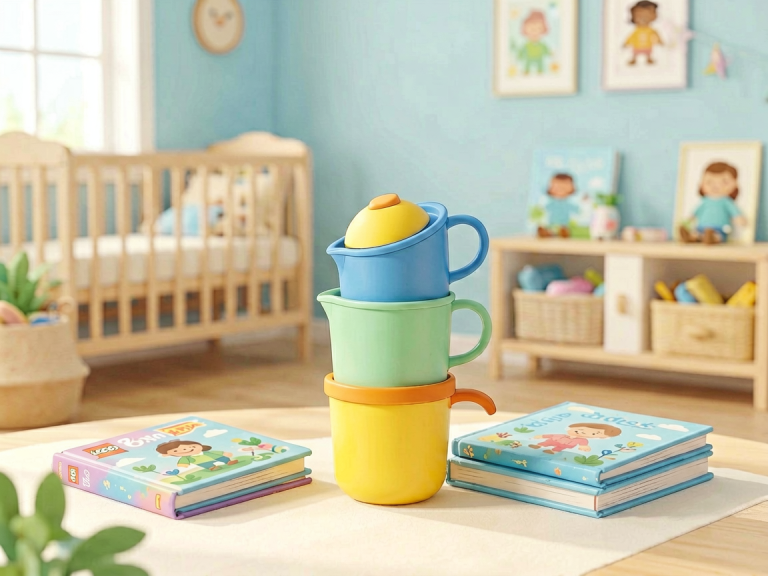
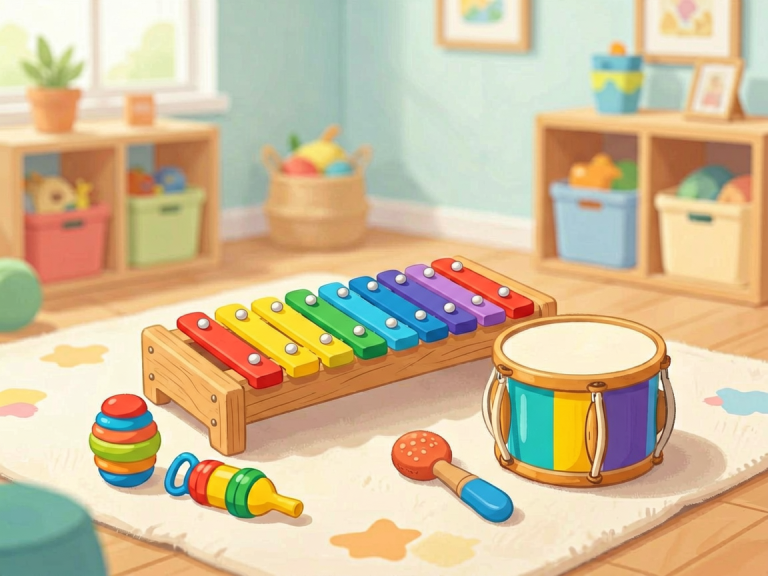
Now that we understand the safety constraints, we can focus on the positive side: what should a six-month-old actually play with? The age rating guide for toys for 6-month-olds is not just a list of prohibitions; it is a blueprint for developmental support. At six months, the major milestones include: rolling from back to tummy and tummy to back, sitting with support (and possibly briefly without), reaching and grasping with intent, transferring objects, banging objects on surfaces, looking for dropped toys, and responding to their name. Toys that encourage these milestones are ideal. First, *teething toys* are non-negotiable. Look for a rating of “6+ months” and choose designs that are easy to hold, such as a ring or a dumbbell shape. Silicone or natural rubber are excellent choices because they are soft, non-toxic, and flexible. Avoid liquid-filled teethers that can leak or break. Second, *cause-and-effect toys* – like a simple pop-up toy, a ball that makes a sound when rolled, or a busy board with one large button – help a six-month-old understand that their actions create reactions. However, the mechanism must be easy to activate with a flat palm or a whole-hand press. Third, *sensory books* and *textured balls* are wonderful. A fabric book with crinkly pages, a mirror, and tags to pull on provides visual, tactile, and auditory stimulation. A textured ball that is ten inches in diameter is safe for tossing, rolling, and mouthing, but only if it is made of soft, non-toxic PVC or rubber and is labeled for 6+ months. Fourth, *stacking cups* are a classic for a reason. They are large, safe, and can be mouthed, banged, nested, and eventually stacked. Make sure the cups have no sharp edges and that the holes (if any) are large enough to prevent finger entrapment but not so small that a cup can suction onto a baby’s face.
What to Avoid: Visual, Auditory, and Material Hazards
Age ratings also address sensory overload and material toxicity. Toys for six-month-olds should not have flashing lights (especially not strobe-like effects) or loud, jarring sirens. At six months, the auditory system is still sensitive, and high-pitched sounds above 85 decibels can cause hearing damage. Many electronic toys labeled “6+ months” are actually too loud, so you should test the toy at arm’s length – if the sound hurts your ears, it is too loud for your baby’s. In terms of materials, avoid anything with BPA, phthalates, lead, or flame retardants. Most reputable toys will state “BPA-free” or “phthalate-free” on the packaging. But be cautious with wooden toys: while they are aesthetically pleasing, they must be made of soft woods with non-toxic paints (or no paint at all). Hard woods can be too heavy and can cause bruising when a six-month-old bangs them against their head. Also avoid toys with long strings, ribbons, straps, or cords – any string longer than 12 inches is a strangulation hazard. This includes pacifier clips that attach to toys, though those have their own safety regulations. Magnets are an absolute no for any child under three, and for a six-month-old they are doubly dangerous because if a magnet is swallowed, it can cause intestinal perforation. Small batteries, button cells, are also a severe hazard – they can cause internal burns within hours. Always ensure that any battery-operated toy has a locked compartment. Finally, avoid toys that are too heavy. A six-month-old has limited neck and upper body strength. A toy that is heavier than 1 pound is likely to cause accidental damage if the baby drops it on themselves.
The Role of Supervision: The Rating Is Not a Substitute for You
Even the best age-rated toy cannot replace an attentive caregiver. The age rating guide for toys for 6-month-olds is a tool, not a fortress. A toy that is perfectly safe today could become hazardous tomorrow if your baby develops a new skill – for example, a six-month-old who learns to chew vigorously can break a toy that was previously only mouthed gently. Also, toys can fail due to manufacturing defects or wear and tear. That is why you must inspect toys regularly for cracks, loose seams, peeling paint, or broken parts. Supervise play sessions, especially when your baby is on a soft surface with many toys. A developing baby can easily roll onto a toy and suffocate if the toy is a large, firm cushion-like item. In fact, one hidden danger is the “nursing pillow” type of toy – some soft play mats have detachable arches that can fold down and cover a baby’s face. Always read the safety instructions that come with the toy, and keep the toy’s original packaging until you are sure of its construction. Moreover, be mindful of the environment: toys should be played on a clean, dry floor away from stairs, heaters, and other hard objects. The six-month developmental stage is one of rapid mobility – many babies start army crawling or scooting, so a toy that is safe in one position can become dangerous when the baby propels themselves forward onto it.
A Practical Checklist for Buying Toys for a 6-Month-Old
To summarize, here is a simple checklist that you can use whenever you see an age rating guide for toys for 6-month-olds or when you are browsing in a store. First, confirm the age label: if it says “0-3 months,” it might be too simple and not provide enough challenge; if it says “12+ months,” it is too risky. Ideally, you want a toy that explicitly says “6+ months” or “6-12 months.” Second, use the small-parts test: any removable part should be larger than 1.25 inches in every dimension, and the toy should be firmer than a typical gummy bear but not rock-hard. Third, check for strings, cords, and ribbons – they must be less than 12 inches long and fixed securely. Fourth, smell the toy: a strong chemical odor is a red flag. Fifth, look for certification marks like the CE mark in Europe, the ASTM F963 compliance in the US, or the UKCA mark. These marks indicate that the toy has been tested. Sixth, think about washability: a six-month-old will drool on everything, so toys must be easy to clean (surface washable or machine washable, if necessary). Seventh, consider the play value: a toy that only does one thing (like a rattle that rattles) may bore your baby quickly, while a toy with multiple textures, sounds, and manipulative features will hold attention for longer. Eighth, do not buy toys with small mirrors that are not securely embedded, as the mirror glass can shatter. Finally, trust your instincts: if a toy feels flimsy, poorly made, or has any part that looks like it could break off, do not buy it, regardless of what the rating says.
Beyond the Label: Setting Up a Safe Toy Rotation Routine
Now that you understand the rating system, you can optimize your toy selection for development and sanity. A good strategy for six-month-olds is to rotate toys every few days. Keep out no more than three to four toys at a time. This prevents overstimulation and helps your baby focus. For example, on one day you might put out a soft textured ball, a crinkle fabric book, and a teether ring. The next day, you could swap the book for a stacking cup set and the teether for a different one. This rotation keeps the toys interesting without requiring a huge collection. Additionally, place toys within easy reach during tummy time – tummy time is crucial for strengthening the neck, shoulders, and back muscles that will eventually lead to crawling and sitting. A toy that is slightly out of reach encourages reaching and rolling. Just make sure that the surface is soft but not too deep (like a plush rug) because that can make it hard for a baby to move. When you introduce a new toy, play along with your baby: show them how to shake a rattle, how to press a button, how to roll a ball. At six months, imitation is a powerful learning tool. The age rating guide is not there to make you paranoid; it is there to empower you to choose confidently. By following the guide, you are giving your child the freedom to explore, mouth, bang, and discover the world in a way that is safe, joyful, and perfectly in tune with their emerging abilities. And as your baby grows, you will update the ratings, revisit the checklist, and watch in amazement as the small creature who once only grasped a random ring transforms into a little person who can stack two cups, wave goodbye, and turn the pages of a board book – all because the right toys were there at the right time, matched to the right age.