Craft Kits vs. Art Supplies for 8-Year-Olds: Which Nurtures Creativity Better?
Every parent or teacher who has faced the colorful chaos of a child’s hobby shelf has pondered the same dilemma: should I buy another pre-packaged craft kit, complete with its glossy box, numbered bags, and step-by-step instructions? Or should I simply invest in a pile of paper, paint, clay, and markers, letting the child decide what to make? For an 8-year-old, this choice matters more than it might seem. At this age, children are transitioning from the imaginative play of early childhood into a phase where logic, planning, and self-evaluation become more prominent. The tools we provide—whether a rigid craft kit or open-ended art supplies—can shape how they approach problems, express themselves, and even how they feel about their own abilities. Both options have passionate advocates, but the truth is more subtle. To make the right decision, we need to examine what each approach actually offers, where it falls short, and what an 8-year-old’s developing brain truly craves.
The Case for Craft Kits: Structure, Success, and Satisfaction
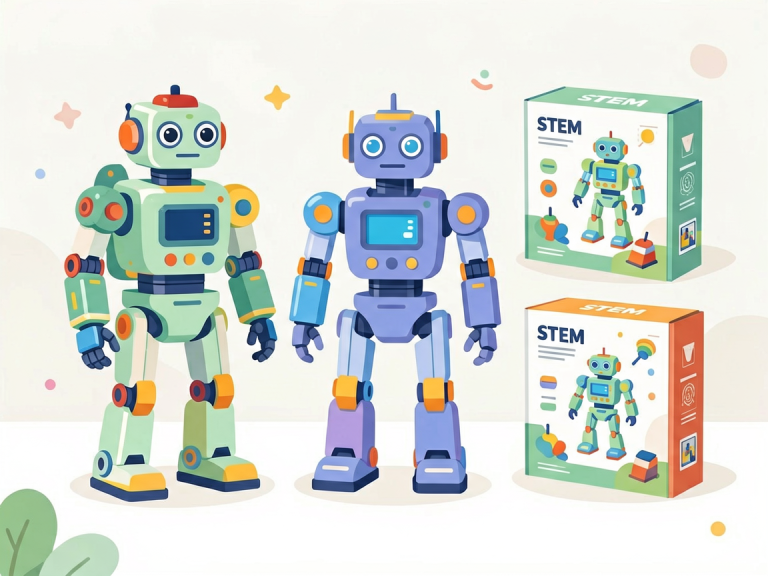
Craft kits are undeniably appealing. They promise a finished product: a glowing lantern, a felt unicorn, a wooden robot that actually moves. For an 8-year-old, there is deep satisfaction in following instructions and seeing a recognizable object appear from a flat pile of materials. This is not trivial. At age eight, children are increasingly aware of social comparison; they want to show off something that looks "real" and "done." A craft kit provides a clear recipe for success. It teaches sequencing, patience, and the ability to follow directions—skills that are heavily valued in school and life. Moreover, the sense of accomplishment from completing a complex kit can boost self-esteem. When a child holds up a finished birdhouse they assembled with only a little help, they feel competent. That feeling can motivate them to take on more challenges.
Craft kits also reduce the paralysis of choice. An 8-year-old may stand before a blank sheet of paper and a box of crayons and feel overwhelmed. "I don't know what to draw," is a common complaint. A kit eliminates this blank-page anxiety. It says: here is the project, here are the exact pieces, here is what you do with them. For children who are perfectionists or who struggle with creative confidence, this scaffolded experience can be a gateway. It shows them that they *can* make things, and sometimes that is the first step toward making their own things. Additionally, many kits now incorporate educational elements—electronics, simple sewing, magnetics—that introduce technical skills in a playful way. A child who learns to wire a small light bulb in a kit may later feel curious enough to experiment with a battery and a motor on their own. In that sense, a kit can be a springboard rather than a cage.
The Case for Open-Ended Art Supplies: Freedom, Exploration, and Originality
Yet for all their virtues, craft kits have a dark side: they are closed-ended. There is a "right" way to assemble the project, and any deviation is seen as a mistake. The instruction booklet does not care about a child's imagination; it cares about compliance. When every piece has a designated place, the child’s role is reduced to that of an assembler, not a creator. The final product looks identical to the one on the box, which means it looks like everyone else's. This can subtly teach an 8-year-old that the goal of making things is to reproduce someone else's vision. Over time, a steady diet of kits may suppress original thinking. The child learns to look for instructions before starting anything, rather than looking inside themselves.
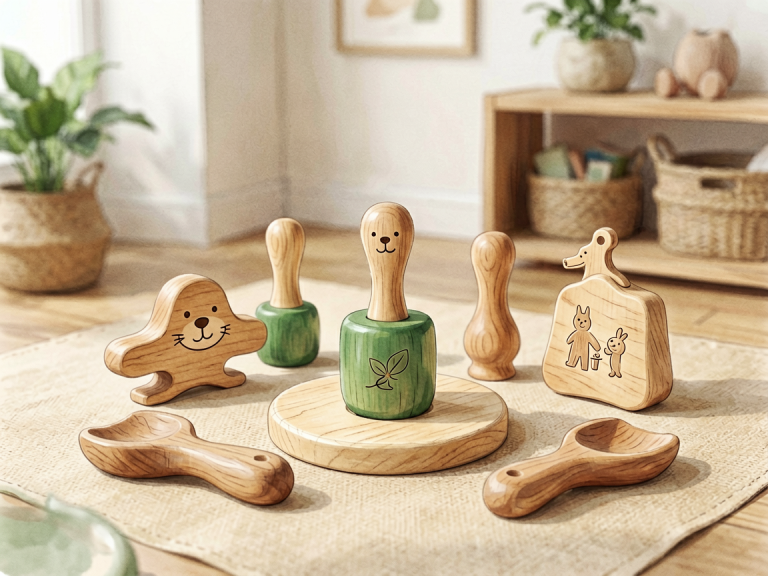
Open-ended art supplies—watercolor sets, air-dry clay, pastel chalks, yarn, beads, cardboard boxes, scissors, tape—offer the opposite philosophy. They have no agenda. A lump of clay can become a dinosaur, a bowl, a face, or nothing at all when the child is done squishing it. A piece of cardboard can be a shield, a painting surface, or a time machine. This ambiguity is precisely what fuels creativity. For an 8-year-old, the process of deciding what to make, what materials to use, and what to do when things go "wrong" is far more valuable than any polished product. It develops executive function: planning, decision-making, problem-solving, and flexibility. If the paint drips, the child must adapt. If the clay collapses, they must rebuild. These are real creative challenges, whereas a kit's challenges are mostly mechanical.
Art supplies also honor the individual child. No two children will use the same set of markers in the same way. One might draw detailed comic stories; another might scribble abstract swirls. Both are valid. This freedom helps children discover their own preferences and talents. It also allows for emotional expression. An 8-year-old who has had a hard day at school may not be able to articulate their frustration, but they can mix dark colors and tear paper aggressively. That is therapy as much as art. Craft kits rarely provide this outlet because the project is predetermined; there is no room for a child's mood to change the outcome.
What Does an 8-Year-Old Really Need? Developmental Considerations
To decide between kits and supplies, we must look at the eight-year-old mind. At this age, children are in what psychologist Erik Erikson called the industry versus inferiority stage. They are eager to build, create, and produce things that are valued by others. They want to feel useful and competent. This is why the tangible result of a craft kit is so attractive—it provides clear proof of competence. But they are also developing what researchers call divergent thinking, the ability to generate multiple solutions to a problem. Divergent thinking flourishes in open-ended environments. If a child is always handed a kit with one solution, they exercise convergent thinking (matching the instructions) at the expense of divergent thinking.
Moreover, 8-year-olds have better fine motor control and hand-eye coordination than when they were five. They can handle scissors, glue guns (with supervision), needles, and small brushes. This is the ideal time to introduce real artistic techniques, not pre-cut foam shapes. They are also beginning to understand symbolism and metaphor. Open-ended art lets them explore these concepts. For example, a child might draw a "happy monster" that represents their little brother. That symbolic act would never emerge from a kit.
Another factor is attention span. While an 8-year-old can focus longer than a preschooler, they still benefit from activities that allow for short bursts of effort as well as extended projects. A craft kit often demands hours of monotonous assembly, which can be frustrating. Open-ended supplies allow the child to spend five minutes or fifty minutes depending on their mood. They can start a painting, leave it, come back, and change it. That flexibility respects their developing sense of time and self-regulation. It also teaches that not everything needs to be completed in one sitting; some projects are living, evolving things.
The Best of Both Worlds: A Hybrid Approach
The smartest approach is not to choose one over the other, but to use both strategically. Parents and educators should view craft kits as tools for teaching specific skills and building confidence, while art supplies are the foundation for genuine creative expression. For example, if a child loved making a birdhouse kit, encourage them to build a second birdhouse without the kit, using scrap wood and their own measurements. This transitions them from following instructions to innovating. Similarly, take the concepts from a kit—like weaving or sewing—and then provide raw fabrics, yarn, and needles, and let the child design their own creation. The kit becomes a lesson, and the open supplies become the playground.
It is also wise to choose high-quality, flexible craft kits that allow for some customization. Some kits come with blank areas to decorate, or parts that can be attached in different configurations. Look for kits that say "includes extra materials so you can make it your own." Avoid kits that are purely about gluing pre-printed pieces together. Better yet, build your own "kit" at home: a box of themed materials—like all-blue items, or all-recycled materials—along with a challenge card that says "Create something that can float" or "Build a fairy house." This gives structure and a learning objective while preserving a child’s artistic freedom. For an 8-year-old, this hybrid offers the best of both worlds: a starting point, but not a cage.
Conclusion
In the quiet debate between craft kits and art supplies, the winner is not a product—it is the child. Craft kits are excellent for teaching patience, following directions, and delivering the joy of completion. They build confidence and can introduce technical skills. But if we rely on them exclusively, we risk raising children who wait for someone else to hand them a blueprint before they dare to make anything. Open-ended art supplies are messier, more uncertain, and sometimes produce nothing at all. Yet they are the true breeding ground for originality, problem-solving, and emotional expression. For an 8-year-old, the ideal creative environment is not a binary choice. It is a careful blend: supplies that invite exploration, kits that teach craft, and the freedom to take what a kit has shown them and then break the rules. So buy the watercolor set. Also buy the robot kit. But then, afterward, take the robot apart together and see what happens when you rearrange its pieces. That is where the magic truly lives.