The Comforting Companions: The Role of Dolls and Plush Toys in Infant Development
Introduction
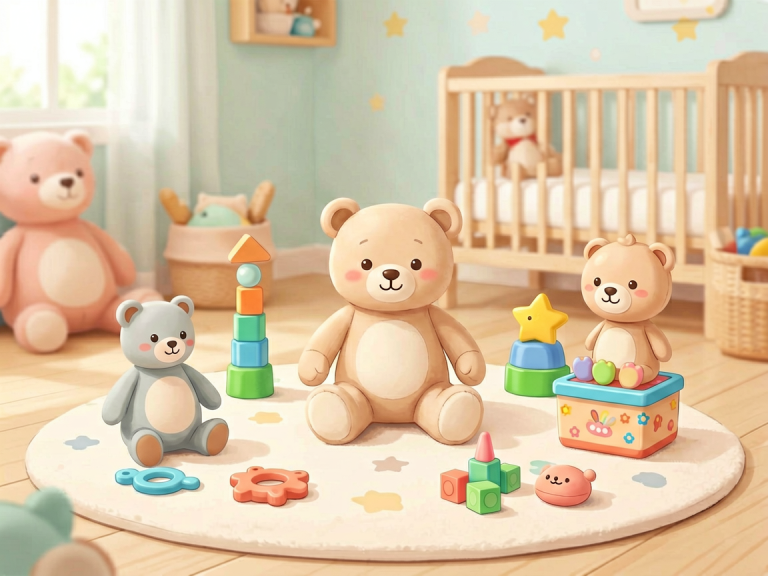
From the moment a baby enters the world, they are surrounded by a cascade of new sensations—sights, sounds, smells, and textures. Among the first objects deliberately placed in their tiny hands are often dolls or plush toys: soft, huggable, and seemingly simple. Yet these unassuming companions are far more than mere decorations or playthings. They serve as anchors in a chaotic world, offering comfort during times of distress, stimulating cognitive and sensory development, and laying the foundation for emotional intelligence. In this article, we explore the multifaceted role of dolls and plush toys for babies, examining their historical roots, psychological benefits, safety considerations, and the subtle ways they shape a child’s early years. Understanding these dimensions helps parents, caregivers, and educators make informed choices about the toys that will become a baby’s first friends.
—
The Historical and Cultural Significance of Soft Toys for Babies
The tradition of giving dolls and plush toys to infants is ancient and universal. Archaeological evidence suggests that dolls made from clay, wood, or fabric have existed for thousands of years across civilizations—from ancient Egypt to pre-Columbian America. In many cultures, these objects were not just playthings but also tools for socialization, ritual, and even education. For example, indigenous communities in North America crafted “awakening dolls” to teach babies about tactile exploration and tribal symbols. In Victorian Europe, soft rag dolls were often sewn at home and imbued with sentimental value, becoming heirlooms passed down through generations.
The modern plush toy, famously epitomized by the teddy bear that emerged in the early 1900s, revolutionized the baby toy industry. The invention of soft, washable fabrics and hypoallergenic fillings made these objects safer and more appealing for infants. Today, plush toys and dolls are a staple in nurseries worldwide, transcending cultural boundaries. Their enduring popularity lies in their ability to provide a consistent, non-judgmental presence—a “transitional object” that helps babies navigate the shift from complete dependence on caregivers to a developing sense of autonomy. This concept, introduced by pediatrician Donald Winnicott, underscores how a simple soft toy can bridge the gap between the internal world of a baby’s needs and the external reality of separations and unknowns.
—
Psychological Benefits: Comfort, Security, and Emotional Development
The most immediate psychological benefit of a doll or plush toy is its role as a source of comfort. Babies, especially those aged six months to two years, experience frequent moments of anxiety—during separation from parents, at bedtime, or when facing unfamiliar environments. A soft toy that smells familiar and feels safe can act as a “security blanket,” providing a soothing tactile sensation that lowers cortisol levels (the stress hormone) and promotes relaxation. Research in developmental psychology shows that infants who have a favorite stuffed animal often fall asleep faster and exhibit fewer signs of distress during transitions.
Beyond immediate comfort, dolls and plush toys are instrumental in emotional development. Through repeated interactions—hugging, patting, talking to the toy—babies begin to practice empathy and caregiving behaviors. A toddler who feeds her teddy bear a pretend bottle or tucks it into a mini bed is not merely imitating; she is internalizing social scripts about nurturing and responsibility. This type of play also allows children to project their own feelings onto the toy, giving them a safe outlet for emotions they cannot yet articulate. For example, a baby who throws her doll might be expressing frustration, and a gentle caregiver can then model how to comfort the doll, teaching emotional regulation. Over time, these interactions build the neural pathways for compassion, self-soothing, and social bonding—skills that are foundational for later relationships.
—
Sensorimotor Stimulation and Cognitive Growth
Dolls and plush toys are also powerful tools for sensorimotor development—a critical stage in Jean Piaget’s theory of cognitive development. Babies learn about the world through their senses and motor actions. A plush toy’s varied textures (fuzzy fur, smooth buttons, crinkly ears) provide rich tactile input that stimulates the somatosensory cortex. When a baby reaches for, grasps, and squeezes the toy, they refine their fine motor skills and hand-eye coordination. Items with different shapes, weights, and sounds (e.g., a rattle inside a plush bear) further engage the auditory and visual systems, encouraging exploration and cause-effect understanding.
Cognitive growth is also nurtured through the symbolic thinking that toys inspire. Around 12 to 18 months, babies begin to understand that a doll represents a real person or animal—a leap in abstract reasoning. They may offer the doll a cup, put it to bed, or imitate actions they have observed in adults. This “pretend play” is not frivolous; it activates the prefrontal cortex, which governs planning, problem-solving, and flexible thinking. Additionally, naming the toy’s features (“This is Bear’s nose, this is Bear’s tummy”) expands vocabulary and reinforces object permanence. A baby who searches for a hidden plush toy is practicing memory and spatial awareness. Thus, a seemingly simple soft companion is actually a multi-sensory learning device, adapting to the baby’s developmental stage.
—
Choosing the Right Doll or Plush Toy: Safety and Age Appropriateness
Given the profound influence of these toys, selecting the right one for a baby requires careful attention to safety and developmental suitability. For infants under six months, toys should be lightweight, free of small parts (such as plastic eyes or ribbons that could be chewed off), and made from non-toxic, hypoallergenic materials. The Consumer Product Safety Commission (CPSC) in the United States and similar international bodies recommend that plush toys for babies under three years have embroidered or securely stitched features, not glued or button-like fastenings. Fabrics should be machine-washable to maintain hygiene, as infants frequently mouth their toys, introducing bacteria.
As the baby grows, the toy’s complexity can increase. For mobile babies (6–12 months), consider plush toys with varied textures, squeakers, or grasping tags that encourage crawling and pulling. For toddlers (12–24 months), dolls with simple clothing or accessories can foster dressing-up skills, but always check that no components are small enough to cause choking hazards (diameter less than 1.75 inches). Avoid toys with long strings or cords that could pose strangulation risks. Additionally, be mindful of the psychological impact: a doll that is too realistic and large may frighten a young infant, while one that is grossly disproportionate might confuse their developing sense of human form. Classic, simple designs—with round heads, soft bodies, and neutral expressions—generally work best because they allow the child to project their own emotions onto the toy.
—
The Role of Parental Interaction and Imaginative Play
While dolls and plush toys are powerful on their own, their developmental impact is greatly amplified by adult interaction. When a parent or caregiver engages with the toy alongside the baby—speaking in a playful voice, pretending the doll is hungry or tired—they are modeling language, social cues, and emotional responses. This joint attention strengthens the parent-child bond and enhances the baby’s learning. For instance, a mother who says, “Look, Teddy is crying. What should we do?” encourages the baby to engage in problem-solving and empathy. Such interactions also promote theory of mind—the understanding that others have feelings and perspectives different from one’s own.
Imaginative play with dolls blossoms around 18–24 months, when toddlers begin to create simple storylines. This is the moment when a plush toy becomes a character: a friend to tea parties, a patient in a pretend doctor’s visit, or a passenger in a toy car. Parents can nurture this by offering open-ended props (blankets, cups, small pillows) and joining the play without dominating it. The key is to follow the child’s lead, allowing them to direct the narrative. Studies show that children who engage in rich pretend play with dolls and soft toys develop stronger language skills, better executive function (the ability to focus, remember, and control impulses), and higher levels of creativity. In a world increasingly dominated by screens, the humble plush toy remains a steadfast gateway to imagination.
—
Potential Concerns and How to Address Them
Despite their many benefits, dolls and plush toys are not without potential concerns. One common issue is excessive attachment: some babies become so reliant on a specific toy that they experience severe distress if it is lost or unavailable. This can be managed by having a backup identical toy (if possible) and gradually introducing other comfort objects. Parents should also respect the attachment, as it is a normal developmental phase that typically fades as the child gains independence. Another concern is hygiene: plush toys can harbor dust mites, allergens, and bacteria. Regular washing (following the label instructions) and airing the toy in sunlight can mitigate this. For babies with severe allergies, choose hypoallergenic fillings like polyester fiberfill and avoid wool or latex.
A more nuanced concern involves gender stereotyping. While dolls have historically been marketed more toward girls, parents and educators now recognize the importance of offering all babies—regardless of gender—a variety of toys, including dolls and plush animals. Research indicates that boys who engage in doll play develop similar nurturing and emotional skills to girls, and that rigid gendering of toys can limit cognitive and emotional opportunities. Therefore, choosing a neutral doll (e.g., a teddy bear or a soft bunny) or explicitly providing diverse options helps break down stereotypes. Finally, be aware of cultural messages: some dolls come with implied roles or appearances that may not align with a family’s values. Selecting dolls with diverse skin tones, abilities, and simple features encourages inclusive thinking from the earliest age.
—
Conclusion
Dolls and plush toys for babies are far more than fuzzy decorations or fleeting distractions. They are silent partners in a child’s journey toward emotional stability, cognitive agility, and social understanding. From their ancient roots to their modern incarnations, these soft companions have consistently provided comfort, stimulated the senses, and sparked the first flickers of imaginative thought. For parents and caregivers, the task is not merely to buy any toy, but to choose thoughtfully—prioritizing safety, developmental appropriateness, and opportunities for active engagement. When a baby clutches their favorite stuffed animal in a moment of fear or laughingly offers it a pretend kiss, they are doing more than playing. They are learning how to soothe themselves, how to care for others, and how to make sense of a world that is both fascinating and overwhelming. In that simple embrace lies the profound power of the soft toy—a lifelong gift of trust, love, and growth.