The Best Alternatives to Learning Tablets for 6-Year-Olds
Introduction: The Tablet Dilemma for Young Learners
At age six, children are at a critical developmental crossroads. They have graduated from preschool basics and are now diving into reading, math, social reasoning, and creative expression. In many households, learning tablets such as the Amazon Fire Kids Edition or an iPad loaded with educational apps have become the go‑to tool for reinforcing these skills. Yet a growing body of pediatric research warns that excessive screen time can impair attention spans, reduce opportunities for sensory‑motor development, and limit face‑to‑face social interaction. The question is not whether technology has a place in early education—it certainly can—but rather what equally engaging, research‑backed alternatives exist that nurture the whole child. This article explores seven powerful alternatives to learning tablets for six‑year‑olds, each grounded in hands‑on, multi‑sensory experiences that promote creativity, critical thinking, and emotional growth.
Why Alternatives Matter: Developmental Benefits
Before listing specific options, it is essential to understand why stepping away from screens is so valuable for a six‑year‑old. At this age, the brain is still forming neural pathways through active, physical exploration. A tablet screen presents a two‑dimensional, feedback‑limited world that often bypasses the fine‑motor movements and sensory integration children need. In contrast, alternatives such as building blocks, board games, and outdoor play engage the whole body: the hands manipulate objects, the eyes track moving pieces, and the ears listen to real‑time instructions from a playmate. Furthermore, non‑digital activities naturally teach patience, frustration tolerance, and problem‑solving through trial and error—skills that an app’s instant reward system may undermine. By choosing alternatives, parents and educators give children a richer, more diversified learning environment that builds foundational skills for later academic success.
Top Alternative 1: Traditional Books and Audiobooks
Nothing quite rivals the power of a printed book for a six‑year‑old. Picture books with rich illustrations and early chapter books invite children to slow down, use their imagination, and practice decoding words in a low‑pressure setting. Unlike a tablet, a book never glitches, never offers distracting pop‑up ads, and never rewards a child for “finishing” a page too quickly. For children still building reading stamina, audiobooks (played on a simple CD player or a dedicated device like a Yoto Player) are an excellent screen‑free alternative. They develop listening comprehension, vocabulary, and narrative awareness—skills that directly transfer to reading proficiency. A six‑year‑old can follow along with a physical book while listening to the audio, which strengthens word‑recognition and fluency. Libraries and second‑hand shops make this alternative affordable and endlessly varied.
Top Alternative 2: Educational Board Games and Puzzles
Board games are perhaps the most underrated learning tools for this age. Games such as *Zingo!*, *Sequence for Kids*, or *The Sneaky, Snacky Squirrel Game* teach turn‑taking, counting, pattern recognition, and social communication in a natural, joyful context. Unlike a tablet game, where the computer “plays” with the child, a board game requires direct interaction with other people—reading facial expressions, waiting patiently, and celebrating or losing gracefully. Jigsaw puzzles (with 50–100 pieces) are equally powerful: they develop spatial reasoning, visual discrimination, and fine‑motor control. A child who works on a puzzle learns to plan, categorize, and persevere through frustration. These analog activities also provide a shared family experience that no app can replicate.
Top Alternative 3: Hands‑On Science and Art Kits
Six‑year‑olds are natural scientists and artists. They want to mix colors, erupt volcanoes, and build structures. Subscription boxes like KiwiCo’s Koala Crate or simple store‑bought kits (e.g., crystal growing, water‑color painting, or simple circuit kits) offer guided, mess‑prone exploration that a tablet simply cannot deliver. When a child physically pours vinegar into baking soda, she observes chemical reactions with all her senses—the fizzing sound, the smell, the texture. This embodied learning leaves a far deeper impression than watching an animation. Art supplies such as clay, modeling dough, washable markers, and collage materials encourage open‑ended creativity. The key is to resist giving a child a pre‑programmed digital palette; instead, let him feel the resistance of clay and the bleed of washable marker on paper. These tactile experiences are essential for developing neural connections related to cause‑and‑effect and self‑expression.
Top Alternative 4: Outdoor Exploration and Nature‑Based Learning
The natural world is the ultimate unstructured learning environment. A simple walk in a park can become a botany lesson (collecting leaves and comparing their shapes), a physics lesson (rolling rocks down a slope), or a math lesson (counting acorns and grouping them by size). For a six‑year‑old, outdoor play with simple tools—a magnifying glass, a bug catcher, a set of measuring cups—sparks curiosity more effectively than any interactive app. Gardening is another powerful alternative: planting seeds, watering daily, and watching them grow teaches responsibility, patience, and biology. Even unstructured free play on playgrounds builds gross‑motor skills, balance, and social negotiation (“Can I go next on the slide?”). The American Academy of Pediatrics recommends at least 60 minutes of active outdoor play daily, and evidence shows it improves focus and reduces symptoms of inattention.
Top Alternative 5: Building and Construction Toys
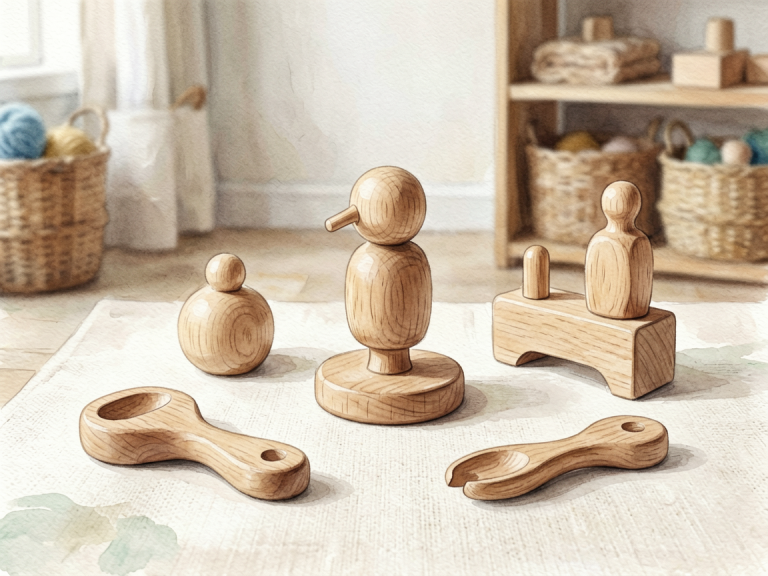
LEGO bricks, wooden blocks, magnetic tiles (like Magna‑Tiles), and K’NEX provide infinite opportunities for engineering, geometry, and creative storytelling. A six‑year‑old who constructs a tower learns about gravity and stability; when the tower falls, she learns resilience and redesign. Unlike a digital building game where elements snap perfectly into place, real blocks require precise hand‑eye coordination and a gentle touch. Building toys also support mathematical thinking: sorting by color, counting pieces, and understanding symmetry. For an extra challenge, parents can give open‑ended prompts (“Build a house that can survive a windstorm” or “Create a vehicle that can carry a toy egg”). These activities develop executive function skills like planning, organization, and flexible thinking far better than a screen‑based alternative.
Top Alternative 6: Musical Instruments and Sound Exploration
Music is a uniquely powerful brain‑builder for young children. Learning a simple instrument—a ukulele, a child‑sized xylophone, a harmonica, or even a set of rhythm shakers—engages auditory processing, fine‑motor timing, and emotional regulation. A tablet can play music, but it cannot teach a child to produce sound with their own breath and fingers. Group music activities, such as singing songs while clapping patterns or playing simple percussion in a family band, strengthen working memory and social bonding. For children not ready for formal lessons, sound‑exploration kits (bells, rainsticks, drums) allow for unstructured experimentation. Research from the University of Southern California’s Brain and Creativity Institute shows that musical training before age seven enhances language development and neural plasticity.
Top Alternative 7: Role‑Playing and Pretend Play
Imaginative play is a cornerstone of cognitive and social‑emotional development. Costumes, puppets, play kitchens, doctor kits, and toy cash registers invite a six‑year‑old to step into another’s perspective. When a child pretends to be a shopkeeper, she practices counting, negotiation, and turn‑taking. When she acts out a story with puppets, she builds narrative skills and empathy. Unlike a digital game that scripts the narrative, pretend play is entirely child‑directed. This autonomy fosters intrinsic motivation and creative problem‑solving. Parents can enhance this by providing “loose parts”—scarves, cardboard boxes, fabric scraps—that can become anything. The open‑ended nature of pretend play is something no app can replicate, and it directly supports the social‑emotional competencies that are increasingly recognized as essential for school success.
How to Choose the Right Alternative
Not every alternative suits every child. The best approach is to observe your six‑year‑old’s natural interests. A child who loves stories will thrive with books and audiobooks. A kinetic learner will prefer building toys or outdoor exploration. A socially‑minded child will gravitate toward board games and role‑play. The key is to rotate activities and avoid overscheduling. Aim for a balanced “menu” that includes a quiet creative option (art or music), a social option (board game or pretend play with a sibling), and a physically active option (outdoor play or construction). Remember that the goal is not to eliminate screen time entirely but to ensure that it occupies a small, deliberate portion of the day—ideally no more than one hour for a six‑year‑old—while the majority of learning occurs through real‑world, hands‑on experiences.
Conclusion: Balancing Screen Time with Real‑World Learning
Learning tablets are here to stay, and they can be useful tools for introducing certain skills, such as typing or math drills. However, the best alternatives for a six‑year‑old are those that engage the whole child—hands, heart, and mind. Books invite deep imagination. Board games build social and mathematical literacy. Science and art kits create unforgettable sensory memories. Outdoor play connects children to the natural world. Construction toys strengthen engineering thinking. Music instruments wire the brain for language. And pretend play cultivates empathy and creativity. These alternatives do not just “substitute” a tablet; they offer a richer, more developmentally appropriate foundation for lifelong learning. By choosing them, parents give their six‑year‑olds the priceless gift of childhood—a time for messy, joyful, and unhurried discovery.