Building Minds: A Comprehensive Guide to Choosing LEGO-Style Bricks for Kindergarteners
The clatter of plastic bricks, the wide-eyed concentration as tiny fingers press two studs together, the triumphant “Look what I made!” – these moments define early childhood play. For kindergarteners, LEGO-style bricks are more than toys; they are tools for engineering, storytelling, and problem-solving. But walk into any toy aisle or browse online, and the sheer variety can overwhelm even the most prepared parent or educator. Should you buy the giant DUPLO blocks? The tiny classic bricks? The themed sets with hundreds of pieces? The answer isn’t one-size-fits-all. Choosing the right LEGO-style bricks for a kindergartener (ages 3–6) requires balancing safety, developmental stage, creativity potential, and budget. This guide breaks down every factor you need to consider, ensuring that the bricks you choose will inspire rather than frustrate, and build skills alongside structures.
Safety First: Size, Material, and Choking Hazards
Before any creative play begins, safety must be the top priority. Kindergarteners are still in the oral exploration phase – they put things in their mouths, drop them, and sometimes throw them. The single most important rule is brick size. Standard LEGO bricks (the classic 2×4, 1×2, etc.) have a height of about 9.6 millimeters, which is too small for children under three and still risky for some four-year-olds. For kindergarteners, especially those in the younger half of the age range (3–4 years), LEGO DUPLO bricks are the gold standard. DUPLO bricks are exactly twice the size of standard bricks in every dimension—twice as tall, twice as wide, and twice as long. This makes them too large to swallow, and their rounded edges prevent injuries from sharp corners. Many parents wonder if they can mix DUPLO with standard bricks. Technically, DUPLO bricks are compatible with LEGO System bricks on top (the studs align), but they do not connect from below. This means you can place a standard brick on top of a DUPLO, but not vice versa. For kindergarteners, sticking with DUPLO until age 4 or 5 is recommended.
Another safety concern is the material itself. Reputable LEGO-style bricks are made from ABS plastic, which is non-toxic, BPA-free, and durable. But counterfeit bricks – often sold under generic names like “building blocks” on discount sites – may use cheaper plastics that contain phthalates or lead. Always check for certifications like ASTM (American Society for Testing and Materials) or EN71 (European safety standard). If the bricks have a strong chemical smell, are too soft, or have rough edges, discard them. Additionally, avoid sets with small accessories (e.g., tiny wheels, minuscule flowers, or mini-figures with detachable parts) for the youngest kindergarteners. Many DUPLO sets include large, chunky accessories that are safe. For children around 5–6 who have outgrown the mouthing phase, standard LEGO bricks become appropriate, but still supervise play with small pieces.
Developmental Readiness: Matching Bricks to Cognitive and Motor Skills
A kindergartener’s brain is developing at lightning speed, and the right bricks can accelerate fine motor control, spatial reasoning, and patience. Here, one size does *not* fit all. A three-year-old’s hands are clumsy; they struggle to align studs precisely and may become frustrated if bricks don’t snap together easily. For this age, DUPLO bricks are ideal because they require less force and have a larger surface area. Their chunky shapes also allow for simple stacking – a tower of six DUPLO blocks is a huge achievement. At this stage, look for sets with large baseplates, big wheels, and minimal small pieces. Themes like farm animals, trains, or simple houses work well. Avoid instruction-heavy sets; young children benefit from open-ended play rather than following step-by-step diagrams.
By age four, children develop pincer grip and hand-eye coordination. They can begin to enjoy standard LEGO bricks, but start with the “Junior” or “4+” lines that LEGO itself produces. These sets contain larger pieces (often a pre-assembled base or oversized elements) and simpler instructions. For example, a LEGO 4+ fire station might have a big molded fire truck chassis and a few walls to build. The key is to gradually increase complexity. For a five- or six-year-old who has been using DUPLO, the transition to standard bricks is often smooth. At this age, children love following instructions to build specific models – a race car, a castle, a spaceship – but they also need unstructured free play. A good strategy is to buy one or two thematic sets (e.g., a police station) plus a large box of classic bricks. The classic bricks allow them to modify or extend the set, fostering creativity.
Cognitive development also matters. Kindergarteners are learning to count, recognize colors, and understand patterns. LEGO-style bricks are excellent for teaching these concepts. Choose sets with a variety of bright, distinct colors (red, blue, yellow, green, etc.). Avoid monochrome sets for this age. Some sets include number or letter bricks, which are wonderful for literacy and numeracy. Also consider bricks with different shapes – arches, slopes, windows, and doors – which introduce geometry and design. The act of sorting bricks by color or size is a pre-math skill. So when choosing, think about the *range* of shapes and colors, not just the number of pieces.
Encouraging Creativity vs. Following Instructions: The Balance
A common debate among parents is whether to buy “themed” sets (like a LEGO City police chase, or a Disney castle) or “classic” boxes of mixed bricks. Themed sets have a clear goal: build the model on the box. They teach children to follow step-by-step instructions, a skill that boosts concentration and reading comprehension. However, once built, many children either disassemble the model immediately or leave it on a shelf. The value of a themed set is often in the building process itself, not the finished product. For kindergarteners, this can be frustrating if they lack the attention span to complete a 50-step build. On the other hand, classic boxes provide endless possibilities – today it’s a rocket, tomorrow it’s a doghouse. Classic bricks encourage divergent thinking, problem-solving, and resilience (when a tower falls, you rebuild it differently).
The ideal approach for kindergarteners is a blend. Start with one or two simple themed sets that match your child’s interests, such as a LEGO DUPLO fire truck or a LEGO 4+ dinosaur. These sets provide a scaffold – a concrete model that gives the child confidence. Then supplement with a large classic brick set (e.g., LEGO Classic 11022 or a generic third-party bucket of 800+ pieces). The classic set should include basic bricks, wheels, windows, and maybe eyes. Avoid classic sets that contain only tiny specialty pieces (like tiny tiles or 1×1 studs) – these are too small and fiddly. Look for boxes that list “basic bricks” as the main component. A good rule: at least 60% of the pieces should be standard 2×4, 2×2, 1×4, and 1×2 bricks.
Also consider “story starter” sets – those that include a few mini-figures and a small scene, like a park bench or a market stall. These encourage pretend play, which is critical for social-emotional development. A kindergartener can spend an hour creating a story about a firefighter rescuing a cat, even if the building itself is crude. So when evaluating a set, ask: does it spark a narrative? Does it have characters? Does it have a vehicle or a building that can be used in multiple ways? If a set is too specific (e.g., a replica of a famous landmark), it may limit creativity because the child feels they must build it exactly.
Material Quality and Compatibility: LEGO vs. Third-Party Brands
LEGO is the dominant brand, but it’s expensive. Third-party brands such as Mega Bloks, Cobi, Kre-O, or generic store brands (like Melissa & Doug’s wooden blocks, or various plastic block sets from Amazon) offer lower prices. Are they any good? For kindergarteners, the key factor is compatibility with LEGO bricks. If you buy a third-party set, check whether the bricks snap together with LEGO bricks. Many generic brands claim to be compatible, but often the clutch power (the tightness of the connection) is either too loose (structures fall apart easily) or too tight (children cannot separate them). Poor clutch power leads to frustration. Test a few bricks if possible, or read reviews specifically mentioning compatibility with LEGO.
Another issue is brick quality. LEGO bricks have precise tolerances – they are injection-molded with a slight draft angle and a consistent stud height. Cheap bricks may have rough edges, uneven colors, or flash (excess plastic). These can be sharp or simply ugly. For kindergarteners, visual appeal matters – a misshapen yellow brick that doesn’t match the others can be upsetting. Also, cheap plastic may wear down quickly, losing grip after a few builds. My recommendation: invest in genuine LEGO DUPLO for the 3–4 age group, then gradually introduce third-party bricks for standard-size sets once the child is older (5+), but only from reputable brands like Mega Bloks (now owned by Mattel) or Cobi (European brand). Avoid unbranded “building blocks” sold in bulk on bargain websites – they often have chemical smells and inconsistent quality.
If budget is a concern, buy LEGO classic boxes in large quantities (the per-piece price is lower) and look for sales. Alternatively, buy used LEGO sets from thrift stores or online marketplaces. Used bricks, after thorough cleaning (soak in warm water with mild soap, then rinse), are perfectly safe and much cheaper. Just ensure no small loose parts are missing or broken. For kindergarteners, avoid sets with stickers or decals that can peel off – young children tend to pick at them.
Quantity, Storage, and Cleanup Considerations
How many bricks does a kindergartener need? Surprisingly, fewer than you think. A bucket of 200 large DUPLO blocks is plenty for a three-year-old; they cannot effectively play with thousands of pieces. Overloading a child with bricks can cause decision paralysis and create a mess that discourages play. For a five-year-old, 800–1000 standard bricks is a good starting point. That might sound like a lot, but consider that many LEGO sets contain 100–300 pieces each. A classic box of 1000 pieces (like LEGO Classic 11022) costs around $50–60 and provides enough variety for years.
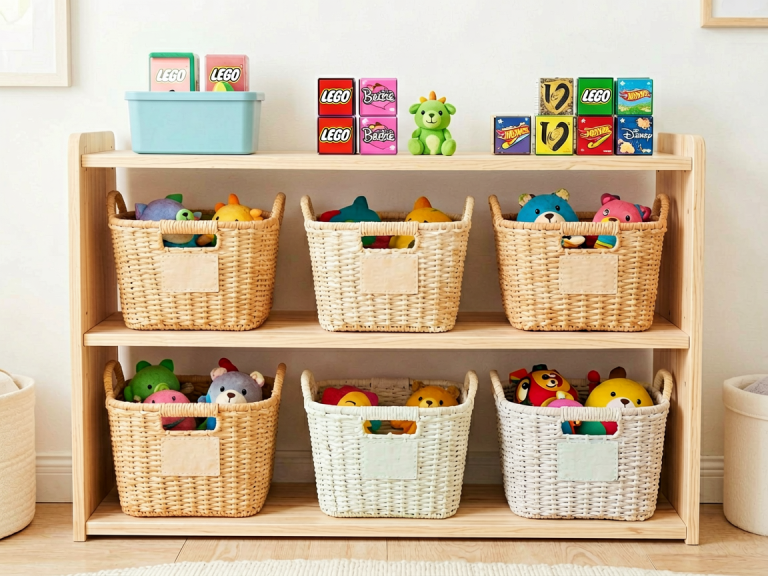
Storage is crucial. Kindergarteners need to be able to access bricks independently and clean up easily. Avoid deep bins where bricks pile up and you can’t find anything. Use shallow, wide trays or compartmentalized sorting boxes. Sort by color or by type (wheels, windows, bricks, plates) – but only if the child is old enough to maintain the system. For younger children, a simple drawstring bag or a shallow plastic tote works. However, make sure the container is not too heavy or big for the child to carry. Also, designate a play mat or a table with edges to prevent bricks from rolling onto the floor (and becoming a tripping hazard). Establish a routine: "When you're done, all bricks go back in the box." Some parents use a blanket that can be gathered up with bricks inside to make cleanup fast – a brilliant trick.
Finally, consider the number of sets you buy. It is better to have a few high-quality, versatile sets than many small, cheap ones that lack compatibility. A kindergartener can derive months of play from one DUPLO farm set and one classic brick box. Resist the urge to buy every theme that catches your eye. Instead, observe what your child gravitates towards – vehicles? Animals? Buildings? – and invest in one good set in that area, plus the classic box.
Recommended Starter Kits for Kindergarteners
To save you research time, here are concrete suggestions for different ages and budgets:
- Age 3–4 (DUPLO): LEGO DUPLO 10933 My First Bricks (a bucket of 80 large blocks with a storage box, great for basic stacking). Or LEGO DUPLO 10887 My First Fun Puzzle (though actually a puzzle, not bricks – better stick with 10933). Another excellent choice is the LEGO DUPLO 10947 Firetruck & Helicopter set – it has a vehicle and a simple building, perfect for pretend play. For a cheaper option, Mega Bloks First Builders (60-80 pieces) are fully compatible with DUPLO and cheaper.
- Age 4–5 (transition): LEGO Classic 11022 (1000 pieces, but includes many large basic bricks – suitable for 4+ with supervision). Or the LEGO 4+ series: 10769 Paw Patrol Adventure Bay (though a licensed theme, the pieces are large). A non-LEGO alternative: Cobi Small Bricks sets (Cobi makes high-quality bricks compatible with LEGO, often with military or vehicle themes – but choose their larger sets).
- Age 5–6 (standard bricks): LEGO Classic 11030 (900 pieces, includes many 2×4 bricks). Pair it with a small themed set like LEGO City 60291 (Family House) or LEGO Friends 41400 (Heartlake City Play Garden). These give a specific model to build, plus extra bricks for modifications. Also consider a baseplate (green or blue) – a 32×32 stud baseplate is excellent for building landscapes.
Final Thoughts: Let Them Build Their Own Way
The ultimate goal of choosing LEGO-style bricks for kindergarteners is not to produce perfect replicas of box art, but to foster a love for making and creating. A child who spends an hour building a lopsided tower that collapses is learning physics. A child who combines a fire truck with a dinosaur and a bathtub is learning narrative logic. The bricks themselves are just catalysts. So when you shop, keep your child’s developmental stage in mind, prioritize safety and compatibility, and above all, give them the freedom to build what they imagine – even if it doesn’t look like anything from the store. The best brick set is the one that stays in the living room for weeks, with pieces scattered across the floor, and a little engineer sitting in the middle, eyes bright with possibility.