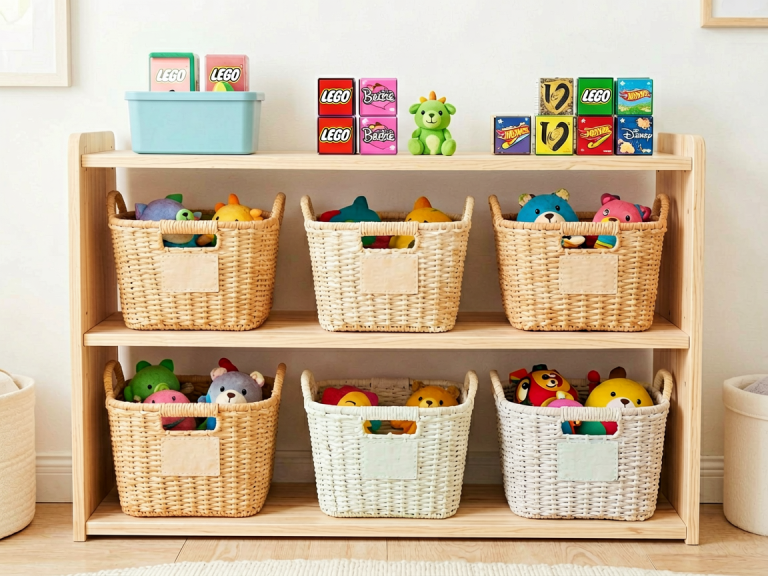
Building Blocks: The Foundation for Fine Motor Skills Development
Introduction
Fine motor skills—the coordinated movements of small muscles in the hands, fingers, and wrists—are essential for everyday tasks such as writing, buttoning a shirt, using utensils, and tying shoelaces. For children, the development of these skills is a critical milestone that lays the groundwork for academic success and independent living. Parents and educators often seek engaging, low-cost tools to support this growth, and one classic toy consistently appears in recommendations: building blocks. But are building blocks truly effective for honing fine motor skills? This article explores the scientific rationale, practical benefits, and developmental nuances of using building blocks as a tool for fine motor development. Through a detailed examination of how these simple objects engage the hand’s intricate musculature, we will see that building blocks are not merely entertaining but are powerful instruments for building the dexterity, precision, and coordination that children need.
The Science Behind Fine Motor Skills and Building Blocks
Fine motor skills require the integration of sensory input, neural pathways, and muscular control. Every time a child grasps a block, positions it, and releases it with careful aim, they are engaging the palmar arches, the intrinsic hand muscles, and the thumb-index coordination known as the pincer grip. According to occupational therapy research, activities that involve grasp-and-release, stacking, and manipulating objects of varying sizes directly stimulate the cortical areas responsible for motor planning and execution. Building blocks—whether wooden cubes, plastic interlocking bricks, or soft foam shapes—demand a range of grip types: a power grip for larger blocks, a tripod grip for smaller ones, and a lateral pinch for turning or aligning edges. These varied interactions help strengthen the hand’s small muscles and improve bilateral coordination (using both hands together). Moreover, the repetitive nature of stacking and aligning reinforces neural pathways, making movements faster and more automatic over time. Scientific studies have shown that children who engage regularly with construction toys score higher on standardized fine motor assessments than those who rely primarily on passive play. Thus, building blocks provide a rich, sensorimotor training ground.
How Building Blocks Enhance Fine Motor Skills
Building blocks are particularly effective because they demand precision in three dimensions. When a child attempts to stack a block on top of another without toppling the tower, they must control the angle of their wrist, the pressure of their fingers, and the speed of their release. This process develops “force modulation”—the ability to apply just enough pressure without crushing the block or letting it slip. For toddlers, the simple act of picking up a block from a flat surface requires the development of the radial palmar grasp, which later evolves into the more refined pincer grip. As children progress to more complex structures, such as bridges or enclosures, they must use their fingers to manipulate blocks into corners and align grooves or pegs. Interlocking blocks, like LEGO or Duplo, add an extra layer of challenge: pushing two pieces together demands oppositional thumb strength, while pulling them apart develops hand dexterity and finger isolation. Additionally, rotating a block to fit a specific orientation exercises the pronation and supination of the forearm—movements crucial for handwriting. In essence, each block manipulation is a miniature workout for the fine motor system, building endurance and control.
Beyond Fine Motor: Cognitive and Social Benefits
While the focus is on fine motor skills, it is important to note that building blocks also foster cognitive and social development, which indirectly supports motor learning. For instance, when a child plans a structure, they engage in spatial reasoning and problem-solving, which requires them to adjust their hand movements based on mental imagery. As they encounter instability, they must experiment with different positions and pressures—a trial-and-error process that refines both cognitive flexibility and motor precision. In group play, children learn to share blocks and coordinate movements, which promotes bilateral integration and hand-eye coordination as they both build and observe. Furthermore, the sensory feedback from different block materials (smooth wood, textured plastic) enhances tactile discrimination, improving the brain’s ability to interpret touch signals—an essential component of fine motor control. Therefore, building blocks are not a single-skill toy; they are a holistic developmental tool where fine motor growth is naturally woven into play.
Age-Specific Considerations
The benefits of building blocks vary with age, and selecting appropriate block types can maximize fine motor gains. For infants (6–12 months), large, lightweight blocks that are easy to grasp encourage the first stages of palmar and radial grasp. Soft cloth or foam blocks are ideal, as they provide sensory stimulation without risk of injury. Toddlers (1–3 years) benefit from slightly smaller wooden or plastic blocks, which require more finger dexterity for stacking. At this stage, offering a mix of shapes (cubes, cylinders, triangles) forces the child to adjust grip accordingly. Preschoolers (3–5 years) can handle interlocking blocks such as LEGO Duplo, which demand greater finger strength for connection and separation. By age 5–7, children can transition to standard-sized LEGO blocks, where small studs require precise pincer grips and finger isolation. It is important to introduce variety: magnetic blocks, unit blocks, and snap-together pieces each present unique fine motor challenges. Parents should allow free play without over-directing, as self-directed manipulation encourages the child to explore different hand positions at their own pace.
Practical Tips for Parents and Educators
To optimize fine motor development with building blocks, consider the following strategies:
- Start simple, then progress: Begin with large blocks and gradually introduce smaller ones to challenge growing dexterity.
- Encourage symmetrical building: Building with both hands simultaneously strengthens bilateral coordination.
- Incorporate counting and sorting: Ask the child to pick up a specific number of blocks of a certain color; this adds purpose to the reach-and-grasp motion.
- Use blocks with varied textures: Sandpaper-covered blocks, rough wooden blocks, or blocks with raised patterns stimulate tactile receptors, improving sensory fine motor integration.
- Model without dominating: Show how to stack or align, then let the child imitate. Avoid correcting every mistake; the child learns from dropping and retrieving.
- Combine with other materials: Add play dough, beads, or drawing to complement the fine motor workout blocks provide.
- Schedule regular, uninterrupted block play: At least 20–30 minutes a day of construction play can yield significant improvements in hand control over several weeks.
Conclusion
In answer to the question “Are building blocks good for fine motor skills?”—the evidence is overwhelmingly positive. Building blocks are not just toys; they are precision instruments for developing the hand’s ability to grasp, manipulate, and coordinate. From the first clumsy stack in infancy to the intricate LEGO models of school age, each interaction builds neural and muscular pathways essential for writing, typing, and self-care. Moreover, because block play is inherently motivating and open-ended, children persist in practicing without feeling like they are doing “exercises.” The multifaceted benefits—cognitive, social, and perceptual—only amplify the fine motor gains. For parents and educators seeking a simple, affordable, and effective way to nurture fine motor skills, the humble building block remains a cornerstone. So next time a child reaches for a block, remember: that small act is laying the foundation for a lifetime of hand skill mastery.