Beyond the Shiny Box: A Parent’s Guide to Avoiding Toys with Limited Play Value
Introduction: The Problem with “Now” Toys
Every parent knows the scene. You spend forty dollars on a sleek, battery-powered spaceship that lights up, makes noise, and promises “interactive fun.” Your child plays with it for exactly eleven minutes. Then the spaceship sits in a corner, gathering dust, until you finally donate it six months later. Meanwhile, the cardboard box it came in has been transformed into a castle, a robot, a time machine, and a doghouse over the past week.
This experience is so common that it has a name: the low-play-value trap. Toys with limited play value are those that entertain once, briefly, but fail to engage a child’s imagination, adapt to different stages of development, or invite open-ended use. As a parent, you are not just buying a product; you are buying a tool for learning, creativity, and emotional growth. Choosing poorly wastes money, clutters your home, and—more importantly—teaches children to expect quick, passive satisfaction rather than sustained curiosity.
This guide will help you identify low-value toys before you buy them, understand why some toys fail, and develop a practical framework for making better choices. The goal is not to eliminate all electronic or commercial toys—some are excellent—but to help you become a more critical, confident consumer.
What Does “Play Value” Actually Mean?
Play value is the measure of how much meaningful play a toy can generate over time. A toy with high play value is like a good book: you return to it again and again, and each time you discover something new. Low play value, by contrast, is a one-trick pony. It does one thing, it does it loudly, and then it is done.
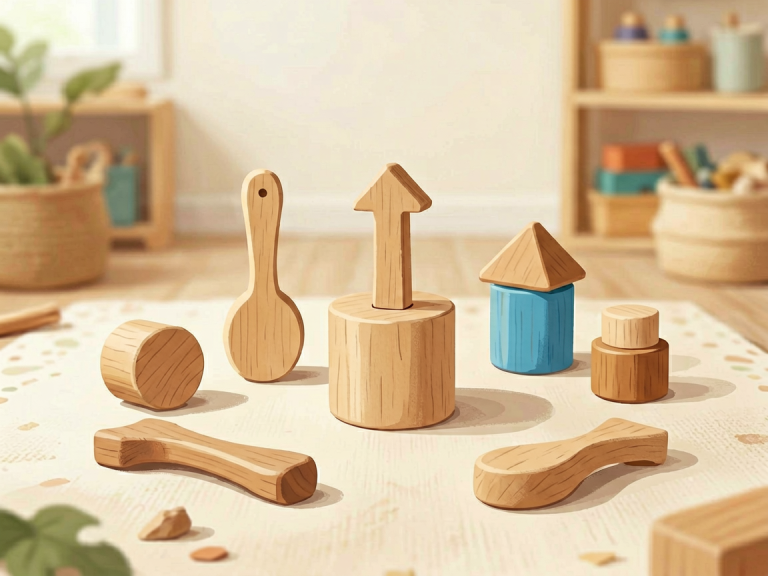
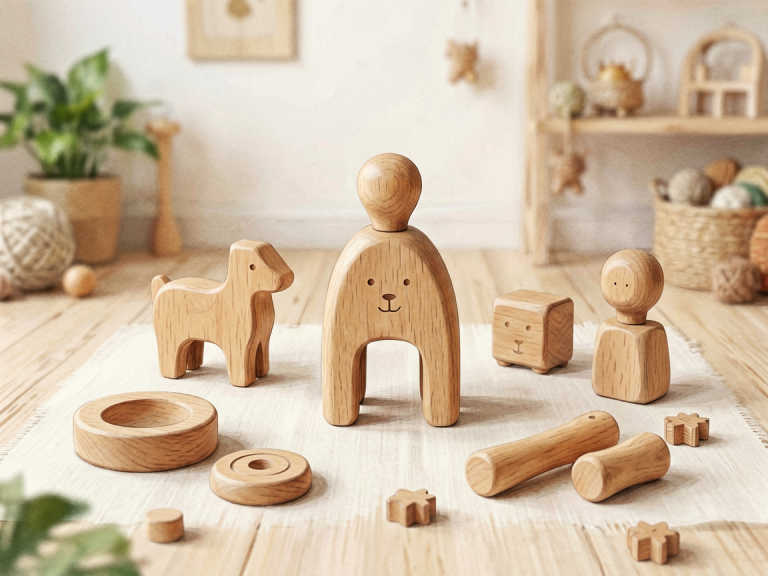
Think of the classic wooden blocks. They can be stacked, sorted, counted, used as pretend food, made into bridges, knocked down, and rebuilt. A three-year-old uses them differently than a six-year-old. A single child can play with the same blocks for years. Now think of a plastic talking dinosaur that roars when you press a button. It has one interaction. No variation. No imagination required. The child presses, the dinosaur roars, and after ten presses, the novelty evaporates.
High play value toys share three characteristics:
- Open-endedness – They can be used in many different ways, limited only by the child’s creativity.
- Adaptability – They grow with the child, offering new challenges as skills develop.
- Active engagement – They require the child to think, create, or problem-solve, rather than passively observe or press a single button.
Toys with limited play value usually score low on at least two of these. A toy that only works one way, for one age, with one outcome, is a poor investment—no matter how attractive its packaging.
The Red Flags: How to Spot a “Once and Done” Toy
You don’t need to be a toy expert to sense when something is off. Train your eye to look for these warning signs.
*Red Flag #1: The “One Function” Feature*
If a toy’s main selling point is a single action—a doll that cries, a car that shoots one projectile, a remote-controlled robot that only moves forward and backward—ask yourself: *What happens after the child has seen that action?* The answer is usually nothing. Once the surprise or sound has been exhausted, there is no reason to return. Compare this to a simple doll without batteries. A child can dress it, feed it, talk to it, make it sleep, take it on adventures. The doll has no built-in script, so the child must write one. That endless scripting is the source of lasting engagement.
*Red Flag #2: Over-Hyped Licensing and Media Tie-Ins*
Toys tied to a specific movie, TV show, or viral YouTube character are often among the worst offenders. They are designed to capitalize on a moment of hype, not to support deep play. The child begs for the “Frozen” wand or the “Paw Patrol” vehicle. Once at home, the toy is simply a static representation of a character the child already loves. The child might reenact a scene from the show for a few minutes, but then what? Because the character’s identity and story are already fixed, the toy offers no room for the child’s own narrative. Unless the toy is genuinely open-ended (e.g., a plain doll that happens to have a licensed face), avoid media-driven purchases. Buy a stick instead. A stick can be a sword, a wand, a fishing rod, a drumstick, or a magic staff. No licensing fees required.
*Red Flag #3: “Infinity” Gimmicks and Collectibles*
A whole category of toys is designed to make you buy more: blind boxes, collectible cards, mini figurines with random packaging. These are not really toys; they are gambling mechanisms for children. The play value is often nil—the child just wants to complete a set. Once acquired, the figurine sits on a shelf. There is no manipulation, no invention, no story. The only “play” is the fleeting dopamine of unboxing. If you find yourself saying “Just one more” to help your child get the rare one, step back. This is not enriching play; this is consumerist compulsion.
*Red Flag #4: Excessive Noise and Light*
Toys that blare music, flash lights, and demand to be touched in specific spots are designed to grab attention, not sustain it. They are over-stimulating and, paradoxically, lead to boredom faster. When a toy constantly performs for the child, the child becomes a passive spectator. High-quality play requires the child to be the performer. A quiet toy is not a boring toy; it is a blank canvas. The best toys are often those that do nothing unless the child does something first.
The Evaluation Framework: Ask These 5 Questions Before Every Purchase
To avoid impulse buys, create a mental checklist. Before you reach the checkout, run the toy through these five questions:
- Can my child use this in more than three ways? If you can list only one or two specific play actions, skip it. A good toy should have endless possibilities. For example, a set of plain wooden rings can be stacking rings, bracelets, napkin holders, wheels for a cardboard car, or targets for a throwing game. A plastic ring that shoots bubbles? No.
- Does the toy require my child to think or imagine? Passive toys (singing animals, remote-controlled things) require no thought. Active toys (magnetic tiles, building sets, art materials, dress-up clothes) force the brain to work. If the toy solves all problems for the child, it solves the fun too.
- Can this toy grow with my child? A two-year-old might use a set of toy tools to pretend to fix a chair. A six-year-old might use them to build a simple machine with rubber bands and cardboard. A ten-year-old might use them to repair a broken bicycle rack. If the complexity cannot increase, the toy has a short lifespan.
- Is it a tool for the child’s story, or a character with a fixed story? This is the most important question. A generic doll, a set of animal figures, a bag of pebbles and shells, a cardboard box—all are story tools. A molded superhero with a set pose and a laser sound is a story *dictator*. When given the former, the child creates worlds. When given the latter, the child just imitates a movie.
- Would I be happy if my child played with this for five minutes? Be honest. High play value toys often keep children engaged for long stretches, but even short sessions feel rich. If the toy can only produce a quick “wow” followed by indifference, it is not worth the money. Also consider the longevity: will it be equally interesting in six months, or will it be broken by the third day?
Practical Strategies for High-Value Toy Choices
Now that you know what to avoid, let’s talk about what to choose. You don’t need to become a minimalist or a montessori zealot. You just need a set of defaults that work.
*The Power of Loose Parts*
The term “loose parts” refers to open-ended materials that can be moved, combined, and transformed. Think: wooden blocks, fabric scraps, cardboard tubes, bottle caps, pine cones, string, clay, paper, water, sand. These are the highest-play-value items on earth. They cost almost nothing. Children naturally use them to build, sort, pretend, and experiment. Whenever you are tempted to buy a plastic playset for a specific scene (a pirate ship, a farm), first ask: Do I have a box and some paper? The box becomes the ship, the paper becomes the map, the child becomes the pirate, and the dog becomes the sea monster. That is play worth having.
*Classics Are Classics for a Reason*
Dolls, balls, blocks, crayons, toy cars, simple puzzles, dress-up clothes, and miniature animals. These have survived for centuries because they align with the developmental needs of childhood. A ball is not just a ball; it is a social object, a physics lesson, and a motor-skill trainer. Crayons and paper are the foundation of writing, drawing, and emotional expression. Do not overlook these in favor of flashy “educational” tablets. The educational value of simple toys is far higher because they teach the child to use *their own resources*, not to consume a pre-programmed app.
*Batteries: Read the Label, Not the Toy*
If you are considering an electronic toy, look for those that provide a *canvas* rather than a *performance*. For example, a kid-friendly digital camera is open-ended: the child decides what to photograph, then edits stories around the photos. A programmable robot that can be coded in endless ways has high value because it is a tool for creation, not a one-time show. But again, ask the five questions. Many coding toys are too rigid. A simple set of dominoes or a marble run also teaches sequencing and cause-and-effect without a screen.
The Shopping Mindset: Slow Down and Resist the Pressure
Finally, change your relationship with toy shopping itself. Avoid browsing toy stores or online marketplaces “just to look.” Browsing is engineered to make you want. Instead, go in with a specific list based on your child’s observed interests. If your child loves building, buy more building supplies. If they love pretending to cook, buy a real whisk and mixing bowl, not a playset kitchen. If they love drawing, buy a large sketchbook and good-quality pencils, not an electronic doodle pad.
Also, ignore age-based labels as rough guidelines only. The real question is whether a toy matches your child’s current open-ended play capacity. Some three-year-olds can safely play with large marbles; some five-year-olds cannot. You know your child best. But when in doubt, choose the simpler, less specific toy. Simplicity is the ultimate sophistication in play.
Conclusion: Choose Toys That Invite, Not Command
Parents are often overwhelmed by the sheer volume of choices in the toy aisle. Every product promises development, fun, and happy memories. But the most important memories your child will keep are not of a specific glowing gadget; they are of feeling absorbed, creative, and powerful. A toy with high play value is merely a doorway. The child provides the magic.
So, next time you see that shiny box, take a breath. Put the battery-powered singing unicorn back on the shelf. Pick up the set of plain wooden pegs and a ball of yarn. Your wallet will thank you, your living room will thank you, and—most of all—your child will thank you, not with words, but with hours of deep, joyful, never-repeating play. That is the only true play value.