Beyond the Screen: The Best Alternatives to Learning Tablets for 5‑Year‑Olds
In today’s digitally saturated world, it is almost instinctive for parents to hand a glowing tablet to a restless five‑year‑old. The promise of interactive lessons, colorful animations, and instant engagement seems irresistible. Yet a growing body of developmental research suggests that for children between the ages of three and six, screen‑based learning may actually hinder, rather than help, the most crucial cognitive and social skills. Tablets, with their endless stream of stimuli and passive consumption, can stifle creativity, reduce attention span, and limit the hands‑on exploration that young brains desperately need. This raises a vital question: what are the best alternatives to learning tablets for 5‑year‑olds? The answer lies not in a single gadget, but in a rich ecosystem of analog, tactile, and socially interactive experiences that nurture a child’s natural curiosity, fine motor skills, and emotional intelligence. This article explores five powerful categories of alternatives—each one backed by child development principles—that can replace or supplement tablet time, and in many ways, offer superior learning outcomes.
The Case Against Early Tablet Dependency
Before diving into the alternatives, it is worth understanding why replacing tablets is not just a preference but often a developmental necessity. The American Academy of Pediatrics recommends that children aged 2 to 5 have no more than one hour of high‑quality screen time per day. Yet many families report far higher usage, especially when tablets are used as “digital pacifiers.” At age five, a child’s brain is developing at a breathtaking pace—neural connections are being forged through movement, touch, language, and social interaction. Tablets, by contrast, deliver a two‑dimensional, pre‑packaged world where cause and effect are simplified, and where the child’s own creative input is limited to tapping or swiping. Studies have shown that excessive screen time at this age is correlated with delayed language development, reduced empathy, and even difficulty with self‑regulation. The alternatives we will discuss are not nostalgic throwbacks; they are evidence‑based tools that address the whole child—physically, emotionally, and cognitively.
1. Open‑Ended Building Toys: The Architects of Problem‑Solving
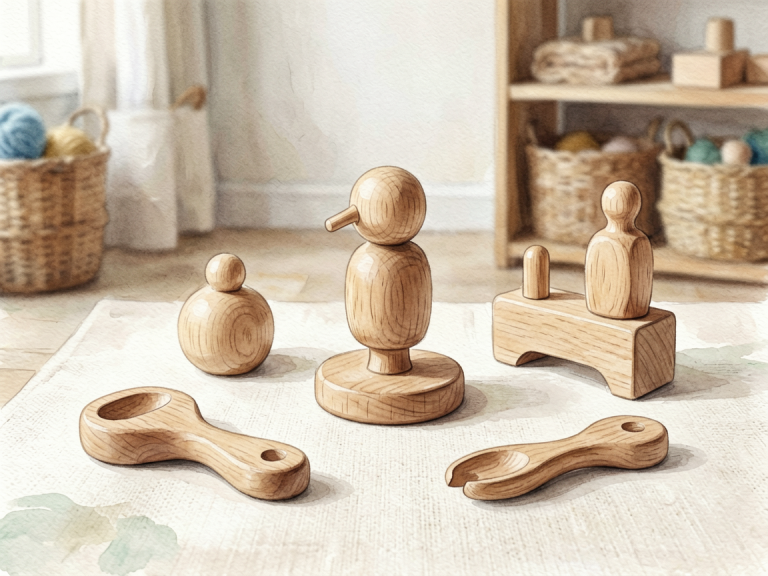
One of the most effective replacements for a learning tablet is a set of high‑quality, open‑ended building materials. Unlike a tablet app that presents a fixed problem with a single correct answer, building toys such as wooden blocks, magnetic tiles, LEGO Duplo, or simple interlocking bricks invite a child to create, fail, and try again. For a five‑year‑old, the act of stacking, balancing, and connecting objects promotes spatial awareness, hand‑eye coordination, and early mathematical thinking—skills that no app can replicate. When a child builds a tower that collapses, they learn about gravity, balance, and perseverance. When they build a “castle” or a “spaceship,” they engage in imaginative storytelling, which strengthens language and narrative skills. Moreover, building toys can be used collaboratively with siblings or parents, fostering turn‑taking, negotiation, and joint attention. Unlike a tablet, which isolates the child in a glowing bubble, blocks invite conversation and cooperation. Parents can extend the learning by asking questions like, “How can we make this bridge stronger?” or “What happens if we put the heaviest block on top?” These interactions build vocabulary and critical thinking far more effectively than a phonics app.
2. The Magic of Real Books: From Passive Viewing to Active Reading
A five‑year‑old who is accustomed to swiping through animated stories on a tablet may initially resist a paper book. But once they experience the tactile pleasure of turning pages, the mystery of lift‑the‑flap elements, and the intimacy of a lap‑read with a parent, the difference becomes profound. Reading from a physical book—or even a simple picture book with no electronics—requires the child to actively construct meaning. There are no sound effects, no automatic animations, and no “read to me” button. Instead, the child must rely on the parent’s voice, the illustrations, and their own imagination. This active engagement is critical for developing comprehension and concentration. Studies consistently show that children retain more information and demonstrate deeper understanding when stories are read aloud from print books compared to electronic versions. Furthermore, the ritual of a bedtime story creates emotional bonding and a positive association with learning. Parents can go beyond just reading: they can point to letters, ask predictive questions (“What do you think will happen next?”), and connect the story to the child’s own life. For a five‑year‑old, a well‑stocked bookshelf with diverse genres—from fairy tales to nonfiction about animals—is arguably the most powerful learning tool ever invented.
3. Sensory Play and Art Exploration: The Forgotten Classroom
Another category of tablet alternatives that is vastly superior is sensory play—activities that engage the senses of touch, smell, sight, and even sound. At age five, children are still in what Maria Montessori called the “sensitive period” for sensory refinement. Simple materials like play‑dough, kinetic sand, water beads, or even a tray of rice with scoops and small toys can provide hours of engrossing, educational play. Unlike a screen, which offers only visual and auditory input, sensory play stimulates the tactile system and enhances fine motor skills. Rolling play‑dough into snakes strengthens the small muscles needed for writing. Pouring water from one cup to another teaches volume and cause‑and‑effect. Adding food coloring or glitter introduces basic science concepts. Art supplies—crayons, washable markers, finger paints, scissors, and glue—are equally powerful. When a child draws a picture, they are not just creating art; they are practicing pre‑writing strokes, expressing emotions, and learning to plan (e.g., “I’ll draw the sun first, then the house”). Art also allows for open‑ended creativity without predetermined outcomes, which is the exact opposite of most tablet games that reward a single correct answer. Parents can rotate sensory bins and art materials to keep novelty high, and they can introduce simple prompts like “Can you make a creature with three eyes?” to encourage imaginative thinking.
4. Outdoor Adventures: Nature as the Ultimate Classroom
Perhaps the most undervalued alternative to a learning tablet is the outdoors. A five‑year‑old’s natural habitat is not a sofa with a glowing screen but a backyard, a park, or a nature trail. Outdoor play offers an unparalleled richness of learning experiences. Collecting leaves, identifying insects, digging in soil, climbing trees, and chasing bubbles all engage gross motor skills, balance, and risk assessment. Nature also provides endless opportunities for scientific inquiry: “Why are some leaves green and others red?” “How does a seed grow?” “What sounds do birds make?” Unlike a tablet, which isolates a child from the physical world, outdoor play immerses them in it. Sunshine boosts vitamin D, which is essential for immune function and mood regulation. Unstructured outdoor time has been shown to reduce stress and improve attention in children, including those with ADHD. Furthermore, playing with other children in a natural setting encourages social skills like sharing, conflict resolution, and cooperative play. Simple tools like a magnifying glass, a bug catcher, a bucket, and a shovel can turn a walk into a scientific expedition. Parents can easily integrate learning by turning outdoor time into a scavenger hunt (“Find something that is bumpy, something that is smooth, something that is round…”) or by keeping a nature journal where children can draw or dictate observations.
5. Board Games and Card Games: Social Learning in Action
Finally, one of the most engaging and effective alternatives to tablet‑based learning is the humble board game or card game. Games designed for ages four and up—such as “Candy Land,” “Chutes and Ladders,” “Memory,” or simple cooperative games—teach a wide range of skills without a single pixel. Counting spaces on a board reinforces number sense. Matching pairs in a memory game strengthens working memory and concentration. Waiting for a turn builds patience and impulse control. Winning and losing, when handled with adult guidance, teaches emotional regulation and resilience. Unlike a tablet game, where the child competes against a computer algorithm, board games involve face‑to‑face interaction with a real person. This requires reading facial expressions, interpreting tone of voice, and practicing sportsmanship—social‑emotional skills that are far more complex than any app can teach. Moreover, many modern board games are designed specifically to teach early literacy or math. For example, “Zingo!” reinforces letter recognition, while “Sum Swamp” practices basic addition and subtraction. But even non‑educational games have immense value because they create a shared experience rich in language and relationship‑building. A family game night is not just fun; it is a powerful learning environment where children absorb vocabulary, logic, and social norms naturally.
How to Transition Away from Tablets Without a Battle
Most parents already know that tablets are not ideal, yet they struggle to reduce screen time because it is the path of least resistance. The key to a successful transition is not to abruptly ban the tablet, but to gradually replace it with compelling alternatives. Start by creating a “menu” of activities from the categories above—perhaps a sensory bin day, a board game afternoon, a nature walk in the morning, and a building challenge in the evening. Let the child choose from this menu, giving them a sense of agency. Be present and engaged during these activities; the parent’s attention is the ultimate reward. It also helps to designate specific “no‑screen zones” (like the bedroom or the dining table) and “no‑screen times” (like during meals or the hour before bedtime). When the tablet does get used, choose high‑quality apps that are slow‑paced, creative, and require active thinking rather than mindless tapping. But always remember: at age five, the best learning experience is one that involves the whole body, real people, and the tangible world. By investing in these alternatives, you are not just avoiding a bad habit—you are building a foundation for lifelong curiosity, resilience, and love of learning that no tablet can ever provide.
Conclusion: The Real World Is the Best Teacher
In the quest to give our children a head start, it is easy to fall into the trap of thinking that the latest technology must be the best teacher. But for a five‑year‑old, the most powerful learning tools are already available: blocks, books, mud, paint, and the loving presence of an adult. The alternatives to learning tablets are not inferior substitutes; they are rich, multidimensional experiences that address a child’s developmental needs far more holistically than any screen. By choosing open‑ended toys, real books, sensory play, outdoor adventures, and board games, parents can provide a learning environment that is not only more effective but also more joyful. The next time you reach for a tablet to occupy your five‑year‑old, pause and consider handing them a box of blocks or a set of crayons instead. In that simple exchange, you are giving them something far more valuable than a video: you are giving them a world to explore with their own hands and minds. That is a lesson no app can teach.