Beyond the Screen: The Best Alternatives to Learning Tablets for 10-Year-Olds
Introduction
In an era where digital devices dominate classrooms and living rooms, the learning tablet has become a default tool for many parents seeking to give their 10-year-old a head start in education. Yet a growing body of research and practical experience suggests that children at this age—caught between late childhood and early adolescence—benefit more from hands-on, tactile, and socially interactive learning experiences. Screens can be addictive, reduce attention spans, and limit physical movement. Fortunately, the world is full of powerful, engaging alternatives that not only teach vital skills but also foster creativity, critical thinking, and genuine curiosity. This article explores the best screen-free and low-tech learning alternatives for 10-year-olds, organized by developmental domains, and explains why each option can outperform a tablet in meaningful ways.
1. Hands-On Science Kits and Experiment Sets
Why they beat tablets: Science is best learned by doing, not by watching a video. A 10-year-old’s brain is wired for cause-and-effect discovery, and nothing replaces the thrill of mixing vinegar and baking soda or building a simple circuit.
- Chemistry and physics kits: Brands like Thames & Kosmos, Snap Circuits, and National Geographic offer age-appropriate kits that teach principles of electricity, magnetism, chemical reactions, and mechanics. A child who builds a working radio or a solar-powered car gains an intuitive understanding of engineering that no app can replicate.
- Crystal growing and geology sets: These foster patience and observation. Over days or weeks, a child watches crystals form, learning about saturation, temperature, and molecular structure.
- Microscopes and nature exploration kits: A basic student microscope opens up a hidden universe—pond water, onion cells, leaf stomata. This kind of exploratory learning cultivates scientific method naturally: question, hypothesize, observe, conclude.
Unlike a tablet that provides instant gratification, a science kit requires preparation, cleaning, and follow-through—teaching responsibility along with science.
2. Construction and Engineering Building Sets
Why they beat tablets: 10-year-olds are in a golden age of spatial reasoning and fine motor skill development. Building sets challenge them to plan, execute, and problem-solve in three dimensions.
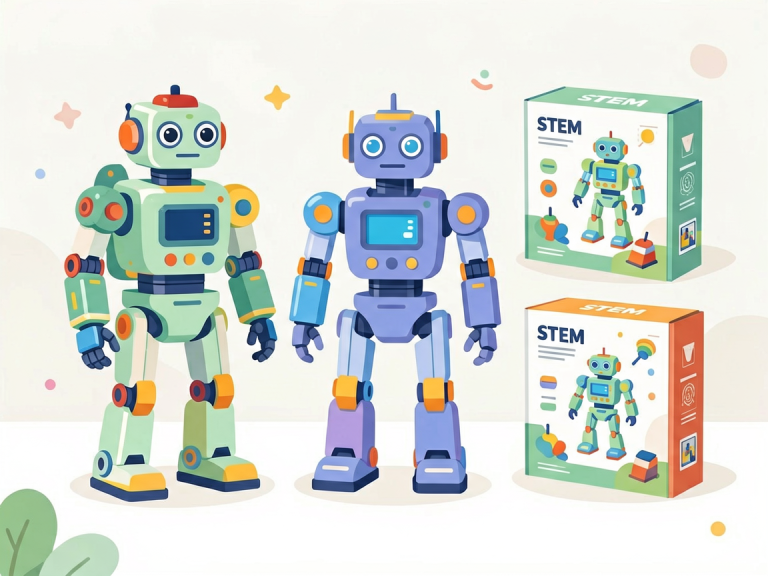
- Advanced LEGO Technic or LEGO Mindstorms: These go beyond simple stacking. Technic gears, axles, and beams allow children to build working cranes, cars with steering, and even programmable robots (when combined with a simple brick-based coding module—still largely screen-free).
- Magnetic tiles and geometry construction sets: Magformers, Magna-Tiles, or Geomag let children build bridges, towers, and polyhedra while learning about structural integrity and symmetry.
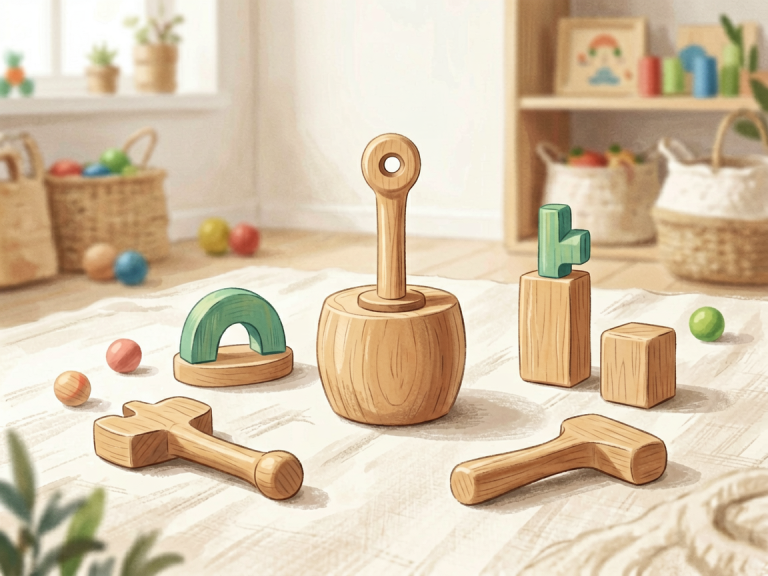
- Wooden architectural and marble run sets: Designing a marble run that works requires understanding of gravity, friction, and angle. When the marble doesn’t reach the bottom, the child must diagnose and redesign—a perfect lesson in iterative thinking.
These sets develop resilience: a tower that collapses teaches more than a perfect simulation. And unlike tablet games, the outcome is physically real.
3. Strategy Board Games and Puzzles
Why they beat tablets: Board games engage multiple children (or a parent) in face-to-face interaction, turn-taking, and strategic negotiation—skills tablets rarely teach. For a 10-year-old, complex games provide mental challenge without a screen.
- Logic and deduction games: Mastermind, Clue (Cluedo), and Turing Tumble (a marble-powered logic puzzle) develop hypothesis testing and deduction.
- Resource management and strategy: Settlers of Catan (junior version), Ticket to Ride, or Azul teach planning, probability, and graceful competition. Kids learn to adapt when their strategy fails—a life skill.
- Cooperative games: Forbidden Island, Castle Panic, or Pandemic (younger version) require teamwork and communication. Players win or lose together, fostering empathy and collaborative problem-solving.
- Jigsaw puzzles and 3D puzzles: 1,000-piece puzzles or brainteasers like Rubik’s Cube improve pattern recognition and patience. They also offer quiet, meditative focus that counters the hyper-stimulation of screens.
Board games also offer a social ritual: gathering around a table, talking, laughing, and sharing a physical artifact. No tablet can replace that.
4. Creative Arts: Drawing, Sculpting, and Craft Kits
Why they beat tablets: Digital drawing apps are powerful, but they lack the sensory feedback of a real brush on paper or clay in fingers. For a 10-year-old, artistic expression is a crucial outlet for emotions and cognitive development.
- Professional-grade drawing and painting supplies: Good quality sketchbooks, graphite pencils, watercolor sets, and charcoal invite experimentation with texture, shading, and color mixing.
- Sculpting and pottery kits: Air-dry clay, polymer clay (like Sculpey), or a simple pottery wheel (manual or electric) teach three-dimensional thinking and fine motor control.
- Weaving, knitting, and sewing kits: These combine math (counting stitches, measuring) with creativity. Making a scarf or a small stuffed animal gives a tangible sense of accomplishment.
- Model making and dioramas: Creating a shoebox diorama of a historical scene or a cardboard model of a solar system integrates research, design, and art.
Crucially, art allows open-ended exploration—there is no “right answer.” This freedom boosts confidence and self-expression, something a tablet’s structured apps often stifle.
5. Outdoor and Nature-Based Learning Tools
Why they beat tablets: Nature is the ultimate classroom. At age 10, children are physically active and curious about the world around them. Outdoor learning supports physical health, observation, and environmental awareness.
- Field guides and binoculars: A pocket guide to birds, trees, or insects, paired with simple binoculars, turns a walk into a research expedition. Kids learn to identify species, take notes, and understand ecosystems.
- Gardening kits: Growing vegetables or flowers from seed teaches biology, patience, and responsibility. Measuring plant growth, tracking weather, and understanding soil composition are real-world science lessons.
- Compass and map reading kits: Orienteering activities develop spatial navigation, geography, and critical thinking. A 10-year-old who learns to use a compass and read a topographical map gains skills that translate to math and problem-solving.
- Weather stations and nature journals: A simple rain gauge, thermometer, and anemometer let kids record and analyze local weather patterns. Combined with a blank notebook for sketching and writing, this becomes a long-term scientific project.
Outdoor learning also reduces screen time, improves mood, and increases attention spans—a triple win.
6. Subscription Boxes for Hands-On Learning
Why they beat tablets: Subscription boxes deliver curated, project-based learning materials monthly, removing the need for parents to research and gather supplies. They build anticipation and sustained engagement.
- KiwiCo Tinker Crate (ages 9-14+): Each month, a new engineering project—hydraulic claws, trebuchets, or LED circuits. All materials and step-by-step instructions are included. The learning is deep because the child builds a functional object.
- Mel Science Chemistry Kits: These come with real lab equipment and a virtual reality companion (optional), but the core is hands-on experiments that teach chemical reactions safely.
- Little Passports or Atlas Adventures: For geography and culture, these boxes include maps, activity sheets, and small souvenirs that teach about countries—perfect for a 10-year-old with a global curiosity.
- Coding without screens: Let’s Start Coding kits or Boolean Boxes allow children to learn programming logic using physical electronics and printed cards, not a tablet. They press buttons, connect wires, and see real LED lights respond—bridging the gap between tangible and digital.
Subscription boxes also offer a sense of ownership: the child anticipates the mail, opens the box, and takes charge of the project. That autonomy is far more motivating than a predefined app lesson.
7. Music and Audio Learning Tools
Why they beat tablets: Learning a musical instrument engages both hemispheres of the brain, improves memory, and teaches discipline. Audio-based learning (audiobooks, podcasts, language tapes) strengthens listening comprehension and imagination.
- Musical instruments: A keyboard, ukulele, recorder, or even a simple drum pad allows a 10-year-old to learn rhythm, melody, and music theory. Many parents find that a real instrument, paired with a songbook or online lessons (used sparingly on a parent’s device), builds a skill for life.
- Audiobooks and educational podcasts: Services like Audible or free podcasts (e.g., “Brains On!”, “Wow in the World”) let children engage with stories, science, and history without a visual screen. Long-form audio improves vocabulary and concentration.
- Language learning with CDs or simple phrase books: Instead of a tablet app, a 10-year-old can use a physical phrase book and audio CDs (still available in libraries) to learn Spanish, French, or Mandarin. This method encourages active listening and repetition without digital distractions.
Music and audio learning are often underestimated, but they cultivate deep listening skills and a love of narrative—qualities that benefit academic reading and writing.
8. Books and Libraries: The Original Learning Tool
Why they beat tablets: Books demand sustained attention, linear thinking, and imagination. A 10-year-old who reads widely develops vocabulary, empathy, and knowledge that no app can match. Libraries offer a treasure trove without screen time.
- Non-fiction books tailored for preteens: Eyewitness series, National Geographic Kids encyclopedias, “The Story of…” books on history, science, and biographies provide rich information and illustrations.
- Graphic novels and illustrated chapter books: For reluctant readers, graphic novels like “Amulet” or “Bone” combine visual storytelling with literacy. They are not “lesser” than books—they build inference and visual literacy.
- Dedicated reading time and book clubs: A parent-led book talk or a small neighborhood book club encourages discussion, critical thinking, and social bonding. Children learn to articulate opinions and listen to others.
Libraries also offer free access to multi-sensory learning: audiobook kits, puzzles, cultural passes, and even maker spaces with 3D printers and sewing machines.
Conclusion: Choosing What’s Best for Your 10-Year-Old
Learning tablets have their place—for video calls with grandparents, for occasional educational apps, and for typing practice. But for a 10-year-old’s holistic development, the best alternatives are those that engage hands, eyes, voices, and feet. A child who builds a marble run, grows a sunflower, plays a board game with siblings, reads a novel under a tree, or learns to play “Happy Birthday” on a real piano is not missing out on education—they are soaking in a richer, more memorable kind of learning.
Parents should consider rotating these alternatives based on a child’s interests: science kits one month, art supplies the next, outdoor exploration during weekends. The goal is not to ban screens entirely, but to ensure that the lion’s share of a child’s learning time happens in the real world—where ideas have weight, gravity, color, and sound. That kind of learning sticks for a lifetime.