Beyond the Pieces: The Best Alternatives to Jigsaw Puzzles for 4-Year-Olds
Jigsaw puzzles are a classic go-to for parents and educators looking to boost a child’s cognition, patience, and motor skills. And yes, many four-year-olds love the satisfying *click* of a perfectly placed piece. But not every four-year-old sits still for a traditional puzzle. Some find the process frustrating, others lose interest after two minutes, and still others find the small, fiddly pieces too challenging or even boring. The good news is that the developmental benefits of jigsaws—such as spatial reasoning, problem-solving, fine motor control, and visual discrimination—can be achieved through a whole host of other engaging, age-appropriate activities. If you are on the hunt for the best alternatives to jigsaw puzzles for 4 year olds, you need options that are equally stimulating, but perhaps more flexible, more sensory, and more tuned to the lively, imaginative brain of a preschooler. Below are five excellent alternatives that offer the same cognitive payoff without the scattered cardboard pieces under the sofa.
Magnetic Building Tiles
One of the most powerful replacements for jigsaw puzzles is a set of magnetic building tiles, such as Magna-Tiles or Playmags. These colorful, translucent squares, triangles, and other shapes snap together with satisfying ease, allowing a four-year-old to explore geometry, symmetry, and spatial relationships in three dimensions. Unlike a jigsaw puzzle, which has only one correct final arrangement, magnetic tiles give a child complete creative freedom. This open-endedness is crucial at age four, when children are developing their sense of agency and their ability to plan an idea from start to finish.
What makes magnetic tiles particularly brilliant is that they require the same visual-spatial skills as a puzzle—recognizing how shapes fit, rotate, and connect—but they do so in a way that encourages trial and error without fear of failure. If a tower falls, you simply rebuild it. If two triangles don't match, you flip one over and try again. This builds resilience and flexible thinking. Furthermore, the tactile click of the magnets provides strong sensory feedback, which many young children find deeply motivating. A four-year-old can spend twenty minutes constructing a cube, a castle, or a rocket ship, all while unconsciously practicing the exact same mental muscles used in jigsaw puzzling: shape recognition, orientation, and part-whole relationships. And because magnetic tiles can be assembled into flat shapes on the floor just as easily as into 3D structures, they serve as a brilliant bridge between 2D puzzles and building blocks.
Sorting and Matching Games
Jigsaw puzzles are essentially a complex form of sorting and matching—you sort by shape, color, and image, and then you match the pieces to their correct slots. For a four-year-old who finds the scale of a puzzle overwhelming, a dedicated sorting and matching game can be an equally rewarding alternative. Think of activities like button jars, color-coded animal figures, or "find the same picture" cards. These games isolate the core puzzle skill into manageable chunks, helping a child build confidence while sharpening their attention to detail.
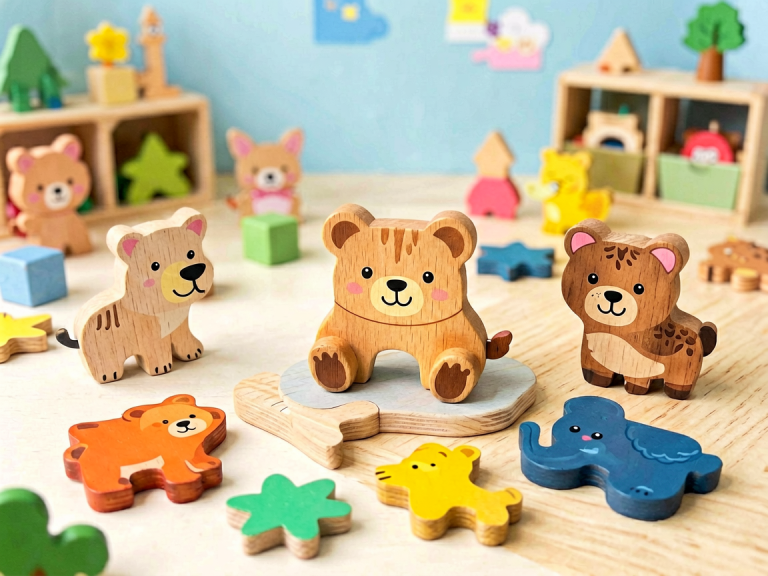
One excellent example is a simple "shape park" game, where foam or wooden shapes like stars, circles, and squares must be placed onto a baseboard with corresponding cut-outs. Another favorite is a "shadow matching" game, in which a child places a colored picture of a bear, a car, or a flower onto its black silhouette. These tasks require focused comparing and contrasting, which is exactly what a jigsaw puzzle demands. The key difference is that they are quicker to complete and offer clear, immediate success. For a four-year-old, the payoff of finishing a small matching task feels enormous, and that positive feeling fuels a desire to try harder challenges later. Moreover, sorting games can easily be themed to a child's interests—dinosaurs, princesses, trains, or sea animals—which makes the activity feel like play, not pressure. Over time, the visual discrimination skills honed through sorting and matching will make jigsaw puzzles far less daunting when the child decides to revisit them.
Sensory Bins with Hidden Objects
Not every four-year-old is a visual learner. Some children learn best through touch, smell, and movement. For these kinesthetic and sensory explorers, traditional jigsaw puzzles can feel flat and static. A sensory bin is a wonderful alternative that engages the whole body and mind. Fill a large plastic container with rice, beans, sand, or water beads, and bury small toys, shapes, or letter magnets inside. Give your child a pair of tongs, a scoop, or just their hands, and let them hunt for hidden treasures.
This activity may not look like a puzzle at first glance, but it shares all the core ingredients of effective problem-solving for young children. Digging for objects requires focus and persistence—the child must scan the environment, decide where to look, and manipulate the material to retrieve the item. Once they find an object, you can extend the activity by asking them to place it in a specific tray or sort it into categories. For example, they might be asked to find all the red animals first, then the blue ones, then the yellow ones. This adds a layer of classification and planning that mirrors puzzle-solving behavior. Sensory bins also excel at strengthening fine motor control, as scooping rice or picking up a slippery bead exercises small hand muscles that are essential for grasping puzzle pieces later. And because the sensory input is so rich, children with shorter attention spans often stay engaged far longer than they would with a cardboard puzzle.
Story Sequencing Cards
A jigsaw puzzle tells a story through its final image—a farm scene, a princess castle, a busy city. But for a four-year-old, the story often comes *after* the puzzle is complete, as they point to characters and make up narratives. Story sequencing cards turn this process inside out: instead of assembling a picture, the child assembles a sequence of pictures to create a logical story. A set of three or four cards might show a bear planting a seed, watering the plant, the plant growing, and the bear picking a flower. The child must arrange the cards in the correct order.
This alternative to jigsaw puzzles is fantastic because it develops a different but equally crucial set of skills: temporal reasoning, cause-and-effect thinking, and narrative comprehension. While jigsaws focus on spatial relationships, sequencing cards focus on logical relationships. At age four, children are just beginning to understand the idea of "first, next, last," and these cards give them hands-on practice with that concept. The physical act of laying cards out and moving them around is similar to arranging puzzle pieces, but the mental challenge is about order, not shape. Moreover, sequencing cards can be interactive and silly—you can deliberately mix up the cards and ask your child to "fix" the story, or you can make your own homemade set using photos from a family outing. This flexibility keeps the activity fresh, and the storytelling aspect naturally expands vocabulary and communication skills. Many children who resist puzzles because they "don't care" about the final picture will happily dive into a sequencing task because it feels like they are in charge of the narrative.
Large Interlocking Blocks and Building Sets
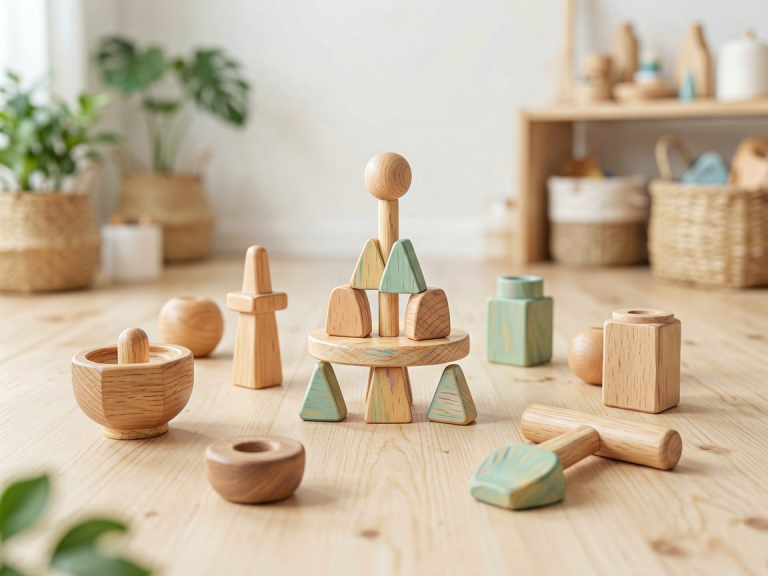
If you have ever watched a four-year-old play with Duplo blocks, large LEGO bricks, or Mega Bloks, you have seen a puzzle solver at work. Interlocking blocks are arguably the most direct alternative to jigsaw puzzles because they require the child to align studs, press pieces together, and make connections based on physical compatibility. The difference is that blocks are three-dimensional and infinitely reconfigurable. A child can follow a picture card to build a specific model, which is very similar to solving a jigsaw puzzle—matching shape and color to a target layout—or they can invent their own creation, which builds creative problem-solving independence.
What makes large interlocking blocks especially suitable for four-year-olds is that they are forgiving. A jigsaw piece that is forced into the wrong spot simply does not fit, which can be frustrating. A block that doesn’t fit can be rotated, swapped, or turned into something else entirely. This reduces perfectionism and encourages experimentation. Building structures from blocks also teaches balance, stability, and spatial planning; children learn that a wide base supports a tall tower, just as puzzle solvers learn that edge pieces must go on the outside. Furthermore, building sets can be combined with other toys—toy animals, cars, people—to create rich, pretend-play scenarios. This narrative layer makes the activity far more engaging for a four-year-old who prefers stories to shapes. Over time, as the child becomes more skilled, you can introduce "build-along" challenges where they must copy a model you have made, which mimics the visual-spatial decoding required by jigsaws while still keeping the playfulness alive.
Conclusion
Jigsaw puzzles are wonderful, but they are not the only path to cognitive development for a four-year-old. The best alternatives to jigsaw puzzles for 4 year olds are activities that respect a child’s natural desire to move, touch, create, and tell stories. Magnetic building tiles, sorting and matching games, sensory bins, story sequencing cards, and large interlocking blocks all deliver the core benefits of puzzling—spatial awareness, problem-solving, concentration, and fine motor coordination—without the rigid, one-answer structure that can sometimes discourage young learners. The perfect choice depends on your child’s personality. If they love to build, choose tiles or blocks. If they love to dig, make a sensory bin. If they love to talk, pick sequencing cards. By offering these varied alternatives, you are not only keeping your child engaged, you are also nurturing a versatile, flexible mind that will be ready for any challenge—including the 500-piece puzzle that awaits them in a few years. In the end, the goal is not to force a child to like puzzles, but to help them develop the skills that puzzles are meant to teach. And as any parent knows, there are many ways to put the pieces together.