Are Science Kits Safe for Babies? A Comprehensive Guide for Parents
In an era where STEM education is celebrated from the earliest stages of life, science kits marketed for babies and toddlers have become increasingly popular. Colorful boxes filled with "safe" experiments, sensory play materials, and simple chemical reactions promise to nurture young Einstein's curiosity. But as a parent, you may find yourself asking a crucial question: are science kits safe for babies? The answer is not a simple yes or no. While science kits can offer wonderful learning opportunities, they also pose potential risks that every caregiver must understand. This article explores the safety landscape of science kits for infants, identifies hidden dangers, and provides practical guidance for making informed choices.
Understanding Science Kits for Babies
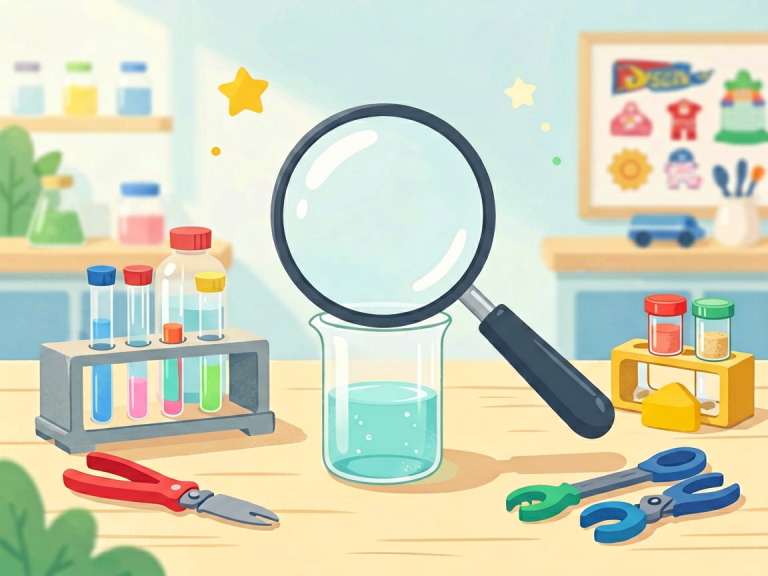
First, it is essential to define what a "science kit for babies" actually contains. Unlike kits designed for school-aged children, baby-oriented kits typically focus on sensory exploration rather than complex experiments. Common components include textured balls, water-absorbing polymer beads, safe-colored vinegar and baking soda mixtures, non-toxic dough, plant seeds, magnifying glasses with rounded edges, and simple pulleys or ramps. The intended age range is usually 6 months to 3 years, an age group that explores primarily through mouthing, touching, and throwing. This developmental reality is the root of most safety concerns. A kit labeled "safe for ages 6 months+" must withstand being chewed, sucked, dropped, and even partially swallowed. However, not all products on the market live up to this promise. The distinction between a genuinely safe kit and a hazard wrapped in cute packaging often comes down to manufacturing standards, material composition, and the realism of the company's age labeling.
Potential Hazards Hidden in "Harmless" Kits
The most obvious danger is choking and suffocation. Babies naturally put objects in their mouths. Small parts—such as tiny magnets, plastic wheels, or foam pieces—can easily become lodged in a baby's airway. Even items larger than a toilet paper roll can pose a suffocation risk if they are soft and compressible. For example, some sensory kits include "fluffy" slime or play foam that can be torn into small pieces and ingested. While many such materials are labeled non-toxic, they are not digestible and can cause intestinal blockages.
Another serious concern is chemical exposure. Some science kits for older children include substances like borax, iron filings, or pH indicators. Even if a kit claims to use "food-grade" ingredients, cross-contamination during manufacturing is possible. Moreover, the vibrant colors and pleasant scents of many baby science products can encourage a child to eat them. For instance, a "volcano eruption" kit might use colored vinegar—safe to touch but highly acidic if swallowed in large quantities. Similarly, water beads, which absorb hundreds of times their weight, can expand inside a baby's stomach or intestines after ingestion, leading to life-threatening obstructions. The American Academy of Pediatrics has reported multiple cases of water bead ingestion requiring surgery. Additionally, long-term exposure to certain dyes or preservatives used in play materials may trigger allergic reactions or skin irritation in sensitive infants.
There is also the risk of physical injury from poorly designed tools. A "baby-safe" magnifying glass may still have sharp edges if not properly polished. A wooden ramp for a marble run could splinter. Even adhesive strips used to attach experiment cards can become loose and sticky, trapping tiny fingers or hair. Batteries, if included in light-up or motorized kits, are a significant hazard—button batteries can cause severe internal burns when swallowed. These hidden risks mean that a parent must not assume that a marketing label guarantees safety.
Age Appropriateness and Safety Standards
The key to answering "are science kits safe for babies" lies in strict age-appropriateness. Regulatory bodies such as the U.S. Consumer Product Safety Commission (CPSC) and the European Union's EN71 standard set rigorous safety requirements for toys intended for children under 3. These standards mandate that toys must be large enough to prevent choking, free of sharp points, and made from materials that do not contain harmful levels of lead, phthalates, or BPA. However, science kits occupy a gray area: they are often categorized as "educational equipment" rather than "toys," which may exempt them from some toy safety regulations. In reality, many kits sold on e-commerce platforms are imported from countries with lax manufacturing oversight. A label saying "ASTM tested" or "CE certified" is a good sign, but it is not a guarantee. Parents should look for specific certifications, such as ASTM F963 (the U.S. standard), and always verify that the kit explicitly states its suitability for the baby's exact age. A kit designed for 3-year-olds is not safe for an 8-month-old, even if the theme seems simple. Additionally, some kits contain small parts that are legally allowed for children 3+ but still risky for babies who put everything in their mouths. Thus, the safest approach is to choose kits with the fewest possible components and no liquids or powders.
How to Choose Safe Science Kits
Selecting a safe science kit requires vigilant label reading and a critical eye. Here are practical criteria to follow:
- Check the age recommendation twice. Ignore any kit that does not display an age range clearly. For babies under 12 months, look for kits designed for "sitting up" or "tummy time" that contain only large, one-piece objects.
- Perform the toilet paper roll test. If any component fits entirely inside a standard toilet paper roll, it is too small for a baby under 3. Remove or discard such pieces.
- Prefer kits with no chemical reactions. For babies, a science kit should focus on physical properties: gravity, light, sound, texture, and motion. Avoid anything labeled "experiment" that requires mixing substances, even if they are edible. A baking soda volcano, for example, is better left to age 5+.
- Choose durable materials. Look for natural wood with non-toxic finish, food-grade silicone, or BPA-free plastic. Avoid brittle plastic that can crack into sharp shards. Seams and edges should be smooth, and all components should be securely attached—no buttons, beads, or wires that can be pulled off.
- Read customer reviews for safety incidents. Search for phrases like "choking," "broke," or "baby ate." Honest reviews often reveal design flaws that official descriptions omit.
- Buy from reputable brands. Established educational toy companies like Hape, Melissa & Doug, and Lovevery have robust quality control. However, even from these brands, you must inspect the kit upon arrival. If an item smells strongly of chemicals or leaves color on your hands, return it immediately.
Supervision and Best Practices
Even the safest science kit becomes dangerous without active adult supervision. When a baby plays with any science kit, an adult should be within arm's reach at all times. This is not merely about preventing ingestion; it is also about observing early signs of frustration or fatigue. A tired baby may throw a toy, and a hard plastic piece may hit another child or a pet. Set a timer for play sessions—15 to 20 minutes is usually enough for a baby's attention span. After each session, carefully inspect the kit for wear and tear. If a piece is cracked, chewed, or discolored, discard it. Wash all reusable components in warm, soapy water before first use and regularly thereafter. Do not allow the kit to be stored with other toys, as a baby might confuse a small piece of the science kit with a teether. Another best practice is to rotating the kit—babies lose interest quickly, and a toy left unattended in a playpen may be explored without supervision at a later time. Finally, always model appropriate behavior. Let your baby see you using the magnifying glass on your own eye (carefully) or rolling the ball down the ramp. Your engagement not only enhances learning but also ensures that your hand is literally on the same object.
Alternatives for Curious Babies
If you remain uncertain about manufactured science kits, rest assured that you can create your own safe, science-rich experiences using everyday household items. A transparent plastic bottle filled with water and a few drops of food coloring offers a mesmerizing lesson in liquids and color mixing. A homemade sensory bag—sealed zipper bag containing gel and large beads—allows for squishy exploration without any risk of choking. A simple shadow puppet play with your hands teaches light and darkness. A wooden spoon and a metal pot introduce sound physics. These DIY alternatives are inherently safe because you control every component. However, even these require supervision: a zipper bag can leak, and a bottle cap can be loosened. In conclusion, the question "are science kits safe for babies" does not have a universal answer. The safety of any kit depends on its design, materials, age labeling, and, most importantly, the vigilance of the parent. While commercially available science kits can be safe and enriching when carefully selected, they are not essential. A baby's natural curiosity is best nurtured through simple, safe, and loving interactions. So, before you add another "science kit" to your cart, ask yourself: Is this worth the risk? If you have any doubt, put it back and reach for a safe, plain wooden rattle instead. The best science for a baby is the world around them—explored with your hands, your voice, and your unwavering attention.