The Blueprint Question: How to Decide If Engineering Kits Are Right for Your Child
Introduction: Beyond the Brightly Colored Box
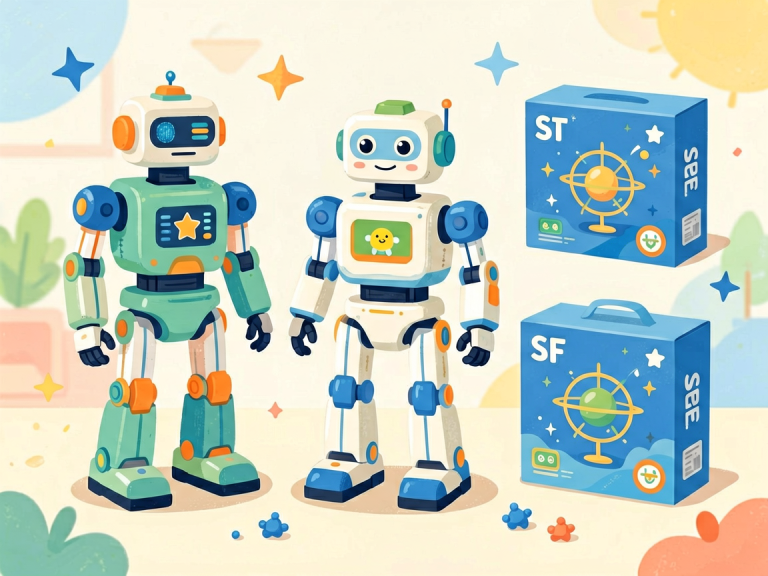
Walking down the toy aisle, you’ve likely seen them: sleek boxes promising to build robots, code a weather station, or construct a working catapult. Engineering kits are everywhere, marketed as the gateway to STEM success. But before you swipe your credit card, a more fundamental question lingers: *Is this right for my child?* The answer is not a simple yes or no. It depends on a constellation of factors—your child’s temperament, your family’s rhythm, and your own role in the learning process. A kit that ignites one child’s curiosity can quietly frustrate another, ending up in a drawer of good intentions. This guide will help you navigate that decision with clarity, moving beyond the hype to evaluate fit based on developmental readiness, learning style, parental involvement, and long-term value.
Assessing Your Child’s Current Interests and Frustration Tolerance
The first and most important diagnostic is your child’s natural curiosity. Ask yourself: Does my child take apart broken toys to see how they work? Do they ask “why” during everyday activities, like how a refrigerator keeps food cold or why a kite flies? Engineering kits are not magical devices that create interest from thin air; they amplify existing sparks. If your child has shown no interest in building, tinkering, or problem-solving, a sophisticated robotics kit may be intimidating rather than inspiring. Start with simpler, open-ended materials like cardboard, tape, and recyclables. If your child enjoys constructing a paper bridge or a marble run, then a structured kit can be a natural next step.
Equally critical is frustration tolerance. Engineering is the art of falling down and getting up again. A kit with a thousand tiny screws and a 47-step instruction manual will test patience. Observe your child during a challenging puzzle or a board game. Do they rage-quit at the first obstacle, or do they methodically try again? If they are easily discouraged, choose a kit with fewer parts, snap-together pieces, and clear visual instructions. Conversely, if your child thrives on tough challenges and enjoys debugging, a more complex kit—even one slightly above their age level—can be a wonderful outlet. The key is that the kit should be *just right*: not so easy that it bores them, and not so hard that it crushes their confidence.
Matching the Kit to Developmental Stage and Motor Skills
Age labels on engineering kits are rough guides, not gospel, but they matter. A five-year-old lacks the fine motor control to manipulate tiny gears and may swallow small magnets. A ten-year-old, however, can handle precision screws and wire stripping. Understand your child’s current motor and cognitive abilities. Preschoolers benefit from large, chunky blocks and kits that focus on cause-and-effect, like simple pulley systems. Elementary-age children can graduate to gearboxes and basic circuits, provided the pieces are large enough to grip. Teens and pre-teens can manage soldering irons, microcontrollers, and complex programming—but only if they have demonstrated responsibility with sharp and hot tools.
Cognitive development also plays a role. Engineering kits often require sequential thinking: step A must happen before step B. Children who struggle with working memory or executive function may need a parent’s help to break down the sequence. Look for kits that offer “visual mapping” or “flowcharts” in their instructions. Some kits are designed for cooperative play, meaning an adult or an older sibling will inevitably be part of the build. That is not a failure—it is a wonderful bonding opportunity. But if you expect your child to work independently, be honest about their readiness. A kit that demands adult intervention every five minutes will quickly become a chore for everyone.
Evaluating the Learning Style: Process-Oriented vs. Product-Oriented
Children approach engineering kits in two distinct ways. Some are *process-oriented*: they love the journey of assembling, exploring, and playing with intermediate steps. They may dismantle a robot halfway through just to see how the motor connects to the wheel. Others are *product-oriented*: they are laser-focused on the final result—the robot that follows the line, the crane that lifts a weight—and they become deeply frustrated if the process doesn’t lead to the promised outcome.
For process-oriented kids, open-ended engineering kits (like a box of assorted gears, axles, and motors) are ideal. These kits have no single correct build; they encourage experimentation and revision. For product-oriented kids, kits with clear, step-by-step instructions and a satisfying, functional final model—like a remote-controlled car or a working hydraulic claw—provide the dopamine hit of completion. Many kits claim to be “open-ended” but still have a rigid end goal. Read reviews and look at the manual online to gauge the flexibility. If your child is on the product-oriented end, also prepare for the post-build moment: after the model is finished, what happens? Some kits offer extensions (e.g., “now add a sensor to make it stop at a wall”), while others become a static trophy. For lasting value, choose kits that allow reconfiguration or that can be combined with other sets.
The Hidden Variable: Your Own Time and Enthusiasm
Let’s be frank: the greatest predictor of an engineering kit’s success is the adult who sits down with the child. You, as a parent, are the real “engineer” of this project. Before you buy, ask yourself: How much time am I willing to commit? For a young child, a quality kit might require 30 minutes of guided help, followed by hours of unstructured play. For an older child, you may need to learn the coding environment or the circuit layout yourself. If you think of the kit as a babysitter, it will fail. If you think of it as a shared activity, it will succeed.
Your attitude matters just as much. Children mirror your reactions. If you sigh when you see the 200-piece bag, they will too. If you exclaim, “Wow, look at these gears!” they will likely follow. But you don’t need to be an engineer yourself. In fact, learning alongside your child—saying “I don’t know, let’s figure this out together”—models a growth mindset that is far more valuable than knowing the answer. Therefore, when choosing a kit, consider whether you find the topic genuinely interesting. A child who loves space but has a parent who yawns at astronomy might still benefit, but the energy will be diluted. Pick a kit that sparks *mutual* curiosity, or prepare to fake enthusiasm convincingly.
Cost, Clutter, and the Long-Term Ecosystem
Engineering kits range from ten dollars to hundreds. Cheap kits often have flimsy plastic that breaks after one build. Expensive kits (like certain robotics platforms) may require additional sensors or software subscriptions. Before investing, consider the “cost per hour of engaged use.” A $30 kit that provides 20 hours of play is a bargain; a $150 kit that collects dust after three hours is not. Also, think about the storage. Kits with many loose parts need organizational systems—zipper bags, tackle boxes, or labeled bins. If your family already struggles with toy clutter, a box of 500 tiny gears might induce panic. Maybe start with a smaller kit, or commit to a “one in, one out” rule.
Long-term ecosystem matters more than you think. Some brands offer expansion packs, online competitions, or software updates that grow with your child. Others are dead ends. Research whether the kit’s parts are compatible with other popular sets (like LEGO Technic, if that’s relevant). A kit that plugs into a broader system—like Arduino or Raspberry Pi—can evolve from a toy into a serious hobby. Ask yourself: Will this kit be a one-week wonder, or a gateway into a multi-year journey? For example, a basic breadboard and LED kit can lead to a passion for electronics. A proprietary, sealed robot that cannot be modified may simply end up as an expensive toy.
The Social and Emotional Dimension
Engineering is often seen as a solitary activity, but for many children, it is inherently social. If your child is extroverted, they may prefer an after-school robotics club or a building session with a friend over solo kit time. Some kits are designed for two or more users, with roles like “builder” and “tester.” Consider your child’s social nature. Would they rather show you their creation, or collaborate on it? Also, think about competition. Some children thrive on engineering challenges with a clear winner (e.g., balloon-powered cars). Others prefer open-ended invention without scoring. Read the kit’s packaging: does it come with a storyline or a challenge sheet? A kit that frames itself as a mission (“Rescue the astronaut!”) may engage a narrative-driven child, while a pure mechanical kit appeals to a tinkerer.
A Practical Test: The Five-Minute Rule
Still uncertain? Here is a practical test. Show your child an online video of the kit being assembled and operated. Watch their face for five minutes. Do they lean in and ask questions? Or do they look away after thirty seconds? If they show intense interest, the kit is likely a good bet. If they seem lukewarm, you might be buying for your own dream, not their reality. You can also borrow a kit from a library or a friend if possible—many communities have STEM lending centers. A trial run costs nothing and reveals everything.
Moreover, consider a kit’s “playability” after the build. Does the final product do something fun? A robot that follows a flashlight or a hydraulic lift that moves 500 grams is captivating. A static bridge that just sits there? Less so. Look for kits with a “wow factor” that your child can demonstrate to grandparents or friends. That moment of showing off is not vanity—it is validation, and it fuels future learning.
Conclusion: Trust the Child, Then Trust the Process
Deciding if an engineering kit is right for your child is not about matching a chronological age to a number on a box. It is about matching a tool to a human being. Observe your child’s play: do they build, fix, ask, and iterate? Assess your own willingness to be a co-creator rather than a supervisor. Look for kits that align with your child’s frustration threshold, motor skills, and social preferences. Remember, the best kit is not the most expensive or the most advanced—it is the one that your child pulls off the shelf again and again, that survives being dropped, that sparks a shouted conversation at dinner: “Guess what I made today!” And if you choose wrong, that is okay. You will learn, and so will your child. The very act of trying—of buying a kit, struggling, failing, and trying another—is itself an engineering lesson. After all, engineering is not about getting it right the first time; it is about iterating toward a better solution. Your decision about the kit is just the first iteration in a lifelong design process.