The Pitfalls of Gimmicky Toys: Why Limited Play Value Toys Fail Our Two-Year-Olds
Understanding “Limited Play Value” in the Context of Toddler Play
When we walk into a toy store, the overwhelming array of flashing lights, electronic sounds, and cartoonish characters can easily distract even the most mindful parent. Yet for a two-year-old, many of these dazzling products belong to a category that child development experts call “limited play value.” A toy with limited play value is one that essentially does the playing for the child. It offers a narrow, repetitive experience—often a single button to press, a song to replay, or a fixed action to perform—and quickly exhausts its potential for exploration, creativity, or problem-solving. Think of a plastic fire truck that only wails and flashes when a child pushes a lever, or a talking plush bear that repeats the same three phrases over and over. After the initial novelty fades, which often happens within minutes, the child loses interest. The toy becomes another piece of clutter in the nursery, serving neither developmental growth nor sustained engagement.
For a two-year-old, play is not entertainment; it is the primary vehicle for learning. At this age, children are rapidly developing fine motor skills, language, social-emotional understanding, and cognitive abilities such as cause-and-effect thinking. They learn through open-ended, hands-on interactions that allow them to experiment, manipulate, and transform their environment. A toy with limited play value stands in direct opposition to this process. It restricts the child’s role to that of a passive observer or a button-pusher, offering little room for imagination or adaptation. To truly understand why these toys fail, we must examine both what they lack and the specific ways they hinder—or at least fail to support—toddler development.
The Hidden Drawbacks for Toddler Development
Limited play value toys are not merely boring; they can actively undermine the development of essential skills. One of the most significant drawbacks is their impact on attention span. Two-year-olds are naturally curious, but their attention is still fragile. A toy that provides instant gratification—a loud sound, a flashing light—trains the child to expect immediate, low-effort rewards. When that reward disappears, the child quickly moves on, reinforcing a pattern of short-lived focus. In contrast, open-ended toys like wooden blocks, stacking cups, or simple shape sorters require sustained effort, trial and error, and repeated attempts. These toys encourage a child to stay engaged for longer periods, gradually building the neural pathways that support concentration and persistence.
Another critical issue is the suppression of creativity and imaginative play. A toy designed with a single function—say, a plastic kitchen set that only makes a sizzling noise when a fake pan touches the stove—leaves no room for a child to invent new uses. But a real (or realistic but simple) cardboard box, a set of fabric scarves, or a collection of natural pinecones can become anything: a hat, a boat, a hiding place, a doll’s bed. For a two-year-old, imaginative play is how they make sense of the world. They act out familiar scenes, like feeding a teddy bear or talking on a phone, and through these scenes they develop empathy, language, and social skills. When toys are overly prescriptive, they narrow the child’s narrative. The fire truck is always a fire truck; it cannot be a spaceship, a monster, or a musical instrument. This rigidity limits the cognitive flexibility that is so important in early childhood.
Furthermore, limited play value toys often hinder the development of fine and gross motor skills. Many electronic toys require only a simple press or a swipe. They do not challenge a child’s dexterity, hand-eye coordination, or balance. In contrast, toys that encourage pushing, pulling, stacking, threading, and pouring—such as pull-along animals, nesting blocks, or large beads—help a two-year-old practice the precise muscle control they will need for dressing, writing, and self-feeding. A toy that merely reacts to a button press does not offer this physical challenge. Even worse, some gimmicky toys are so heavy or awkwardly shaped that they discourage movement altogether, encouraging a child to sit and watch rather than crawl, walk, climb, and explore.
Social and Emotional Consequences of “Battery-Powered” Play
The social and emotional consequences of low-value toys are often overlooked. When a child plays with a toy that performs on its own, the toy takes on the role of the entertainer, leaving the child as an audience member. This dynamic can reduce opportunities for interaction with caregivers and peers. Shared play is crucial for developing turn-taking, language, and emotional regulation. A simple wooden train set, for example, invites a parent to sit down and push the train back and forth, to narrate a story, to ask “where is the train going?” An electronic robot that walks and talks by itself does not require—or even welcome—a partner. The parent becomes a spectator, not a participant. Over time, this can weaken the bonds built through co-play and diminish the rich verbal exchanges that support vocabulary growth.
Another emotional concern is the frustration and boredom that follows the novelty effect. Two-year-olds are highly sensitive to their environment. When a toy promises excitement but delivers only a few repetitive actions, the child may feel confused or disappointed. They might cry, throw the toy, or become clingy. This is not a tantrum in the negative sense; it is a natural response to unmet expectations. Repeated exposure to such toys can teach a child that play is something that happens to them, rather than something they create. This passive attitude can carry forward into later learning, where children may expect entertainment rather than engagement. The result is a child who has difficulty entertaining themselves, constantly seeking external stimulation instead of tapping into their own imagination.
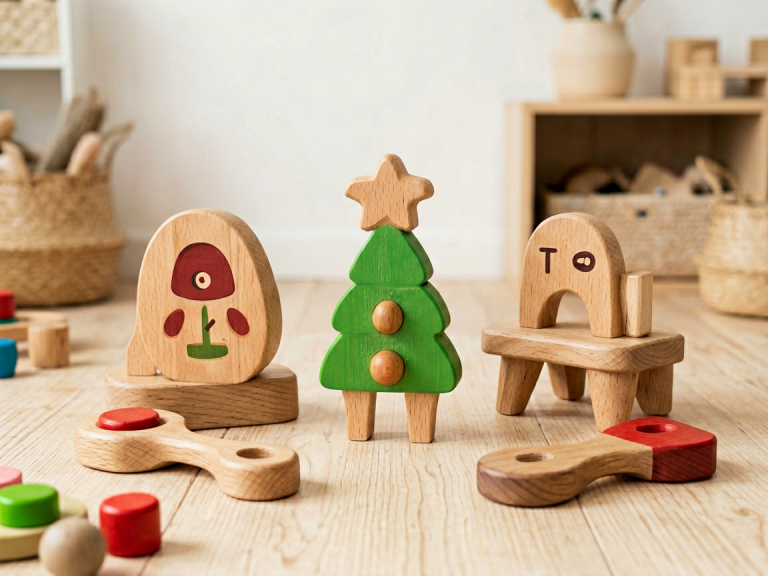
Additionally, limited play value toys often fail to provide appropriate challenges for a two-year-old’s developmental stage. Some are too simplistic, offering no cognitive growth, while others are too complex, requiring skills beyond the child’s age range. For instance, a toy that asks a child to match colors and shapes simultaneously might frustrate a two-year-old who has just mastered color sorting. Instead of supporting step-by-step learning, the toy becomes a source of failure and discouragement. High-quality toys for this age group are designed to be just a little ahead of a child’s current ability, creating a “scaffold” that helps them stretch their skills. A set of chunky wooden puzzles with knobs is perfect: at first, the child may just lift the pieces out, but with practice, they learn to rotate and fit them into their proper slots. That progression is the essence of meaningful play.
The Marketing Trap: How Parents Are Misled About “Educational” Claims
Parents fall into the trap of buying limited play value toys for very understandable reasons. Toy manufacturers know that parents want the best for their children, so they use words like “educational,” “interactive,” and “developmental” on packaging, regardless of the product’s true value. A plastic toy phone with thirty prerecorded animal sounds might claim to teach vocabulary, but a real wooden phone or even a set of toy animals offers far richer language opportunities. When a parent and child play with a simple toy animal, the parent can name it, describe its actions, make up a story, and respond to the child’s coos and gestures. This reciprocal communication is the heart of language learning. In contrast, the electronic phone’s fixed sounds are the same each time; the child cannot modify or extend them. Research in early childhood development consistently shows that human interaction is far more effective than screen-based or prerecorded prompts for building language skills in toddlers.
Another misleading aspect is the sheer visual appeal of these toys. Bright colors, blinking lights, and popular cartoon characters are designed to attract children’s eyes in the store, and they often trigger an immediate “I want that” response. Two-year-olds are highly susceptible to this kind of eye-catching packaging, and exhausted parents may give in to avoid a meltdown. However, what a child asks for and what a child needs are often very different. The child is drawn to the flashing lights and the smiling character, but they do not understand that the toy will cease to be interesting after ten minutes. A wise parent learns to see through the gimmick and ask: “Will this toy still be played with next week? Next month? Can my child use it in more than one way? Does it invite my participation?” These questions are far more useful than the product’s tagline.
The problem is compounded by the sheer abundance of cheap, plastic, battery-operated toys in the marketplace. Many are given as gifts by well-meaning relatives who remember the joy of a shiny new toy from their own childhood. The result is that many two-year-olds have overflowing toy bins filled with items of little value, which can also create sensory overload. When a child is surrounded by dozens of single-purpose toys, they may flit from one to the next, never fully engaging with any. This is the exact opposite of the deep, focused play that supports brain development. Simplifying the toy environment—removing the noisy, limited toys and keeping only a few open-ended, high-quality ones—can dramatically improve a child’s play quality. Parents often report that their toddlers become more creative and more content when they have fewer, better toys.
How to Choose Lasting, High-Value Toys for Two-Year-Olds
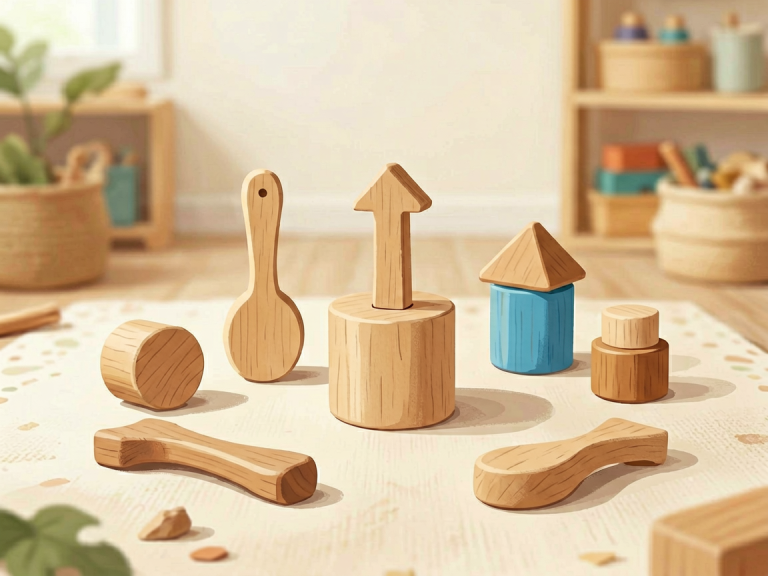
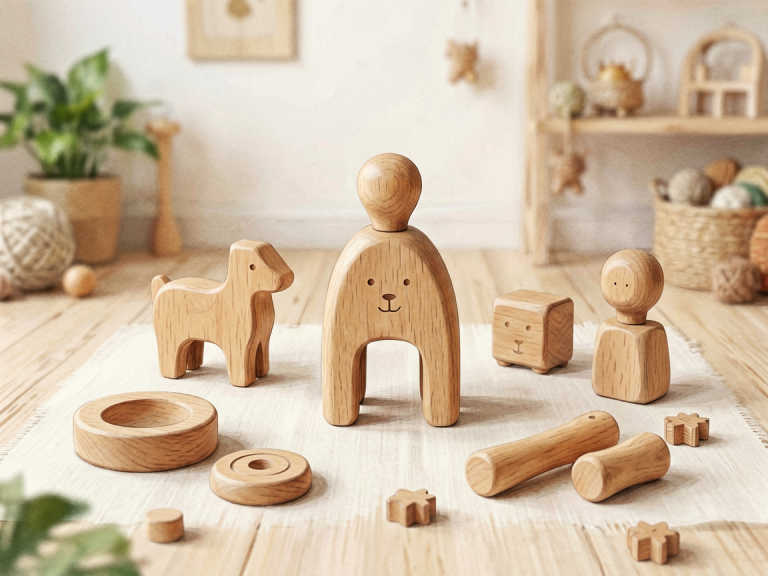
So what should a parent look for instead? The guiding principle is open-endedness: a toy that can be used in many different ways, by themselves or with others, without predetermined outcomes. For a two-year-old, excellent choices include building blocks (wooden or large plastic), nesting cups, stacking rings, simple shape sorters, pull-along toys, child-sized tools like a toy hammer and pegboard, and pretend-play props like dolls, blankets, or play food. These toys encourage problem-solving, fine motor practice, and imaginative scenarios. A set of plain wooden blocks, for example, can become a tower, a bridge, a road, a zoo cage, or a castle. The only limit is the child’s imagination. As the child grows, the same blocks can be used for more complex constructions, meaning the toy has long-term value that spans years, not just the brief “two-year-old phase.”
Durability and safety are also crucial. Two-year-olds are rough on their possessions, and they explore with their mouths as well as their hands. High-quality wooden toys, heavy-duty plastic without small parts, and washable fabric toys are ideal. Avoid anything with batteries unless it serves a truly functional purpose (such as a flashlight that the child can turn on and off, which actually teaches cause-and-effect). Even then, a simple push-button flashlight is still limited compared to a real decorative lantern that a child can use in a play tent. The fewer functions a toy has in terms of electronics, the more functions it has in terms of creativity.
Another important factor is the role of the caregiver. Parents and teachers should actively participate in play, especially when introducing a new toy. Sit on the floor, model ways to use the toy, and then let the child take the lead. For example, with a set of animal figures, a parent might say, “The cow is hungry. What should she eat?” and then hand the child a small bowl. The child soon learns that the cow can be fed, bathed, put to bed, or taken on a walk. This kind of adult participation dramatically extends the value of any toy, even simple ones. In contrast, no amount of adult enthusiasm can salvage a toy that offers no interactive possibilities. The toy itself must invite involvement.
Finally, consider homemade and natural objects. Many of the best toys for two-year-olds cost nothing or very little. Cardboard boxes, large plastic containers with lids, wooden spoons, empty paper towel rolls, fabric scraps, and clean pinecones or stones all offer endless possibilities for sensorimotor and pretend play. These items are not branded or manufactured, but they are exactly what a developing brain needs. They require the child to imagine, to manipulate, and to problem-solve. They also provide wonderful opportunities for language-rich interactions as the parent names the objects and narrates the child’s play. A cardboard box can be a bus, a cave, a rocket, or a dollhouse, and it will remain interesting far longer than any electronic toy with a fixed set of sounds.
In conclusion, choosing toys for two-year-olds demands a shift in perspective—from buying products that entertain to selecting materials that invite. Limited play value toys may look impressive, but they fail the very children they claim to help. They shorten attention spans, suppress creativity, reduce social interaction, and offer no lasting developmental challenge. By focusing on open-ended, durable, and simple toys, and by remembering that the parent-child interaction is the most powerful “toy” of all, we can give our two-year-olds the rich, meaningful play experiences they deserve. When we choose wisely, we are not just buying a toy; we are investing in a child’s curiosity, resilience, and love of learning—a gift that will never lose its value.