Beyond the Flashy Buttons: Why Choosing Toys with Limited Play Value for 18-Month-Olds Is a Mistake
Every parent has been there: standing in a brightly lit toy aisle, staring at a plastic singing robot that promises to teach the alphabet, or a light-up steering wheel that attaches to a stroller. The box says “Ages 18 months and up.” The child points, grabs, and grins. It goes home, batteries are installed, and for three glorious days the toy is fascinating. Then, on day four, the child ignores it completely. The robot sits in a corner, blinking and squeaking to no one. The steering wheel’s songs start to grate on every adult nerve. This is the classic story of a toy with limited play value—a toy that offers a short burst of stimulation but fails to engage a toddler’s developing mind in meaningful, open-ended ways. For an 18-month-old, whose brain is undergoing explosive growth in language, motor skills, and problem-solving, choosing toys with limited play value is not just a minor misstep; it is a missed opportunity for early learning. This article explores what “limited play value” actually means, why 18-month-olds are uniquely affected, and how parents can make wiser choices.
What Does “Limited Play Value” Really Mean?
Play value is not simply about whether a toy makes noise or whether a child finds it momentarily interesting. A high-play-value toy is one that supports many different types of play over a long period of time. It can be used in multiple ways, adapts to the child’s changing abilities, and encourages active engagement—thinking, manipulating, experimenting, and imagining. A limited-play-value toy, by contrast, does the opposite. It usually has only one or two predictable functions. Press a button, hear a song. Push a lever, see a door pop open. The toy “plays” rather than allowing the child to play. For example, a battery-powered remote-control car that drives itself across the floor offers nothing for an 18-month-old to do except watch it move. There is no cause-and-effect exploration beyond pressing the same button. Similarly, a plastic toy phone that only recites pre-recorded phrases may initially amuse a toddler, but it quickly loses appeal because it does not invite the child to create conversations or invent scenarios.
Limited play value also refers to toys that are too passive, too restrictive, or too easily exhausted. Puzzles with only one correct solution can be frustrating if they are too advanced, and boring if they are too simple. A toy that only lights up when a specific piece is placed in a specific spot teaches a narrow skill, but it does not foster creative thinking. Even more problematic are toys with fixed outcomes—toys that flash, spin, or make noise when the child performs a single action. The child learns “if I press this, that happens,” but then what? Once the novelty wears off, there is nothing left to explore. The toy becomes a piece of plastic junk. For an 18-month-old, whose attention span is naturally short, this cycle of initial excitement and rapid boredom can be especially damaging, because it trains the brain to expect constant external stimulation rather than internal curiosity.
Why 18-Month-Olds Are Especially Vulnerable
At 18 months, a child is at a remarkable developmental crossroads. They are walking steadily, running a little, climbing onto furniture, and using their hands with increasing precision. They are also beginning to understand symbols—they know that a block can represent a car, or that a cup might be used as a hat. This is the age of pretend play, simple problem-solving, and intense language acquisition. Toddlers at this age are natural explorers who learn best through hands-on, open-ended interactions with objects and people. They do not need a toy to tell them what to do; they need toys that let them decide.
However, 18-month-olds are also easily captivated by bright colors, loud noises, and rapid motion. Their brains are wired to pay attention to novelty and sensory extremes. Toy manufacturers know this, which is why so many “toddler” toys are overloaded with flashing lights and annoying jingles. The problem is that this sensory overload actually undermines deeper learning. When a child is passively watching a toy light up and sing, they are not using their own hands, eyes, and mind to figure out how the world works. They are simply spectators. Moreover, an 18-month-old has very little impulse control. They may cry for a toy in the store, and parents, tired and eager for peace, give in. But the child’s momentary desire does not reflect a genuine long-term need. A toddler cannot tell the difference between a toy that will sustain their curiosity and one that will be abandoned in a week. That is the parent’s job.
Another vulnerability is the rapid pace of skill development. A toy that is perfectly engaging at 18 months may become obsolete by 20 months. For example, a shape sorter with three basic shapes might entertain a child for a few weeks, but once they master sorting, the toy has nothing new to offer. A limited-play-value toy does not grow with the child. In contrast, a set of plain wooden blocks can be used at 18 months for stacking, at 24 months for building towers, at 30 months for making roads, and later for creating imaginary worlds. High-play-value toys are open-ended enough to adapt to a child’s changing abilities. Limited-play-value toys are static—they are the same on day one as on day one hundred, which is exactly why they become boring so quickly.
The Hidden Consequences of Poor Toy Choices
The immediate consequence of choosing toys with limited play value is boredom and clutter, but the deeper consequences are more concerning. One of the most significant is the impact on attention span. When toddlers are repeatedly exposed to toys that deliver instant gratification through buttons and lights, they begin to expect that level of stimulation from all activities. Real-world play—like stacking blocks, sorting stones, or exploring a cardboard box—requires sustained effort and delayed gratification. A child who has been conditioned to expect flashing rewards may abandon such activities prematurely, leading to a shorter attention span over time.
Another consequence is the missed opportunity for language development. Interactive toys that speak to the child are often marketed as educational, but research suggests that the best language learning happens through back-and-forth conversation with people, not through listening to a toy’s pre-recorded phrases. When a child plays with a simple doll, they talk to it, cuddle it, and practice the sounds and words they have heard. When a child plays with a singing toy, they just listen. The toy does not respond to the child’s babbling or adjust to their level. Therefore, limited-play-value toys can actually reduce the amount of meaningful verbal exchange.
There is also a social-emotional cost. Open-ended play helps toddlers develop independence, creativity, and resilience. When a child builds a tower of blocks and it falls, they learn to try again. When they use a spoon as a drumstick, they learn that the world is full of possibilities. Limited-play-value toys, with their rigid scripts, offer no such lessons. They do not encourage problem-solving, because the answer is always just a button push away. They do not encourage creativity, because the outcome is fixed. Over time, a child may become more passive and less inclined to initiate their own play. This is troubling because self-directed play is essential for brain development, emotional regulation, and even executive function skills like planning and focusing.
Finally, there is the issue of consumer waste. The toy industry churns out millions of plastic gadgets that are played with for a few weeks and then tossed into landfills. By choosing limited-play-value toys, parents contribute to a cycle of overconsumption that is both financially wasteful and environmentally harmful. High-quality, simple toys—wooden blocks, balls, nesting cups, toy animals, art supplies—tend to last for years and can even be passed down to younger siblings. In the long run, they are not only better for the child but also better for the planet.
How to Choose High-Play-Value Toys for an 18-Month-Old
So what should a parent look for instead? The golden rule is to choose toys that are open-ended, durable, and age-appropriate in a developmental sense, not just in a safety sense. Here are some practical guidelines.
First, ask yourself: “Can this toy be used in more than one way?” A simple set of stacking cups can be nested, filled with sand, used as drums, turned into hats, or used as scoops in the bathtub. A cardboard box can become a house, a car, a tunnel, or a castle. If a toy has a fixed function—like a plastic laptop that only says the alphabet—it will quickly be exhausted. But if it can be incorporated into many different types of play, it will remain interesting for months or even years.
Second, prioritize toys that engage the child’s whole body. At 18 months, toddlers need to practice gross motor skills like climbing, pushing, pulling, and balancing. Large balls, push-and-pull toys, and low climbing structures are excellent choices. They allow the child to move and explore their physical environment, which is far more valuable than sitting still and pressing buttons.
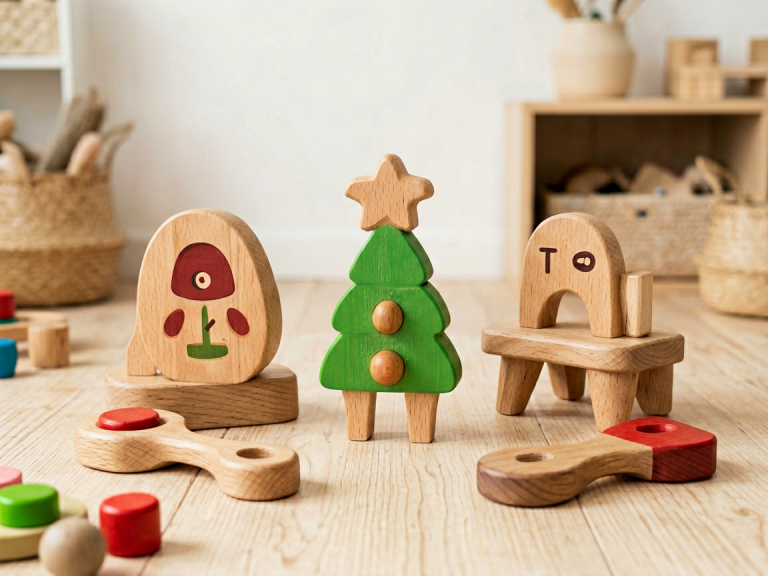
Third, choose toys that encourage problem-solving and cause-and-effect in a natural way. A shape sorter with chunky pieces is good, but make sure the pieces are not too hard to grasp. A set of chunky wooden puzzle pieces with handles can teach fine motor skills and spatial reasoning. Simple pop-up toys where the child has to slide, push, or turn a knob to make an animal appear are also great—but they are best used sparingly, as they still have a limited number of actions. The ideal is a toy that offers many different problems to solve, such as a set of nesting blocks that can be stacked in different orders.
Fourth, consider “loose parts” play. This is a term used by educators to describe collections of open-ended materials such as pinecones, large pebbles, fabric scraps, cardboard tubes, wooden rings, and empty containers. For an 18-month-old, these offer endless possibilities. They can be stacked, rolled, hidden, sorted, and combined. They encourage imagination and creativity because there is no prescribed way to play with them. Of course, safety is crucial—avoid small parts that could be choking hazards, and always supervise.
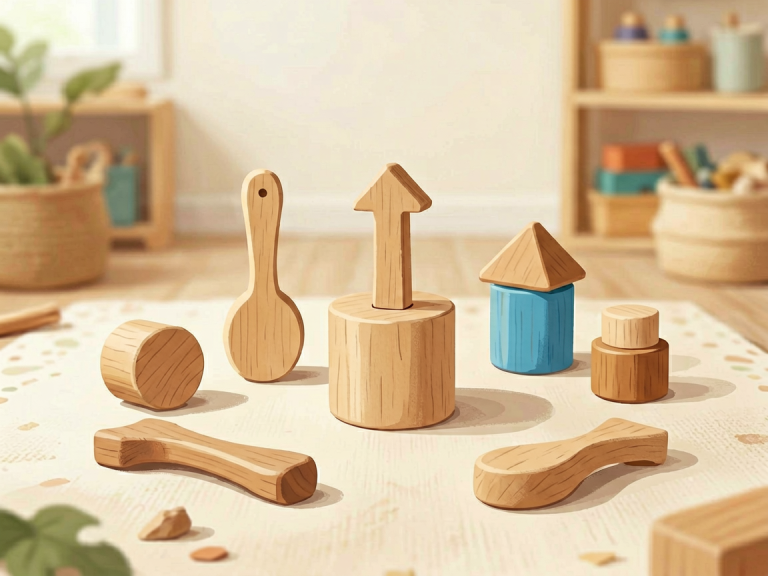
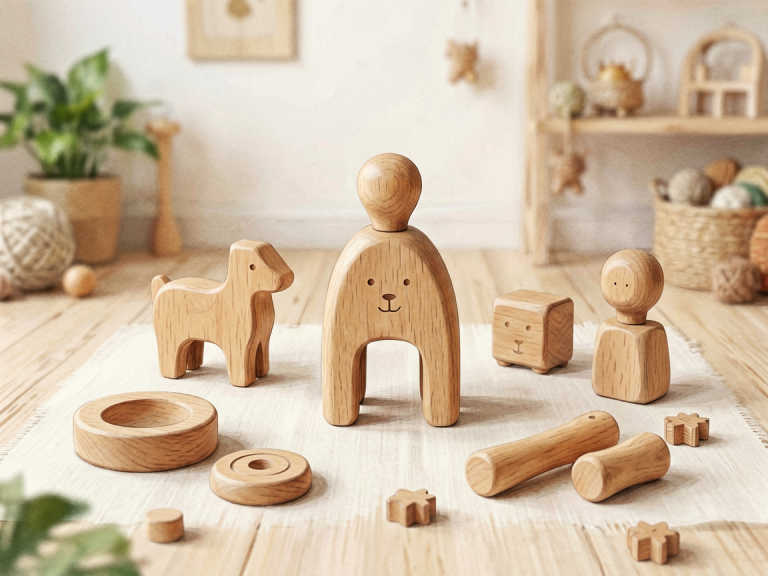
Fifth, do not underestimate the value of classic toys. Wooden blocks, simple dolls in soft fabric, toy cars without batteries, animal figurines, and musical instruments like tambourines or maracas all have high play value. They are durable, safe, and open-ended. They do not perform, so the child must use their own mind to bring them to life. This is exactly the kind of play that builds neural connections.
Finally, remember that the best “toy” for an 18-month-old is often the parent themselves. Face-to-face play, singing songs, reading picture books, building block towers together, and simply talking about what the child is doing are all far more enriching than any store-bought gadget. A child does not need a toy that teaches them; they need a world that invites them to explore. The parent’s role is to provide safe, interesting materials and then step back to let the child lead.
Conclusion
Choosing toys with limited play value for an 18-month-old is an easy mistake to make. The marketing is persuasive, the flashing lights are demanding, and the child’s pleading eyes are difficult to resist. But as this article has shown, such toys fail to support the rich, active, open-ended play that is so crucial during this stage of rapid development. They shrink attention spans, limit language learning, stifle creativity, and create clutter. Instead, parents should reach for toys that are simple, durable, and open-ended—toys that encourage a child to think, move, imagine, and talk. By making the conscious choice to avoid the flashy and temporary, and to embrace the simple and lasting, parents can give their 18-month-olds the greatest gift of all: the freedom to play in ways that build a strong foundation for a lifetime of learning. Next time you stand in that toy aisle, close your eyes, ignore the buzzers and sirens, and ask yourself one question: “Will this toy make my child think, or will it only make noise?” Your toddler’s future self will thank you.