Are Robot Toys Worth It for 6-Month-Olds? A Developmental Perspective
Walking into a modern baby store, parents are confronted by a dizzying array of "smart" playthings: robotic dogs that wag their tails, talking cubes that sing the alphabet, and plush robots that roll across the floor, flashing LED eyes. The marketing is persuasive—these toys promise to stimulate cognitive development, teach cause and effect, and even introduce early STEM skills. But when your baby is only six months old, still barely able to sit up without wobbling, are robot toys genuinely beneficial, or are they just expensive distractions? This question deserves careful consideration, because the first year of life is a critical period for brain development. What a baby experiences through play shapes neural connections, motor skills, and emotional bonds. To decide whether robot toys are worth it for a six-month-old, we must first understand what this age truly needs, what robot toys can and cannot offer, and how they compare to simpler, time-tested alternatives.
What Six-Month-Olds Actually Need
At six months, a baby is a remarkable little scientist. She is learning to grasp objects deliberately, transferring them from one hand to another, and bringing everything to her mouth—her primary tool for exploration. She can reach for a dangling toy, bat at it, and squeal with delight when it moves. She is beginning to understand object permanence: that a toy hidden under a blanket still exists. She is also intensely social, recognizing familiar faces, babbling in response to voices, and laughing at peekaboo games. Her vision is maturing, but she still has limited ability to track fast-moving objects. Her hearing is sharp, yet sudden loud noises can startle her.
Developmentally, a six-month-old’s most urgent needs are simple and profound: human connection, sensory-rich but gentle experiences, and opportunities to practice motor skills. She needs to feel secure, to hear a parent’s voice, to touch different textures, and to witness the natural consequences of her own actions—like shaking a rattle to hear its sound. Crucially, she needs play that is *active* rather than passive. The brain develops through her own actions and interactions, not through merely watching or listening to stimulation. For this reason, many child-development experts emphasize the value of open-ended toys: blocks, soft balls, fabric books, and household objects like wooden spoons and plastic cups. These allow the baby to be the agent of play, discovering endless possibilities through trial and error.
What Robot Toys Can Offer
Robot toys are not inherently evil. Many of them are designed with appealing colors, gentle rounded edges, and materials safe for little mouths. The best ones—say, a small rolling ball that moves away when touched or a stuffed animal that plays soft lullabies—can attract a baby’s attention and encourage visual tracking. A toy that responds to a baby’s tap with a cheerful beep provides a delightful lesson in cause and effect. This feedback loop is genuinely valuable: it helps the baby learn that her actions can influence the world around her. Some robot toys also incorporate songs, animal sounds, and spoken words, which can introduce vocabulary and auditory discrimination. For a six-month-old, hearing varied speech sounds is important for language development, so a parent and child playing together with a talking robot can create a shared focus that facilitates conversation—"Look, the robot says 'moo'! Yes, that’s a cow!"
Moreover, certain motorized toys encourage crawling or reaching. If a robot slowly inches forward, a baby may be motivated to chase it, which strengthens the muscles needed for mobility. Some parents report that their babies are absolutely captivated by a moving toy, laughing and flapping their arms in excitement. Used sparingly and alongside a caregiver, robot toys can add novelty and joy to a baby’s day. They are not wholly pointless; they simply must be chosen and used with intention.
The Hidden Downsides of Robot Toys
Despite their allure, robot toys carry significant risks for this age group. The first problem is overstimulation. Most six-month-olds have immature nervous systems that can easily become overloaded by too many flashing lights, overlapping sounds, and unpredictable movements. Signs of overstimulation include fussiness, turning away, crying, or even staring blankly at the toy in a trance-like state. When a baby is overwhelmed, she is not learning; she is merely coping. Instead of fostering focus, a hyperactive robot can fragment her attention and make it harder for her to engage in sustained, active exploration. Another concern is the passive, screen-like quality of many robot toys. While not all robot toys have screens, many include digital displays or glowing surfaces. The American Academy of Pediatrics recommends avoiding all screen media for children under 18 months, except for video chatting. Even without a traditional screen, the constant visual and auditory stimulation from a robot can overshadow the subtler, quieter feedback that real-world objects provide—the soft thud of a cloth block, the gentle wobble of a wooden ring—which are essential for building sensory integration.
Safety is yet another issue. Robot toys have batteries, motors, and small parts. If the battery compartment is not securely screwed shut, a baby could access dangerous lithium batteries. Loose wires or plastic shards from rough handling pose choking hazards. Some motorized toys move in ways that can startle or accidentally hit a baby. Because six-month-olds explore with their mouths, any coating or paint must be non-toxic and free of BPA and phthalates. Many cheap robot toys fail these standards. Additionally, the worst danger may be psychological: a robot toy that repeatedly sings or talks can overshadow the human voice. A parent may be tempted to use the toy as a babysitter, leaving the baby alone with the machine. Yet the foundation of social and emotional development is face-to-face interaction, eye contact, and responsive cooing. No robot, no matter how advanced, can replace the warmth of a caregiver’s lap, the cadence of a heartbeat, or the subtle cues of a smile.
What to Choose Instead
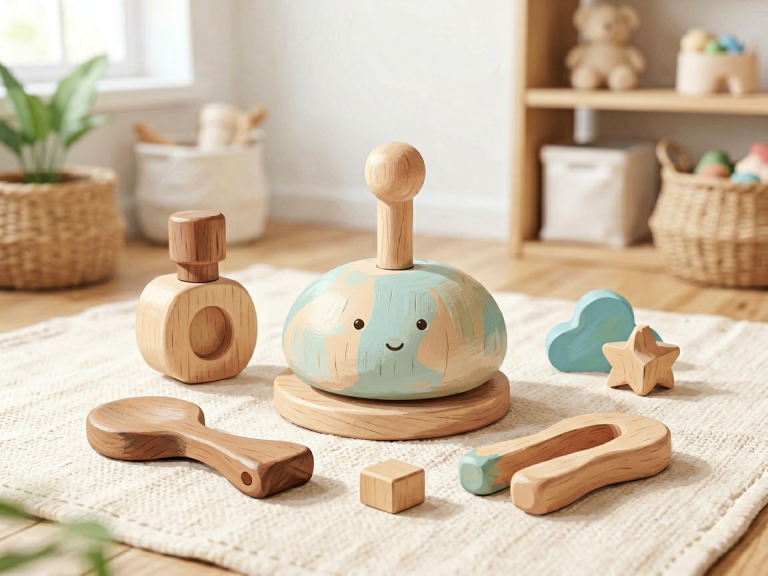
If robot toys are questionable, what should a parent offer a six-month-old? The answer lies in simplicity, texture, and human presence. High-contrast board books with large pictures, soft blocks with bells inside, textured teething rings, and activity gyms with hanging toys are all excellent choices. Everyday items from the kitchen—measuring cups, silicone spatulas, cardboard boxes—are often the most beloved "toys" of all, because they are naturally open-ended and safe under supervision. A simple game of hiding a blanket over your face then revealing it, or rolling a soft ball back and forth, does more for a baby’s brain than any electronic gadget. These interactions teach turn-taking, anticipation, and social rhythm. Sensory play with water, crinkly paper, or safe sand helps refine touch and motor planning. Singing songs, reciting nursery rhymes, and narrating your daily actions—"Now we’re putting on your warm socks"—builds language and attachment far more effectively than a robotic alphabet recital.
That is not to say parents must banish all robot toys. If you already own one or receive one as a gift, you can use it wisely. Limit sessions to five or ten minutes, always play together with the baby, and watch for signs of overstimulation. Turn off the sound when possible and let the baby push the buttons herself. Choose robot toys with simple actions—a slow roll, a single gentle song—rather than multi-functional, flashing, loud models. Better yet, look for "least electronic" options: a jack-in-the-box, a pull-along duck, or a simple musical windup toy. These provide the magic of movement without the sensory overload.
A Balanced Verdict
So, are robot toys worth it for six-month-olds? The honest answer is: rarely, and never as a substitute for real play. A few high-quality, simple robot toys can be delightful additions to a baby’s toy box, provided they are used sparingly, with active parental involvement, and in full awareness of the baby’s developmental needs. However, the vast majority of robot toys marketed for infants are over-engineered, overstimulating, and designed more to impress parents than to benefit babies. The science is clear that babies learn best through warm, interactive, real-world experiences with caregivers and simple objects. Putting your smartphone aside to make silly faces, offering a wooden spoon to bang on a pot, or letting your baby grab your finger while you sing—these are the moments that truly build a brilliant, happy mind. In the end, the best "toy" for a six-month-old is you. And that costs nothing at all.