Are Robot Toys Worth It for Learning? A Balanced Examination
Introduction: The Allure of the Talking Machine
Walk into any toy store today, and you will see a shelf lined with blinking, beeping, sometimes even dancing robots. From programmable coding bots to interactive AI companions, these devices promise to make children smarter, more creative, and future-ready. But behind the bright lights and cheerful voices lies a genuine question for parents and educators: are robot toys actually worth it for learning? The answer, as with most educational tools, is neither a simple yes nor a resounding no. It depends on the toy, the child, the context of use, and the learning goals we hope to achieve. By examining the cognitive benefits, the potential drawbacks, and the practical realities of robot toys, we can make a more informed decision about how—and whether—they belong in a child’s learning journey.
The Promise: What Robot Toys Can Teach Well
There is no doubt that certain robot toys excel at introducing foundational STEM concepts, especially coding and logical thinking. Products like Botley, Sphero, or LEGO Mindstorms allow children to engage with sequencing, conditionals, loops, and debugging through hands-on play. Instead of staring at a screen, a child physically sees a robot move forward, turn left, or react to a sensor — making abstract code concrete. This tangible feedback loop is powerful. Research in educational psychology suggests that embodied learning, where physical actions accompany mental reasoning, strengthens memory and understanding. For a seven-year-old, programming a robot to navigate a maze is not merely fun; it is a lesson in cause and effect, spatial reasoning, and problem-solving. These toys also foster persistence, as children must iterate and alter their commands when the robot fails, cultivating a growth mindset that is arguably more valuable than the technical skill itself.
Beyond coding, some robot toys are designed to teach social-emotional skills. Humanoid robots like Moxie or Cozmo are built to recognize faces, express emotions, and engage in conversation. For children on the autism spectrum or those with social anxiety, these devices can serve as low-pressure practice partners. The robot never gets impatient, never judges, and can be turned off at any moment. In controlled therapy settings, social robots have been shown to help children practice eye contact, turn-taking, and emotional recognition. Even for typically developing children, interacting with a robot that asks questions and responds to feelings can model empathy and conversational reciprocity. Thus, the learning potential of robot toys is not limited to science classrooms; it extends into the realm of emotional intelligence.
The Pitfalls: Why the Hype Can Backfire
However, the case for robot toys is not without significant caveats. The most glaring issue is the price-to-value ratio. High-quality educational robots often cost anywhere from fifty to several hundred dollars, yet their educational content may be shallow or easily exhausted. A child who masters the basic coding commands within a few weeks may lose interest, leaving a costly plastic brick on the shelf. Meanwhile, cheaper alternatives like simple board games, building blocks, or even a deck of cards can teach logical reasoning, strategy, and social interaction at a fraction of the cost. The novelty effect is another danger. Many robot toys are designed to be exciting at first, with flashing lights and cheerful sounds, but the learning gains often flatten after the initial engagement. If the toy’s curriculum does not progress in complexity, the educational value diminishes rapidly. Parents may find that they are paying for a gimmick rather than a sustained learning tool.
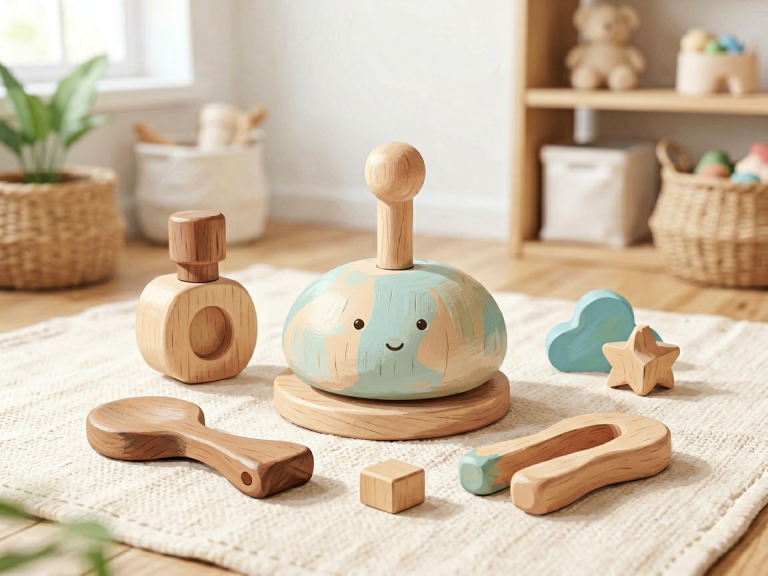
Moreover, the presence of a robot can inadvertently reduce creative and open-ended play. Traditional toys like wooden blocks, dolls, or art supplies are infinitely reconfigurable; a child can invent entire worlds with minimal constraints. Robot toys, by contrast, are often rule-bound. They do what they are programmed to do, and the child must adapt to the toy’s capabilities. This can lead to a more prescriptive form of play, where the child is a consumer of interactions rather than an author of narratives. Several child development experts have warned that excessive reliance on interactive robots could diminish imagination, as the robot’s predefined responses limit the child’s ability to assign arbitrary meanings to objects. Furthermore, screen-free time is increasingly precious, and many robot toys require an accompanying app or tablet, turning “educational play” into yet another form of screen time. Even if the child is learning, parents must question whether this is the healthiest mode of learning compared to physical play, reading, or outdoor exploration.
The Context Matters: How to Make Robot Toys Truly Educational
If we move beyond the binary of “worth it vs. not worth it,” the real question becomes: under what conditions do robot toys enhance learning? The first critical factor is adult involvement. Studies consistently show that children learn more from any educational toy when a parent or teacher mediates the experience. A robot toy is not a babysitter; it is a catalyst for conversation. When a parent asks, “What happens if you change this command?” or “Why did the robot stop there?”, the child engages in metacognition and verbal reasoning, which deepens learning. Without this scaffolding, children may simply watch the robot perform novelty tricks, absorbing little. So, a robot toy is only as educational as the dialogue that surrounds it.
The second factor is design quality. Not all robot toys are created equal. The best ones are open-ended, allowing children to create new behaviors, build custom attachments, or solve progressively challenging puzzles. For example, a robot that can be disassembled and rebuilt, or one that integrates with craft materials, sparks engineering thinking far more than a robot with a fixed set of pre-recorded phrases. Parents should look for toys that encourage iteration and customization, rather than those that simply respond to input with correct or incorrect answers. Also, the toy should match the child’s developmental stage. A coding robot designed for a six-year-old will frustrate a ten-year-old, while a sophisticated robotics kit will overwhelm a preschooler. The sweet spot is a toy that sits just above the child’s current ability level—a concept borrowed from Vygotsky’s zone of proximal development.
The third factor is time and balance. Robot toys should be one tool among many, not the centerpiece of a child’s learning ecosystem. The American Academy of Pediatrics recommends unstructured, free play as the best vehicle for healthy development. Robot toys can complement that, but they should not displace blocks, crayons, dress-up clothes, or time in nature. A balanced schedule might include thirty minutes of robot play after school, followed by an hour of outdoor play and a shared family dinner conversation. The goal is to use robot toys intentionally, not habitually. Parents might also consider shared projects, such as building a robot with siblings or friends, which turns solitary screen-adjacent activity into a social, cooperative exercise.
The Verdict: A Conditional Investment
So, are robot toys worth it for learning? The honest answer is: yes, but only conditionally. They are worth it when they are thoughtfully selected for a specific skill, when an adult actively participates in the learning process, and when they are used as a supplement to, not a replacement for, diverse forms of play. They are not worth it when they are bought as quick fixes, when they dominate a child’s playtime, or when their interactive features are so flashy that they overshadow deep thinking. Ultimately, the child’s own curiosity and creativity are the true engines of learning. A robot toy can be a spark, but it cannot be the fire. With clear goals, realistic expectations, and a commitment to engaged parenting, robot toys can earn a place in the toy box. Without those elements, they are just expensive, high-tech decorations. As with any educational investment, the question is not what the toy can do, but what you and your child will do with it.