The Fragile Genius: Why Buying Breakable Toys for 1-Year-Olds Is Anything But a Mistake
—
Introduction: The Unbreakable Myth
Walk into any baby store today, and you will be bombarded with promises: “indestructible,” “BPA-free, shatterproof,” “designed to withstand the strongest toddler.” The modern parenting industry has sold us a powerful narrative—that the best toy for a one-year-old is one that can survive a nuclear blast. We are told to avoid anything that chips, cracks, or crumbles. Yet, in our quest for durability, we may have lost something essential: the very nature of how a one-year-old learns. This article argues that buying toys that break easily for 1-year-olds is not only acceptable but often preferable, provided we understand the developmental, sensory, and even philosophical reasons behind the choice.
—
1. The Sensory-Seeking Toddler: Why Destruction Is Discovery
A one-year-old is not a miniature adult. She is a scientist in a high-chair lab, armed with drool, curiosity, and two uncoordinated hands. Her primary method of research is cause and effect. She drops a spoon—it clatters. She throws a block—it bounces. She squeezes a soft toy—it squeaks. But what happens when she squeezes a plastic rattle too hard and it cracks? She hears a sharp snap; she sees two pieces separate; she feels a new texture under her palm. That moment of breakage is a rich, multi-sensory learning event.
The developmental truth: A one-year-old’s brain is building neural pathways at a furious rate. Predictable outcomes (a rubber ball always bounces) teach pattern recognition. But unpredictable outcomes—an object that fails, fractures, or falls apart—teach something deeper: the concept of fragility, the boundary of material strength, and the consequence of force. When a toy breaks, the child experiences a controlled failure in her environment. She learns that actions have limits. This is not frustration; it is education.
Consider the Montessori philosophy, which favors natural materials like wood and glass over plastic. Montessori educators deliberately present children with breakable objects because they teach the child to adjust her movements, to use just enough force, and to respect the material world. A one-year-old who only ever handles unbreakable plastic never develops fine motor calibration. She smashes a wooden block against a table; it makes a satisfying sound but does not shatter. She learns that wood is dense. She crushes a cardboard box; it crumples. She learns about compression. Each material offers a different lesson. If all toys are “indestructible,” those lessons become uniform—and dull.
—
2. The Hidden Benefits of Impermanence: Attention, Attachment, and Letting Go
Most parents worry that a broken toy will lead to a crying meltdown. In reality, the emotional response of a one-year-old to a broken toy is complex and often surprising.
Short attention spans, deep moments of focus: A one-year-old’s attention span is notoriously short—typically two to four minutes per activity. But when a toy breaks, something remarkable happens. The sudden change in shape or sound jolts the child out of her automatic play pattern. She stops, stares, picks up the pieces, and investigates. This moment of heightened focus can last much longer than her usual attention span. The break itself becomes an event that demands cognitive engagement. She might try to put the pieces together, or she might simply examine the broken edge with her fingers. Either way, she is learning.
The lesson of impermanence: Children who experience toys that break learn early that objects are not eternal. This may sound harsh, but it is actually a gentle preparation for the real world. A one-year-old who drops a cookie and sees it crumble learns that some things cannot be fixed. She learns to adjust her grip, to be more careful next time. She also learns that it is okay to let go. In a consumer culture that often teaches kids to hoard and accumulate, the experience of losing a toy—saying goodbye to it because it is broken—can foster a healthy detachment from material goods.
Attachment and replacement: Importantly, the broken toy does not have to be a source of trauma. If the parent responds calmly, models problem-solving (“Oh, the wheel came off! Let’s put it in the recycling bin and find another toy”), the child learns that breakage is a normal part of life, not a catastrophe. This emotional regulation skill is far more valuable than the toy itself.
—
3. Safety First: Choosing “Smart-Fragile” Toys for One-Year-Olds
Of course, the keyword here is *buying toys that break easily for 1-year-olds*—not toys that break dangerously. There is a critical difference between a toy that crumbles into safe pieces and one that splinters into sharp shards. Parents must be discerning. The goal is not to give a child a glass vase, but to select toys made from materials that fail in a safe, predictable way.
Examples of safe “breakable” materials:
- Thin cardboard or paperboard: A lightweight cardboard block will dent, tear, or crush under a toddler’s weight. It will not cut. It can be safely recycled. Think of a simple cardboard stacking tower—it gets squashed, the child loves re-stacking it.
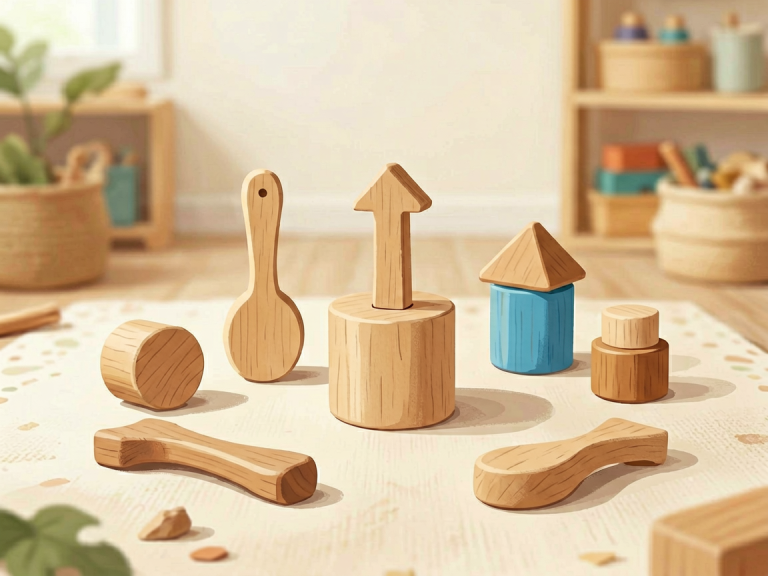
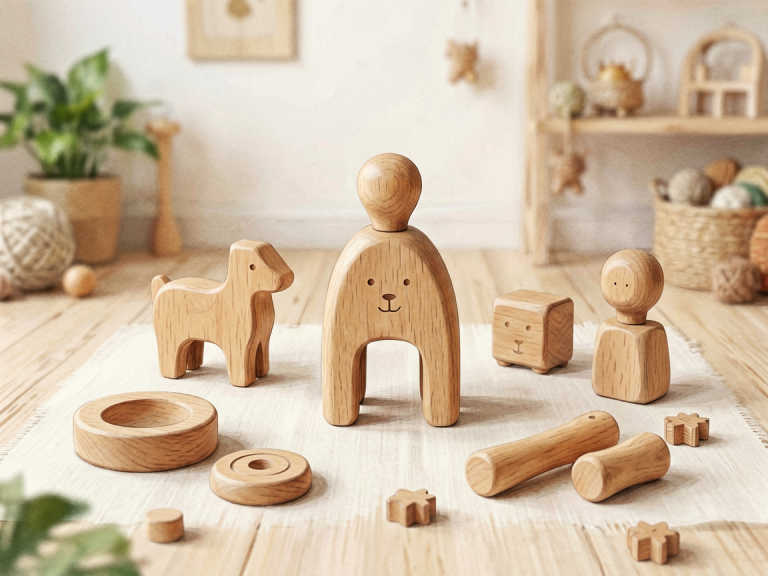
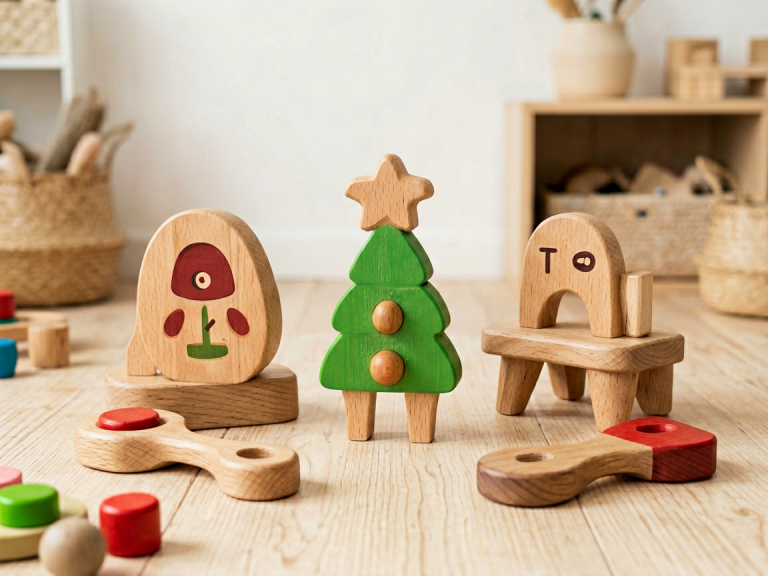
- Natural wood (with non-toxic finishes): Wood can crack but usually along grain lines, producing blunt pieces. Avoid varnishes that could flake off. A wooden ring that splits is still safe if the edges are smooth.
- Biodegradable plastics (like PLA or starch-based): Some newer eco-friendly toys are designed to be compostable. They may be brittle and break under stress, but they shatter into blunt chunks rather than splinters.
- Chalk or crayon-based toys: Chalk sticks break easily. A one-year-old will snap a thick piece of sidewalk chalk, and the fragments are non-toxic, soft, and crumbly. This teaches cause and effect without risk.
What to avoid: Glass, hard brittle plastic (like acrylic or polycarbonate that can splinter), ceramics with sharp edges, toys with small internal parts (batteries, magnets) that can be exposed when broken. Always check for choking hazards. A broken toy that disgorges tiny pieces is dangerous. The “breakability” must be designed such that the broken pieces are larger than a toilet paper roll (the standard choking hazard gauge) or crumble into harmless dust.
—
4. Environmental and Financial Arguments: The Case Against “Forever Toys”
Let us address the obvious counterargument: “Why would I spend money on a toy that will break in a week?” That question assumes that the toy’s value is measured by its lifespan. But for a one-year-old, a toy’s value often peaks at the moment of novelty, which lasts days, not years. A toy that lasts ten years will be outgrown in three months. Meanwhile, a cheap, biodegradable, fragile toy that breaks after a month may actually be environmentally superior to a “forever” plastic toy that sits in a landfill for a millennium.
The economics of childhood: Infants and toddlers go through rapid developmental stages. A rattle is interesting at 6 months, boring at 10 months. By 12 months, they want to bang, throw, and dismantle. Buying expensive, “indestructible” toys often leads to a drawer full of ignored objects. A set of simple, fragile wooden blocks that you replace when they crack costs far less and provides more engagement.
Environmental perspective: Many “durable” plastic toys are made from petrochemicals and are not recyclable. When they eventually break (and they do break, no matter what the label says), they become microplastic hazards. A fragile toy made from paper, cardboard, or plant-based materials can be composted or recycled. Parents who choose breakable toys are often making a conscious choice to reduce long-term waste.
—
5. Practical Tips for Parents: How to Embrace the Fragility
If you are now convinced that buying breakable toys is a good idea, how do you implement it without chaos? Here are concrete strategies:
- Create a “break zone”: Designate a play area with a soft rug or mat. When a toy breaks, the pieces land softly. The child can safely examine them.
- Supervise, but don’t intervene: Give the child freedom to explore the breaking process. Only step in if pieces become a choking hazard or sharp.
- Teach “repair” as play: For toys that break cleanly (like a wooden knob popping off), you can show the child the repair process. Even a one-year-old can watch you glue it. This teaches problem-solving and patience.
- Rotate breakable toys: Keep a small basket of “fragile” toys (cardboard tubes, paper cups, thin wooden rings) that you replenish regularly. This mimics the natural cycle of consumption and renewal.
- Accept the mess: Yes, the playroom may have crumbs of broken cardboard. Yes, you might find little wood chips. But the learning that happens in that moment of breakage is worth a few minutes of sweeping.
—
Conclusion: The Zen of the Broken Toy
In a culture obsessed with perfection and permanence, buying toys that break easily for a 1-year-old feels counterintuitive. But consider this: a one-year-old’s world is already full of fragility. The cookie crumbs, the crumpled tissue paper, the fallen leaves—these are the materials that captivate them. They are not afraid of breakage; they are fascinated by it. By providing safe, breakable toys, we honor that fascination. We give them the joy of discovery, the humility of impermanence, and the knowledge that even the strongest grip must be calibrated with care.
So the next time you see a toy labeled “unbreakable,” ask yourself: what lesson is my child missing? Perhaps the most intelligent purchase you can make is a toy that will not last—because it will teach something that does last: the curiosity to explore, the courage to let go, and the wisdom to handle a fragile world with gentle hands.