Beyond the Screen: Top Alternatives to Learning Tablets for 4-Year-Olds
In the digital age, it is tempting to hand a 4-year-old a brightly colored tablet loaded with "educational" apps. Advertisements promise accelerated learning, better vocabulary, and even early coding skills. Yet a growing body of research in child development suggests that for children under five, screens—no matter how interactive—may hinder rather than help the most critical aspects of early learning. The question is not whether tablets are effective, but what better tools exist to nurture a four-year-old’s curious mind. Instead of defaulting to glowing pixels, parents and educators can turn to a rich array of alternatives that foster imagination, fine motor skills, social-emotional growth, and deep concentration. This article explores the best alternatives to learning tablets for 4-year-olds—options that are more developmentally appropriate, more engaging over the long term, and far more likely to lay the foundation for genuine lifelong learning.
The Case Against Early Tablet Use
Before diving into alternatives, it is worth understanding why tablets fall short for 4-year-olds. At this age, children learn through multi-sensory, hands-on experiences. They need to touch, manipulate, move, and interact with real objects in three-dimensional space. Tablets, for all their flash, limit children to two-dimensional interactions that often encourage passive consumption rather than active creation. Moreover, the instant rewards and rapid scene changes of many apps can shorten attention spans and reduce tolerance for slower, more demanding tasks like building with blocks or waiting for a turn in a board game. Pediatric organizations worldwide, including the American Academy of Pediatrics, advise limiting screen time for preschoolers to no more than one hour per day of high-quality content—and even that comes with the caveat that co-viewing with a caregiver is essential. In short, while a tablet can be a convenient digital babysitter, it is rarely the best learning tool for a four-year-old’s developing brain.
Hands-On Building Blocks: The Cognitive Power of Construction Toys
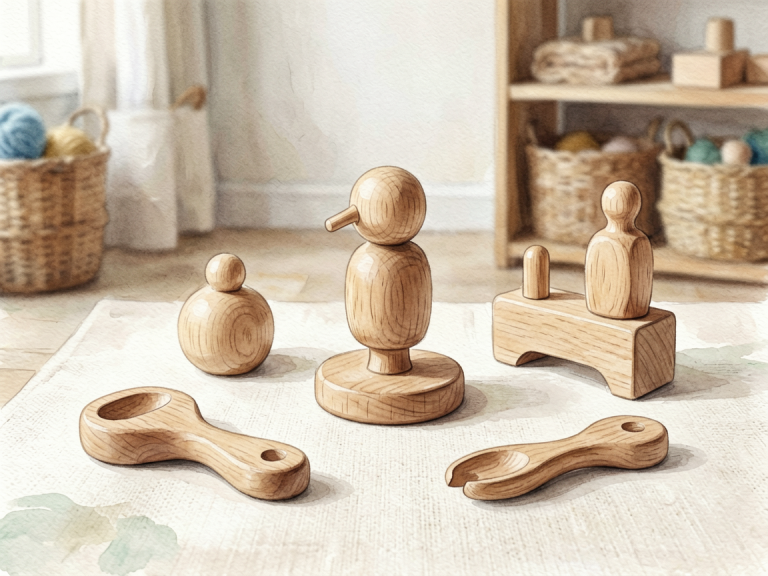
One of the most powerful alternatives to a learning tablet is the humble set of building blocks. Whether wooden unit blocks, LEGO Duplo, magnetic tiles, or interlocking plastic bricks, construction toys offer a depth of learning that no app can replicate. When a 4-year-old stacks blocks to build a tower, they are not just playing—they are experimenting with gravity, balance, symmetry, and spatial relationships. They learn cause and effect (too high and it falls), problem-solving (how to make a bridge stay up), and persistence (trying again after a collapse). Unlike a tablet game that provides a single correct solution, blocks are open-ended. A child can build a house one day, a rocket ship the next, and an imaginary castle the day after. This flexibility fuels divergent thinking, a key component of creativity. Furthermore, building with blocks strengthens fine motor skills—the small muscles in the hands and fingers that are essential for later writing. The physical feedback of weight, texture, and resistance is something no touchscreen can mimic. To maximize the learning potential, parents can ask open-ended questions like, “What would happen if you put that big block on top?” or “Can you build a tunnel for this toy car?” These interactions build language and reasoning far more effectively than a voice-over from a cartoon character.
The Magic of Open-Ended Play: Art, Clay, and Sensory Materials
Another category of alternatives revolves around open-ended art and sensory materials. At age four, children are natural artists—they love to smear paint, squish clay, cut paper, and glue random objects together. These activities are not just messy fun; they are sophisticated learning tools. Finger painting, for example, develops tactile sensitivity and hand-eye coordination. Modeling clay strengthens finger muscles and encourages three-dimensional thinking. Simple scissors-and-paste projects teach planning, sequencing, and spatial awareness. Unlike a tablet drawing app that offers undo buttons and perfect shapes, real art materials demand patience, resilience, and acceptance of imperfection. A child who accidentally rips their paper has to figure out how to fix it or start over—a valuable lesson in problem-solving and emotional regulation. Sensory bins filled with rice, beans, sand, or water offer similar benefits. Pouring, scooping, digging, and sorting engage multiple senses at once, which strengthens neural connections in ways that only real-world, hands-on play can. These activities also invite language development: “This sand feels wet,” “The rice is making a whooshing sound,” “I found a blue bead under the beans.” Such self-directed exploration is far more enriching than tapping a screen to select a color from a digital palette.
Nature as a Classroom: Outdoor Exploration and Physical Play
Perhaps the most underappreciated alternative to learning tablets is the great outdoors. A 4-year-old’s brain is wired to learn from nature. Picking up leaves, watching ants march in a line, climbing a small hill, jumping in puddles—these experiences teach science, physics, and biology in the most authentic way possible. Outdoor play also develops gross motor skills: running, jumping, balancing, and throwing. These physical abilities are directly linked to cognitive functions such as attention, memory, and self-regulation. When a child navigates a tree root or decides which rock to step on, they are practicing executive function—the ability to plan, focus, and control impulses. A tablet cannot offer this. Moreover, time outdoors reduces stress, improves mood, and provides natural light that supports healthy sleep-wake cycles. Simple nature-based activities can be deeply educational: collecting different types of stones and sorting them by size, identifying bird calls, or planting a seed and watching it grow over weeks. These slow, observational experiences teach patience and scientific thinking far better than a fast-paced app about the life cycle of a butterfly.
The Lost Art of Storytelling: Books, Puppets, and Imaginative Play
In a world of animated e-books and interactive story apps, the simple printed book remains one of the best alternatives for a 4-year-old. Reading a physical book together involves turning pages, pointing to pictures, asking questions, and hearing a real human voice. This shared experience builds vocabulary, comprehension, and—most importantly—the emotional bond that makes learning stick. Children who are read to regularly develop stronger literacy skills and a longer attention span. But books are just the beginning. Puppets, dress-up costumes, and play kitchens open the door to imaginative play, which is the foundation of social-emotional learning. When a 4-year-old pretends to be a doctor, a shopkeeper, or a dinosaur, they practice empathy, negotiation, and perspective-taking. They create their own narratives, solve imaginary problems, and regulate their emotions within the safe container of make-believe. No app can match the cognitive complexity of a child who invents an entire scenario from scratch, assigns roles to friends or dolls, and adapts the story as it unfolds. Parents can encourage this by providing simple props—a cardboard box becomes a car, a blanket becomes a cape—and by joining in the play without directing it. The learning that happens in these moments is organic, deep, and lasting.
Music, Rhythm, and Movement: Auditory Learning Without Screens
Another rich alternative is music and movement. Four-year-olds are naturally rhythmic—they bounce, clap, and sway. Instead of a tablet with a music app, give them real instruments: a small drum, shakers, a xylophone, or even pots and wooden spoons. Making music teaches auditory discrimination (hearing differences in pitch and tempo), pattern recognition, and coordination. Singing songs with actions—like “The Wheels on the Bus” or “Head, Shoulders, Knees, and Toes”—builds memory, language, and body awareness. Dance and free movement to different kinds of music help children express emotions and develop gross motor control. These activities are also deeply social when done in a group: taking turns with a tambourine, keeping a steady beat together, or inventing new dance moves. Unlike a screen that demands focused visual attention, music and movement engage the whole body and the whole brain. They can be done anywhere—in the living room, in the park, or during a quiet moment before bed.
Social Interaction: Board Games and Cooperative Play
Learning tablets are solitary by design, even when they claim to be interactive. For a 4-year-old, one of the most important learning experiences is learning how to be with others. Simple board games designed for preschoolers—like Candy Land, Chutes and Ladders, or cooperative games such as “The Sneaky, Snacky Squirrel Game” or “Hoot Owl Hoot!”—teach turn-taking, following rules, managing disappointment, and celebrating others’ successes. These skills are the bedrock of emotional intelligence. Playing a game also involves counting, color recognition, and strategic thinking, but the real learning is social. Children learn to wait, to read facial expressions, to communicate their intentions, and to negotiate when a disagreement arises. No amount of screen time can replicate the subtle feedback of a real human opponent or partner. For families with one child, playdates or parent-child game sessions fulfill this role equally well. The key is to keep the games short, simple, and focused on fun rather than winning.
Practical Life Skills: Cooking, Gardening, and Chores
Finally, some of the most educational alternatives to tablets are everyday tasks that seem mundane to adults but are fascinating to a 4-year-old. Cooking, for example, is a multi-sensory learning laboratory. Stirring a batter develops fine motor control and hand strength. Measuring ingredients introduces basic math concepts like “more” and “less,” “full” and “empty.” Following a simple recipe teaches sequencing and listening comprehension. Gardening offers similar benefits: digging, watering, weeding, and harvesting teach biology, responsibility, and the value of patience. Simple chores like setting the table, sorting socks, or wiping a table build independence, self-esteem, and practical reasoning. These activities are not “play” in the traditional sense, but they engage a child’s natural desire to be helpful and to master real-world skills. They also provide rich opportunities for language: “Can you count the plates? We need four.” “Feel how soft the dough is now that we added water.” In many ways, these humble tasks are the original “learning tablets”—hands-on, purposeful, and deeply satisfying.
Conclusion: Choosing the Best Path for Your Child
Learning tablets for 4-year-olds are not inherently evil, but they are often a shortcut that bypasses the messy, beautiful, and vital work of real-world learning. The alternatives presented here—building blocks, art materials, nature, books, music, board games, and practical chores—are not just “less bad” than screens; they are actively superior at building the skills that matter most: creativity, concentration, social competence, emotional resilience, and a love of discovery. Each child is different, and the best approach is to observe your own four-year-old’s interests and provide a rich mix of these alternatives. Rotate toys to maintain novelty, spend time outdoors every day, read aloud without distractions, and allow plenty of unstructured time for imagination to flourish. By choosing these screen-free alternatives, you are giving your child the gift of a childhood that is hands-on, heart-full, and brain-building in the deepest sense. The tablet can wait. The world is the real classroom.