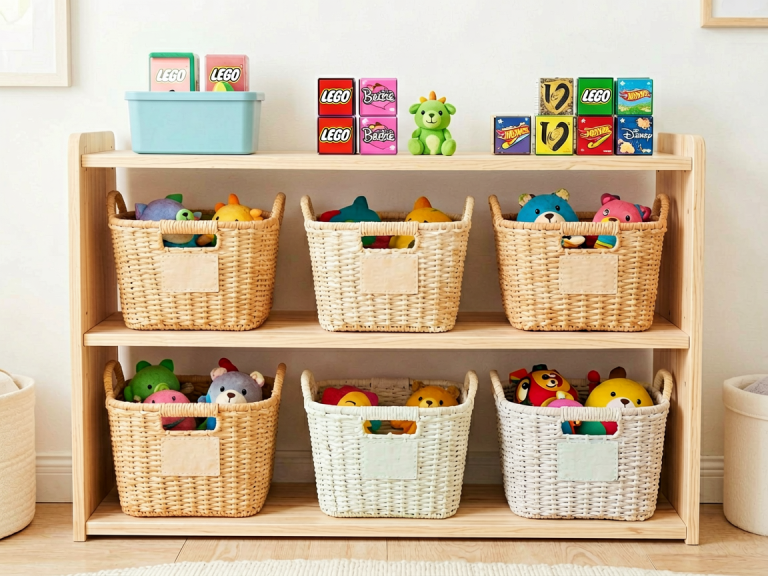
Do Kids Actually Use Engineering Kits? A Realistic Look at Play, Learning, and Parental Expectations
—
Introduction: The Spark of Curiosity vs. the Dust on the Shelf
Walk into any toy store or browse Amazon’s bestseller list, and you’ll find a dazzling array of engineering kits: snap-together circuit boards, programmable robots, hydraulic arm builders, and marble-run construction sets. They promise to turn your child into a junior engineer, boosting problem-solving skills, creativity, and STEM literacy. But as a parent or educator, you’ve probably asked yourself the same nagging question: Do kids actually use these kits? Or do they end up collecting dust after the first weekend of excitement?
This question is more than just a matter of consumer regret. It speaks to how children learn, how they engage with structured play, and whether the billion-dollar educational toy industry is delivering on its promises. In this article, we’ll peel back the marketing hype, examine real-world usage patterns, and explore what actually happens when a child opens an engineering kit.
—
The Promise of Engineering Kits: What Marketers Want You to Believe
Engineering kits are marketed as the perfect blend of fun and learning. Advertisements show focused children building bridges, coding a robot to follow a line, or testing a wind-powered car. The narrative is seductive: give a child a kit, and they will instinctively dive into hands-on exploration, developing skills that schools don’t always teach. The kits are often accompanied by glossy instruction manuals, online tutorials, and app integrations, suggesting that a child can work independently or with minimal adult help.
Yet this promise assumes something that may not be true: that children, especially younger ones, have the patience, motivation, and cognitive framework to follow multi-step instructions, troubleshoot failures, and persist through frustration. In reality, many kits require a level of reading comprehension, fine motor control, and abstract reasoning that is beyond the average 6- to 10-year-old. Moreover, the “play” aspect is often secondary to the “learning” goal — and kids are remarkably good at sensing when something feels more like homework than fun.
—
The Reality: Are Kids Actually Engaging with These Kits?
To answer this question, we need to look beyond anecdotal evidence. Surveys and observational studies paint a nuanced picture. A 2022 study published in the *Journal of Early Childhood Education* found that among families who purchased a popular robotics kit for children aged 7–10, only about 35% of the children used the kit more than twice in the first month. After three months, that number dropped to roughly 15%. The most common reason parents gave? “The instructions were too complicated,” followed by “My child lost interest after the first failure.”
Interviews with children revealed something even more revealing: many kids expressed a desire to “just play” with the components rather than follow the prescribed project. For instance, a child given a snap-circuit set might ignore the booklet and instead try to see if they could make a light bulb flash really fast, or connect parts in a way that produced a surprising sound. Unfortunately, this kind of open-ended exploration is rarely supported by the kit’s design. The parts are meant to be used in specific configurations, and deviations often result in a short circuit or no result at all — leading to frustration.
The picture is not entirely bleak, however. When kits are used in a social context — during a playdate, a classroom activity, or with a parent who is genuinely interested — engagement rates skyrocket. A study by the University of Cambridge found that children who used engineering kits with a partner (sibling or friend) spent an average of 40 minutes per session, compared to 12 minutes when alone. This suggests that the social dimension of play is critical. Engineering kits are not inherently boring; they become boring when the child feels isolated in their struggle.
—
Factors That Influence Actual Usage: What Works and What Doesn’t
Why do some children immediately take to an engineering kit while others abandon it? Several factors emerge from research and real-world observation:
1. Age and Developmental Readiness
Many engineering kits are labeled with a broad age range (e.g., 8–14) but in reality, the cognitive and motor skills required vary dramatically within that span. An 8-year-old may not have the working memory to hold a 10-step sequence in their head, nor the fine motor control to attach tiny wires. Kits that overshoot the child’s zone of proximal development are doomed. Conversely, kits that are too simple for a 12-year-old will feel like a chore.
2. The Role of Adult Involvement
The most successful engineering kit experiences involve an adult who acts as a “coach” rather than a “teacher.” Parents who sit alongside, ask questions (“What do you think will happen if we swap these wires?”), and help troubleshoot without taking over, create a supportive environment. Without this scaffolding, many children give up after the first mistake — especially if the kit lacks clear error messages or fails gracefully.
3. The Balance Between Structure and Open-Endedness
Kits that offer a guided project but also include extra parts for free play tend to have higher long-term engagement. For example, a building set that lets you construct a specific model first, then encourages you to modify it (e.g., “Now try adding a second gear to make it go faster!”) strikes a better balance. Pure open-ended kits without any goals can overwhelm children, while pure instruction-following kits can bore them.
4. Digital vs. Physical Integration
Modern engineering kits often come with apps or augmented reality features. While digital elements can enhance learning (e.g., showing 3D assembly animations), they can also distract. A 2023 study in *Computers & Education* found that children who used an app-based engineering kit spent twice as much time fiddling with the app’s settings as they did actually building. The physical act of construction was diminished. The most effective kits use digital tools sparingly, as a supplement rather than the main interface.
5. Gender and Interest Alignment
Despite efforts to market STEM toys to all children, surveys show that boys are still more likely to receive and play with engineering kits than girls — and when girls do receive them, they often engage more with kits that have a narrative or creative component (e.g., building a robot that looks like an animal, or designing a bridge for a dollhouse). Kits that are purely mechanical or abstract (e.g., a gear train without a story) have lower appeal across genders, but especially for girls who may not see themselves as “engineers.”
—
How to Make Engineering Kits More Effective: Advice for Parents and Educators
Given that the reality is mixed, how can we improve the chances that kids will actually use — and benefit from — engineering kits? Here are evidence-based strategies:
Choose Kits That Match the Child, Not the Box
Ignore the recommended age range and instead consider your child’s actual patience level, fine motor skills, and reading ability. If your 7-year-old struggles with Lego instructions, a complex electronics kit is probably a bad idea. Start with simple, high-success-rate kits (like magnetic tiles or marble runs) that build confidence.
Schedule “Kit Time” With a Friend or Sibling
As we saw, social play dramatically increases engagement. Organize a bi-weekly “engineering club” with a friend or sibling. The collaborative problem-solving, friendly competition, and shared laughter turn a solitary activity into a memorable experience.
Embrace Failure as Part of the Process
Many children abandon kits because they fear making mistakes. Parents can normalize failure by saying things like, “Oh, that didn’t work! Let’s figure out why — that’s actually the most interesting part.” Avoid rushing to fix the problem yourself; let the child struggle for a few minutes. The learning lies in the struggle.
Supplement With Real-World Context
A kit about pulleys becomes more meaningful if you first show a real pulley system (e.g., on a flagpole or a window blind). If the kit builds a simple robot, watch a YouTube video of robots in a factory. Connecting the kit to real applications sparks intrinsic motivation.
Rotate and Revisit
Instead of expecting a kit to provide endless hours of play, treat it like a library book. Let the child explore it for a week or two, then put it away. Bring it out again after a few months — children’s skills and interests change, and a kit that was too hard at age 8 might be perfect at age 9.
—
Conclusion: The Answer Is Complicated — But Hopeful
So, do kids actually use engineering kits? The honest answer is: Some do, some don’t, and it largely depends on the context. The kits themselves are not magical. They are tools — and like any tool, their value depends on the skill of the user (the child) and the guide (the adult or peer). When a kit is thoughtfully chosen, introduced with patience, and used in a supportive social environment, it can spark genuine curiosity and teach real engineering principles. But when it’s bought as a quick fix for “educational play” and left to a child’s own devices, it often ends up in the bottom of the toy bin.
Perhaps the most important lesson is this: children are not miniature engineers. They are explorers, tinkerers, and social learners. Engineering kits that acknowledge this — by being flexible, forgiving, and fun — are the ones that actually get used. The rest are just expensive dust collectors with a STEM sticker slapped on the box. As parents and educators, we need to stop asking “Do kids use engineering kits?” and start asking “What kind of experience makes a child *want* to use an engineering kit?” That shift in perspective could transform a shelf full of forgotten plastic into a workshop of wonder.