Unboxing Curiosity: Are Science Kits the Key to Inspiring Young Minds?
Introduction
In an era dominated by screens and passive entertainment, the question of how to ignite and sustain scientific curiosity in children has never been more pressing. Science kits—those neatly packaged boxes of test tubes, crystals, circuit boards, and instructions—have emerged as a popular solution. Parents, educators, and gift-givers often turn to them with the hope that a hands-on volcano eruption or a homemade slime experiment will spark a lifelong passion for discovery. But are these kits truly effective at nurturing curiosity, or do they risk reducing science to a series of pre-packaged, predictable outcomes? This article explores the nuanced relationship between science kits and scientific curiosity, weighing their undeniable appeal against their potential limitations. By examining how kits engage the mind, what they teach about process versus product, and how they compare to open-ended exploration, we can better understand whether they are a gateway or a gilded cage for young inquirers.
The Allure of the Box: How Science Kits Engage Young Minds
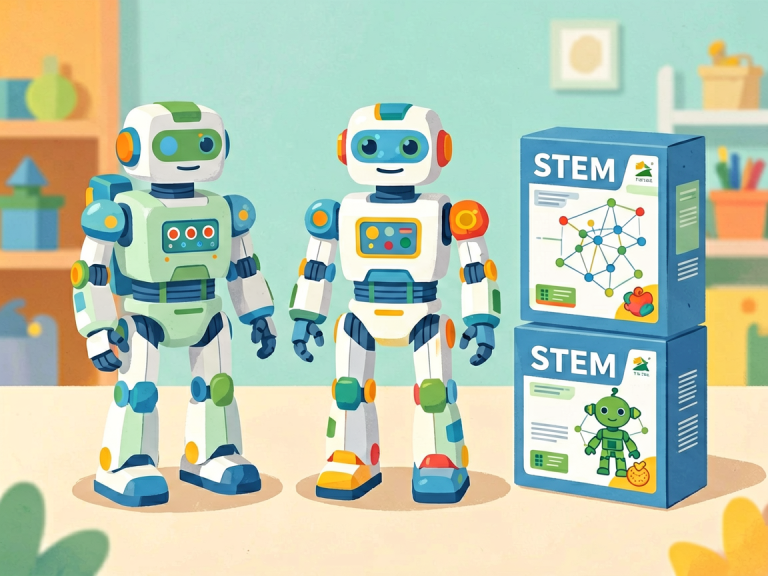
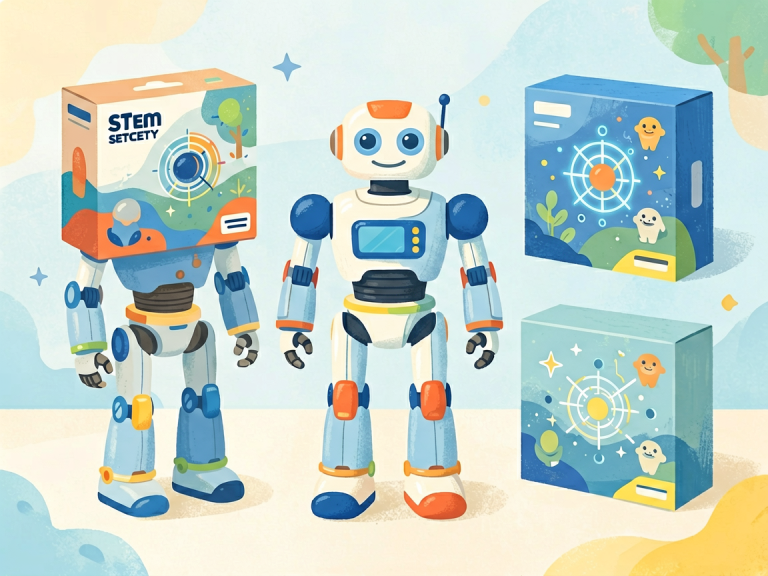
Science kits are designed with one primary goal: to make science accessible, tangible, and fun. At their best, they succeed brilliantly. A child who has never considered why a light bulb glows can, in under an hour, build a simple circuit and see the connection between wires and illumination. This immediacy is powerful. According to educational psychology, hands-on learning activates multiple sensory pathways, making abstract concepts concrete. When a child mixes baking soda and vinegar and watches the foam overflow, they are not just memorizing a reaction—they are witnessing cause and effect in real time. That visceral experience can plant a seed of wonder that no textbook can replicate.
Moreover, science kits lower the barrier to entry. For parents who lack a science background, the kit provides a structured, safe, and guided path. The instructions become a shared language between adult and child, transforming a potentially intimidating subject into a collaborative activity. Many kits also include "fun facts" or extension ideas, prompting the child to ask, "What if I used more vinegar?" or "How does this work on a bigger scale?" These spontaneous questions are the very essence of curiosity—a desire to know more that arises organically from action.
However, the engagement that kits provide is often narrow. The box tells the child exactly what to do, in what order, and what to expect. The joy of discovery is, in a sense, pre-engineered. While this can be comforting, it also risks teaching that science is a recipe rather than a process of inquiry. A child who follows the instructions perfectly and gets the expected result may feel satisfaction, but they may not learn how to ask their own questions or design their own experiments. The kit’s closure—the neat conclusion when the last step is done—can inadvertently signal that the exploration is over, rather than that it has just begun.
The Hidden Curriculum: What Kits Teach About Failure and Process
One of the most valuable aspects of real scientific work is the acceptance of failure. Scientists spend far more time troubleshooting than celebrating breakthroughs. Yet the typical science kit is engineered for success: the chemicals are pre-measured, the materials are precisely cut, and the steps are foolproof. When a child’s crystal doesn’t form exactly like the picture, or when the rocket fails to launch, the kit rarely offers guidance on what went wrong or how to iterate. Instead, the default response is often disappointment—or a quick blame on the child’s execution. This inadvertently teaches that science works only when you follow the rules perfectly, which is the opposite of the iterative, messy, trial-and-error nature of real discovery.
Furthermore, kits often emphasize product over process. The end goal—growing a colorful crystal, launching a rocket, building a working radio—becomes the measure of success. But curiosity thrives not on the final product but on the "why" and "how" along the way. A child who grows a crystal from a kit might learn that crystals form from supersaturated solutions, but they may never wonder why some crystals are cubic and others are hexagonal, or how temperature affects growth, because the kit doesn’t invite those questions. The very structure that makes kits easy to use can also make them intellectually shallow.
That said, some kits are explicitly designed to counteract this. "Open-ended" kits—such as those that provide a collection of generic parts (like Arduino or LEGO Mindstorms kits) rather than a single experiment—allow for multiple outcomes. These encourage trial, error, and re-design. A child building a robot from scratch may have to figure out why the motor won’t spin, testing different gear ratios or programming loops. That process of debugging is far more valuable for curiosity than any pre-assembled result. The key, then, is not to dismiss all kits, but to distinguish between closed-form kits (which provide a single, predetermined path) and open-ended kits (which provide tools for exploration).
The Social and Emotional Dimensions of Kit-Based Learning
Curiosity is not just a cognitive phenomenon; it is deeply social and emotional. Children are more likely to develop a sustained interest in science when they have supportive adults who model curiosity, ask open-ended questions, and allow for unstructured play. A science kit can facilitate this interaction, but it can also replace it. In the worst-case scenario, a parent hands the child the box and says, "Go do this," while the parent scrolls on a phone. The child follows the instructions alone, completes the task, and puts the kit aside. The curiosity that might have been sparked by a shared "I wonder what would happen if…" moment never materializes.
Conversely, a skilled parent or teacher can use a kit as a springboard for deeper conversation. For example, after building a simple electromagnet, an adult can ask, "What do you think would happen if we used a bigger battery? Or a smaller nail?" The adult can encourage the child to predict, test, and record results—transforming the kit from a one-time activity into the beginning of a personal research project. In this sense, the kit is only as good as the human interaction it enables.
Peer collaboration also matters. Some science kits are marketed for group use, and when children work together, they naturally discuss, argue, and negotiate ideas. This social friction is fertile ground for curiosity: one child might wonder aloud why the circuit isn’t working, and another might suggest a different connection. But if the instructions are too rigid, collaboration can turn into a simple division of labor (one holds the wire, another attaches the battery) without real intellectual exchange. The design of the kit—whether it encourages multiple valid solutions or only one—determines whether the social interaction deepens or merely completes the task.
Comparison with Unstructured Exploration: A Question of Balance
No discussion of science kits would be complete without comparing them to unstructured, free-form exploration. A child who plays in a mud puddle, watches ants build a colony, or takes apart an old clock is engaging in a radically different kind of learning. There are no instructions, no expected outcomes, and no time limits. The child follows their own curiosity, which may lead to questions about why ants follow trails or how gears work. This kind of exploration is inherently driven by intrinsic motivation and is often richer in developing problem-solving and creative thinking.
However, unstructured exploration has its own limitations. It can be inefficient, messy, and sometimes dangerous (especially with electronics or chemicals). Moreover, without any guidance, a child may never encounter foundational scientific concepts like the scientific method, controlled variables, or systematic observation. Science kits provide a structured introduction to these concepts. They can serve as a scaffold—a temporary support that helps a child climb to a level of understanding they might not reach on their own. The challenge is to remove the scaffold gradually, allowing the child to walk on their own.
Ideally, a child’s scientific journey should include both: structured activities from kits to learn basic techniques and vocabulary, and open-ended play to foster creativity and deep questioning. A child who grows crystals from a kit for the first time gains the vocabulary of "solution" and "crystallization." Later, they might try growing crystals from other household substances, varying temperature or concentration, and documenting results. The kit provides the initial foothold; the free exploration provides the climbing.
Practical Recommendations for Cultivating Curiosity with Kits
Given the mixed evidence, how can parents and educators maximize the benefits of science kits while minimizing their drawbacks? First, choose kits that emphasize process over product. Look for kits labeled "open-ended," "build your own," or "experiment with different variables." Avoid kits that promise a single, spectacular outcome with no room for variation. If a kit includes a "What if?" section or extension activities, that is a good sign.
Second, use the kit as a conversation starter, not a script. Before opening the box, ask your child, "What do you think will happen? Why?" After completing the activity, ask, "What surprised you? What would you do differently?" If the kit fails—as many do—celebrate the failure as a learning opportunity. "Great! Now we know that doesn't work. Let's think about why." This teaches resilience and the true nature of scientific inquiry.
Third, supplement kits with free resources. Encourage your child to modify the experiment. If the kit uses 100 ml of water, ask what would happen with 50 ml or 200 ml. Let them test it, even if it might not work. The act of designing a variation is far more valuable than the original experiment. Keep a science journal where the child records their questions, predictions, and results—whether they come from the kit or from outdoor exploration.
Fourth, don’t rely on kits exclusively. Provide opportunities for unstructured outdoor time, building with random materials, and taking apart broken appliances (with safety guidance). Curiosity is like a muscle; it needs to be exercised in many different ways, not just in a single prescribed workout.
Conclusion
So, are science kits good for science curiosity? The answer is a qualified yes—but with important caveats. Science kits are excellent tools for introducing concepts, providing a safe and accessible entry point, and engaging children in hands-on learning. They can spark initial wonder and build confidence. However, they are not a panacea. If used rigidly, as a closed-ended activity without room for questioning, failure, and iteration, they can actually stifle the very curiosity they aim to nurture. The true measure of a science kit’s value lies not in the neatness of the final product, but in the questions it provokes and the freedom it allows. When combined with thoughtful adult guidance, open-ended design, and ample unstructured exploration, science kits can be powerful catalysts for a lifelong love of discovery. But in the end, curiosity cannot be boxed—it must be set free. The best kit is not one that provides all the answers, but one that opens the door to a thousand new questions.