The Definitive Guide to the Best Toy Features for 18-Month-Olds: Nurturing Development Through Play
—
Introduction
At eighteen months, a child stands at a thrilling developmental crossroads. Toddlers are no longer passive infants but active explorers, wobbling on two feet, pointing at everything, and uttering their first words with a mixture of pride and frustration. Their brains are forming synaptic connections at a staggering rate—about one million new neural connections per second. Play is not merely entertainment; it is the primary vehicle through which these young learners understand their world, develop motor skills, and build foundational cognitive and social abilities. Selecting the right toys can profoundly influence this journey, but the market is flooded with flashing, noisy, and often developmentally inappropriate options. This article unpacks the best toy features for 18-month-olds, moving beyond brand names and marketing hype to focus on evidence-based characteristics that truly support growth. By understanding these features, parents and caregivers can curate a play environment that is safe, engaging, and perfectly aligned with the unique needs of a toddler in the midst of the "terrific twos" transition.
—
1. Absolute Safety and Uncompromising Durability
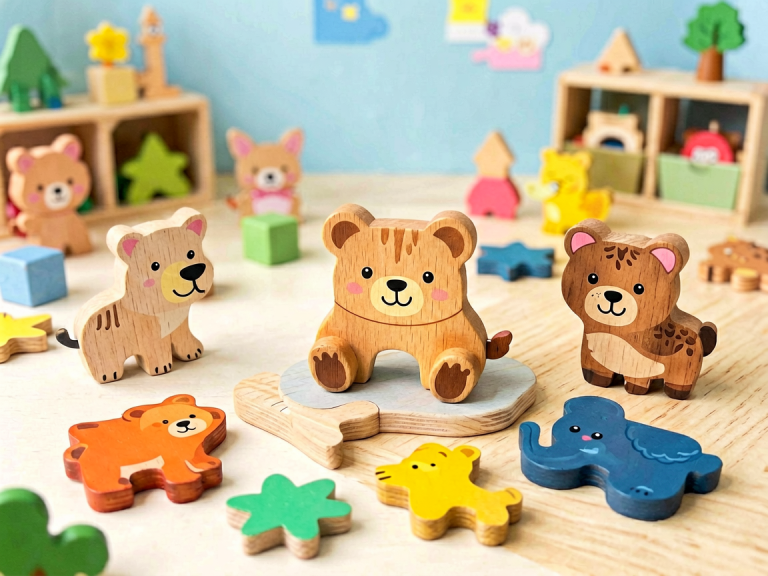
Safety is not just a feature; it is the non-negotiable foundation of any toy intended for an 18-month-old. At this age, children explore primarily through mouthing, banging, throwing, and dropping. Therefore, toys must be constructed from non-toxic materials—free from BPA, phthalates, and lead—and should have no small parts that could become choking hazards. The "choke tube" test is a practical standard: any component small enough to fit inside a toilet paper roll is dangerous. Additionally, edges should be rounded, surfaces smooth, and paints and finishes must be non-peelable. Durability is equally critical because an 18-month-old’s play is often robust. A toy that breaks easily not only creates sharp edges but also frustrates the child, who may lose interest in a broken object. Look for solid wood (hard maple or beech are excellent), food-grade silicone, or high-density plastics that pass impact tests. Features like securely attached wheels, reinforced seams on fabric toys, and batteries housed in screw-secured compartments ensure that the toy survives enthusiastic play while keeping the child safe. Remember, a toy that cannot withstand a drop from a high chair or a series of enthusiastic bangs is not suitable for this age group.
—
2. Rich Sensory Stimulation Across Multiple Modalities
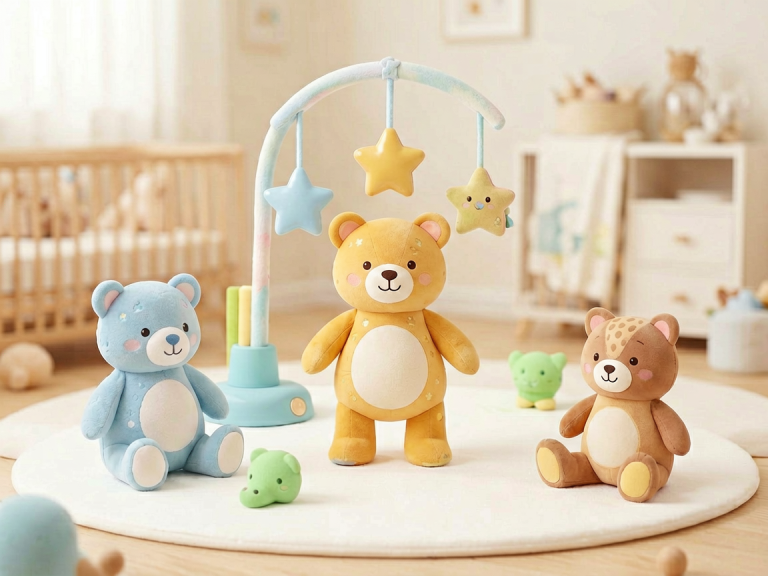
Between 18 and 24 months, the sensory cortex is undergoing rapid maturation. Toys that engage multiple senses simultaneously accelerate neural connectivity and support sensory integration—the brain’s ability to process and respond to information from different senses. The best toys for this age offer a multisensory experience that goes beyond just bright colors. Visual features should include high-contrast patterns (black-and-white, primary colors) as well as subtle gradients that help the eyes track movement. Auditory features should be varied: gentle rattles, crinkles, bells, and wooden clacks are far superior to constant electronic beeps or loud pop music, which can overstimulate and lead to avoidance. Tactile variety is paramount—toys with different textures: smooth wood, soft velvet, bumpy silicone, ribbed plastic, and rough fabric help refine the sense of touch. Nubby balls, textured stacking blocks, and fabric books with flaps and tags are excellent. Some toys even incorporate olfactory or proprioceptive feedback, such as scented play dough (if taste-safe) or weighted plush animals that provide deep pressure input. The goal is to offer a rich sensory world without overwhelming the child. A toy that alternates between visual, auditory, and tactile engagement, such as a wooden activity cube with bead mazes, sliding doors, and shape sorters, offers sustained interest without causing sensory overload.
—
3. Purposeful Promotion of Fine and Gross Motor Skills
The physical achievements of an 18-month-old are remarkable: walking, climbing, squatting, and beginning to run. Toys should support this motor explosion in two complementary ways. For gross motor development, the best features include push-and-pull toys that encourage walking forward and backward while maintaining balance. Wagons, wooden animal pull-alongs, and push walkers with sturdy handles help strengthen core muscles and improve coordination. Ride-on toys that require leg propulsion—without pedals—build hip and leg strength. Simple climbing structures or soft foam blocks that can be stacked and climbed over nurture spatial awareness and large muscle control. For fine motor skills, the focus shifts to hand-eye coordination and finger dexterity. Toys with knobs, handles, and latches that require grasping, twisting, turning, and pushing allow children to practice the pincer grasp (the ability to pick up small objects between thumb and forefinger). Stacking rings, nesting cups, chunky puzzles with three to five large pieces, and shape sorters with holes that require precise orientation are ideal. A particularly effective feature is the cause-and-effect mechanism—a button that when pressed makes a ball pop out, or a lever that lifts a flap. These teach the connection between action and outcome while developing fine motor control. Avoid toys that require fine motor precision beyond the child’s dexterity (such as tiny pegs), as they lead to frustration; instead, offer toys that can be manipulated in multiple ways, such as threading large wooden beads onto a thick lace.
—
4. Cognitive Challenges Through Problem-Solving and Cause-and-Effect
At 18 months, a toddler’s cognitive world expands dramatically. They begin to understand object permanence (that a hidden toy still exists) and start to engage in simple problem-solving. Toys that incorporate open-ended cognitive challenges are therefore invaluable. Shape sorters are classic for a reason: they require the child to match a block’s form to a hole, a task that involves spatial reasoning, visual discrimination, and trial-and-error learning. The best sorters have simple shapes (circle, square, triangle) at first, and later progress to more complex forms. Another powerful cognitive feature is sequential play—toys that require a specific order to achieve a result. For instance, a simple wooden car ramp where you place the car at the top, watch it roll down, and then retrieve it to repeat the process teaches basic sequencing and prediction. Cause-and-effect toys, especially those with immediate, satisfying feedback (a ball that drops into a hole with a “pop,” a jack-in-the-box that surprises but does not frighten), reinforce logical thinking. Puzzles with knobs that present a picture once all pieces are placed help develop part-whole relationships. Additionally, toys that involve classification—such as sorting by color, size, or animal type—lay the groundwork for early mathematical thinking. The key is that the challenge should be just slightly above the child’s current ability—what developmental psychologist Lev Vygotsky called the “zone of proximal development.” A toy that is too easy is boring; one that is too difficult leads to tears. Look for toys that offer multiple levels of difficulty, such as stacking rings with graduated sizes or puzzles with three then five pieces.
—
5. Language and Communication Encouraging Features
The language explosion that begins around 18 months is one of the most exciting milestones. Toddlers typically learn new words at a rate of one to two per day, and toys can be powerful language catalysts. The best features for language development include naming opportunities—toys that depict familiar objects, animals, people, and actions. A farm set with a cow, pig, horse, and farmer encourages a caregiver to say “cow says moo,” building vocabulary and phonological awareness. Picture books with large, realistic images (not overly stylized) are superb because they invite labeling and conversation. Toys that have repetitive sounds (like a toy phone that says “hello” or a button that plays a nursery rhyme) can be useful, but only if used interactively—the adult should repeat the word and encourage the child to imitate. Avoid passive electronic toys that simply play scripts; instead, choose toys that require the child to press, pull, or slide to produce a sound, giving them agency over the experience. Another excellent feature is mirrors and faces—toddlers are fascinated by their own reflection and by images of human faces. Mirrors on activity centers or dolls with simple, pleasant facial expressions invite the child to point to “nose,” “eyes,” or “mouth,” supporting body-part vocabulary. Additionally, toys that allow for turn-taking, such as a simple ball you roll back and forth, teach the rhythmic structure of conversation. The adult’s role is crucial: narrate the play, ask open-ended questions (“What does the dog say?” “Where is the red block?”), and wait for a response, even if it is only a babbling sound or a pointing finger. Language-rich toys are those that spark dialogue, not monologue.
—
6. Imaginative and Social Play Elements
While deep pretend play typically emerges closer to age two, the seeds of imagination are being sown at 18 months. Toys that encourage simple role-play are both engaging and developmentally rich. Look for features like a baby doll with a bottle or a soft blanket that the child can “feed” or “wrap up.” A toy telephone, a shopping cart, or a doctor’s kit with large, safe instruments allows the toddler to imitate everyday actions they observe. At this stage, the play is primarily functional (holding a phone to the ear) rather than fully dramatic, but it builds the mental flexibility needed for later creativity. Social features are equally important, even for toddlers who play primarily alongside others (parallel play). Toys that are large enough for two children to share—such as a wide tunnel, a big ball, or a set of stacking blocks—encourage cooperative social interactions. A toy that makes a sound when shared (like a two-sided drum that two toddlers can beat simultaneously) teaches basic reciprocity. Avoid toys that are highly possessive or have only one function; instead, provide multiple pieces so that parallel play can occur without conflict. Also, consider toys that incorporate cause-and-effect related to emotions, such as a plush animal with a zipper that reveals a happy face or a sad face. While the concept of emotions is advanced, such toys can start conversations about feelings when guided by a caregiver. The best social toys are those that naturally invite another person to join the play, whether an adult or a sibling.
—
7. Open-Ended Potential and Longevity
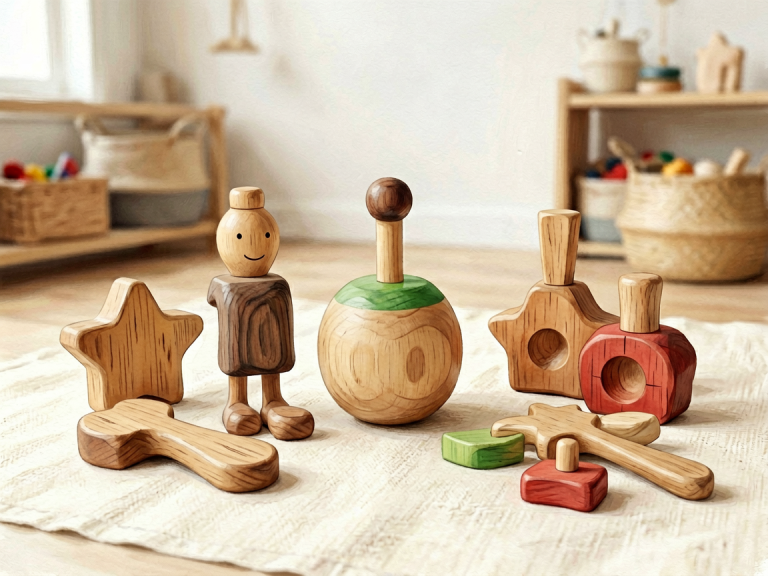
One often-overlooked feature of the best toys for 18-month-olds is open-endedness—the ability to be used in multiple ways over time. Unlike a single-purpose electronic toy that performs one function and quickly becomes boring, an open-ended toy evolves with the child. For example, a set of simple wooden blocks can be stacked (fine motor), knocked down (cause-and-effect), sorted by color (cognitive), used as pretend food (imaginative), or even placed in a cart (gross motor). A set of nesting cups can be stacked into a tower, used as scoops in a sensory bin, or worn as a hat. Loose parts like fabric scarves, large rings, or cardboard tubes allow for endless creativity. Open-ended toys also tend to be more durable and sustainable because they are not tied to a single trend. Feature-wise, look for toys that have no right or wrong way to play—they invite exploration rather than a predetermined outcome. This fosters intrinsic motivation, problem-solving, and resilience. Moreover, open-ended toys grow with the child: blocks from age one become bridge-building tools at age three. When purchasing, consider the toy’s potential to remain relevant for at least another year. A simple wooden train set with a few rails and a single engine can captivate at 18 months and become more complex at 24 months. The investment in open-ended play repays itself with longer interest spans and richer developmental benefits.
—
Conclusion
Choosing toys for an 18-month-old is not about buying the trendiest gadget or the most expensive brand. It is about understanding the intricate dance of development occurring under the surface—the rapid neural wiring, the emerging sense of self, the burning curiosity that drives every wobbling step. The best toy features for this age are those that prioritize safety, stimulate multiple senses, challenge fine and gross motor skills, encourage cognitive problem-solving, foster language and social growth, and provide open-ended possibilities that adapt as the child grows. A single toy that incorporates several of these features—like a well-designed activity cube—can be far more valuable than a pile of single-use plastic distractions. Ultimately, the most powerful “feature” of any toy is the presence of a loving, engaged adult who sits on the floor, follows the child’s lead, and turns play into a dialogue. When paired with developmentally appropriate toys, this interactive play becomes the foundation for a lifetime of learning, creativity, and joyful discovery.