Beyond the Screen: Effective Educational Alternatives to Learning Tablets
In recent years, learning tablets have become a staple in classrooms and homes around the world. Promising interactive content, instant access to information, and personalized learning paths, these devices seem like the ultimate educational tool. Yet a growing body of research and practical experience reveals significant drawbacks: excessive screen time contributes to eye strain and attention deficits, digital distractions undermine deep learning, and the cost of tablets—along with required apps, subscriptions, and repairs—places a heavy burden on families and schools. Moreover, the passive consumption of pre-packaged educational apps often fails to foster creativity, critical thinking, and hands-on engagement. As educators and parents seek more holistic approaches, a range of powerful alternatives to learning tablets has emerged—alternatives that are not only effective but often superior in nurturing a child’s cognitive, social, and emotional development. This article explores several such alternatives, each grounded in research and real-world success.
The Resurgence of Printed Books and Hands-On Reading
While tablets offer digital libraries, the humble printed book remains one of the most powerful educational alternatives. Studies consistently show that reading from paper enhances comprehension and retention compared to screens. The tactile experience of turning pages, the spatial memory of where a passage appears on a page, and the absence of pop-up notifications all contribute to deeper immersion. For young learners, picture books with textured pages, lift-the-flap elements, or simple pop-ups engage multiple senses—something no touchscreen can replicate. Libraries, book swaps, and classroom reading corners create a community around literature without the isolating effects of personal devices. Moreover, printed books are infinitely durable, require no charging, and can be passed down or shared, promoting sustainable consumption. When combined with parent-child read-aloud sessions, books become vehicles for oral language development, bonding, and imaginative play. For older students, textbooks with margin notes, highlighters, and physical page flipping support active reading strategies. In an age of digital overload, returning to the printed word is not a step backward but a conscious choice for focus and depth.
Interactive Whiteboards and Physical Manipulatives
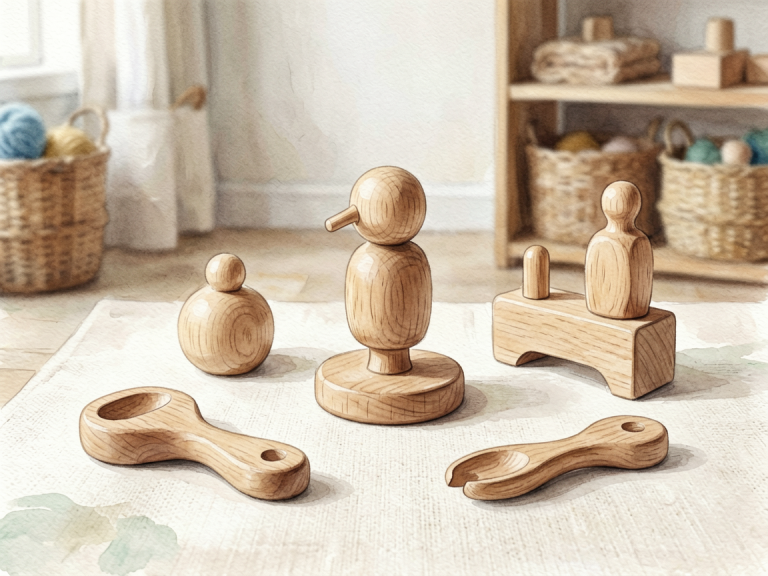
Learning tablets often replace group activities with individual screen time, but interactive whiteboards (IWBs) and physical manipulatives bring students back together. IWBs, used with projectors and touch-sensitive surfaces, allow teachers to display content that the entire class can see and discuss. Students can come to the board to drag, sort, or annotate in real time, transforming passive viewing into collective problem-solving. Unlike tablets, which isolate each child in their own digital bubble, IWBs encourage collaboration, peer teaching, and whole-group engagement. Complementing this, physical manipulatives—such as fraction tiles, counting blocks, geometric shapes, and even simple LEGO bricks—enable kinesthetic learning. When a child physically stacks blocks to understand multiplication or arranges pattern blocks to explore symmetry, the neural pathways are reinforced by touch, movement, and spatial reasoning. These materials are especially critical in early childhood education, where abstract concepts must be grounded in concrete experience. Research in STEM education has shown that students who use hands-on manipulatives outperform those who rely solely on virtual simulations on tests of conceptual understanding. By combining IWBs for dynamic visualization with physical objects for tangible exploration, educators create a richer, more memorable learning environment than any tablet app can offer.
Outdoor and Nature-Based Learning
Perhaps the most overlooked alternative to screens is the natural world itself. Outdoor learning—whether in school gardens, local parks, or organized nature walks—provides a multisensory, ever-changing classroom that no tablet can match. Students can observe insects, identify plants, measure rainfall, build shelters, or trace the path of the sun. Such experiences foster scientific curiosity, environmental stewardship, and physical health. Importantly, outdoor learning naturally incorporates interdisciplinary skills: a child calculating the area of a leaf practices math; writing a field journal develops literacy; describing the colors of a sunset hones language; and navigating a trail builds spatial awareness. Compared to the scripted, linear activities of most learning tablets, nature offers open-ended problems that require creativity, adaptation, and collaboration. Studies from the Fields of environmental psychology and education confirm that time outdoors reduces stress, improves attention, and boosts academic performance across subjects. Schools can implement simple programs like “Forest Fridays” or “Garden Math,” where tablet time is replaced by direct observation and experimentation. Even urban schools can use window boxes, rooftop gardens, or regular visits to public parks. The key is to treat nature not as a break from learning but as a core educational tool—one that is free, ubiquitous, and infinitely rich.
Project-Based Learning with Real-World Materials
Learning tablets often deliver content through isolated apps, but project-based learning (PBL) requires students to engage with actual materials and authentic challenges. In a PBL framework, students might design a cardboard roller coaster to understand physics, build a simple water filter to explore chemistry, or create a community map using paper, markers, and string. These projects demand planning, iteration, trial-and-error, and teamwork—skills that screen-based activities rarely develop. For instance, when a group of fourth graders builds a model bridge to test weight capacity, they must negotiate roles, measure precisely, adjust designs based on failures, and present their results. This process teaches resilience and deeper comprehension than any virtual bridge-building simulation. Teachers can stock classrooms with low-tech supplies: cardboard, tape, scissors, measuring tools, craft materials, and recycled objects. The cost is minimal compared to tablets, and the learning outcomes are profound. Additionally, PBL naturally integrates literacy and numeracy: writing project proposals, calculating budgets, reading instructions, and documenting findings. By replacing “app time” with “making time,” students become creators rather than consumers, developing the critical thinking and problem-solving abilities essential for the 21st century.
Structured Oral Discourse and Socratic Discussions
One of the most serious downsides of learning tablets is that they reduce verbal interaction. Children speak to screens rather than to peers or teachers, limiting their oral language development and social skills. A powerful alternative is to prioritize structured oral discourse—Socratic seminars, debate formats, think-pair-share activities, and small-group discussions. In a Socratic seminar, students sit in a circle and explore a open-ended question (e.g., “What makes a hero?”) by citing evidence from a text they have read collectively. This format teaches listening, critical thinking, respectful disagreement, and articulate expression. Unlike a tablet’s algorithm, which feeds answers, these discussions require students to formulate their own ideas and defend them. For younger children, “morning meeting” circles or classroom dialogues about a shared experience serve the same purpose. Teachers can also implement “dialogic teaching,” where every student is expected to contribute orally in each lesson. This approach has been shown to improve vocabulary, reasoning, and comprehension more effectively than silent reading on a device. Furthermore, oral discourse builds empathy and community—elements often lacking in individualized tablet learning. By replacing solo screen time with engaged conversation, schools cultivate not only academic skills but also emotional intelligence and social cohesion.
Conclusion: Reclaiming Holistic Learning
Learning tablets are not inherently evil; they offer convenience and access to digital resources. However, their overuse has created an imbalance in education, privileging passive consumption over active creation, isolation over collaboration, and screen-based interaction over real-world engagement. The alternatives presented here—printed books, interactive whiteboards with manipulatives, outdoor learning, project-based work using physical materials, and structured oral discourse—restore the sensory richness, social connection, and hands-on experimentation that are fundamental to how humans learn best. These approaches are not anti-technology; they are pro-development. They acknowledge that a child’s brain needs variety: text and touch, nature and conversation, failure and collaboration. As educators and parents seek to design learning environments that truly prepare children for life, they should view tablets as one tool among many—and often not the most important one. By embracing these proven alternatives, we can move beyond the screen and offer children an education that is as deep, wide, and vibrant as the world itself.