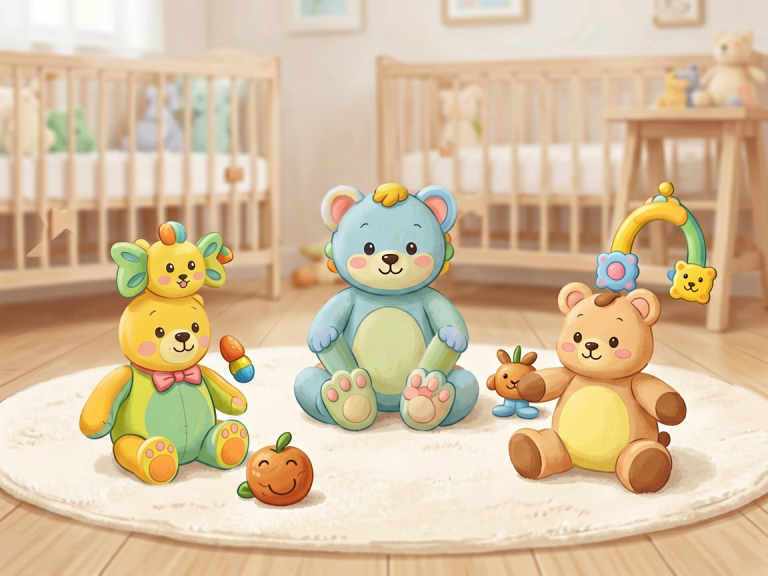
Beyond the Glowing Screen: Nurturing Young Minds with Non-Toxic Alternatives to Learning Tablets
—
Introduction: The Digital Dilemma in Early Education
In an age where silicon and lithium-ion batteries dominate childhood learning, the humble tablet has become a near-ubiquitous tool in homes and classrooms. Marketed as interactive, educational, and indispensable for developing "21st-century skills," these devices promise to give toddlers a head start in reading, math, and problem-solving. Yet beneath the glossy surface lies a growing body of concern—not just about screen addiction or diminished attention spans, but about the very *toxicity* of the learning environment. The term “toxic” here operates on two levels: the literal chemical toxicity of the materials used in manufacturing tablets (flame retardants, lead, mercury, and BPA in casings) and the metaphorical toxicity of excessive screen time on cognitive development, sensory integration, and emotional well-being. Parents and educators are increasingly asking: What are the truly non-toxic alternatives? This article explores a spectrum of low-tech, high-touch, and environmentally safe substitutes that can replace—or at least supplement—the glowing rectangle, fostering authentic learning without the hidden costs.
—
The Hidden Costs of the Digital Cradle
Before we celebrate alternatives, we must understand why “non-toxic” is not just a buzzword. On a chemical level, many tablets contain hazardous substances. The lithium-ion battery, for instance, poses fire and leaching risks if improperly disposed of. The plastic casing often includes organophosphate flame retardants, which have been linked to endocrine disruption and neurodevelopmental delays in animal studies. Even the glass screen may contain antimony, a heavy metal that can cause respiratory irritation during manufacturing. While these elements are generally sealed inside a finished device, the production cycle—from mining rare earth minerals in conflict zones to e-waste accumulation in developing countries—creates a toxic footprint that indirectly affects children’s health.
On a developmental level, the toxicity is subtler but equally damaging. A learning tablet often replaces free play with algorithm-driven interactions. Dr. Dimitri Christakis, a leading pediatric researcher, has noted that fast-paced screen stimuli can condition young brains to expect constant reward, reducing tolerance for slower, deeper cognitive tasks like building with blocks or listening to a story. Furthermore, the blue light emitted by screens disrupts circadian rhythms and may contribute to myopia. These are not minor side effects; they are systematic pressures on a child’s natural growth. Recognizing this, many families now seek alternatives that are materially safe (free of heavy metals, BPA, and phthalates) and developmentally safe (encouraging open-ended play, fine motor skills, and real-world interaction).
—
Alternative 1: The Wooden Wonder – Classic Toys That Teach
Perhaps the most obvious yet profound alternative is the humble wooden toy. Unlike plastic tablets, high-quality wooden toys from sustainable sources (like beechwood or maple, finished with non-toxic plant-based oils) contain no volatile organic compounds (VOCs) or endocrine disruptors. But the pedagogical value goes beyond material safety.
Montessori-inspired manipulatives such as stacking rings, shape sorters, and counting beads offer a tactile, kinesthetic learning experience that a touchscreen cannot replicate. When a child grasps a chunky wooden number, they not only see the shape but feel its weight, texture, and temperature. The sensorimotor feedback loop is rich: the sound of the pieces clinking together, the slight resistance when fitting a square peg into a square hole, the smell of natural wood. This multi-sensory engagement builds neural pathways in ways that two-dimensional swiping does not.
Consider the wooden abacus—a timeless tool for arithmetic. Unlike a tablet app that instantly produces answers, the abacus requires the child to physically move beads, count aloud, and experience the spatial relationships between numbers. Research from cognitive science suggests that such embodied cognition (learning through physical action) strengthens mathematical understanding more effectively than passive screen viewing. Moreover, wooden puzzles and building blocks (like unit blocks or magnetic wooden tiles) foster spatial reasoning, planning, and creative problem-solving. A child designing a tower with real blocks learns physics (gravity, balance) intuitively; a child stacking virtual blocks on a screen misses that visceral cause-and-effect.
Safety note: Always choose toys certified by organizations like the Forest Stewardship Council (FSC) and finished with water-based, non-toxic paints. Avoid cheap composite woods that may contain formaldehyde-based glues.
—
Alternative 2: The Analog Library – Books That Breathe
Tablets often tout e-books and interactive story apps as literacy boosters, but the printed book remains one of the most non-toxic learning tools ever invented. A paper book requires no battery, emits no blue light, and can be read in a bathtub without worry. But more importantly, the physical act of turning pages, pointing to illustrations, and following text with a finger engages the brain in a linear, focused manner that digital media fragments.
Board books for infants and toddlers are particularly valuable. Made from thick, recyclable cardboard, they are built to be chewed, drooled on, and dropped—all without leaching chemicals. The illustrations, often created with soy-based inks, are non-toxic even if licked. Beyond safety, books foster a bond between caregiver and child that no app can reproduce. The shared attention, the warmth of a lap, the dialogue around pictures (“What color is the dog? Where is his nose?”) build vocabulary, empathy, and narrative comprehension. Studies show that parents reading from a tablet often engage in less conversational back-and-forth than when reading from a print book, because the device itself competes for attention.
For older children, activity books (e.g., sticker books, drawing books, or DK’s “Knowledge Encyclopedia” series) provide self-directed learning without screen fatigue. A child can spend an hour tracing mazes, connecting dots, or reading about dinosaurs—all while exercising fine motor control and sustaining concentration. Libraries, book swaps, and second-hand shops make books a cost-effective and low-waste alternative.
—
Alternative 3: The Great Outdoors – Nature as Curriculum
No tablet can replicate the complex, ever-changing classroom of the natural world. Yet outdoor play is arguably the most potent non-toxic alternative for learning. Sunlight triggers vitamin D synthesis, fresh air reduces indoor air pollution, and unstructured outdoor time has been shown to improve executive function, creativity, and resilience.
Nature-based learning can be as simple as a “mud kitchen” in the backyard—a few pots, water, soil, and leaves. Children mixing mud learn about texture, volume, and cause-and-effect (too much water makes soup; not enough makes crumble). They spontaneously engage in early chemistry concepts without a single digital gadget. Collecting leaves, rocks, or seashells teaches classification, sorting, and pattern recognition. Observing ants, birds, or clouds sparks curiosity about biology and meteorology.
For families in urban settings, community gardens or forest schools offer structured outdoor learning. Programs like “Tinkergarten” or “Nature Preschools” use only natural materials—sticks, stones, pinecones—to teach math (counting seeds), literacy (storytelling around a campfire), and social skills. The non-toxic aspect here extends beyond physical safety: nature has a calming effect on the nervous system, reducing cortisol levels and improving mood. A child who spends an hour climbing trees or digging in dirt is less likely to experience the anxiety or overstimulation associated with screen time.
Practical tip: Equip children with a simple magnifying glass, a small notebook, and crayons for nature journaling. This combination replaces any “learning app” about bugs or plants—and costs pennies.
—
Alternative 4: The Power of Hands – Art, Music, and Making
Creative expression is fundamental to cognitive development, and it suffers when a child’s only outlet is a drawing app or a virtual piano. Non-toxic art supplies—watercolor paints, clay, modeling dough made from flour and salt, beeswax crayons—provide sensory richness without chemical exposure.
Open-ended art allows a child to fail and try again. A smudged watercolor or a collapsed clay pot teaches perseverance and flexibility far better than an app that offers “undo” buttons. Similarly, musical instruments made from wood, metal, or gourds (e.g., xylophones, shakers, drums) produce acoustic sounds that stimulate the auditory system without the compressed, artificial frequencies of digital audio. Studies in early childhood music education suggest that live sound-making enhances pattern recognition, memory, and emotional regulation more than listening to pre-recorded songs.
Building and making is another avenue. Cardboard boxes, tape, string, and recycled materials become castles, cars, or spaceships. This type of construction play—often called “loose parts play”—encourages engineering thinking, collaboration, and imagination. No tablet can offer the same depth of problem-solving as figuring out how to attach a toilet-paper-roll telescope to a cardboard box so it doesn’t fall off. The frustration and triumph are real, and they build grit.
—
Alternative 5: Human Interaction – Conversation as the Ultimate Learning Tool
Finally, we must not underestimate the simplest alternative of all: direct, unmediated human interaction. Tablets are sometimes used as substitutes for adult attention—a “digital babysitter.” Yet studies consistently show that the quality of back-and-forth conversation with a caring adult is the single strongest predictor of language development in young children.
Storytelling without a book, for instance, is a powerful cognitive exercise. When a parent or grandparent tells a personal anecdote or invents a tale, the child must listen actively, visualize, and infer meaning. This process demands more neural engagement than watching a pre-recorded animated story. Similarly, cooking together teaches measurements, sequencing, and chemistry (why does yeast make bread rise?) in a context that is entirely non-toxic—as long as ingredients are organic and hands are washed.
Role-playing (pretend play) with dolls, action figures, or homemade costumes allows children to process emotions, develop empathy, and negotiate social rules. A tablet gamifies these interactions, often following scripts; in real play, the child writes the script and adapts it in real time. This flexibility is the foundation of innovation.
—
Conclusion: Reclaiming Real Learning
The movement toward non-toxic alternatives to learning tablets is not a Luddite rejection of technology, but a thoughtful rebalancing. It acknowledges that while digital tools can offer convenience and novelty, they cannot replace the physical, emotional, and relational richness of analog experiences. Wooden toys, printed books, outdoor exploration, art, music, and conversation are not just “backup options”—they are superior in many ways for the developing brain.
As parents and educators, we have a responsibility to assess the hidden toxicity in our children’s learning environments—both chemical and developmental. By choosing materials that are safe, sustainable, and sensorially rich, we give our children the gift of real engagement with the world. The next time a toddler reaches for a tablet, consider offering a handful of smooth stones, a set of wooden blocks, or a story told in the soft light of a lamp. That is learning without toxins—and it is a lesson that will last a lifetime.