The Hidden Treasures of Second-Hand Toys: Why They Are Perfect for 7-Year-Olds
Introduction
When a child turns seven, the world of toys opens up in new and exciting ways. Seven-year-olds are no longer toddlers, nor are they fully independent pre-teens. They are in a sweet spot of development – curious, imaginative, beginning to grasp complex rules, and increasingly aware of social dynamics. Their play needs evolve: they want toys that challenge their growing logic, fuel their creativity, and allow for social interaction. In the midst of flashy advertisements and the pressure to buy the latest licensed action figure or electronic gadget, an often-overlooked treasure trove awaits: second-hand toys. This article explores why second-hand toys are not just an economical choice for parents of seven-year-olds, but also a developmental, environmental, and even emotional goldmine. From building problem-solving skills to teaching the value of reuse, pre-loved playthings offer benefits that brand-new ones often cannot replicate.
—
The Economics of Pre-Loved Play: Stretching Budgets Without Sacrificing Quality
At seven, children’s interests shift rapidly. One month they are obsessed with dinosaurs, the next with space exploration, and then with intricate building sets. Keeping up with these changing passions can strain any family budget. New construction kits, board games, and science kits easily cost $30 to $60 each. Multiply that by several interests per year, and the expense becomes daunting.
Second-hand toys provide a practical solution. Thrift stores, garage sales, online marketplaces (like eBay, Facebook Marketplace, or local buy-nothing groups), and consignment shops offer high-quality toys at a fraction of their original price. A gently used LEGO set that retails for $80 can often be found for $15–$20. Board games like *Catan Junior* or *Outfoxed!* – perfect for a seven-year-old’s developing strategic thinking – are frequently available in near-perfect condition for under $10. This affordability allows parents to provide a wider variety of toys, exposing children to different types of play without breaking the bank. Moreover, if a seven-year-old abandons a toy after a few weeks, the financial sting is much smaller. The savings can then be redirected toward experiences – a museum trip, a music class, or a family outing – which are equally valuable for development.
—
Environmental and Ethical Benefits: Teaching Stewardship Early
At age seven, children are beginning to understand abstract concepts like responsibility and the impact of their actions on the world. Introducing them to the idea of second-hand goods is a powerful, hands-on lesson in sustainability. The toy industry is a major contributor to plastic waste and carbon emissions. According to environmental reports, millions of tons of toys end up in landfills each year, many of them still functional. By choosing second-hand, parents actively reduce demand for new plastic production and keep usable items out of the waste stream.
This isn’t just an abstract benefit; it becomes a tangible conversation. When a seven-year-old plays with a toy that was once loved by another child, parents can explain the concept of reusing resources. “This puzzle looks brand new to us, but it actually had a whole adventure at someone else’s house first. By taking care of it, we’re helping the Earth.” This narrative resonates with seven-year-olds, who are often naturally empathetic and eager to be “helpers.” It plants the seed of conscious consumerism. Furthermore, many second-hand toy shops support charitable causes, so the purchase can also fund community programs – another layer of ethical value that a child can grasp.
—
Developmental Gold: Why Seven-Year-Olds Thrive with Pre-Loved Toys
Seven-year-olds are at a unique cognitive stage. They are moving from purely imaginative play to more rule-based and goal-oriented activities. They enjoy board games with simple strategies, complex building projects, and creative arts that require planning. Second-hand toys are ideally suited for this transition for several reasons.
Variety and Experimentation
Because second-hand toys are inexpensive, children can try many different types of play without the pressure of a large investment. A seven-year-old can explore a vintage marble run, a nearly-complete train set, a box of mismatched LEGO bricks, and a set of wooden blocks, all for the price of one new video game. This variety encourages divergent thinking – the ability to solve problems from multiple angles. A child who has both new and used building pieces learns to improvise when a specific part is missing, fostering resilience and creativity.
Nostalgia and Open-Ended Play
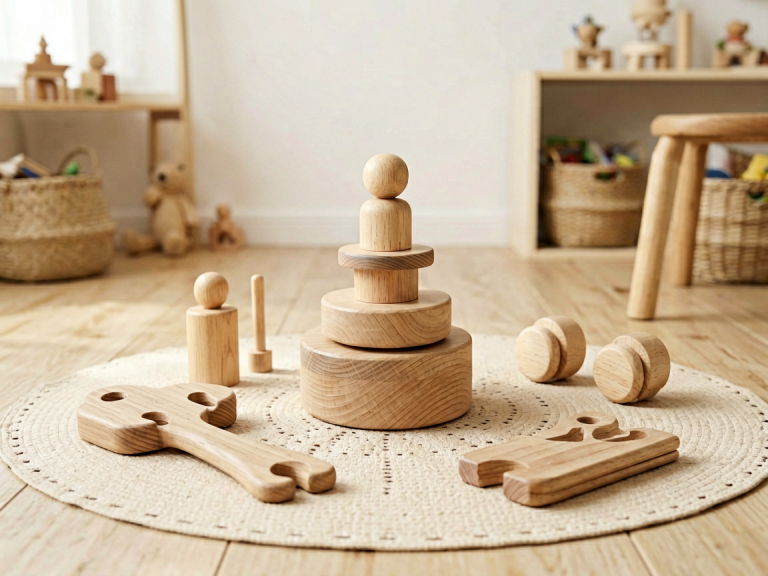
Many second-hand toys come from decades when play was less structured and less tied to media franchises. A 1980s wooden shape sorter or a set of plain wooden blocks without logos encourages pure open-ended play. Seven-year-olds, though capable of following instructions, still benefit enormously from toys that have no “right” way to be used. A collection of second-hand action figures from various series – a Star Wars stormtrooper alongside a generic knight – invites cross-universe stories that spark rich narrative thinking. This kind of hybrid play is harder to achieve with a complete licensed set, where the story is already dictated by the franchise.
Social Skills Through Shared History
Second-hand toys often come with a story. A parent might say, “This doll belonged to a little girl who loved to dress her up in homemade clothes. She took her on trips to the park.” This narrative encourages a seven-year-old to imagine the previous owner’s life, developing empathy and narrative skills. Moreover, when a child brings a used toy to a playdate or school, it can start conversations. “Wow, where did you get that old-fashioned fire truck?” The toy becomes a social bridge, a conversation starter that new toys sometimes lack because they are so common.
—
Safety, Hygiene, and Quality: Addressing Common Concerns
Some parents hesitate about second-hand toys due to concerns about cleanliness, wear, or safety. These are valid, but manageable. With a few simple steps, second-hand toys can be made perfectly safe for a seven-year-old.
Cleaning and Sanitizing
Plastic toys can be washed in warm soapy water, or run through the dishwasher (if they are dishwasher-safe). Hard plastic items like LEGO bricks, Duplo, and action figures can be soaked in a mild bleach solution (1 tablespoon per gallon of water) and then rinsed thoroughly. Fabric toys, like stuffed animals, can often be machine-washed on a gentle cycle in a pillowcase. Wooden toys should be wiped with a damp cloth and a gentle cleaner, then dried completely to prevent warping. For electronic toys, use a slightly damp cloth on surfaces and avoid getting moisture inside. With these simple routines, any second-hand toy can be made as clean as new.
Safety Checks
Before giving a toy to a seven-year-old, check for potential hazards. Look for chipped paint (especially on older toys, which may contain lead – though modern regulations have reduced this risk, it’s still wise to avoid pre-1980s painted toys). Check for loose small parts that could be a choking hazard for younger siblings, but for a seven-year-old, the main concern is sharp edges or broken components. Batteries should be removed and replaced if corroded. Ensure all batteries compartments have secure screw covers – a seven-year-old can be tempted to pry them open. Also, inspect any strings or cords over 12 inches, which could pose a strangulation risk. If a toy fails these checks, discard or repair it.
Age Appropriateness
Not every second-hand toy is ideal for a seven-year-old. Some vintage toys may be too simple (designed for toddlers) or too complex (with tiny pieces intended for older children). Always check the manufacturer’s age recommendation, and use your judgment. For example, a 1970s board game called “Mouse Trap” is still enjoyed by seven-year-olds, but its tiny plastic pieces require supervision. Likewise, a used chemistry set might be too advanced for a typical second grader unless an adult is closely involved.
—
How to Choose the Best Second-Hand Toys for a 7-Year-Old
Not all second-hand toys are created equal. To maximize the benefit, focus on types of toys that align with a seven-year-old’s developmental needs.
Building and Construction Sets
LEGO bricks, Mega Bloks, magnetic tiles, and wooden block sets are perennial favorites. Seven-year-olds love to follow instructions to create models, but they also enjoy free-building. Second-hand sets often come without the original box or instructions, which can be a bonus – it forces the child to problem-solve. You can find instructions online for many sets, or simply let them create their own designs.
Board Games and Card Games
At seven, children can handle games with simple rules, turn-taking, and a bit of strategy. Classics like *Connect 4*, *Guess Who?*, *Uno*, *Jenga*, *Blokus*, and *The Game of Life* (junior version) are readily available second-hand. These games teach patience, social skills, and flexible thinking.
Puzzles
Puzzles with 100 to 200 pieces are ideal for seven-year-olds. Second-hand puzzles may have missing pieces – this is something to check carefully. But if a puzzle is complete, it provides excellent fine motor and spatial reasoning practice. Some thrift stores tape the box shut and note “all pieces” – trust but verify.
Dolls, Action Figures, and Playsets
Seven-year-olds still engage in dramatic play, but with more complex storylines. Second-hand dolls (like Barbies or fashion dolls) and action figures (Superheroes, dinosaurs, animal figures) can be combined into elaborate worlds. Avoid dolls with hair that is matted or stained – these can be cleaned, but it’s extra work.
Science and Art Kits
Used science kits (like a magnifying glass, bug-catching kit, or simple microscope) are often missing small components but can be supplemented. Art supplies like second-hand paints, brushes, and easels are wonderful if still in good condition – just be sure the paints are non-toxic and haven’t dried out.
What to Avoid
Steer clear of battery-operated toys that are missing their original chargers or have exposed wiring. Avoid toys with sharp metal parts, and be cautious of toys that require a specific app or internet connection that may no longer be supported. Also avoid plush toys with missing squeakers or loose seams that could become a choking hazard for younger siblings – though for a seven-year-old alone, these are minor concerns.
—
The Joy of Discovery: Building a Treasure Hunt Mentality
Perhaps the most magical aspect of second-hand toys for a seven-year-old is the element of discovery. Shopping for used toys can become a family adventure. Instead of walking into a brightly lit toy store and picking a shiny box off the shelf, you can visit a thrift store or a flea market and turn the experience into a treasure hunt. Children learn to evaluate items, ask questions, and make choices based on condition and potential. This process builds decision-making skills and patience.
When a seven-year-old finds a rare vintage toy or a complete set of something they love, the excitement is genuine – not manufactured by advertising. They form a deeper connection with the object because they “rescued” it. This emotional bond often leads to longer-lasting play. A child who paid some coin (or even earned money to buy the toy) is more likely to care for it than a toy that arrived in a gift box. The lesson of gratitude and stewardship extends beyond the toy itself into other areas of life.
—
Conclusion: Value Beyond the Price Tag
Second-hand toys are not a compromise; they are a choice rich with benefits. For a seven-year-old – who is navigating a world of new rules, growing social relationships, and boundless imagination – a gently used toy can be just as meaningful, if not more so, than a brand-new one. The economic savings allow for a broader range of play experiences. The environmental lesson plants the seeds of conscious living. And the developmental advantages – from open-ended creativity to empathetic storytelling – align perfectly with a seven-year-old’s needs. With a little care in cleaning and selecting, second-hand toys offer a world of adventure that is affordable, sustainable, and deeply enriching. The next time you consider buying a toy for a seven-year-old, look past the glitter and plastic wrapping. Visit a thrift store, browse an online marketplace, or ask a friend. You might just uncover a hidden treasure that will provide hours of joy and learning – and a lesson that lasts far longer than any toy.