A Parent’s Guide to Choosing Science Kits for Kindergarteners: Spark Curiosity Without the Mess
Introduction: Why Science Kits Matter at Age Five
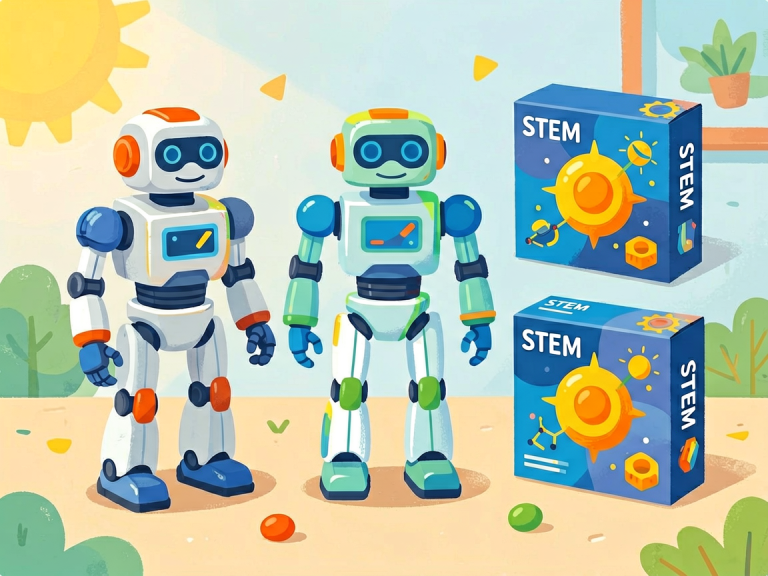
At five or six years old, children are natural scientists. They ask “why” a hundred times a day, mix mud with grass to see what happens, and stare at a puddle until the reflection of a cloud makes them giggle. Science kits for kindergarteners are not just toys—they are carefully designed tools that channel this innate curiosity into structured discovery. Yet the market is flooded with boxes labeled “STEM” that promise to turn toddlers into little Einsteins, while many contain parts too small, instructions too abstract, or goals too ambitious for a developing mind. Choosing the right kit requires understanding the child, the kit’s design philosophy, and the role of the adult facilitator. This guide will walk you through the key factors to consider, ensuring that the kit you bring home becomes a gateway to wonder, not a source of frustration.
Safety First: The Non-Negotiable Foundation
Before any discussion of educational value, safety must take precedence. A kindergarten science kit will inevitably contain small pieces, liquids, or tools that could be misused. Check the manufacturer’s age recommendation—most reputable brands design kits specifically for ages 3–6 or 5–7. Look for non‑toxic materials: a “non‑toxic” label on paints, powders, and slime components is essential. Avoid kits that include glass containers, sharp edges, or tiny magnets that can be swallowed. Even “safe” items like baking soda and vinegar can irritate eyes if splashed, so read reviews to see if other parents mention messiness or hazard. A good kit will include safety goggles (even if they are just fun plastic frames) and clearly printed warnings. Remember, the best kit is one that allows exploration without requiring your constant “No, don’t touch that!”—so choose products that pass the “grab‑and‑spill” test.
Age-Appropriate Complexity: Not Too Easy, Not Too Hard
Science kits for kindergarteners should strike a delicate balance. If the experiments are too simple—like mixing colored water—the child may lose interest after two minutes. If they are too advanced—like building a simple circuit with wires—the child will not understand the cause and effect, and the adult will end up doing all the work. Look for kits that offer open‑ended activities with a single, clear goal. For example, a kit that asks the child to “make a volcano erupt” is perfect: the steps are few (fill a container, add baking soda, pour vinegar), the result is dramatic, and the “why” can be explained in one sentence. Kits that include a story or a character (e.g., “Dr. Dino’s Weather Lab”) help kindergarteners connect emotionally. Avoid kits that require reading long instructions—at this age, visual picture‑based guides are far more effective. A good rule of thumb: if you yourself need to read the manual more than once, the kit is likely above the child’s developmental level.
The Power of Open-Ended Play vs. Structured Experiments
Many parents assume that a science kit must come with a specific “experiment” to be educational. In reality, the most valuable kits for kindergarteners are those that allow both structured and unstructured play. A kit that provides a magnifying glass, tweezers, sorting trays, and a few natural objects (like fake gemstones or bug replicas) can be used for a dozen different learning moments: sorting by color, comparing sizes, pretending to be a geologist, or simply staring at a fake spider’s legs. This type of kit encourages observation skills, classification, and vocabulary building. On the other hand, kits that force a single outcome—like “make a rainbow in a jar”—can be fun once, but then the kit collects dust. The best science kits offer a replay value: materials that can be reused (like pipettes, test tubes, and measuring cups) and a variety of suggested activities, with the freedom to invent new ones. Look for brands that include a small guide with 5–10 activities rather than just 2–3.
Engaging Multiple Senses: The Kinesthetic and Visual Element
Kindergarteners learn through touch, sight, sound, and even smell. A great science kit for this age group will engage at least three senses. For instance, a “sensory science” kit might include scented play dough, color‑changing liquids, and textured materials like cotton balls or sand. Kits that involve water play (such as sink‑or‑float experiments) are almost always hits because water is inherently magical to young children. Sound‑making elements—like making a simple rubber‑band guitar or a rain stick—introduce physics concepts in a playful way. Avoid kits that rely heavily on worksheets, screens, or passive observation. The child should be actively pouring, mixing, poking, and shaking. If the kit comes with a digital app to watch videos, that is fine as a supplement, but the primary activity must be hands‑on. Remember: a five‑year‑old’s attention span is short—about 10 to 15 minutes for a focused activity—so the kit should deliver a satisfying result quickly.
Parental Involvement: The Kit as a Relationship Tool
No science kit, no matter how brilliant, can replace the role of a parent or caregiver. In fact, the kit is only as good as the conversation it sparks. When choosing a kit, consider how much preparation it requires from you. Some kits need you to gather additional household items (like eggs, milk, or ice cubes)—this can be fun if you have time, but frustrating if you are rushing after work. Others come with everything pre‑measured and pre‑packaged. For busy parents, the latter is often better. However, do not overlook the value of co‑exploration: when you sit with your child and say, “Let’s see what happens if we add more baking soda,” you are modeling scientific thinking. Look for kits that include a simple explanation of the science behind each experiment, written in plain language you can read aloud. Also, check if the kit encourages mistakes—for example, a “guess and check” approach where the child predicts an outcome before doing the experiment. This builds the scientific method naturally. A kit that makes you look like a fun, smart grown‑up will do wonders for your bonding and your child’s confidence.
Sustainability and Material Quality: Avoid the Throwaway Plastic Problem
One major downside of many children’s science kits is the sheer amount of single‑use plastic packaging and cheap, breakable parts. A kit that includes a plastic pipette that cracks on the first use is not just frustrating—it teaches a bad lesson about resourcefulness. When choosing a kit, examine the materials. Are the test tubes made of sturdy plastic or thin glass? Are the measuring spoons reusable? Can the printed instruction cards be wiped clean after a slime disaster? Better yet, look for kits that emphasize reusable components or use recycled or biodegradable packaging. Some high‑quality brands now sell “starter kits” that contain only the specialized items (like a real microscope or a set of large magnets) and suggest using common household items for the consumable parts. This reduces waste and teaches children that science can be done with everyday objects. If the kit comes with a plastic “lab coat” that will end up in a landfill after one wear, consider whether the money is better spent on a simple set of real tools—a magnifying glass, a scale, and a collection of rocks.
Price vs. Value: Don’t Be Fooled by Brand Names
Science kits for kindergarteners range from $10 to $100. Price does not always correlate with quality. A $15 kit that includes a dozen activities using baking soda, vinegar, and a few balloons can provide hours of fun, while a $60 kit with a fancy box and a cartoon character may have only three activities and a lot of plastic junk. Before buying, read reviews from other parents—pay attention to comments about durability, messiness, and whether the child actually played with it more than once. Also, consider the long‑term value: can the kit be used again when the child is six or seven? Some kits have “expansion packs” or suggested follow‑up experiments online. Another factor is the child’s specific interests. If your child is obsessed with dinosaurs, a fossil‑dig kit will motivate them far more than a generic chemistry set. Tailor the choice to the child’s current passion, not what the package says is “most educational.” After all, learning happens best when the child is engaged.
Conclusion: The Magic Is in the Wondering
Choosing the perfect science kit for a kindergartener is not about finding the most sophisticated gadget or the most glittery box. It is about finding a tool that invites the child to ask “what if?” and then gives them the power to test that question with their own hands. The best kit will be safe, simple, sensory, and open‑ended—and it will make you, the parent, a partner in discovery rather than a mere supervisor. Do not overthink the decision. Pick one that aligns with your child’s natural curiosity, set aside 20 minutes of your time, and let the world’s smallest scientist lead the way. The volcano may fizzle, the crystals may not grow perfectly, and the slime may end up in your hair—but that messy, joyful process is the real science education. And that is a kit you can never buy in a store.