The Silent Hazard: Understanding and Mitigating Toy Noise Levels for Three-Year-Olds
Introduction
The world of a three-year-old is one of exploration, imagination, and sensory discovery. Toys are their primary tools for learning about cause and effect, social interaction, and the physical properties of sound. However, hidden within the cheerful chirps of a plastic telephone, the blare of a toy horn, or the rattle of a musical instrument lurks a potential health risk that many parents and caregivers overlook: excessive noise. While the visual appeal, texture, and educational value of toys are routinely scrutinized, the acoustic environment they create is often ignored. For a toddler whose auditory system is still developing, prolonged or intense exposure to high-decibel toy noise can have lasting consequences, ranging from temporary hearing threshold shifts to permanent noise-induced hearing loss (NIHL). This article delves into the critical issue of toy noise levels for three-year-olds, examining existing safety standards, the physiological risks to young children, and practical strategies for parents to make informed, hearing-safe choices.
The Importance of Monitoring Toy Noise Levels in Early Childhood
The auditory system of a three-year-old is not simply a smaller version of an adult’s; it is anatomically and physiologically immature. The ear canal is shorter and more resonant, which can amplify certain frequencies. The middle ear bones are still growing, and the neural pathways connecting the ear to the brain are undergoing rapid myelination. As a result, children are more vulnerable to acoustic trauma than adults. Studies from organizations such as the World Health Organization (WHO) and the American Academy of Pediatrics (AAP) have long warned that sounds exceeding 85 decibels (dB) can be harmful with prolonged exposure. Yet many toys on the market produce sounds that reach 100 dB or even higher when held directly against a child’s ear—a common behavior among toddlers who explore toys by bringing them close to their face.
The problem is compounded by the fact that three-year-olds cannot articulate discomfort or recognize dangerous noise levels. A loud toy may not cause immediate pain, but it can induce a temporary threshold shift—a subtle decrease in hearing sensitivity that often goes unnoticed. Repeated exposure can lead to permanent damage. Furthermore, noisy toys contribute to overall ambient noise in the home, daycare, or preschool, creating a constant soundscape that can impede speech development, attention span, and sleep quality. Therefore, understanding and regulating toy noise is not merely a matter of comfort; it is a fundamental aspect of safeguarding a child’s developmental trajectory.
Standards and Regulations for Toy Noise: A Global Perspective
To address these concerns, several international bodies have established guidelines. In the United States, the Consumer Product Safety Commission (CPSC) enforces the ASTM F963-17 standard, which stipulates that toys intended for children under the age of three must not produce continuous sound levels exceeding 80 dB when measured at a distance of 25 centimeters. For impact-type sounds (e.g., a toy hammer), the peak level must not exceed 90 dB. Similarly, the European Union’s Toy Safety Directive (EN 71-1) sets a limit of 80 dB for continuous sound and 110 dB for peak sound from close-proximity toys. However, these standards have notable loopholes. The 25-centimeter measurement distance does not reflect real-world usage: a child often holds a toy directly against the ear, making the actual exposure much louder. Moreover, many toys marketed for older age brackets—such as musical instruments, toy phones, or electronic learning devices—are frequently given to three-year-olds, and their noise levels may exceed recommended thresholds.
Independent testing by organizations like the Sight & Hearing Association has repeatedly found that up to 70% of popular toys produce sound levels above 85 dB when tested at ear level. For example, toy sirens, electronic drums, and talking dolls have been measured at 95–110 dB—comparable to the noise of a chainsaw or a rock concert. For a three-year-old whose eardrum is only about the size of a dime and whose auditory structures are less resilient, such levels are dangerously high. Advocacy groups have called for stricter regulations that simulate real-world usage, such as testing toys at zero inches (direct ear contact) and requiring warning labels for toys that exceed 85 dB. However, until such reforms become universal, the responsibility falls upon parents and educators to identify and mitigate risks.
Potential Risks of Excessive Noise in Toys for Toddlers
The most immediate risk is noise-induced hearing loss. Unlike age-related hearing loss (presbycusis), NIHL is preventable but irreversible. For a three-year-old, even a single episode of loud noise—such as pressing a toy horn repeatedly next to the ear—can damage the delicate hair cells in the cochlea. These hair cells do not regenerate, and once lost, they result in permanent high-frequency hearing loss. This can impair speech comprehension, phonological awareness, and later reading ability. Studies have shown that children with slight hearing deficits often struggle in noisy classrooms, miss nuances in conversation, and exhibit higher rates of behavioral problems.
Beyond hearing loss, excessive toy noise contributes to other health and developmental issues. Chronic noise exposure raises cortisol levels, the body’s primary stress hormone. In toddlers, elevated cortisol can disrupt sleep patterns, increase irritability, and interfere with executive function—the ability to regulate attention and impulses. A three-year-old who is constantly exposed to a loud toy environment may become overstimulated, leading to tantrums or withdrawal. Moreover, loud toys can mask important environmental sounds, such as a parent’s voice or a smoke alarm, creating safety hazards.
Another less-discussed risk is the impact on language acquisition. A child learns language by listening to repeated, clear auditory input. If a toy’s background noise is consistently louder than a parent’s speech (a phenomenon known as the “cocktail party effect”), the child’s brain may have difficulty isolating and processing speech sounds. This can delay vocabulary development and reduce the quality of parent-child interaction during play. For a three-year-old, whose vocabulary is expanding rapidly from about 200 to 1,000 words, every decibel matters.
How to Choose Safe Toys: Practical Tips for Parents and Caregivers
Given these risks, parents need actionable strategies to select toys that are both engaging and hearing-safe. The following guidelines can help:
- Test Before You Buy: Many toy stores and online retailers do not provide decibel ratings. When possible, listen to the toy yourself at a hearing distance similar to how a child would use it. If the sound makes you wince or feels uncomfortably loud in a quiet room, it is far too loud for a toddler’s delicate ears. Use a free smartphone decibel meter app (many are accurate within a few decibels) to measure the toy at ear level. If the peak reading exceeds 85 dB, reconsider the purchase.
- Look for Volume Control or “Ear-Safe” Labels: Some manufacturers now include a volume limiter or a “low battery” mode that reduces output. Seek toys that have a physical or digital volume slider, and set it to the lowest setting before giving the toy to a three-year-old. Also, look for certifications such as the “Hearing Safe” logo from organizations like the American Tinnitus Association or the Hearing Health Foundation, though these are not yet widespread.
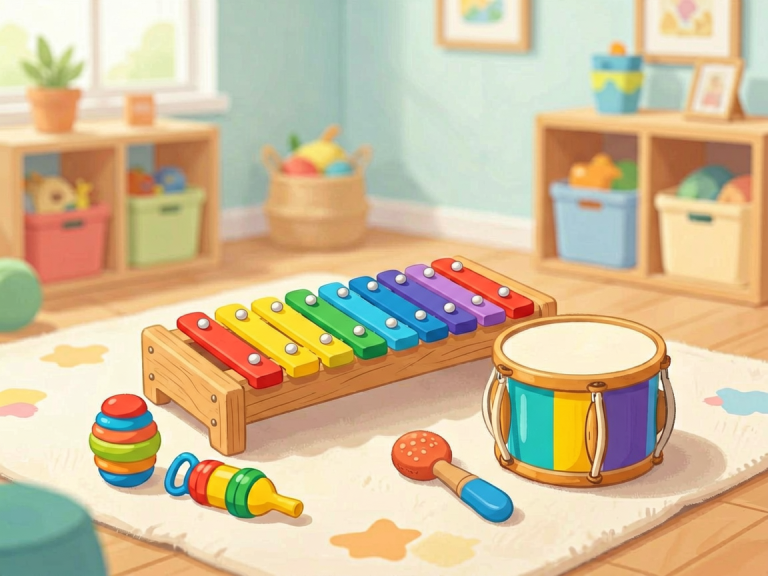
- Prefer Acoustic Over Electronic: Traditional wooden rattles, cloth dolls, and simple percussion instruments (like maracas or hand drums) often produce softer, more natural sounds. Even if they are struck enthusiastically, the peak decibel levels are generally lower than battery-operated plastic toys that amplify synthetic noises. For musical education, consider acoustic instruments designed for children, such as glockenspiels with soft mallets or small harmonicas that require gentle breath.
- Modify Existing Toys: For toys already at home, you can reduce noise by placing a piece of masking tape over the speaker, covering it with a thin cloth, or inserting a small piece of foam. For battery-operated toys, removing the power source or cutting the speaker wire (if you are handy with electronics) transforms them into quiet visual toys. Alternatively, simply encourage your child to play with them in a carpeted room or with the toy resting on a soft surface, which dampens the sound.
- Create a “Quiet Play” Routine: Limit the duration of exposure to noisy toys. For example, allow a toy siren for only two minutes per day, and then redirect the child to quieter activities. Implement regular “sound breaks” where all electronic toys are turned off, and the environment returns to a calm baseline. This gives the child’s ears time to recover and reduces cumulative stress.
- Educate Older Siblings and Caregivers: If a three-year-old shares toys with older siblings, ensure that louder toys (e.g., remote-controlled cars with screeching engines, playtape players with headphones for older kids) are kept out of reach. Explain to older children why they should not blast sounds near the toddler’s ears. At daycare or preschool, ask teachers about their policies on toy volume and whether they conduct regular noise audits.
Conclusion
The joy of a three-year-old’s laughter as they press a button and hear a melody should never be overshadowed by the hidden cost of hearing damage. Toy noise levels are a critical but often undervalued aspect of child safety. While regulatory bodies have taken steps to set limits, these standards are imperfect and often do not capture the true exposure a child experiences. As research continues to underscore the vulnerability of the developing auditory system, parents, educators, and manufacturers must collaborate to create a safer acoustic environment. By choosing toys with moderate sound output, modifying existing ones, and fostering mindful play habits, we can ensure that every giggle comes without a price. After all, the best sound a three-year-old can make is their own joyful voice—and protecting that ability to hear it is a responsibility we all share.