Should I Buy STEM Kits for Kindergarteners? A Balanced Guide for Parents
Introduction: The Allure of Early STEM Education
Walk into any toy store or browse Amazon today, and you will be bombarded with colorful boxes labeled "STEM Kit," "Coding for Beginners," or "Little Engineer Lab." These products promise to turn your five-year-old into a budding scientist, mathematician, or programmer. As a parent of a kindergartener, you have likely felt the pressure: everyone else seems to be investing in these kits, and you wonder if you are falling behind if you don’t. The question "should I buy STEM kits for kindergarteners?" is not just about a purchase—it reflects a deeper anxiety about giving our children the best possible start in an increasingly technology-driven world.
But before you click "Add to Cart," it is crucial to step back and examine what these kits actually offer, what developmental stage a kindergartener is truly in, and whether the benefits outweigh the potential downsides. This article will guide you through the evidence, expert opinions, and practical considerations so that you can make an informed decision for your child—one that prioritizes genuine learning over marketing hype.
The Appeal of STEM Kits: What They Promise
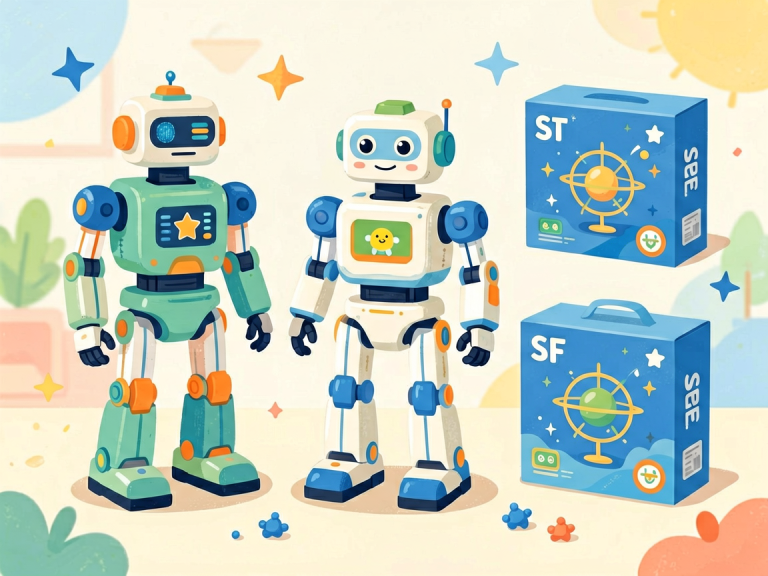
STEM stands for Science, Technology, Engineering, and Mathematics. STEM kits for kindergarteners typically include hands-on activities like building simple circuits, constructing bridges with blocks, mixing colors or baking soda reactions, or using basic coding toys that require logical sequencing. On the surface, these kits seem perfect: they are engaging, screen-free (or limited screen), and claim to develop critical thinking, problem-solving, and creativity.
Many parents are drawn to STEM kits because they provide structured, ready-to-use activities that require minimal preparation. Unlike open-ended play with loose parts, a kit tells you exactly what to do, which can be reassuring for parents who are not confident in their own science knowledge. Moreover, the kits often come with educational claims backed by research on early brain development—the idea that the first five years are a "critical window" for building neural connections related to math and logic. In this sense, buying a STEM kit feels like a responsible investment.
However, the marketing of STEM kits frequently overstates their benefits. A kindergartener’s brain is not a miniature adult brain; it develops best through play, social interaction, and sensory exploration—not through following rigid instructions. The question "should I buy STEM kits for kindergarteners?" therefore requires us to separate genuine educational value from mere product hype.
Potential Benefits: When STEM Kits Can Actually Help
1. Fostering Curiosity and Early Exposure
One clear benefit of a well-designed STEM kit is that it can spark curiosity. For example, a kit that lets a child mix vinegar and baking soda to inflate a balloon demonstrates cause and effect in a dramatic, memorable way. Such experiences plant seeds of wonder: "Why did that happen?" If the kit includes a simple explanation or encourages open-ended experimentation, it can encourage a child to ask questions and explore further. Early exposure to scientific concepts—even at a very basic level—can help normalize STEM vocabulary and reduce later anxiety about these subjects.
2. Developing Fine Motor Skills and Hand-Eye Coordination
Many STEM kits require assembling small parts, connecting wires, or manipulating pieces. For a kindergartener, these actions strengthen fine motor muscles and improve dexterity, which are essential for writing, drawing, and self-care tasks. A kit that involves building a simple marble run or a snap-together circuit board can be as beneficial for motor development as any traditional puzzle or building block set.
3. Introducing Logical Thinking and Sequencing
Coding kits designed for young children (like those using picture cards or physical robots that follow commands) introduce the basic idea of sequencing—doing things step by step to achieve a result. This is not so different from following a recipe or a dance routine. When a child learns that if they press "forward," "forward," "turn right," the robot will move to a specific spot, they are practicing logical reasoning. These skills are transferable to reading comprehension, mathematics, and everyday problem-solving.
4. Building Confidence and Persistence
Structured STEM activities often involve trial and error. When a bridge collapses or a circuit doesn’t light up, the child must try again. This process teaches resilience and the idea that failure is a stepping stone to success. If the parent or caregiver guides the child gently through troubleshooting, the kit can become a powerful tool for developing a growth mindset—the belief that abilities can be improved through effort.
Concerns and Drawbacks: Why You Should Think Twice
1. The Risk of Over-Structuring Play
Kindergarteners learn most effectively through free, unstructured play. When you hand a child a kit that has a specific end goal (e.g., "build this model of a dinosaur"), you inadvertently limit their creativity. Instead of imagining that a block is a spaceship one minute and a castle the next, the child is fixed on following instructions. Many early childhood experts argue that open-ended materials—like wooden blocks, playdough, water, sand, and art supplies—offer far richer learning opportunities because they allow infinite possibilities. Over-reliance on kits can actually stifle the very creativity that STEM education claims to promote.
2. Mismatch with Developmental Readiness
Not all kindergarteners are ready for the abstract thinking required by some STEM kits. Concepts like "electricity," "forces," or "coding logic" are quite advanced for a five-year-old brain that is still developing the ability to hold multiple variables in mind. A child may be able to follow the steps mechanically (e.g., plugging the red wire into the red hole) without any understanding of why it works. This can lead to a false sense of learning—the child performs the activity but does not internalize the concept. Worse, it can cause frustration if the kit is too difficult, turning what should be fun into a chore.
3. Commercialization of Learning and Parental Pressure
The STEM kit market is booming, and many products are designed to appeal to parents’ anxieties rather than to children’s actual needs. Labels like "award-winning" or "recommended by teachers" may not be independently verified. Some kits are cheaply made, with flimsy parts that break easily, leading to disappointment. Moreover, when parents feel they must buy these kits to keep up, they may inadvertently transmit their own stress to the child. The question "should I buy STEM kits for kindergarteners?" becomes less about the child’s interests and more about social comparison.
4. Screen Time and Overstimulation
While many STEM kits are hands-on, some incorporate tablets or apps. For kindergarteners, screen time should be minimal, and even interactive apps can overstimulate the developing brain. The American Academy of Pediatrics recommends no more than one hour of high-quality screen time per day for children aged 2–5. If a STEM kit relies heavily on a screen, it may actually detract from the hands-on, sensory experiences that are most beneficial at this age.
What the Experts Say: A Developmental Perspective
Leading early childhood educators, such as those from the National Association for the Education of Young Children (NAEYC), emphasize that the best learning environment for kindergarteners is one that is rich in play, relationships, and real-world experiences. Dr. Peter Gray, a research professor at Boston College, argues that children learn best when they are free to choose their own activities, make mistakes, and explore without adult-imposed goals.
That said, many experts do not oppose STEM kits outright—they simply caution against using them as a primary learning tool. Dr. Jennifer Cross, a child development researcher at the University of California, suggests that STEM kits can be beneficial if they are used as a supplement to free play, not a replacement. She advises parents to look for kits that are open-ended (e.g., a set of magnetic tiles rather than a kit that only builds one specific model) and that encourage exploration rather than a single correct outcome.
The key takeaway from expert consensus is that the *how* matters more than the *what*. A STEM kit in the hands of a patient, observant parent who asks questions ("What do you think will happen if we add more water?") and allows the child to deviate from instructions is far more valuable than the same kit used as a one-time activity that must be completed perfectly.
Guidelines for Choosing: If You Decide to Buy
If after weighing the pros and cons, you decide to purchase a STEM kit, here are practical guidelines to ensure it serves your child well:
- Prioritize open-endedness: Choose kits that allow multiple outcomes, such as building blocks, magnetic tiles, or simple gears. Avoid kits that have one predetermined final product.
- Check age recommendations carefully: A kit labeled for ages 3–5 may still be too complex for some kindergarteners. Look for kits that require minimal adult help and that the child can manipulate independently.
- Emphasize process over product: Do not pressure your child to "finish" the kit. Let them explore, make a mess, and even use the pieces in unintended ways. The learning is in the doing, not the completing.
- Integrate with real-world experiences: A kit about magnets is more meaningful if you also play with magnets in the kitchen or discuss why a refrigerator door sticks. Connect the kit to everyday life.
- Limit quantity: One or two well-chosen kits are better than a dozen. Too many structured activities can overwhelm a child and reduce time for unstructured play.
- Watch for frustration: If your child shows signs of distress or boredom, put the kit away and try again another time. No kit is worth damaging your child’s natural love of learning.
Alternatives to STEM Kits: What Might Be Better
Before you click "buy," consider whether you already have equally valuable resources at home or can create them for free. Some highly effective "STEM" activities for kindergarteners require no purchase at all:
- Water play: Measuring cups, funnels, and containers teach volume and cause-effect.
- Cooking: Measuring ingredients introduces fractions and chemical changes (e.g., baking soda and vinegar in pancakes).
- Nature walks: Collecting leaves, rocks, and insects sparks observation and classification.
- Building with cardboard boxes: Scissors, tape, and recycled materials encourage engineering and creativity.
- Free drawing and painting: Spatial reasoning and pattern recognition develop through art.
These activities are not only free but also more flexible and rich than any commercial kit. They do not come with instructions, so the child is forced to imagine and create—exactly the skills that STEM careers demand.
Conclusion: A Thoughtful Yes, but with Caution
So, should you buy STEM kits for your kindergartener? The answer is not a simple yes or no. If you choose wisely, use them sparingly, and focus on the joy of exploration rather than the achievement of a finished product, STEM kits can be a wonderful tool to spark curiosity and develop specific skills. However, they should never replace the boundless, messy, unstructured play that is the real engine of early childhood learning.
As a parent, your role is not to fill your child’s toy box with the latest educational gadgets but to create an environment where your child feels safe to experiment, fail, ask questions, and follow their own interests. If a STEM kit supports that goal, buy it. If it becomes another item on a checklist, skip it. The best investment you can make is not in a product, but in your time—sitting on the floor with your child, asking "I wonder what would happen if we try this differently?" and marveling together at the world.
Ultimately, the question "should I buy STEM kits for kindergarteners?" is best answered by observing your own child. Does she show a deep fascination with how things work? Does he love building and taking things apart? If so, a well-chosen kit might be a wonderful gift. But if your child is happiest running outside, making mud pies, and pretending to be a dragon, trust that she is learning everything she needs for a bright future—no purchase required.