To STEM or Not to STEM? A Thoughtful Guide on Buying STEM Kits for Your 9-Month-Old
Introduction: The Allure of Early Education
Parents today are bombarded with a relentless stream of marketing that promises to turn their infants into the next Einstein. Among the most tempting products are STEM kits—brightly colored boxes filled with gears, magnets, stacking rings, and sensory materials, all labeled with phrases like “future engineer” or “little coder.” But if you are the parent of a 9-month-old, you might find yourself staring at the online shopping cart and wondering: *Should I buy STEM kits for a baby who cannot yet crawl consistently, let alone understand basic physics?* The answer, as with most aspects of early childhood development, is nuanced. While the term “STEM” (Science, Technology, Engineering, and Mathematics) sounds impressive, its application to infants requires careful consideration of developmental appropriateness, safety, and the true nature of learning in the first year of life.
In this article, we will dissect what STEM kits for infants actually contain, examine the cognitive and motor milestones of a 9-month-old, weigh the potential benefits against the hidden pitfalls, and offer practical alternatives that may serve your child better than any store-bought kit. By the end, you will have a clear, evidence-informed perspective on whether to click “Add to Cart” or save your money for a set of simple wooden blocks.
What Exactly Are STEM Kits for 9-Month-Olds?
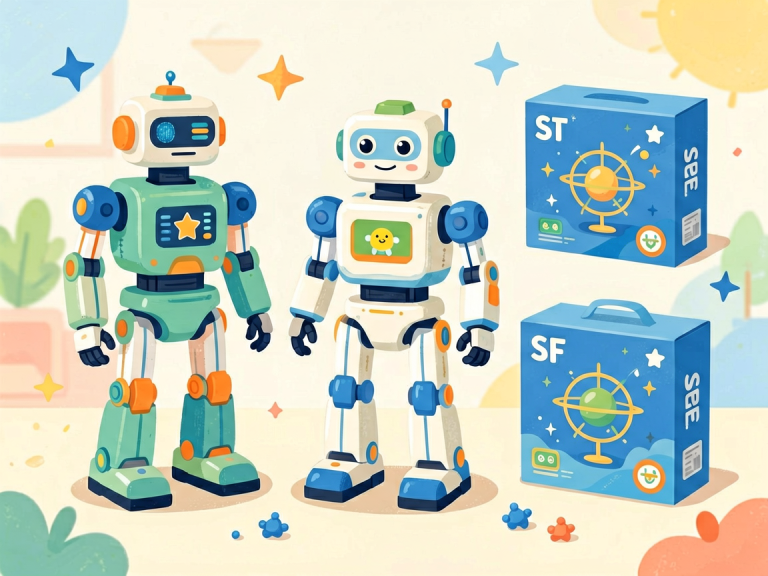
Before deciding, it helps to understand what is inside these kits. Search online and you will find products marketed as “STEM toys for babies” that typically include:
- Sensory elements: Textured balls, crinkly fabric, water or sand play sets.
- Cause-and-effect toys: Push buttons that trigger lights, sounds, or vibrations.
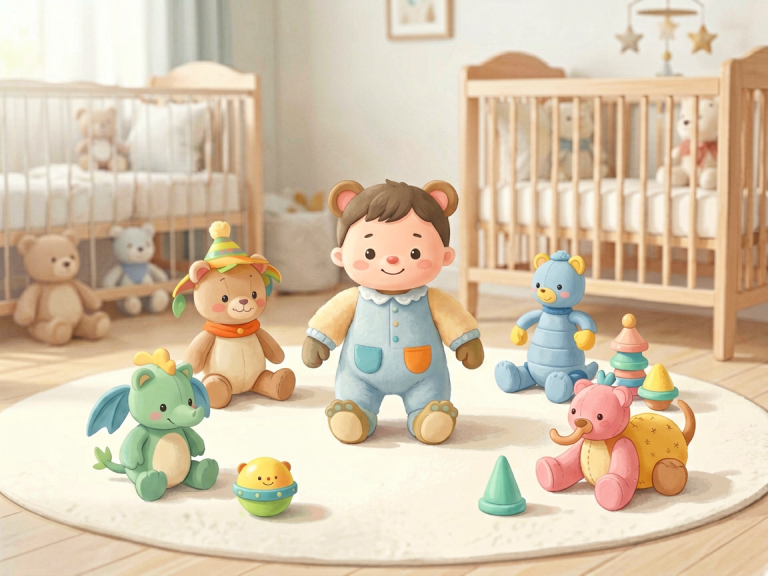
- Stacking and nesting objects: Cups, rings, or blocks that encourage hand-eye coordination.
- Magnetic or interlocking pieces: Simplified versions of building sets that claim to introduce “engineering.”
- Colorful shape sorters: Often with oversized pieces that fit into corresponding holes.
At first glance, these items seem harmless and even educational. However, the label “STEM” is often a marketing gimmick rather than a pedagogically sound classification. A 9-month-old is not learning the principles of magnetism; she is learning that when she drops a magnetic block, it makes a satisfying *click* on the fridge. She is not solving engineering problems; she is exploring how objects feel, taste (yes, everything goes into the mouth), and respond to her actions. The real question is whether a specialized, often expensive “kit” offers anything more than simpler, cheaper toys that have been beloved for generations.
The Developmental Reality of a 9-Month-Old Baby
To evaluate whether STEM kits are beneficial, we must ground our reasoning in developmental science. At 9 months, a typical infant is experiencing a rapid transformation in motor, cognitive, and social-emotional domains.
Motor Development: Most 9-month-olds are proficient sitters, many are crawling (or scooting, or rolling), and some are beginning to pull themselves up to stand. Their fine motor skills are advancing: they can transfer objects from one hand to another, use a raking grasp to pick up small items, and eventually develop a pincer grip. These milestones demand toys that are easy to grasp, safe to mouth, and not so complex that they frustrate the child.
Cognitive Development: Object permanence is becoming established—the baby understands that a hidden object still exists. This is why peek-a-boo is endlessly fascinating. Cause and effect is a major cognitive theme: “If I drop this rattle, it makes a noise. If I shake it, it rattles.” Babies at this age are natural scientists, but their “experiments” are concrete, repetitive, and sensory-based. They do not need abstract concepts like numbers or engineering schematics; they need opportunities to repeat actions and observe outcomes.
Social-Emotional Development: Attachment is paramount. A 9-month-old learns best through warm, responsive interactions with a caregiver. Joint attention—looking at the same object together—is a cornerstone of early learning. Toys that replace or diminish caregiver interaction (e.g., a light-up gadget that entertains the baby independently) can actually hinder development by reducing back-and-forth communication.
Given these realities, the ideal “toy” for a 9-month-old is one that encourages exploration, is safe for mouthing, offers simple cause-and-effect feedback, and—most importantly—invites adult participation. Does the typical STEM kit meet these criteria? Sometimes yes, but often no.
Potential Benefits of STEM Kits for Infants: A Balanced Look
Proponents of early STEM exposure argue that introducing scientific thinking from infancy builds a foundation for later problem-solving. When used correctly, certain components of STEM kits can indeed offer value:
1. Sensory Stimulation and Brain Development
Many STEM kits include materials with varying textures, temperatures, and sounds. For instance, a water-play mat or a set of smooth versus bumpy balls provides rich sensory input. The first three years of life are a critical period for neural connectivity, and diverse sensory experiences do support brain development. A 9-month-old exploring a squishy, cold gel bead (supervised) is building neural pathways.
2. Cause-and-Effect Understanding
Kits often include items like a simple lever that makes a ball roll down a ramp, or a button that plays a musical note. These toys clearly demonstrate cause-and-effect, which is exactly what a 9-month-old’s brain is wired to learn. When a baby pushes a button and hears a sound, she learns that her actions have consequences—a primitive but essential “scientific” insight.
3. Fine Motor Practice
Stacking rings, nesting cups, and shape sorters require precise hand movements. A 9-month-old may not yet succeed in stacking rings correctly, but the attempt to grasp, lift, and release objects strengthens the small muscles of the hand and improves hand-eye coordination. Many STEM kits include these classic activities under flashy new names.
4. Vocabulary and Concept Exposure
If you, the parent, engage with the kit and use language like “up, up, up,” “round,” “roll,” “soft,” and “hard,” you are naturally building your baby’s receptive vocabulary. Even if the baby does not understand the word “magnet,” hearing it repeatedly in context plants a seed. The kit itself is not the teacher; you are.
The Hidden Downsides: Why You Might Want to Wait
Despite these potential benefits, there are compelling reasons to be skeptical of STEM kits for 9-month-olds. The downsides are often overlooked by enthusiastic marketing.
1. Overstimulation and Frustration
Many infant STEM toys are packed with lights, sounds, and moving parts. A 9-month-old’s nervous system is still immature; too much sensory input can lead to overstimulation, crying, sleep disruption, or simply a loss of interest. Babies learn best in calm, predictable environments. A flashing, beeping toy that does something different every time can overwhelm the baby’s developing ability to focus.
2. The “Passive Toy” Problem
Some of the most expensive STEM kits include electronic components that perform actions without the baby’s intentional input. For example, a toy that vibrates and plays music when a baby accidentally touches it might seem educational, but it reduces the baby’s role from active experimenter to passive observer. True learning at 9 months requires the baby to intentionally cause an effect. Toys that do too much on their own can actually undermine the development of agency.
3. Safety Concerns
Nine-month-olds explore primarily with their mouths. Any toy that has small parts, sharp edges, or detachable magnets is a choking hazard. While reputable companies claim to test for safety, the reality is that many STEM kits contain multiple pieces that must be kept out of reach or used only under constant supervision. This can make play stressful rather than joyful for parents.
4. Opportunity Cost
Perhaps the most significant drawback is what a STEM kit replaces. A 9-month-old does not need a specialized kit; she needs a cardboard box to bang on, a wooden spoon to chew, a mirror to look at, and—above all—a loving human face smiling back at her. Money spent on a fancy kit might be better invested in a few high-quality classic toys (simple blocks, a ball, a few board books) or, even better, experiences like a trip to the park or a music class with live singing.
Expert Recommendations: What Child Development Specialists Say
I consulted several pediatric occupational therapists and early childhood educators to provide a professional perspective. Their consensus can be summarized as follows:
- Focus on the process, not the product. Dr. Anna Lemberger, an occupational therapist specializing in infant development, explains: “A 9-month-old doesn’t need a ‘kit.’ He needs loose parts—safe objects he can mouth, drop, bang, and shake. A Tupperware lid is as educational as a $50 STEM set.”
- Prioritize caregiver interaction. “The best ‘STEM toy’ for a baby is a responsive adult,” says child development researcher Dr. Michael Torres. “When you roll a ball back and forth, you’re teaching physics—trajectory, gravity, force—through play. No kit can replicate that.”
- Avoid age-inappropriate claims. Many STEM kits are labeled “0–3 years” but contain parts that are dangerous for younger infants. Always check for small parts. And beware of claims that a toy will “teach coding” to a baby—that is marketing nonsense.
The American Academy of Pediatrics (AAP) recommends that screen-based or battery-operated toys be minimized for children under 18 months. While STEM kits are not screens, the principles of passive entertainment apply: the more a toy does, the less the child learns.
Practical Alternatives: Simple, Inexpensive, and Developmentally Perfect
If you are still tempted to buy a STEM kit, consider these alternatives that cost less and often provide richer learning experiences:
1. The Classic “Treasure Basket”
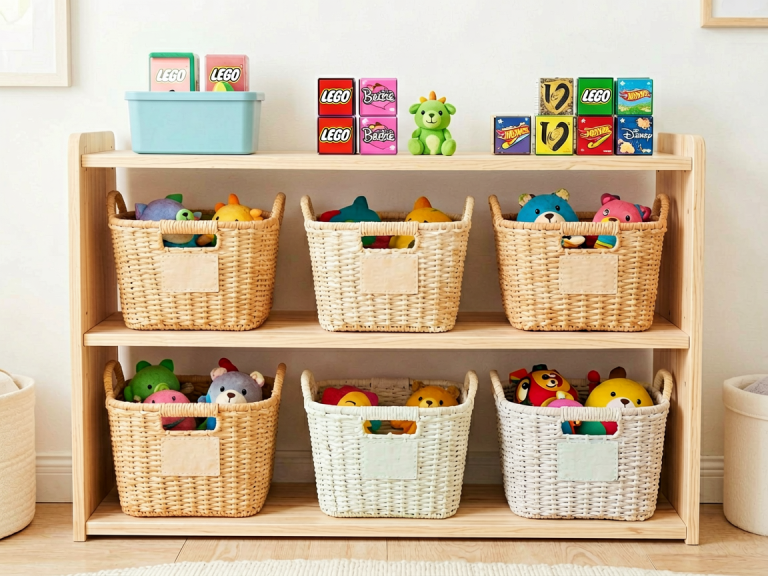
Fill a shallow basket with everyday objects: a wooden spatula, a whisk, a metal measuring spoon, a smooth stone (larger than a ping-pong ball), a silk scarf, a cardboard tube. Let your baby explore freely while you sit nearby and observe. This approach, inspired by the Montessori method, supports sensory exploration, fine motor development, and concentration—all without batteries.
2. Mirror Play
A baby-safe mirror propped against a wall allows your 9-month-old to discover his own reflection. This fosters self-awareness and social-emotional development, and it’s free.
3. Water and Sand Play
Fill a shallow tray with water or dry rice (supervised). Add a few plastic cups and spoons. Your baby will spend 20 minutes scooping, pouring, and splashing—learning volume, gravity, and cause-and-effect in the most natural way.
4. Simple Stacking Cups
A set of colorful nesting cups (cost: about $10) offers endless possibilities. Stack them, knock them down, hide a small toy under one, fill them with water. No lights, no noise, no small parts.
5. Musical Instruments
A wooden shaker, a small drum, or a set of jingle bells (sewn into fabric) encourage your baby to experiment with sound and rhythm. Singing together is even better.
6. Books!
Board books with high-contrast images, textures, or simple faces are far more beneficial than any electronic toy. Reading together builds language, bonding, and early literacy.
Conclusion: Save the STEM Kit for Later—Much Later
So, should you buy STEM kits for your 9-month-old? The honest answer is: probably not. While the idea is appealing, the reality is that most commercial STEM kits are overpriced, overstimulating, and developmentally mismatched for a baby who is still mastering basic motor and cognitive skills. The core concepts of science, technology, engineering, and mathematics are far beyond a 9-month-old’s comprehension, and the toys that claim to teach them are often little more than flashy gimmicks.
That said, if you find a simple, non-electronic kit that consists solely of safe, sensory-rich, open-ended materials (like cloth balls, wooden rings, and a simple shape sorter), and if you are willing to sit on the floor and play alongside your baby, then such a kit can be a fine addition to your toy collection—but not a necessity. The real STEM learning at this age happens when you talk to your baby about the world around you: “Look, the ball rolled under the chair! Where did it go?” It happens when you let your baby drop a spoon from the high chair for the hundredth time, and you pick it up with a smile. It happens during simple, joyful, human connection.
Invest your money and energy in experiences that foster that connection. Save the fancy STEM kits for when your child is at least 18 to 24 months old, when they can actively build, sort, and problem-solve with more intention. For now, a cardboard box, a loving parent, and a world full of wonder are all the STEM education a 9-month-old truly needs.