Beyond Beeps and Buttons: The Best Alternatives to Robot Toys for 18-Month-Olds
Introduction: Why Rethink Robot Toys for Toddlers?
In the age of blinking lights, synthetic voices, and motion sensors, robot toys have become a staple in many households with young children. They promise early STEM exposure and interactive play. Yet when it comes to an 18-month-old—a toddler who is just beginning to walk, talk, and make sense of the world—the allure of a robotic companion may be more appealing to parents than to the child’s actual developmental needs. At this age, the brain is forming critical neural connections at an astonishing rate, and the most valuable playthings are not those that entertain by themselves, but those that invite exploration, manipulation, and open-ended creativity.
Robot toys, especially those with preset responses and limited interactivity, often fail to engage a toddler on multiple sensory and cognitive levels. They may encourage passive observation rather than active problem-solving. Moreover, excessive screen time or noisy electronic features can overstimulate a child or, conversely, dull their ability to find joy in simpler, more meaningful interactions. For these reasons, parents and caregivers are increasingly seeking the best alternatives to robot toys for 18-month-olds—alternatives that support motor skills, language development, social-emotional growth, and, above all, the pure, unstructured magic of childhood play.
This article explores seven categories of exceptional alternatives, each backed by developmental research and real-world parenting wisdom. From sensory bins to stacking rings, these toys do not rely on batteries or algorithms. They rely on the child’s own curiosity—and that is infinitely more powerful.
1. Simple Wooden Stacking and Nesting Toys: Building Foundations for Logic and Fine Motor Control
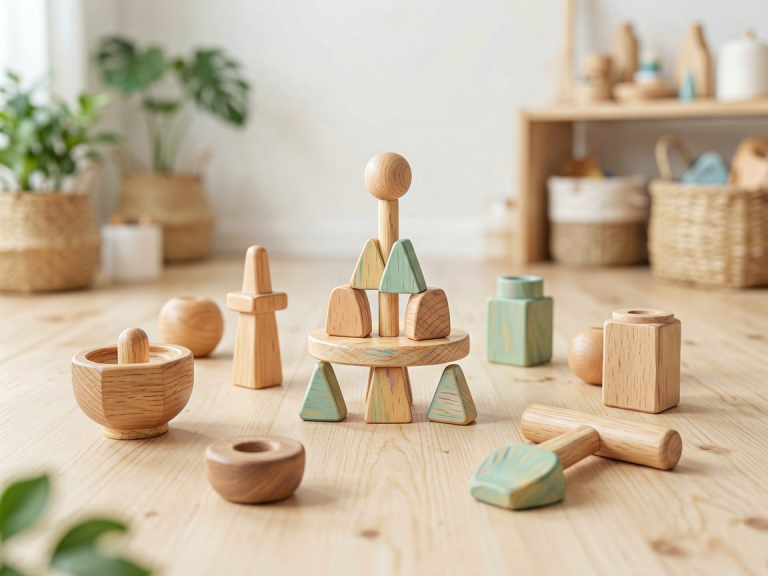
At 18 months, a toddler’s hand-eye coordination is rapidly improving but still far from precise. Robot toys often require pressing small buttons or swiping screens—actions that can frustrate a child who has not yet mastered the pincer grasp or wrist rotation. Wooden stacking rings, nesting cups, and simple shape sorters, on the other hand, offer a perfect challenge.
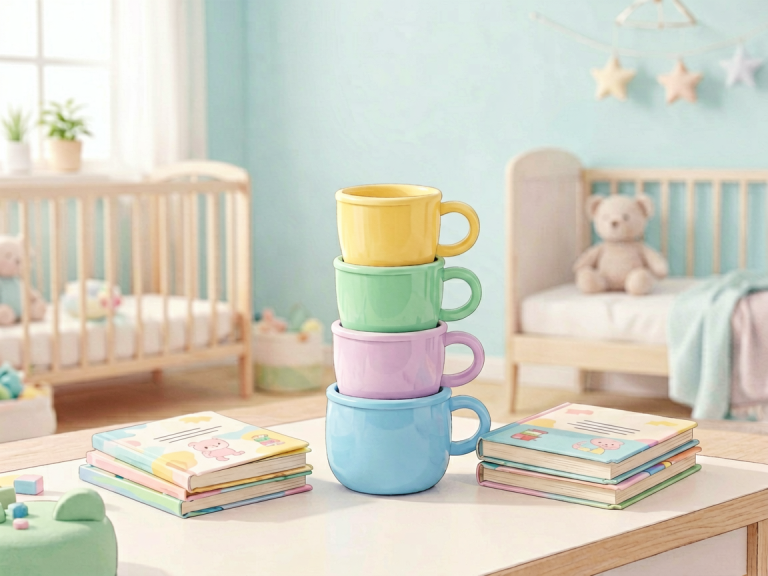
A classic stacking ring set, for example, requires the toddler to place rings of different sizes onto a central peg. This seemingly basic activity teaches size differentiation, sequencing, and cause-and-effect. When a child tries to force the largest ring onto the smallest peg, they learn through trial and error—a process far richer than a robot’s flat “try again” beep. Nesting cups allow for endless possibilities: stack them up, knock them down, hide a small toy inside, or use them as makeshift drums. These toys grow with the child, evolving from simple stacking to imaginative play like “cooking” or “building towers.”
Moreover, the natural texture of wood provides sensory feedback that plastic cannot replicate. Wood is warm, slightly weighty, and often painted with non-toxic, matte finishes that reduce glare. Many wooden stacking toys are designed with safe, rounded edges and are free of small parts that could pose a choking hazard—an essential consideration for the mouthing phase that many 18-month-olds still enjoy.
2. Sensory Play Kits: Engaging the Whole Brain Through Texture, Sound, and Sight
While robot toys may offer flashing lights, they rarely provide the rich, multi-dimensional sensory input that a toddler’s developing brain craves. Sensory play—activities that stimulate touch, smell, sight, sound, and even taste in safe ways—is widely recognized by child development experts as crucial for neural pathway formation. For an 18-month-old, simple sensory bins or kits can be more engaging than any electronic gadget.
Consider a kit filled with large, smooth river stones, a few scoops of dry rice or oats, and a set of soft, child-safe scoops and cups. The toddler can run their fingers through the rice, watch it cascade from a cup, and listen to the soft patter as it falls. This kind of open-ended exploration promotes focus, pattern recognition, and language development as the caregiver narrates: “You’re pouring the rice! It makes a shshsh sound.” Compare this to a robot that says a predetermined phrase—the robot cannot adapt to the child’s mood or pace, while sensory play does.
Water play, kinetic sand (specifically designed for young children to avoid mess and ingestion risks), and textured balls are all excellent additions. The key is to ensure all materials are non-toxic, too large to swallow, and supervised. Sensory bins can be changed weekly to maintain novelty, preventing the boredom that often leads a toddler to press the same robot button again and again.
3. Push, Pull, and Ride-On Toys: Developing Gross Motor Skills and Confidence
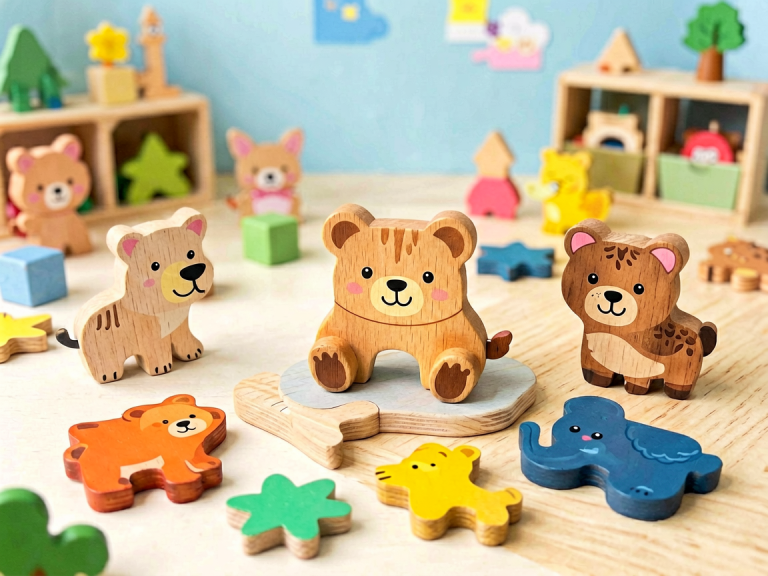
An 18-month-old is often a new walker, wobbling with determination across the room. Robot toys that sit on a tabletop do little to support this monumental physical achievement. Instead, push and pull toys—especially those with a low center of gravity and sturdy construction—encourage walking, balancing, and even running. A classic wooden push cart, often filled with blocks, allows the toddler to load, unload, and push it around. The resistance of the cart against the floor provides proprioceptive feedback, helping the child understand their body in space.
Pull-along toys, such as a wooden duck on wheels or a small animal that waddles, motivate the child to walk backwards or sideways, subtly improving coordination and spatial awareness. For the more adventurous, a small ride-on toy without pedals—propelled by the toddler’s feet—offers an excellent core workout and introduces concepts of direction and speed control. These toys are far superior to a stationary robot because they involve the whole body. They also build independence; the child decides where to go, not a pre-programmed direction.
4. Soft Building Blocks and Fabric Play Mats: Encouraging Creative Construction and Safety
While some robot toys are made of hard plastic with sharp edges, 18-month-olds are still prone to falls and bumps. Soft building blocks, often made of foam or fabric with gentle stitching, provide all the benefits of block play—spatial reasoning, balance, and creativity—without the risk of injury. These blocks can be stacked into towers that topple safely, used as pretend food, or even hugged. They are lightweight enough for a toddler to carry multiple at once, which strengthens arm and core muscles.
Fabric play mats with attached elements like flaps, mirrors, and crinkly corners add another dimension. Unlike a robot’s fixed screen, a fabric mat invites tactile exploration. The child can lift a flap to find a hidden animal, gaze at their own reflection, or simply enjoy the soothing texture of velvet versus corduroy. These mats can be folded and taken anywhere, making them a versatile alternative to a clunky robot.
5. Musical Instruments for Tiny Hands: Rhythm, Cause-and-Effect, and Emotional Expression
Robots that play songs are passive entertainment. But handing a toddler a simple instrument—a small shaker egg, a wooden xylophone, a hand drum, or a set of jingle bells—turns them into a creator. At 18 months, children begin to understand that their actions can produce sound, and this cause-and-effect revelation is powerful. A robot may respond to a button press, but a drum responds to any hit, in any rhythm, at any volume. This freedom encourages experimentation.
Playing instruments also supports language development by introducing patterns, tempo, and emotion. A caregiver can sing along while the child shakes a rattle, fostering joint attention and turn-taking. Safety is paramount: choose instruments with no small parts that could come loose, and ensure they are made from non-toxic materials. Musical toys that are too loud can damage hearing, so opt for those with adjustable volume or, better yet, natural acoustic sounds.
6. Board Books with Interactive Elements: Early Literacy Without the Screen
An 18-month-old’s language explosion is one of the most exciting developmental milestones. Robot toys that speak limited phrases cannot compare to the rich, interactive experience of sharing a board book with a caring adult. Board books with flaps to lift, textures to feel, or simple sliders to push engage fine motor skills while building vocabulary and comprehension. The physical act of turning pages (and occasionally chewing on them) is a sensory experience that screens lack.
What makes board books an excellent alternative to robot toys is their social component. Reading together involves eye contact, expressive voices, and emotional bonding. The caregiver can pause, ask questions, and respond to the child’s babbling. No robot can replicate this warm, human interaction. Choose books with bold, high-contrast illustrations, simple narratives, and relatable topics like animals, daily routines, or family.
7. Open-Ended Loose Parts Play: The Ultimate Creative Alternative
Perhaps the most developmentally potent alternative to robot toys is nothing pre-packaged at all—but rather a carefully curated collection of loose parts. This Montessori-inspired approach includes items like large wooden beads (too big to swallow), fabric scraps, cardboard tubes, plastic lids, and silicone cupcake liners. For an 18-month-old, loose parts can be dropped into containers, sorted by size or color, stacked, rolled, or simply carried from place to place.
Loose parts support divergent thinking—the ability to see many uses for one object. A robot toy has one function, but a cardboard tube can be a telescope, a drumstick, a tunnel for a toy car, or a building column. This kind of play fosters resilience, problem-solving, and imagination. It also respects the child’s pace: they decide when to engage, how long to focus, and when to move on. The only “rule” is safety: ensure all items are large enough not to pose a choking risk, smooth without sharp edges, and washable.
Conclusion: Choosing Simplicity Over Screen-Like Stimulation
The best alternatives to robot toys for 18-month-olds are not about rejecting technology outright; they are about honoring the unique developmental window of toddlerhood. At this age, the brain is primed for learning through physical activity, sensory exploration, and social connection. Robot toys, with their pre-scripted responses and electronic hum, often short-circuit this natural process. They may keep a child quiet, but they rarely keep a child engaged in the deep, joyful learning that builds a foundation for life.
Wooden stacking toys, sensory play kits, push-and-pull vehicles, soft blocks, simple instruments, board books, and open-ended loose parts each offer something a robot cannot: genuine agency. The child is the driver, the creator, the problem-solver. They learn that their actions matter, that curiosity leads to discovery, and that the most powerful plaything is their own imagination. As you fill your 18-month-old’s toy basket, consider these alternatives not as a compromise, but as a gift—a gift of real-world wonder that will serve them far longer than any rechargeable battery ever could.