Beyond the Gears: The Best Alternatives to Robot Toys for 1-Year-Olds
Introduction: Why Rethink Robot Toys for Toddlers?
Walk into any modern nursery, and you are likely to find blinking, beeping, and rolling robot toys designed to “interact” with babies. While these gadgets promise cognitive stimulation and early STEM exposure, pediatricians and child development experts often caution against over-relying on electronic toys for children under two. At one year old, a baby’s brain is wiring itself at an astonishing rate—synapses are forming based on sensory input, motor exploration, and, most importantly, human interaction. Robot toys, with their pre-programmed responses and flashing lights, can actually overstimulate a toddler’s developing nervous system and limit opportunities for open-ended, creative play. More critically, they may replace the kind of warm, responsive, and variable interaction that only caregivers provide. This article explores the best alternatives to robot toys for one-year-olds—options that are safer, more developmentally appropriate, and ultimately more enriching for a toddler’s growth. Each alternative prioritizes sensory exploration, fine and gross motor skills, cause-and-effect learning, and social-emotional bonding, all without a single battery.
Why Robot Toys Miss the Mark for 1-Year-Olds
Before diving into alternatives, it is useful to understand why robot toys are not the ideal choice. At twelve months, a child is transitioning from a dependent infant to a curious explorer. They are learning to pull themselves up, take their first wobbly steps, and manipulate objects with increasing precision. Robot toys often have small parts that pose choking hazards, and their rigid, plastic bodies can be hard for tiny hands to grip. More importantly, the “intelligence” of a robot toy is predictable—it says the same thing, makes the same noise, and moves in the same pattern every time. This predictability, while seemingly educational, actually reduces the complexity of learning. A baby learns best from the unpredictability of real-world interactions: a ball that rolls differently depending on how it is thrown, a wooden block that clacks when knocked over, or a caregiver’s face that changes expression. Robot toys, by contrast, offer a closed-loop system that can stifle curiosity after the initial novelty wears off. Additionally, the American Academy of Pediatrics recommends that children under two avoid screen-based or electronic toys altogether because they can delay language development by reducing face-to-face communication. With these concerns in mind, let us explore superior alternatives.
1. Simple Wooden Blocks: The Ultimate Open-Ended Toy
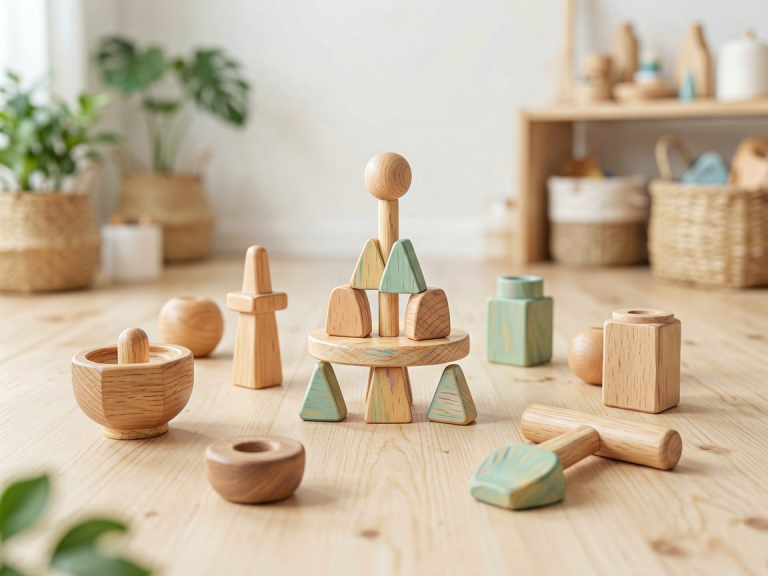
Wooden blocks are a timeless classic for a reason. For a one-year-old, a set of smooth, unpainted or non-toxic painted wooden blocks in various shapes and sizes offers endless possibilities. Unlike a robot toy that can only roll or beep, blocks invite a baby to stack, knock down, sort, and carry them. This activity develops hand-eye coordination, spatial awareness, and fine motor skills as the baby grasps each block and attempts to place one on top of another. The satisfying *clunk* of a falling tower teaches cause and effect—a concept far richer than a robot’s recorded “Uh-oh!” Block play also nurtures problem-solving; when a block does not fit where the baby wants it to go, they must adjust their approach. Furthermore, blocks can be used in social play: a parent can build a tower while the baby delights in knocking it over, strengthening the back-and-forth interaction that is crucial for emotional regulation. Choose large blocks that are easy to grasp (at least 1.5 inches on each side) to avoid choking hazards. Avoid sets with magnets or small decorative pieces; simplicity is key.
2. Sensory Balls: Grasping, Rolling, and Exploring
At one year, tactile exploration is at its peak. Sensory balls—those with bumps, ridges, soft spikes, or different textures—are far superior to any robot toy. A classic rubber ball with a bell inside can be rolled across the floor; the baby may crawl or toddle after it, strengthening leg muscles and gross motor coordination. A bumpy massage ball provides delightful tactile feedback against tiny palms, activating nerve endings that support brain development. Unlike a robot that moves itself, a ball responds directly to the baby’s actions: if they push it hard, it goes far; if they pat it gently, it wobbles. This immediate, non-mediated cause-effect relationship is precisely what a one-year-old’s brain craves. Moreover, balls can be used for simple games of catch with a caregiver, promoting eye-tracking and social interaction. Opt for balls made of natural rubber or cloth, avoiding hard plastic that might hurt if thrown. A set of three to five balls with varied textures and sizes provides rich sensory input—far more than a robot’s single plastic surface.
3. Stacking Rings and Nesting Cups: Problem-Solving in Three Dimensions
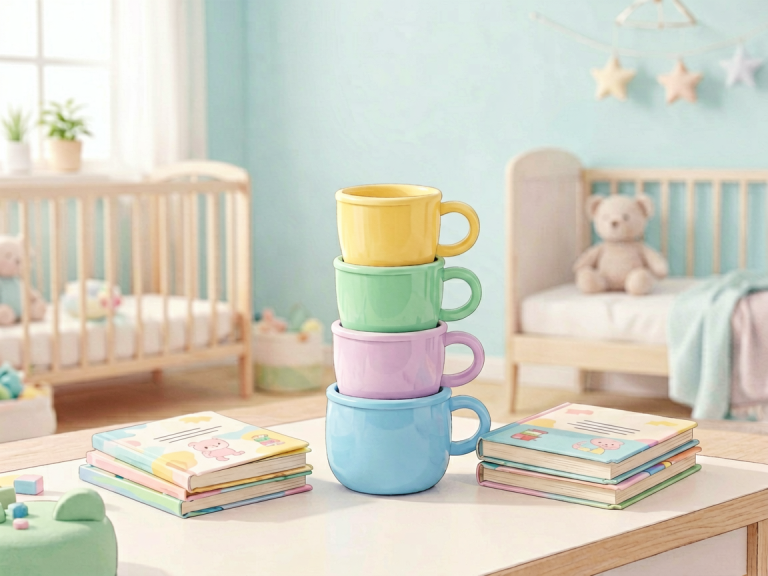
Stacking rings are a developmental milestone classic. A typical set consists of a central post and several rings in graduated sizes, often in bright colors. A one-year-old will likely first try to mouth the rings (choose BPA-free, phthalate-free materials) and then attempt to place them on the post in any order. As they grow, they will begin to recognize that the largest ring must go on first, then smaller ones—a primitive understanding of size seriation. This process builds logical thinking, fine motor precision, and concentration. Nesting cups, similarly, offer the joy of hiding one cup inside another, then pulling them out again. The *pop* sound when cups separate or the clatter when they are dumped teaches auditory cause and effect. Both toys are inherently interactive without any electronics; they rely entirely on the child’s own movements. They also encourage “sorting and filling” behavior, which is a precursor to math skills. Unlike a robot’s pre-programmed “Great job!” which is generic, the satisfaction of successfully stacking a ring is an intrinsically rewarding moment—building self-esteem.
4. Pull-Along Toys: Encouraging First Steps
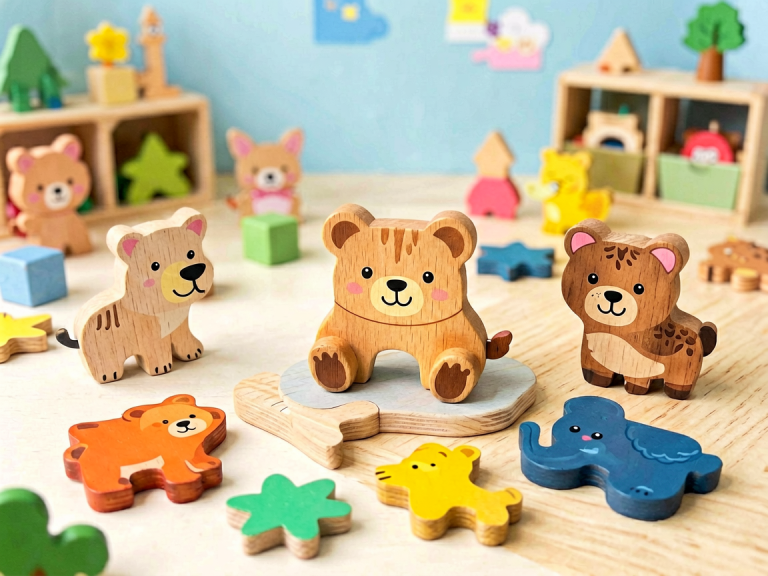
For a one-year-old who is starting to walk or cruise, a pull-along toy is an excellent alternative to a robot. These toys—often a wooden animal on wheels with a string—require the child to walk while pulling, which strengthens balance, coordination, and leg muscles. The gentle wobbling or clicking sound made by the wheels provides auditory feedback without overwhelming noise. Unlike a robot that zooms away autonomously, a pull-along toy moves only as fast as the child walks, giving the toddler a sense of control and mastery. Many pull-along toys also feature small parts that spin or flap, adding visual interest. Choose a low, stable design to prevent tipping. Avoid long strings that could become a strangulation hazard; the best pull toys have a short, rigid handle attached to the toy itself. This alternative not only promotes physical development but also inspires imaginative play—the child might pretend the wooden duck is “going for a walk,” a first step toward symbolic thinking.
5. Board Books: Language and Bonding
One-year-olds are rapidly absorbing language, and nothing substitutes for the human voice. Board books with thick, durable pages and simple, high-contrast illustrations are wonderful alternatives to robot toys that “talk.” A robot may say “apple” in a flat digital tone, but a parent reading “Apple!” with enthusiasm, pointing to the picture, and pausing for the baby to babble back, creates a rich language-learning environment. Board books also offer tactile exploration: some have textures (furry, shiny, bumpy) that engage the sense of touch. Reading together builds a routine of closeness, eye contact, and turn-taking—the foundation of social communication. Choose books with simple narratives or concept words (colors, animals, body parts). At one year, babies often enjoy books with flaps to lift or mirrors, which add surprise and self-awareness. Unlike a robot that “teaches” vocabulary through repetition, a book fosters a dynamic interaction where the caregiver adjusts their pace and expression to the child’s response.
6. Musical Instruments (Unplugged): Rhythm and Coordination
Instead of a robot that plays pre-recorded tunes, offer real, simple musical instruments. A small drum, a pair of maracas, a xylophone with a soft mallet, or a jingle bell bracelet. These instruments allow the child to produce sound through their own actions—banging, shaking, tapping. This is profoundly different from pressing a button to hear a song. With a real instrument, the baby learns that *they* are the source of the music, which builds agency and creativity. The variety of sounds (loud, soft, fast, slow) is infinitely richer than a robot’s limited repertoire. Moreover, making music together with a parent—clapping along, singing, dancing—enhances emotional bonding and rhythm awareness. Choose instruments made of wood or metal (with safe finishes) rather than cheap plastic that can break into sharp pieces. Avoid anything with small parts that could be swallowed. A simple wooden egg shaker is perfect for tiny hands.
7. Soft Dolls and Stuffed Animals: Social-Emotional Play
At one year, children begin to engage in pretend play, albeit in a rudimentary form. A soft, cuddly doll or plush animal can become a beloved companion. A child might hug it, pat it, or try to feed it—practicing empathy and caregiving behaviors that are essential for social development. Unlike a robot that responds with pre-scripted phrases, a doll is a blank canvas; the baby projects their own emotions and experiences onto it. When a caregiver says, “Oh, the bear is sleepy. Let’s rock the bear,” they are modeling nurturing behavior that the child will imitate. This type of play is impossible with a robot toy, which already has a fixed personality. Choose a doll with simple sewn-on features (no hard plastic eyes that can come loose) and made from organic, washable materials. The weight and texture of a soft toy provide comfort and sensory feedback that no blinking robot can match.
8. Activity Cubes and Shape Sorters: Problem Solving Without Screens
A classic activity cube—often made of wood, featuring a shape sorter on one side, bead mazes on another, and spinning gears—provides multiple challenges in one toy. A one-year-old can spend minutes trying to fit a triangle block into the triangle hole, learning through trial and error. The bead maze helps develop finger dexterity and visual tracking as they push beads along wires. Unlike a robot’s single-function play, an activity cube offers varied, self-directed exploration. Shape sorting specifically teaches early geometry concepts and perseverance. When the block finally drops through the hole, the baby experiences a genuine “aha!” moment, far more rewarding than a robot’s recorded applause. Choose a cube that is sturdy and has no sharp edges. Ensure the shape pieces are large enough to be safe.
Conclusion: Less Tech, More Touch
In the end, the best alternatives to robot toys for one-year-olds are those that put the child in control of the play, rather than making the child a passive spectator to electronic entertainment. Wooden blocks, sensory balls, stacking rings, pull-along toys, board books, simple instruments, soft dolls, and activity cubes all share a common thread: they invite the child to explore, manipulate, experiment, and interact with a caring adult. These toys do not need batteries or screens because they tap into the most powerful learning tool of all—the child’s natural curiosity and the responsive love of a caregiver. As you consider gifts for a one-year-old, remember that the best toy is often the simplest one, the one that can be banged, tossed, chewed, and stacked. Skip the robot; give the gift of a real-world adventure.