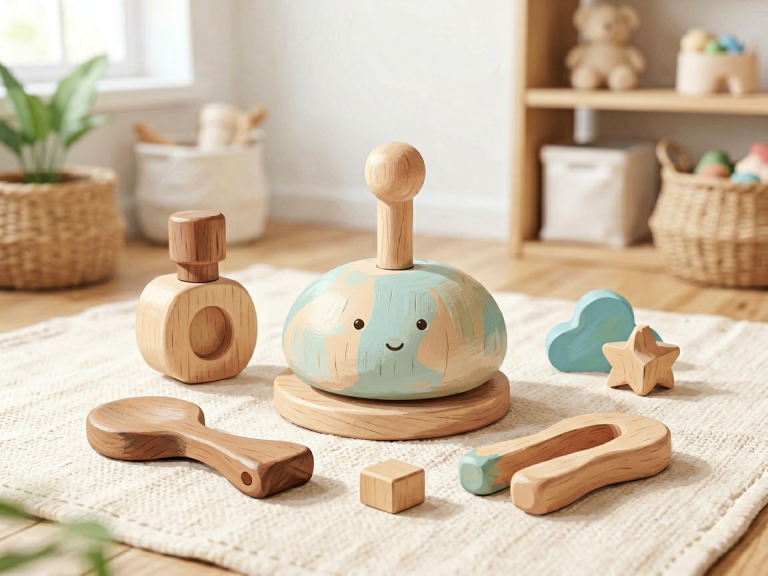
Are Wooden Blocks Worth It Under $50? A Comprehensive Analysis
Wooden blocks have been a staple of childhood play for generations, prized for their natural feel, durability, and open-ended educational value. But in an era of flashy electronic toys and budget-conscious parenting, a common question arises: Are wooden blocks worth it under $50? At this price point, consumers often wonder whether they are buying quality, safety, and long-term utility or merely a cheap imitation that will splinter, chip, or bore their children. This article dives deep into the factors that determine value—material quality, construction, educational benefits, and longevity—to help you decide if that $50 set is a smart investment or a waste of money.
The Timeless Appeal of Wooden Blocks
Before evaluating cost, it is essential to understand why wooden blocks remain a preferred choice for early childhood development. Unlike plastic toys that often have a single function, wooden blocks are a blank canvas for creativity. They encourage spatial reasoning, problem-solving, fine motor skills, and even social collaboration when used in group play. The tactile experience of wooden blocks—the weight, grain, and warmth—is something no screen can replicate. Research in child development consistently supports the value of unstructured, open-ended play, and wooden blocks are a prime tool for that. Whether a child builds a tower, a castle, or a simple road, each creation teaches balance, symmetry, and cause-and-effect.
Given these advantages, the question is not whether wooden blocks are good, but whether a set under $50 can deliver those benefits without compromising safety or longevity. The answer depends heavily on what you are willing to sacrifice—quantity, precision, or material purity.
What to Expect Under $50: Quality and Quantity
In the sub-$50 category, you generally find two types of wooden blocks: smaller sets from budget brands and larger sets from reputable manufacturers that may be on sale or have fewer pieces. For example, a well-known brand like Melissa & Doug often sells a 60-piece set for around $30–$40, while a generic brand on Amazon might offer 100 pieces for $25. The immediate trade-off is between the number of blocks and the quality of the wood and finish.
Let’s break down the typical characteristics:
- Wood type: Under $50, most sets use rubberwood, birch, or pine. Pine is softer and more prone to dents; rubberwood is harder but may have visible grain cracks. High-end sets use maple or beech, but those cost significantly more.
- Paint and finish: Non-toxic, water-based paints are standard in reputable brands. However, cheaper sets sometimes use varnish or paint that can peel or contain traces of heavy metals. Always look for ASTM or EN71 certification (safety standards in the US and Europe).
- Precision and smoothness: Budget blocks may have rough edges, uneven cuts, or splinters. A $20 set might require sanding before use. Premium $50 sets typically have rounded corners and smooth surfaces.
- Variety of shapes: Many budget sets include only basic cubes, rectangles, and triangles. More expensive sets add arches, cylinders, half-circles, and people figures, which greatly expand building possibilities.
Thus, if you prioritize safety and smoothness, you might prefer a smaller, well-made set from a trusted brand—even if it means fewer blocks. If you need quantity for a classroom or multiple children, a larger budget set may suffice but requires careful inspection.
Educational Value vs. Plastic Alternatives
One of the strongest arguments for wooden blocks under $50 is their superior educational value compared to plastic blocks at the same price. Plastic blocks, such as Mega Bloks or Duplo-style sets, are also excellent for fine motor skills and creativity, but they have different limitations. Plastic blocks encourage stacking and interlocking, but they often dictate a specific assembly method (e.g., snapping together). Wooden blocks, by contrast, rely purely on balance and gravity, which teaches children about stability and weight distribution. They also foster a more forgiving sense of failure—a plastic castle that falls apart is frustrating; a wooden tower that tumbles is a lesson in physics.
Moreover, wooden blocks under $50 are often more durable than plastic blocks in the same price range. Cheap plastic can crack or warp, while cheap wood can splinter, but wood can be sanded and repainted. A plastic block set that breaks is typically trash; a wooden block that chips can become a “character piece” or be disposed of responsibly (wood is biodegradable). However, note that some plastic sets come with battery-operated features or sounds, which can be attractive but also limit imaginative play. Wooden blocks are almost purely open-ended, which experts argue is more valuable for cognitive development.
If you are comparing a $40 wooden block set to a $40 plastic construction toy, the wooden blocks generally offer more long-term educational value, provided they are safe and well-constructed.
Safety Considerations and Durability
Safety is paramount when buying any toy for young children. Under $50, you must be vigilant. Reputable brands like Hape, Tegu (though Tegu is often above $50), Guidecraft, and Melissa & Doug adhere to strict safety standards. Their paints are lead-free, their woods are sustainably sourced, and their blocks are tested for choking hazards. On the other hand, generic unbranded sets from online marketplaces may cut corners. A common issue is the use of melamine or MDF (medium-density fiberboard) instead of solid wood. MDF can warp when wet and may contain formaldehyde in its glue. Always read customer reviews—look for mentions of smell, splinters, or chipping paint.
Durability also varies. Solid wood blocks under $50, especially if made from pine, may dent if dropped repeatedly. However, even dents rarely affect function. The paint may wear off on high-use blocks after a few years, but that can be a sign of genuine play. Many parents report that a $35 wooden block set purchased for a toddler is still in good shape when the child enters elementary school—a lifespan of 4–6 years. That makes the cost per year as low as $6–$8, which is excellent value compared to plastic toys that often end up in landfill after a year.
One more safety point: weight. Wooden blocks are heavier than plastic ones, which means they can cause injury if thrown. However, this risk is manageable with supervision and age-appropriate use. For children under 18 months, larger blocks (at least 2 inches in any dimension) are recommended to prevent choking, and many under-$50 sets meet that criterion.
How to Choose the Best Set for Your Budget
Given the variability, here is a practical guide to selecting wooden blocks under $50 that are worth your money:
- Prioritize safety certifications: Look for “ASTM F963” or “EN71” on the package. If no certification is listed, check the brand’s website. Avoid any set that has a strong chemical smell.
- Check the wood type: Solid rubberwood or birch is ideal. Avoid particle board or laminated wood.
- Inspect the finishing: Blocks should have rounded edges and a smooth, non-toxic coating. If possible, read reviews that mention “no splinters.”
- Consider the number of pieces: 50–80 pieces are typically enough for one child aged 2–5. Larger sets (100+ pieces) may be necessary for siblings but often compromise on shape variety.
- Look for shape diversity: A good set includes cubes, rectangles, triangles, cylinders, and perhaps arches. Avoid sets that are all cubes—they limit creativity.
- Think about storage: Many under-$50 sets come in a wooden crate or a cotton bag. A storage container adds value and keeps blocks organized.
- Compare brands: Melissa & Doug’s standard 60-piece set (around $35) is a reliable benchmark. Hape’s “Wall of Wooden Blocks” (often around $45) offers more shapes but fewer pieces. Lovevery’s block sets are excellent but usually exceed $50. For a budget alternative, “Lauri” crepe rubber blocks are not wood but are similarly tactile and under $50; however, they are a different material.
Conclusion: Are They Worth It?
Yes, wooden blocks under $50 are absolutely worth it—provided you choose wisely. The key is to avoid the cheapest, unbranded sets that sacrifice safety and quality for a low price. A well-made set in the $30–$45 range from a reputable manufacturer offers tremendous value: it lasts for years, supports critical developmental skills, and never needs batteries or updates. The initial investment is modest, especially when compared to the cost of disposable plastic toys or screen-based subscriptions.
However, there is a caveat: if you are looking for a huge number of blocks or highly specialized shapes (like magnetic blocks or complex architectural pieces), you may need to spend more than $50. For most families, though, a basic set of 50–80 solid wooden blocks is a perfect entry point. They will be used in towers, roads, castles, and imaginary worlds for years. In the age of digital overload, the simple, tactile joy of wooden blocks is not just a nostalgic luxury—it is a practical, cost-effective tool for raising curious, creative children. So, under $50, the answer is a resounding yes: wooden blocks are worth it, as long as you do your homework before adding to the cart.